
The best home espresso machines are the ones that fit how you want to make coffee: a manual lever press for control on a small budget, a semi-automatic for hands-on shots and milk, a model with a built-in grinder for an all-in-one setup, or a super-automatic for one-touch drinks. Choose the type first, then compare pressure, temperature control, steam and size.
No model is ranked here; example machines use their makers’ specs and each maker’s own US store price as of October 2026. If you want a machine that grinds for you, our guide to the espresso machine with grinder covers that type in depth.
Stovetop moka pots and capsule brewers are not espresso machines in the pump-and-portafilter sense; our comparison of espresso maker vs espresso machine explains the difference.
The short answer
| Machine type | Suits | Skill needed | Workflow | Milk | Example maker prices (US, Oct 2026) |
|---|---|---|---|---|---|
| Manual lever press | Straight espresso, small kitchens, travel | High | Kettle, grind, dose, pull a lever | Separate frother | Flair Classic $159; Flair 58 Plus 2 $699 |
| Semi-automatic | Learners who want control and milk drinks | Medium | Grind (separate grinder), tamp, start and stop | Steam wand | Breville Bambino $299.95; Gaggia Classic Pro E24 $549 |
| Semi-automatic with built-in grinder | One appliance, hands-on shots | Medium | Grind into the portafilter, tamp, brew | Steam wand or automatic | Breville Barista Express $699.95 |
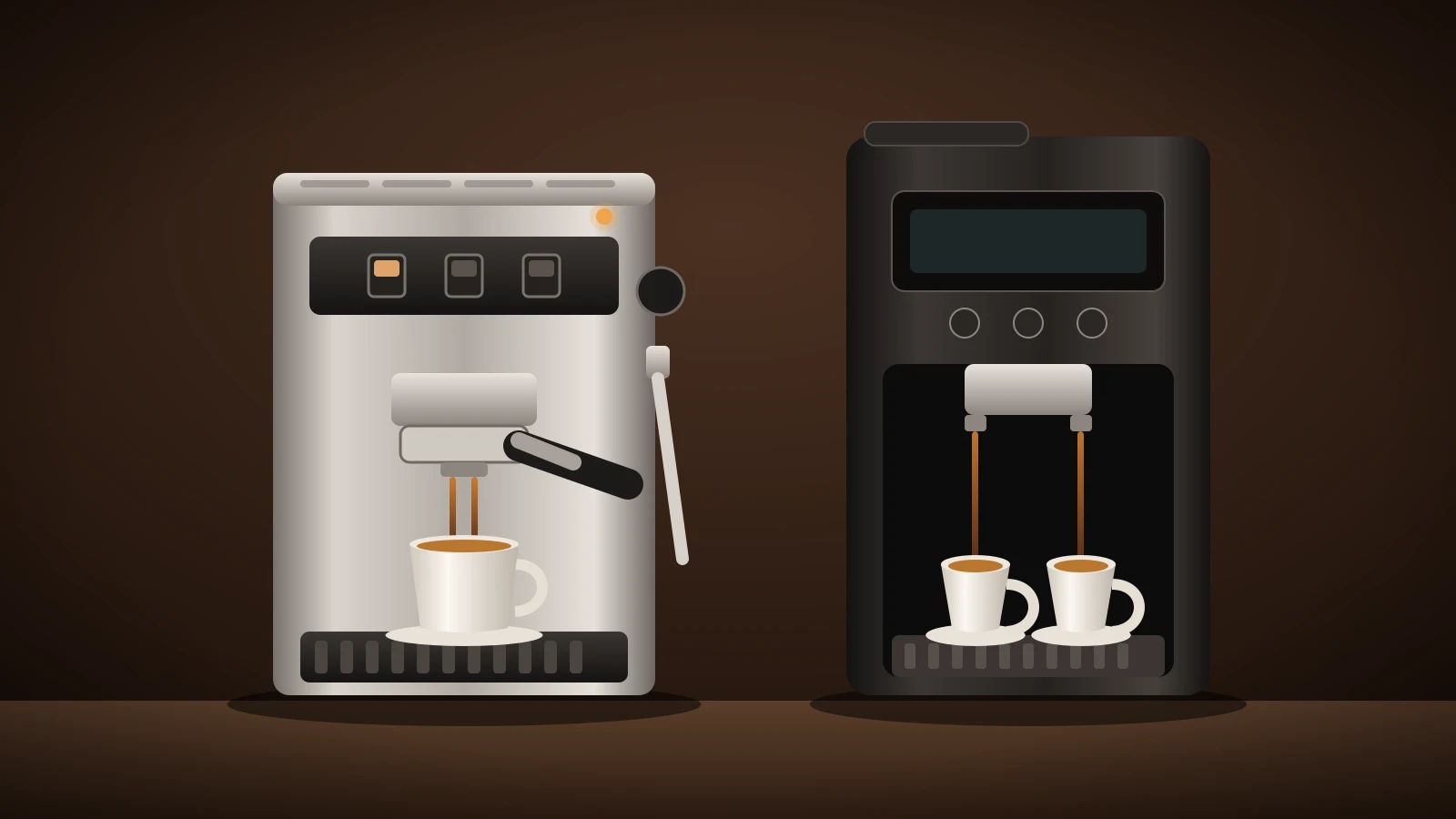
| Super-automatic | One-touch drinks for a household | Low | Fill beans and water, press a button | Automatic system | De’Longhi Magnifica Duo $999.95 list |
| Pod or capsule machine | Speed with no grinding or cleanup | None | Insert a capsule | Separate frother or built in | Not covered; capsules only |
If you mostly drink milk drinks, prioritize the steam system. If you mostly drink straight espresso, prioritize temperature control and a good grinder.
Which type of home espresso machine fits you?
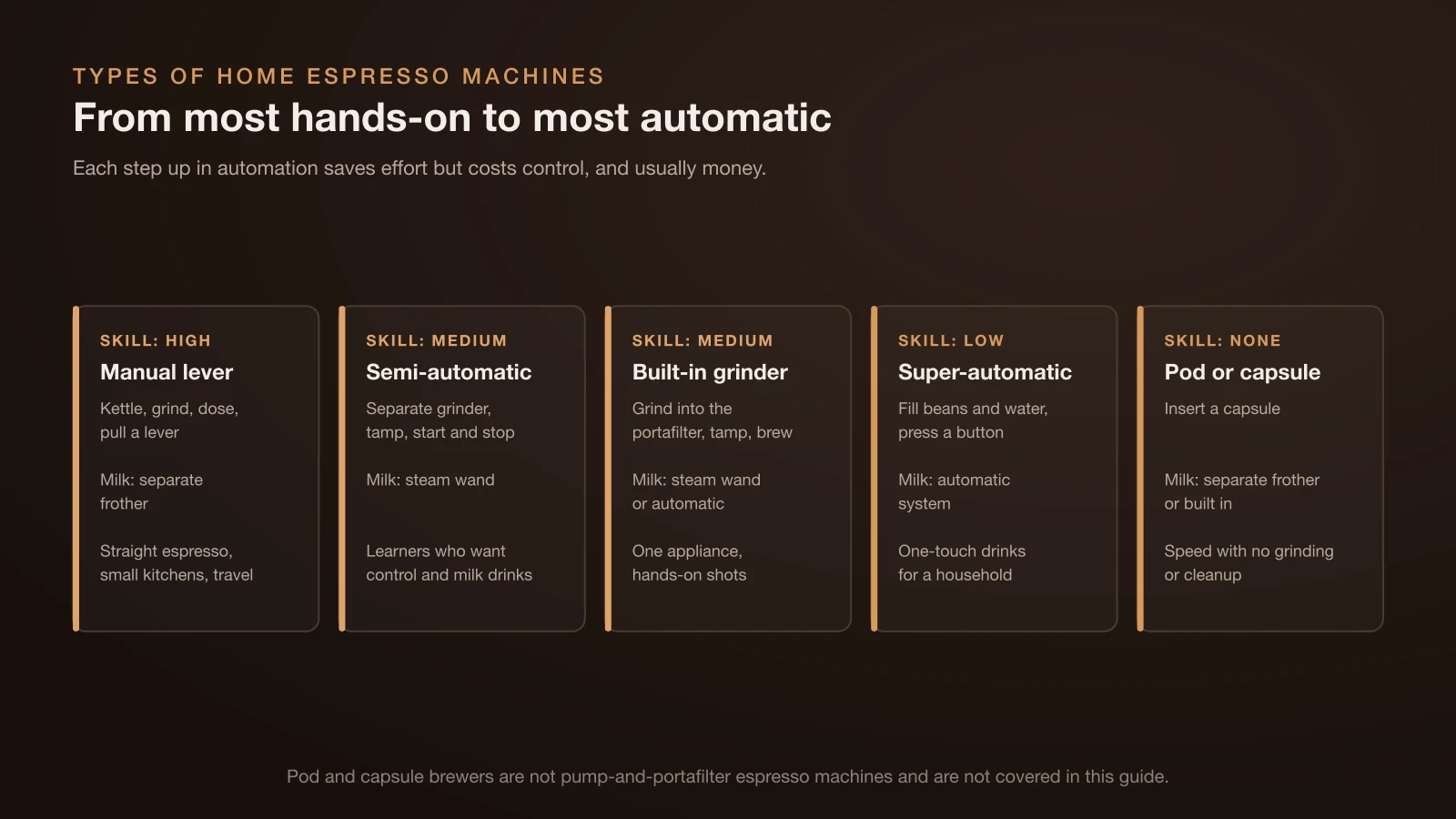
The right type of home espresso machine depends on how much of the work you want to do yourself and how many milk drinks you make. Each step up in automation saves effort but costs control, and usually money.
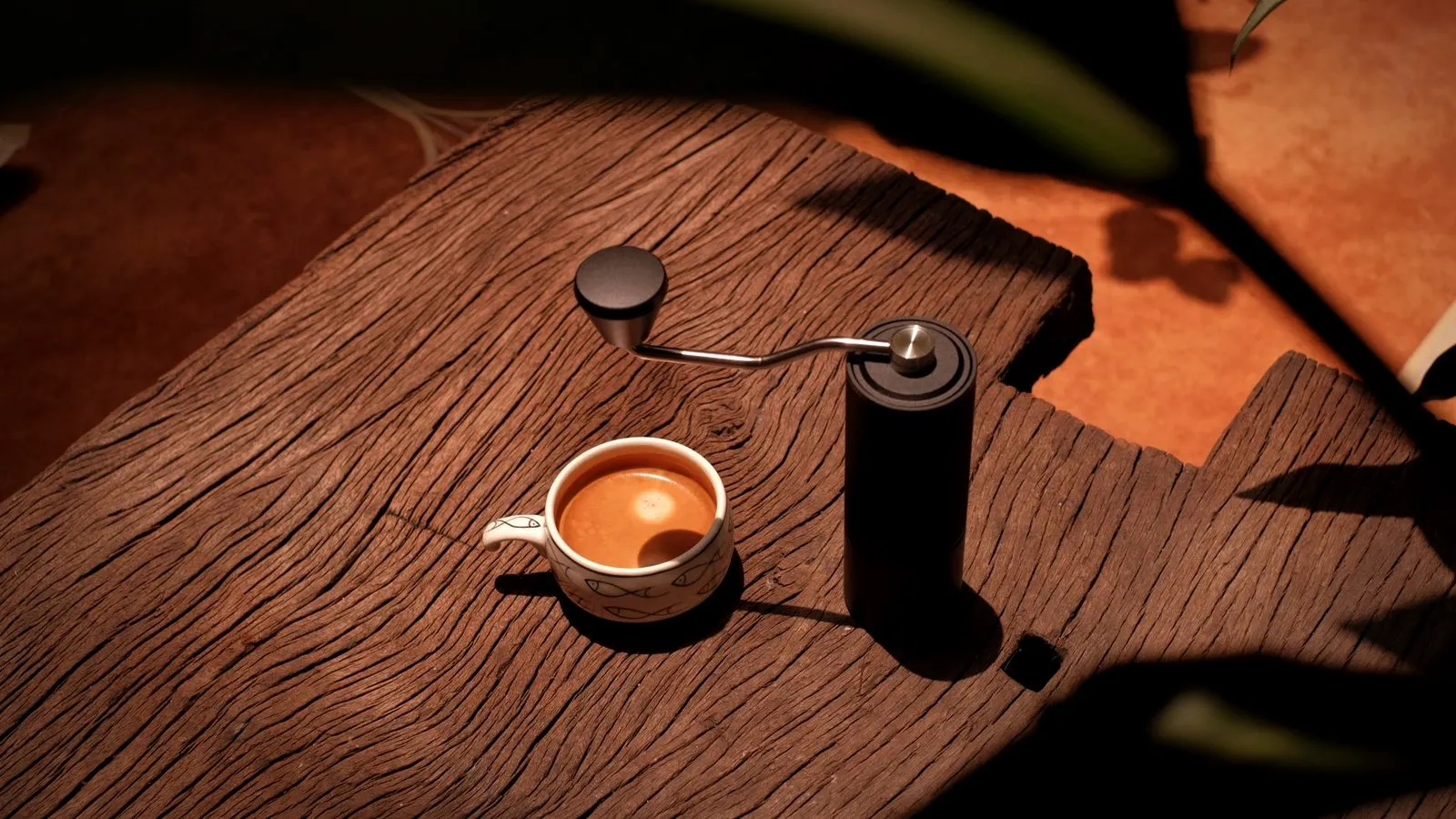
- Manual lever press. You heat water in a kettle and create the pressure with a lever. Flair’s Classic takes 12–18 g of coffee and needs a kettle that can boil water. Our guide to manual espresso machines covers presses and spring levers.
- Semi-automatic. A pump supplies the pressure while you grind, tamp and start and stop the shot. This is the classic home setup, and it needs a separate grinder.
- Semi-automatic with a built-in grinder. The same workflow, with a burr grinder that feeds the portafilter directly. It saves counter space and the cost of a second appliance.
- Super-automatic. A built-in grinder and brew unit grind, dose, tamp and brew for you. Our guide to super-automatic espresso machines explains how they work and what upkeep they need.
- Pod or capsule machine. The fastest option, but you are limited to capsules and cannot adjust grind or dose.
Checklist before you buy a home espresso machine
Before you buy a home espresso machine, answer these questions, because they rule out most models faster than any review.
- What do you drink? Straight shots need temperature control; daily milk drinks need a steam wand or automatic milk system with enough power for back-to-back drinks.
- Do you have a grinder? If not, budget for one now or choose a machine with a built-in grinder.
- Fresh beans or pre-ground? Pre-ground coffee needs pressurized (dual wall) baskets; fresh beans work best in standard single wall baskets.
- How fast do you need coffee? Thermoblock-style heaters are ready in seconds; large boilers can take many minutes.
- Counter space. Measure width, depth and the height under your wall cabinets, plus room to refill the tank.
- Water tank. A larger tank means fewer refills; check that it lifts out easily.
- Portafilter size. 58 mm is the size used by the Gaggia Classic Pro, Flair 58 Plus 2 and Breville Dual Boiler; 51 mm and 54 mm are common on compact machines.
- Service and warranty. Check the warranty length and whether a local repair shop or the maker services the machine.
What makes a good espresso machine?
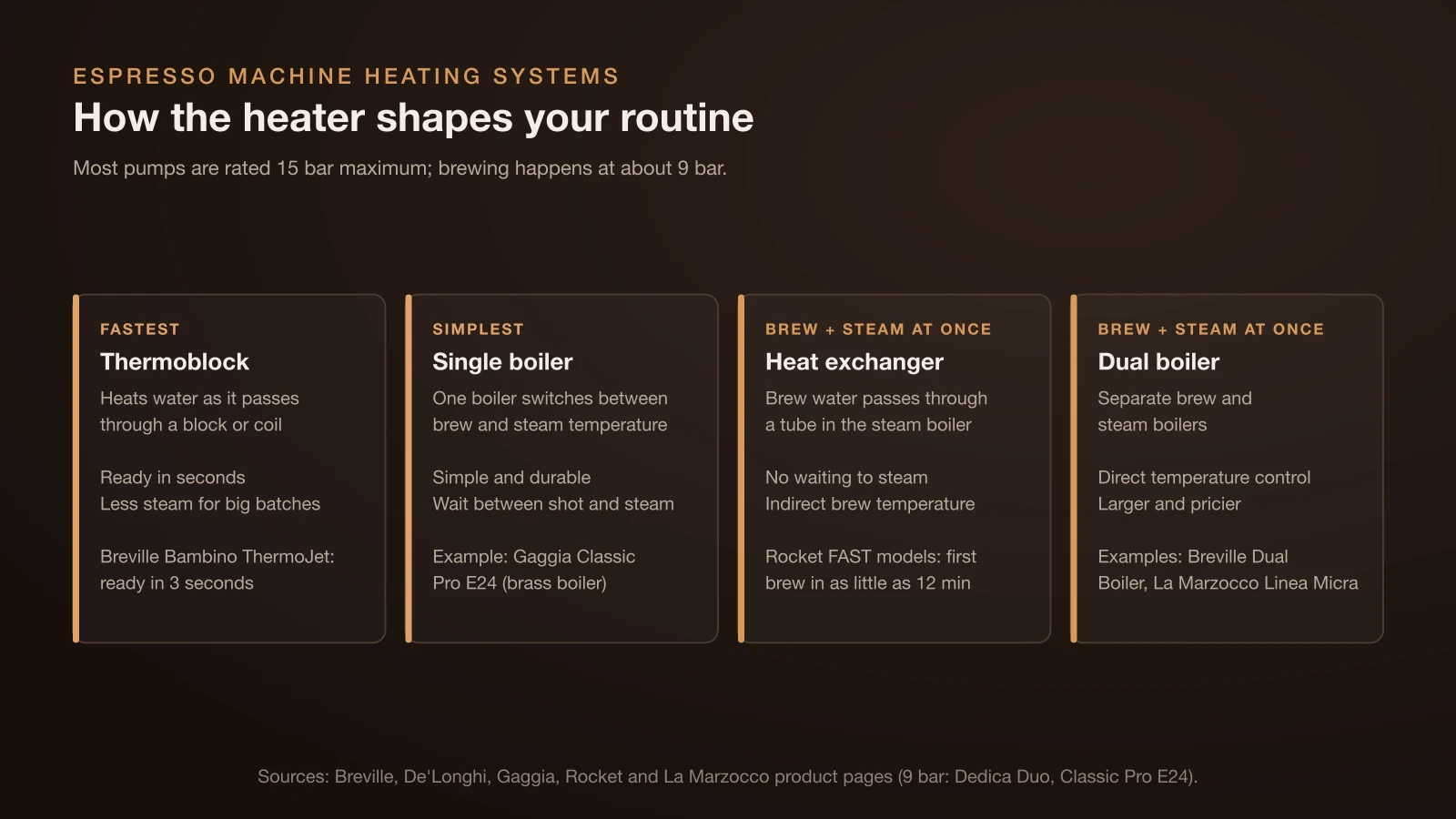
A good espresso machine delivers water at about 9 bar of pressure and a steady brewing temperature, steams milk well enough for your drinks, and fits your routine. Most home pump machines list a 15 bar pump, but that is the pump’s maximum. De’Longhi describes low-pressure pre-infusion followed by 9 bar extraction on its Dedica Duo, and Gaggia calibrates the Classic Pro E24’s valve to 9 bar.
Temperature control and heating systems
Temperature control decides whether shots taste the same from one day to the next. A PID (proportional-integral-derivative) controller holds water at a set temperature, and Breville lists PID control even on its compact Bambino.
| Heating system | How it works | Typical trade-off |
|---|---|---|
| Thermoblock or thermocoil | Heats water as it passes through a block or coil | Ready in seconds; less steam for big batches |
| Single boiler | One boiler switches between brew and steam temperature | Simple and durable; wait between shot and steam |
| Heat exchanger (HX) | Steam boiler with brew water passing through a tube inside it | Brew and steam at once; indirect brew temperature |
| Dual boiler | Separate brew and steam boilers | Brew and steam at once with direct control; larger and pricier |
Our guide to high-end espresso machines explains heat exchangers, dual boilers and E61 groups in detail.
Steam, baskets and portafilter size
The steam system, the basket type and the portafilter size matter as much as the heater for daily use. A manual steam wand lets you texture milk by hand; Breville’s Bambino Plus adds hands-free texturing. Breville says its dual wall baskets regulate pressure and help the extraction regardless of grind, dose, tamp or freshness, which makes them forgiving for beginners.
Portafilter sizes follow the maker: 51 mm on De’Longhi’s La Specialista and Dedica Maestro machines, 54 mm on Breville’s Bambino and Barista lines, and 58 mm on the Gaggia Classic Pro and Breville Dual Boiler. If you will never steam milk, a separate milk frother can fill the gap.
Warm-up time, size and water tank
Warm-up time, footprint and tank size decide how the machine fits your mornings and your kitchen. Breville rates the Bambino’s ThermoJet heater as ready in 3 seconds, while Rocket quotes a first brew in as little as 12 minutes for its FAST heat exchanger models. The Bambino measures 11.9 × 6.1 × 13.5 in (W × D × H) with a 47 fl oz (1.4 L) tank; the Gaggia Classic Pro E24 is 8 in wide with a 72 oz (2.1 L) tank.
Home espresso machine examples by budget tier
The example machines below show what each budget tier buys; they are examples, not a ranking. Specs come from each maker’s page, and prices from the maker’s own US store as of October 2026.
| Tier | Example | Key maker specs | US maker price |
|---|---|---|---|
| Under $300 | Flair Classic | Manual lever, 12–18 g dose, pressure gauge, needs a kettle | $159 |
| Under $300 | De’Longhi Dedica Duo | Thermoblock, 15 bar pump, 9 bar extraction, 5.9 in (15 cm) wide, baskets up to 16 g | $249.95 list |
| Under $300 | Breville Bambino | ThermoJet ready in 3 s, PID, 54 mm portafilter, 47 fl oz tank | $299.95 |
| $500–$1,000 | Gaggia Classic Pro E24 | Brass single boiler, 9 bar valve, 58 mm portafilter, 72 oz tank, made in Italy | $549 |
| $500–$1,000 | Flair 58 Plus 2 | Manual lever, 58 mm, electric preheat with 3 settings, 16–20 g dose | $699 |
| $500–$1,000 | Breville Barista Express | Built-in grinder, 16 grind settings, 54 mm, pressure gauge | $699.95 |
| $500–$1,000 | De’Longhi Magnifica Duo | Super-automatic, conical burr grinder, 13 settings, 20 presets | $999.95 list |
| $1,500 and up | Breville Dual Boiler | Dual boiler, heated group, 58 mm, 84 oz (2.5 L) tank | $1,599.95 |
| $1,500 and up | La Marzocco Linea Micra | Dual boiler with PID, 42 lb, 11.5 × 18 in (W × D) | $4,500 |
De’Longhi showed sale prices below list on its US store in early October 2026, and all prices change, so check the maker’s store before buying. For the Barista Express against its siblings, see our Breville Barista Express vs Pro comparison.
Don’t forget the grinder
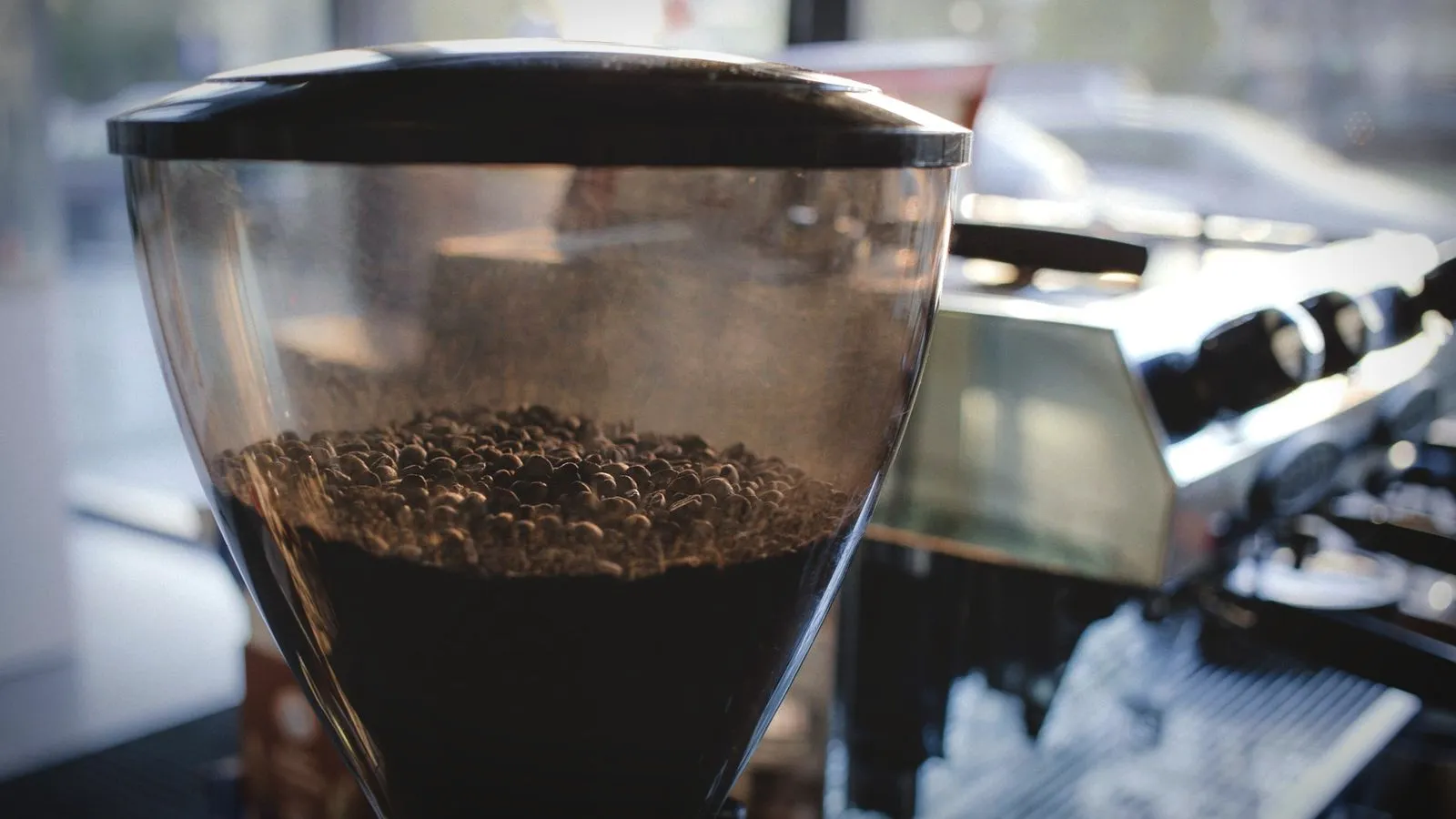
A home espresso machine is only as good as the grinder feeding it, because espresso needs a fine, consistent and finely adjustable grind. Pre-ground coffee goes stale quickly and only behaves well in pressurized baskets.
Budget the two together. On breville.com in October 2026, a Bambino at $299.95 plus a Smart Grinder Pro at $199.95 came to $499.90, against $699.95 for the Barista Express with its grinder built in. The separate pair lets you upgrade one part later; the combined machine saves space. Our guide to the espresso grinder explains burr types, adjustment steps and what to look for.
How much of the work do you want to do?
How much of the work you want to do is the question that separates the machine types more than price does. Hands-on machines reward practice, and one-touch machines reward routine.
Choose a hands-on machine (manual, semi-automatic or semi-automatic with grinder) if you:
- enjoy adjusting grind, dose and time to change the taste;
- want to switch between beans and roast levels often;
- want parts that are easy to service or upgrade.
Choose a one-touch machine (super-automatic or capsule) if you:
- want the same drink every morning with no learning curve;
- share the machine with people who will not tamp or dial in;
- accept less control in exchange for speed.
Whichever you choose, the basic workflow is covered in our guide on how to use an espresso machine.
The bottom line
The best home espresso machines are the ones that match your drinks, your skill and your counter, not the ones at the top of a list. Pick the type first, check pressure, temperature control, steam, basket type and size, and budget for a capable grinder at the same time. Compare prices on each maker’s own US store, because retailer and sale prices change often.
Sources
- Breville US product pages: Bambino BES450, Bambino Plus BES500, Barista Express BES870, Dual Boiler BES920, Smart Grinder Pro BCG820 and the Barista Express instruction book (prices, ThermoJet 3 seconds, PID, 15 bar pump, 54 and 58 mm portafilters, tank sizes, dimensions, 1,700 W, 16 and 60 grind settings, dual wall baskets)
- De’Longhi US store: Dedica Duo EC890 and Magnifica Duo ECAM33080 (list prices, Thermoblock, 15 bar pump, pre-infusion and 9 bar extraction, 15 cm width, 16 g baskets, conical burr grinder, 13 settings, 20 presets) and the 51 mm bottomless portafilter (51 mm size)
- Gaggia North America: Classic Pro E24 (price, brass single boiler, 15 bar pump, 9 bar valve, 58 mm, 72 oz tank, 1,425 W, size, made in Italy)
- Flair Espresso: Flair Classic and Flair 58 Plus 2 (prices, doses, kettle, preheat settings, 58 mm)
- La Marzocco and Rocket: Linea Micra US store page (price, dual boiler, PID, 42 lb, size) and Rocket Espresso Mozzafiato FAST (first brew in as little as 12 minutes on FAST models)