Espresso maker vs espresso machine comes down to pressure. An “espresso maker” usually means a stovetop moka pot or a simple press such as an AeroPress, which brews strong coffee at around 0 to 2 bar of pressure. An espresso machine uses a pump or lever to reach about 9 bar, the pressure that defines true espresso with crema.
Both make good coffee, and plenty of home baristas own one of each. This guide explains how each works, what you can make with it, and which one fits your kitchen.
The short answer
| Moka pot (stovetop espresso maker) | AeroPress | Espresso machine | |
|---|---|---|---|
| Pressure | about 1–2 bar (steam) | low, by hand | about 9 bar (pump or lever) |
| True espresso? | No | No, by its maker’s own definition | Yes |
| Crema | Little to none | None | Yes |
| Milk drinks | With a separate frother | With a separate frother | Built-in steam wand on most models |
| Grind | Medium-fine | Fine to medium | Fine |
| Learning curve | Low | Low | Moderate |
What people mean by “espresso maker”
The words are used loosely. In stores and searches, “espresso maker” can mean:
- A stovetop moka pot, the classic aluminum or steel pot from Italy.
- A manual press such as the AeroPress, which you push by hand.
- A small pump espresso machine, which some brands simply call an espresso maker.
In this guide, “espresso maker” means the non-machine options, and “espresso machine” means a device that brews with a pump or lever at espresso pressure.
How a stovetop espresso maker works
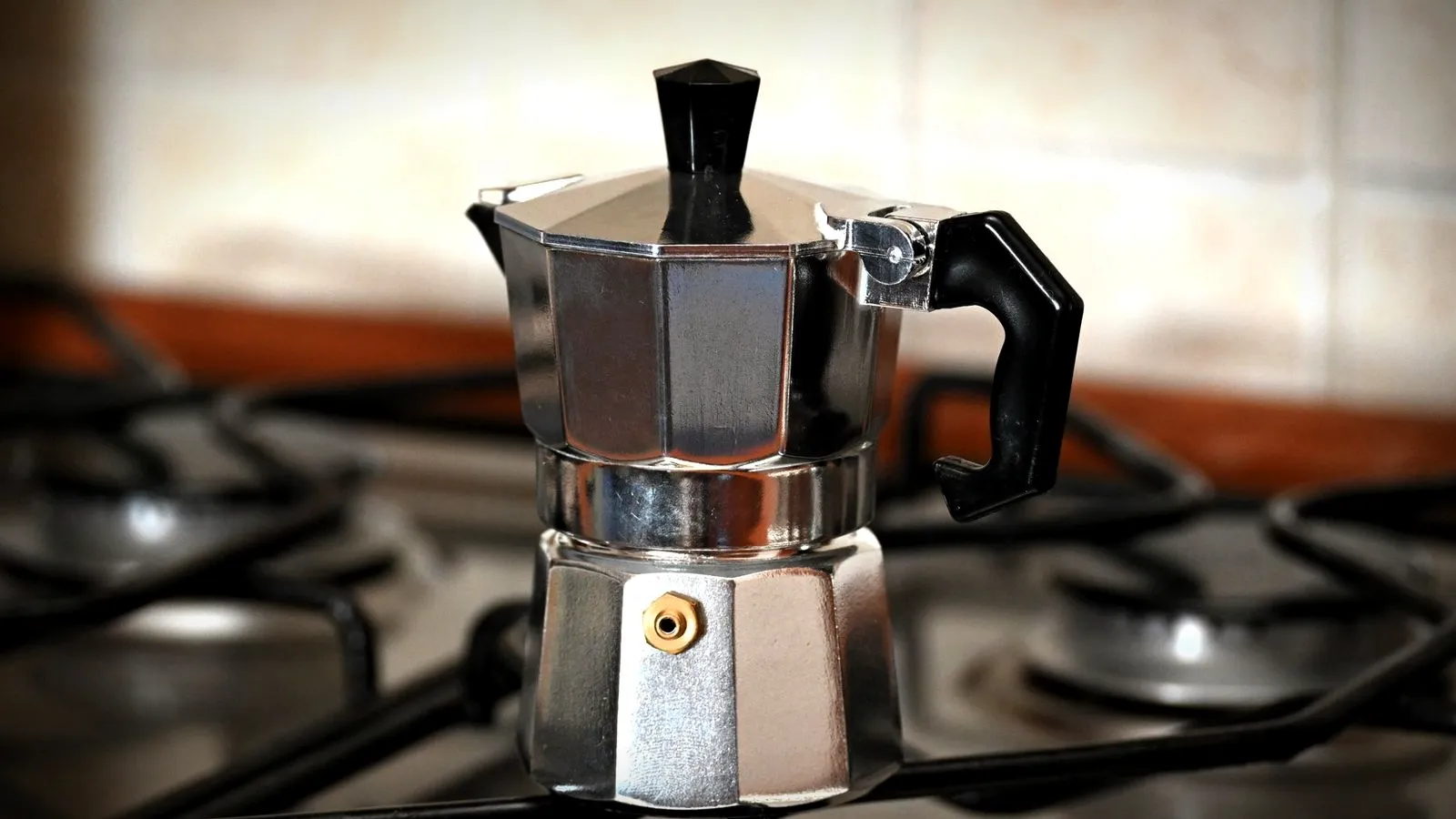
A moka pot has three parts: a lower chamber for water, a funnel-shaped basket for coffee and an upper chamber for the finished brew. As the water heats, steam builds pressure in the sealed lower chamber and pushes hot water up through the coffee.
Laboratory measurements of a stovetop coffee maker show pressures of roughly 1 to 2 bar, a fraction of espresso’s 9. The result is a strong, full-bodied coffee, somewhere between drip coffee and espresso.
Two tips from Bialetti, the company behind the original moka pot: use a grind coarser than espresso, and never press the coffee down in the basket.
Getting the best coffee from a moka pot
- Fill the base with water up to, but not above, the safety valve.
- Fill the basket loosely with medium-fine coffee and level it without pressing.
- Use low to medium heat so the coffee flows out slowly and evenly.
- Take it off the heat as soon as it starts to sputter. The last, gurgling part of the brew tastes bitter and burnt.
- Stop the brewing quickly by running the base under cold water, if you like a sweeter cup.
Many people also start with hot water in the base, which shortens the time the coffee sits on the stove and reduces any burnt taste. Our full guide on how to use a moka pot covers grind size, heat levels and common fixes.
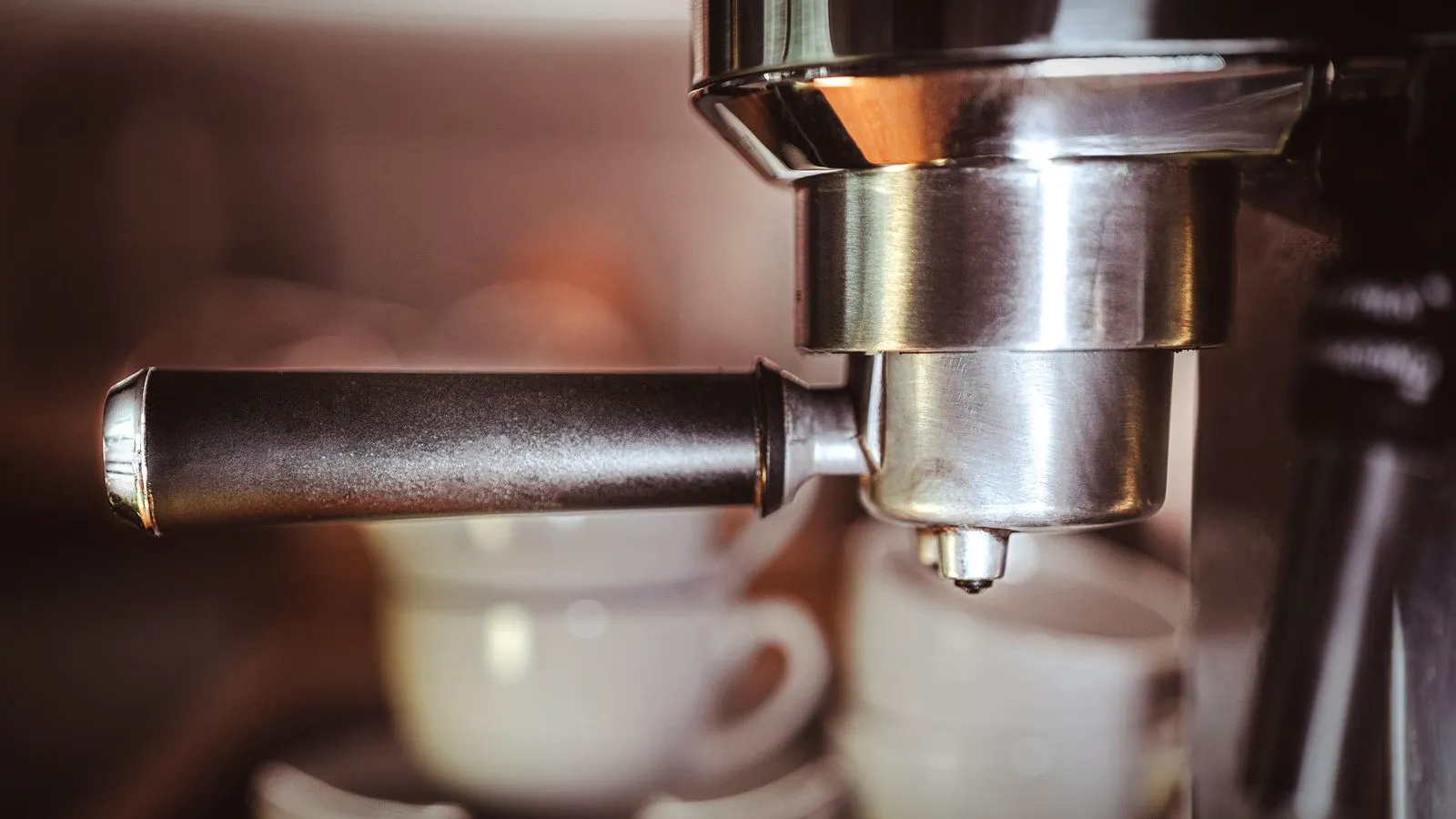
How an espresso machine works
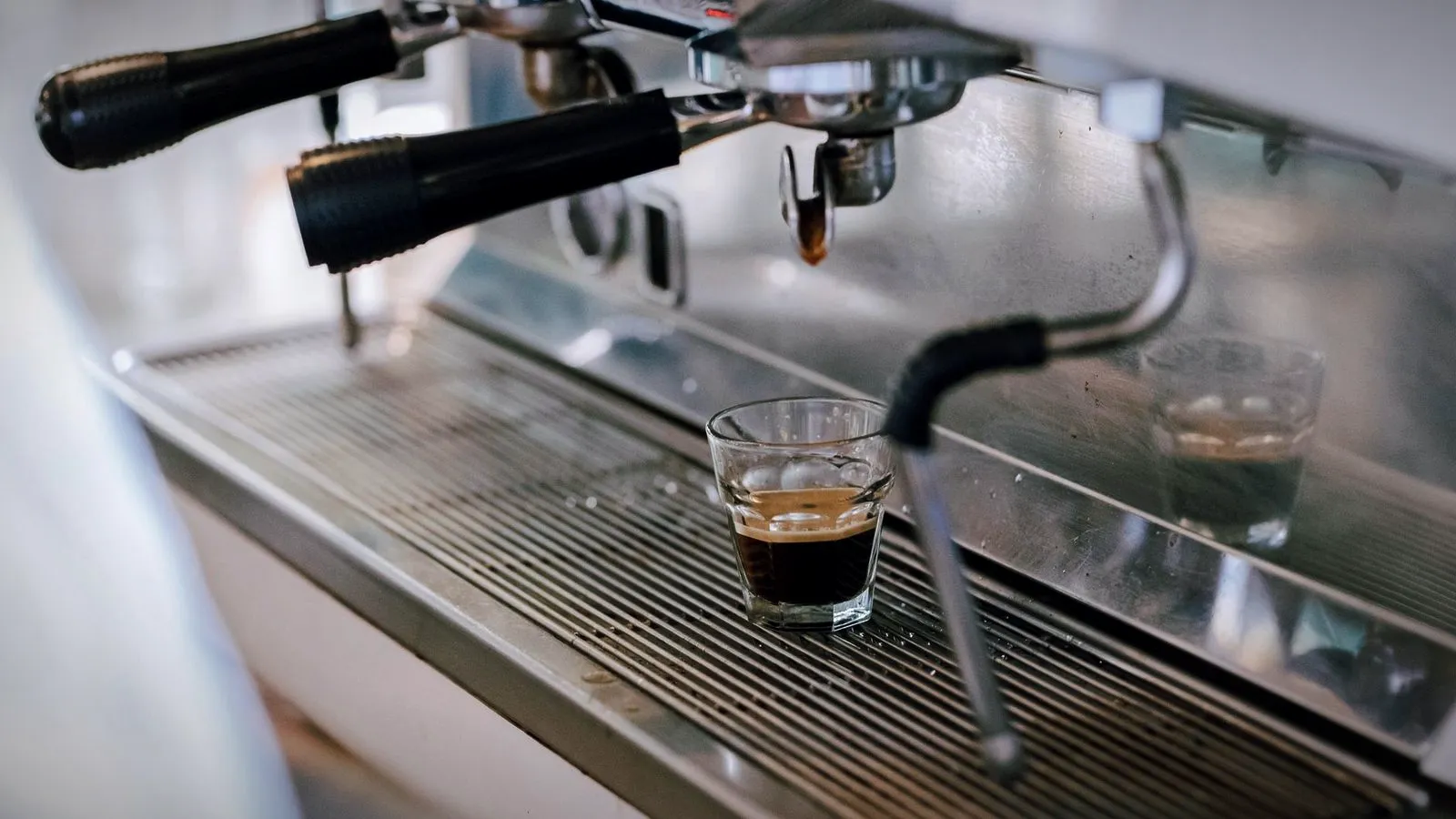
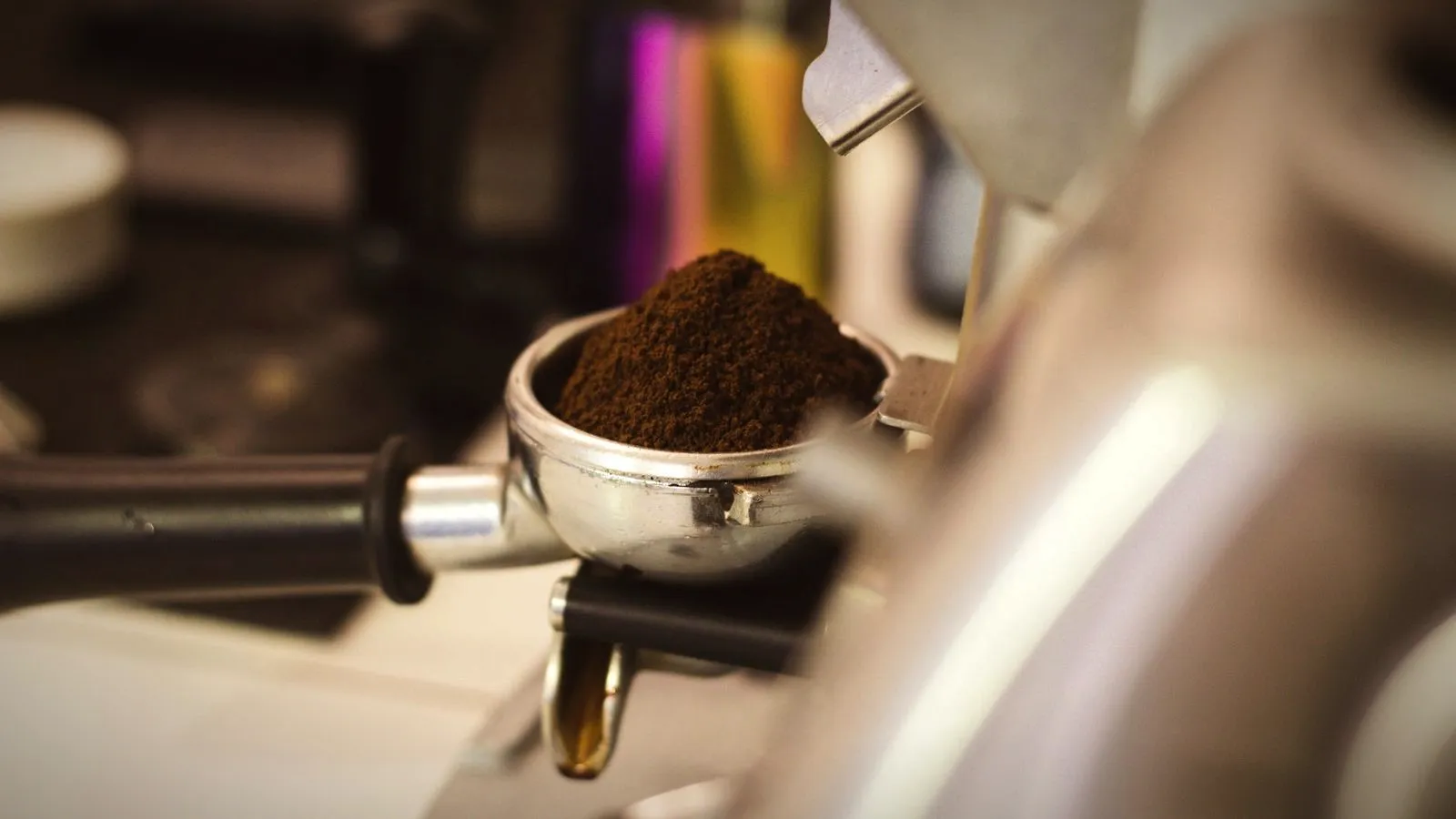
An espresso machine heats water and forces it through a compact, finely ground puck of coffee in a portafilter. The Specialty Coffee Association’s heritage definition of espresso calls for water at 195–205 °F (90–96 °C), forced through the coffee at 9 to 10 atmospheres, with a grind fine enough that brewing takes 20 to 30 seconds. The result is small: Italy’s espresso institute puts a certified espresso at about 25 ml in the cup. The high pressure extracts oils and fine particles, which create espresso’s thick body and crema.
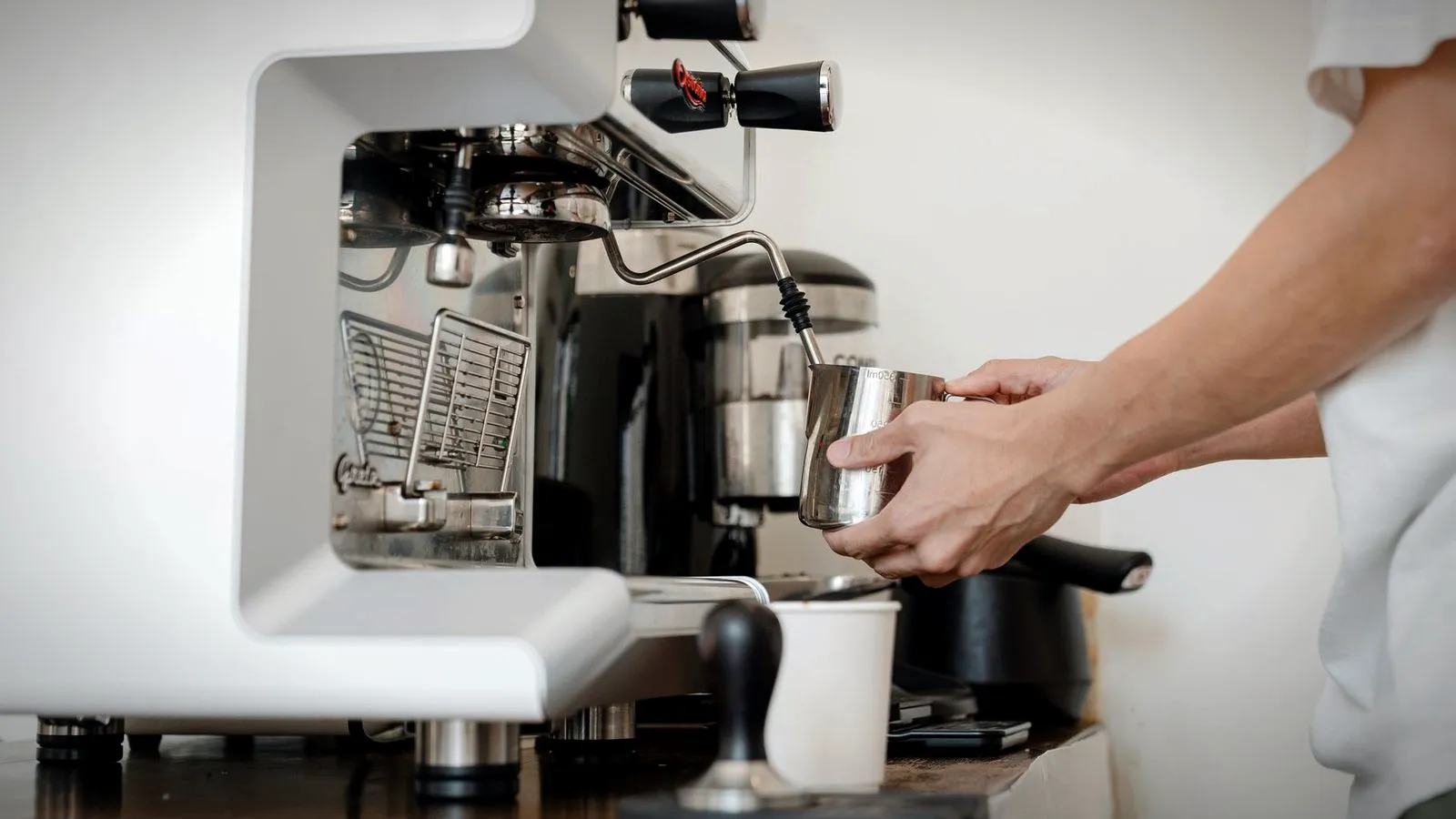
Most home machines also have a steam wand for milk, which is why they can make cappuccinos and lattes as well as straight shots. There are several kinds, from manual lever machines to super-automatic machines that grind and brew at the touch of a button.
Pressure: the real difference
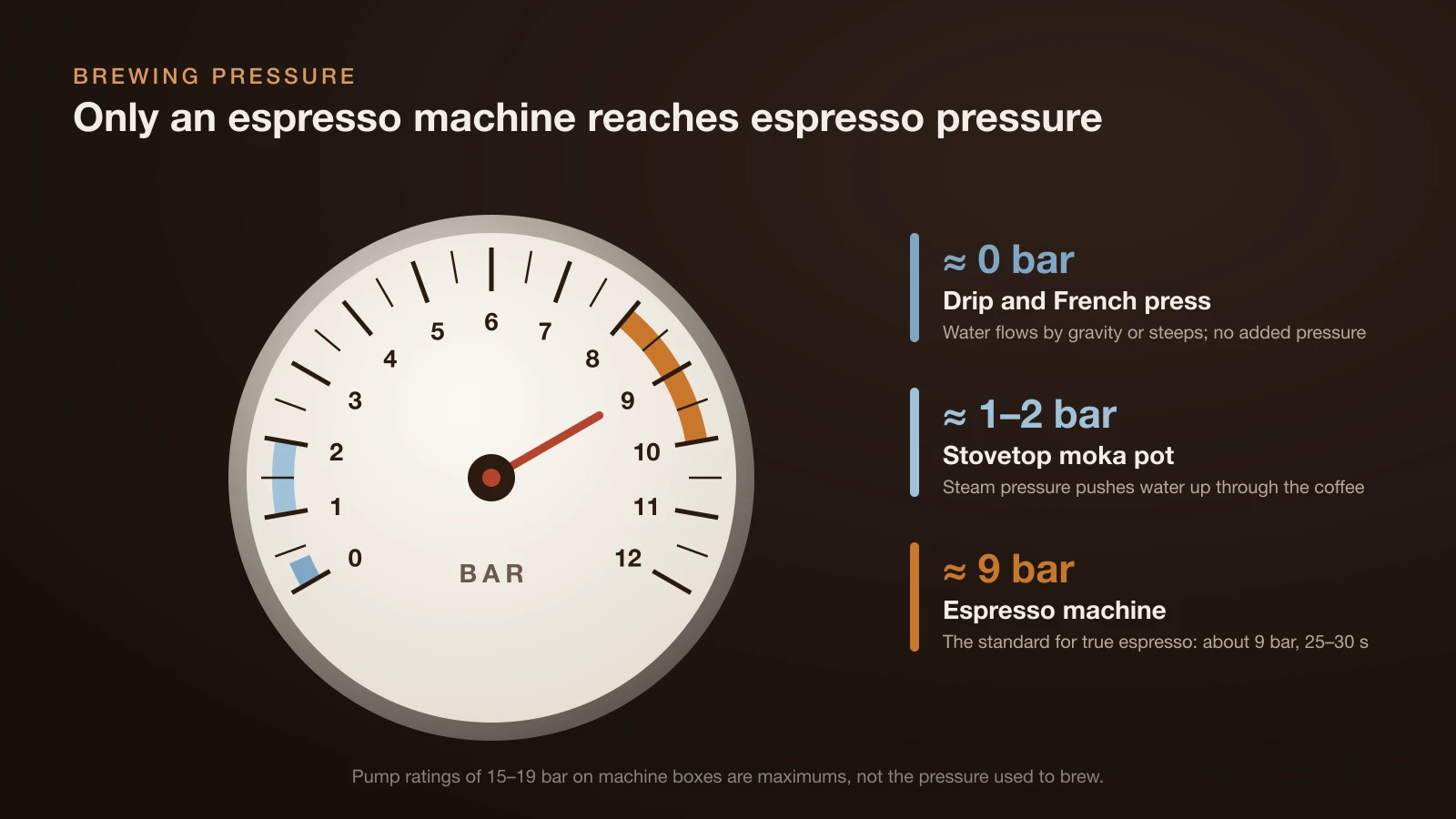
Pressure is what separates espresso from everything else.
- Drip coffee and French press: no added pressure. Water flows through by gravity or the coffee steeps.
- Moka pot: roughly 1–2 bar of steam pressure.
- Espresso machine: about 9 bar. The Specialty Coffee Association’s heritage definition calls for 9 to 10 atmospheres, and in its survey of professional baristas, 9 bar was the most common brewing pressure.
You will often see “15 bar” or “19 bar” on machine boxes. That is the pump’s maximum rating, not the pressure used to brew. A well-set machine brews at around 9 bar either way. A brew pressure gauge shows what your machine actually reaches during a shot.
Other espresso makers: AeroPress, manual presses and portable pumps
- AeroPress: you push water through the coffee by hand. It makes a concentrated, smooth coffee, but the company itself says that by the 9-bar definition, AeroPress does not make espresso.
- Manual lever presses: devices such as the Flair use a long lever to reach espresso pressure without a pump. They can make true espresso, with more effort.
- Portable hand pumps: small devices that you pump by hand to build pressure, designed for travel.
We explain the lever and hand-pump options in our guide to manual espresso machines.
Coffee maker vs espresso machine
A regular drip coffee maker is a different device again. It drips hot water over medium-ground coffee and makes a pot of coffee in a few minutes, with no pressure at all.
- Drip coffee maker: large volumes, simple, inexpensive, hands-off. Best for mugs of black coffee and for several people.
- Espresso machine: small concentrated shots and milk drinks, more hands-on, more expensive, and it needs a good grinder.
If you are deciding based on the drink itself, our comparison of espresso vs coffee covers taste and caffeine.
Can an espresso machine make regular coffee?
Not quite, but it can come close:
- Americano: a shot of espresso topped up with hot water. It tastes closer to drip coffee but keeps espresso’s character.
- Lungo: a longer shot with more water run through the coffee. It is larger and more bitter than a normal shot.
Neither tastes exactly like filter coffee, because espresso’s grind and pressure extract the coffee differently. If you drink both styles every day, many people keep a simple drip brewer or pour-over next to the espresso machine.
Do you really need an espresso machine?
It depends on what you want in the cup:
- You mainly drink lattes and cappuccinos at home: a moka pot plus a milk frother makes a very good, strong milk drink for little money. We show how in how to make a latte.
- You want real espresso with crema, or straight shots: you need an espresso machine or a manual lever press that reaches about 9 bar.
- You mostly drink black coffee in large mugs: a drip coffee maker or pour-over is the better tool.
Which should you buy?
- Choose a moka pot if you want strong coffee on a small budget, like a simple ritual and do not need crema.
- Choose an AeroPress if you want a versatile, forgiving brewer that also travels well.
- Choose an espresso machine if you want true espresso, plan to steam milk regularly and are willing to learn to dial in shots. Budget for a capable grinder too.
Once you have a machine, our step-by-step guide to how to use an espresso machine will get you to a good first shot.
The bottom line
An espresso maker such as a moka pot or AeroPress brews strong coffee at low pressure; an espresso machine brews true espresso at about 9 bar. The machine makes crema, straight shots and steamed milk; the maker is cheaper, simpler and still makes excellent strong coffee. Choose by the drinks you want and how much time you want to spend at the counter.
Sources
- Istituto Espresso Italiano: Certified Italian Espresso (about 25 ml per espresso)
- Specialty Coffee Association: Defining the ever-changing espresso (archived; heritage definition: 9 to 10 atmospheres, 195–205 °F, 20–30 seconds; barista survey: 9 bar most common)
- Navarini et al., Applied Thermal Engineering (2009): Experimental investigation of steam pressure coffee extraction in a stove-top coffee maker
- AeroPress: Frequently asked questions (espresso definition)
- Bialetti: Ground coffee for moka should never be pressed