Manual espresso machines make espresso with pressure you create by hand, using a lever, a press or a small pump, instead of an electric pump. Done well, they reach the same roughly 9 bar as a pump machine and can make outstanding espresso, with more control and more effort.
The term is confusing, because some brands also call ordinary pump machines “manual”. This guide explains every kind, how they work, and who they suit.
The short answer
| Type | Where the pressure comes from | Electricity | Steams milk | Best for |
|---|---|---|---|---|
| Spring lever | You compress a spring; the spring pushes the water | Usually, for the boiler | Often | Traditional espresso, repeatable pressure |
| Direct lever | Your arm pushes the water directly | Usually, for the boiler | Often | Full control over pressure |
| Manual press | A long lever on a countertop press | Mostly no (kettle water) | No | Great espresso on a budget, quiet |
| Portable hand pump | A small pump you work by hand | No (kettle water) | No | Travel and camping |
| “Manual” pump machine | An electric pump (some retail names) | Yes | Usually | Everyday home use |
What is a manual espresso machine?
A true manual espresso machine is one where you, not an electric pump, provide the brewing pressure. The lever machine dates back to the 1940s: in 1947, Achille Gaggia patented a lever-piston mechanism in which a spring, loaded by a lever, pushes the piston through the coffee. Gaggia traces the “crema naturale” we now expect on espresso to his earlier 1938 pressure-brewing patent.
In stores, “manual” is used more loosely. De’Longhi, for example, calls its Stilosa, a machine with a 15-bar electric pump, a “manual espresso machine”, because you dose, tamp and start the shot yourself. Machines like that are really semi-automatic pump machines. The dividing line is the source of pressure: a semi-automatic’s powered pump runs while its switch is on, while a lever machine relies on your arm or on a spring you load with the lever.
How do manual espresso machines work?
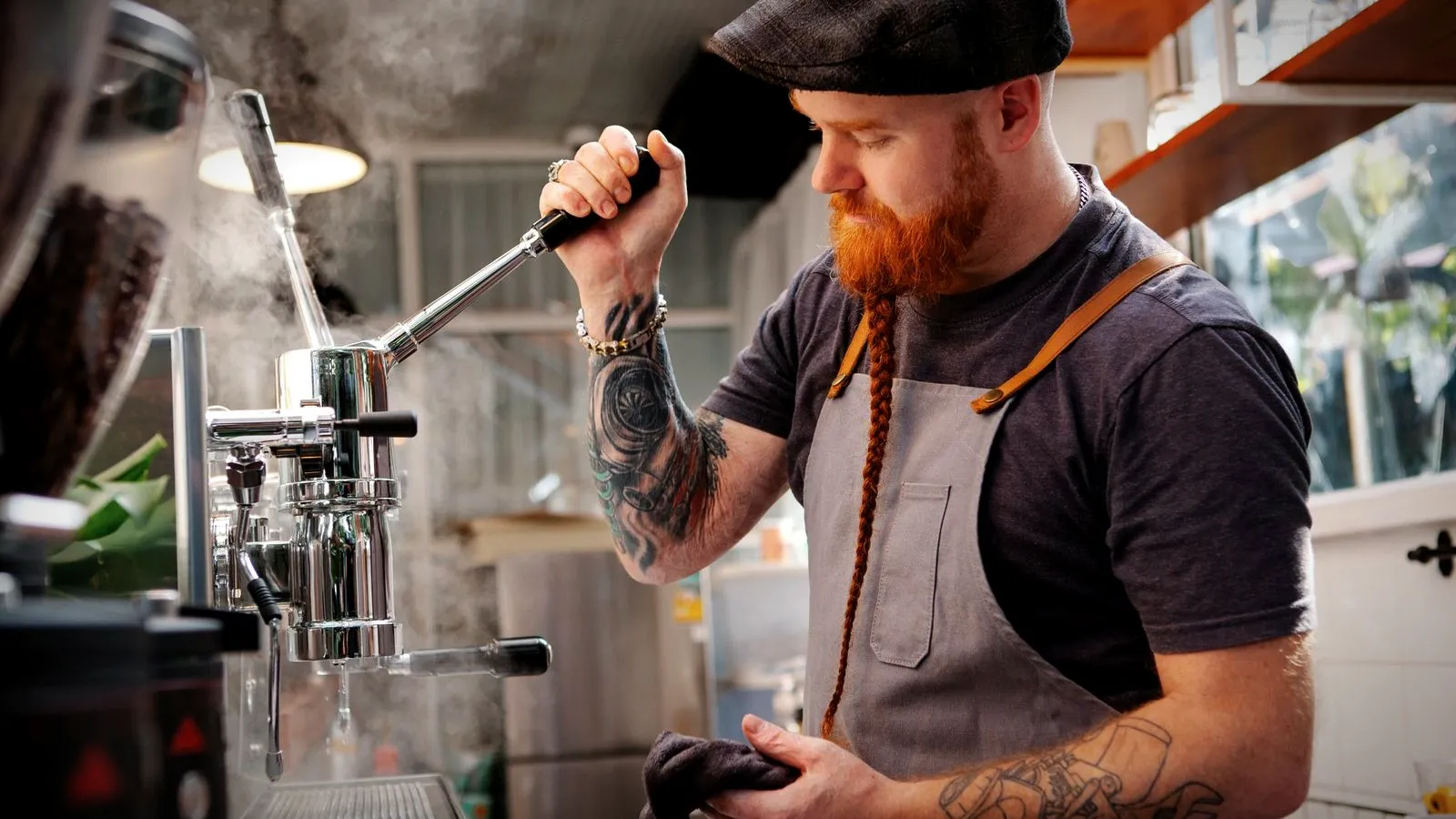
Spring lever machines
Pulling the lever down compresses a strong spring and lets water into the chamber above the coffee. As you release the lever, the spring pushes the piston down and forces water through the coffee. Pressure starts high and falls gently as the spring extends, and because the spring sets the force, shots are easier to repeat than on a direct lever.
Direct lever machines
On a direct lever, there is no spring: your arm drives the piston, so you control the pressure throughout the shot. That gives full control and a real learning curve. Our guide to lever espresso machines compares spring and direct levers in more detail.
Manual presses
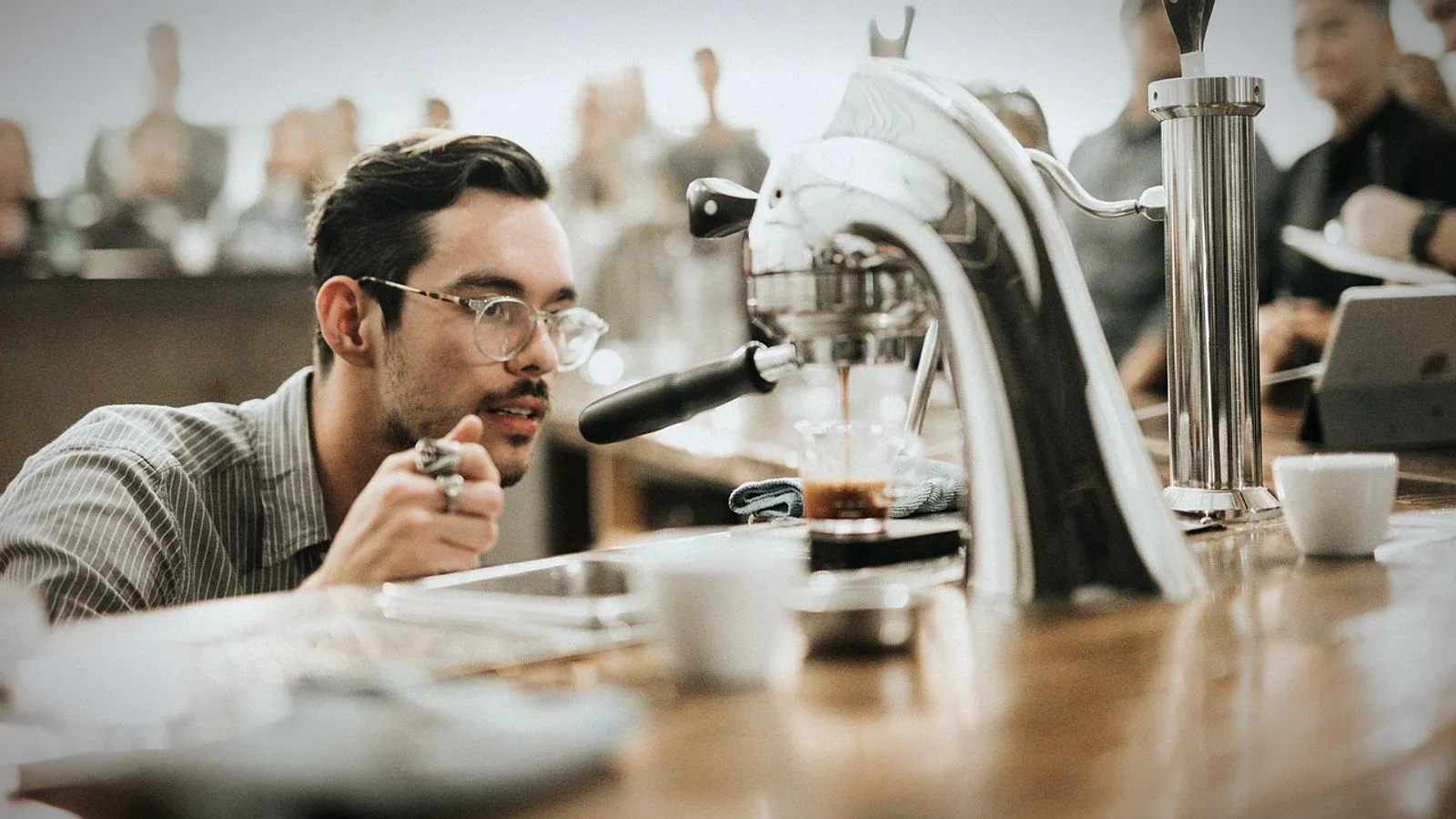
A manual press is a countertop stand with a lever and a brew chamber. You preheat the brew parts, add ground coffee, fill the chamber with just-off-the-boil water from a kettle and pull the lever. Flair, a well-known maker, describes its classic model as a completely manual lever press and marks 6–9 bar as the target zone on its pressure gauge, with over 12 bar in the danger zone. Some models, such as the Flair 58, add an electric preheat system for more stable temperature.
Portable hand pumps
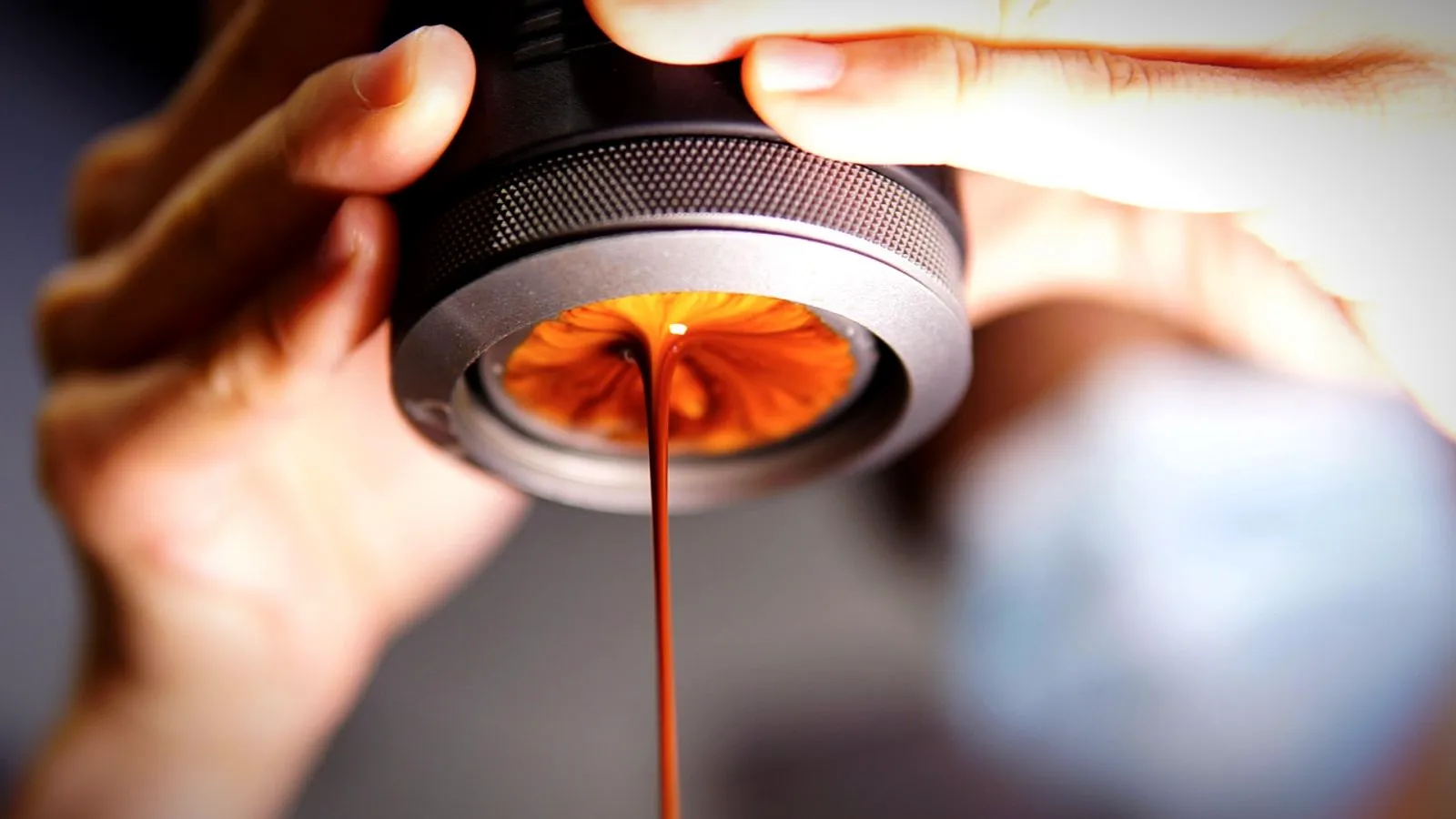
Portable espresso makers are small cylinders with a built-in pump. You add ground coffee, pour in boiling water and pump by hand to build pressure. Wacaco’s Nanopresso, for example, has an 8 g coffee basket and an 80 ml water tank. They are made for travel and camping rather than daily kitchen use.
Are manual espresso machines better?
They are not better or worse, just different.
Advantages
- Control. You feel and adjust the pressure, especially on direct levers and presses.
- Quiet. No pump noise, only the sound of the lever.
- Fewer parts. No pump to wear out, and hand presses have almost nothing electrical.
- Portability. Presses and hand pumps work anywhere you can boil water.
Disadvantages
- Learning curve. It takes practice to pull consistent shots.
- Preheating. Metal parts must be warm, or the shot cools and tastes sour. Flair’s own guide stresses preheating.
- One shot at a time. Slow if you are making drinks for several people.
- Milk. Presses and portable pumps cannot steam milk; you need a separate steamer.
What you need besides the machine
A manual machine is only as good as its grind. Every manual option needs:
- An espresso-capable burr grinder that can grind fine and adjust in small steps. This is the most important purchase.
- A kettle, ideally with temperature control, for presses and portable pumps.
- A scale that reads to 0.1 g for dose and yield.
- A milk frother or steamer if you want milk drinks and your machine has no steam wand.
How to pull a shot on a manual espresso press
- Preheat the brew chamber and portafilter with hot water, following the maker’s instructions.
- Grind and dose the amount your press’s guide gives, for example 12–18 g on the Flair Classic.
- Distribute and tamp level.
- Assemble and fill the chamber with water just off the boil.
- Pull the lever smoothly and steadily, keeping the gauge in the 6–9 bar range until you reach your target yield.
- Taste and adjust the grind: finer if the shot is fast and sour, coarser if it is slow and bitter.
For the full routine on a pump machine, see how to use an espresso machine.
Common mistakes with manual espresso machines
- Skipping the preheat. Cold metal pulls heat from the water, and the shot comes out sour and thin.
- Grinding too coarse. Without enough resistance you cannot build pressure, however hard you pull.
- Pushing too hard. More pressure is not better. Stay in the target range; Flair marks anything over 12 bar as a danger zone.
- Changing several variables at once. Adjust the grind first, and keep the dose the same while you learn.
- Ignoring the gauge. If your press has one, use it; it is the fastest way to learn what a good pull feels like.
Manual vs semi-automatic vs super-automatic
| Manual (lever or press) | Semi-automatic (pump) | Super-automatic | |
|---|---|---|---|
| Pressure | Your arm or a spring | Electric pump | Electric pump |
| Grinding | Separate grinder | Separate or built-in grinder | Built-in grinder |
| Control | Highest | High | Low |
| Effort | Highest | Moderate | Push a button |
| Milk | Separate steamer (presses) | Steam wand | Often automatic |
If you want the opposite of a manual machine, see our guide to super-automatic espresso machines. If you are still deciding whether you need a machine at all, read espresso maker vs espresso machine.
Who should buy a manual espresso machine?
- Hobbyists who enjoy the ritual and want to learn how pressure shapes a shot.
- Straight espresso drinkers who rarely need steamed milk.
- Small kitchens and quiet homes, where a compact, silent press fits better than a large machine.
- Travelers and campers, who want real espresso away from home with a portable pump.
If you want fast lattes for several people every morning, a semi-automatic or super-automatic machine will suit you better. A compact example is compared in Breville Bambino vs Bambino Plus.
The bottom line
Manual espresso machines let you make espresso with pressure from your own hands, through a spring lever, a direct lever, a countertop press or a portable pump. They can match a pump machine’s espresso and give you more control, in exchange for practice, preheating and slower workflow. Pair any of them with a good grinder, and check whether “manual” on a listing actually means a pump machine.
Sources
- Flair Espresso: Espresso makers, Flair Classic with Pressure Kit brew guide (12–18 g dose, 6–9 bar target, over 12 bar danger zone), Flair 58 manual (preheat system) and Espresso University: basics of espresso (preheating)
- Wacaco: Nanopresso (basket and tank capacity)
- De’Longhi: Stilosa EC260BK (a 15-bar pump machine sold as a “manual espresso machine”)
- Gaggia: 85 years of heritage: 1938–1947 (1938 patent and “crema naturale”, 1947 spring lever-piston patent)