In the Breville Barista Pro vs Express comparison, the Pro adds a ThermoJet heater that Breville says reaches extraction temperature in 3 seconds, a 30-setting grinder and an LCD with a shot clock. The Express keeps a Thermocoil heater, 16 grind settings and an analog pressure gauge. Both use a 54 mm portafilter and a 2 L tank.
Both are Breville espresso machines with a built-in grinder, and three close relatives, the Express Impress, the Touch and the Touch Impress, add assisted tamping or a touchscreen. If you already own a grinder, our Breville Bambino vs Bambino Plus comparison covers the compact models without one. Every figure below comes from Breville’s US product pages and instruction books.
The short answer
| Barista Express (BES870) | Barista Pro (BES878) | |
|---|---|---|
| Heating | Thermocoil, PID | ThermoJet, PID |
| Stated heat-up time | Not stated | 3 seconds |
| Grind settings | 16 | 30 |
| Feedback | Analog pressure gauge | LCD with shot clock |
| Milk | Manual steam wand | Manual steam wand |
| Pump and extraction | 15 bar pump, low-pressure pre-infusion, 9 bar extraction | Same |
| Portafilter | 54 mm | 54 mm |
| Water tank | 67 oz (2 L) | 67 oz (2 L) |
| Bean hopper | 8.8 oz (250 g) | 8.8 oz (250 g) |
| Power | 1,600 W | 1,680 W |
| Weight | 22.09 lb | 20.92 lb |
| Dimensions as listed (W × D × H) | 15.9 × 13.1 × 12.4 in | 16.1 × 13.8 × 13.1 in |
| Warranty | 1 year limited | 2 year limited |
Barista Express vs Pro: heating and heat-up time
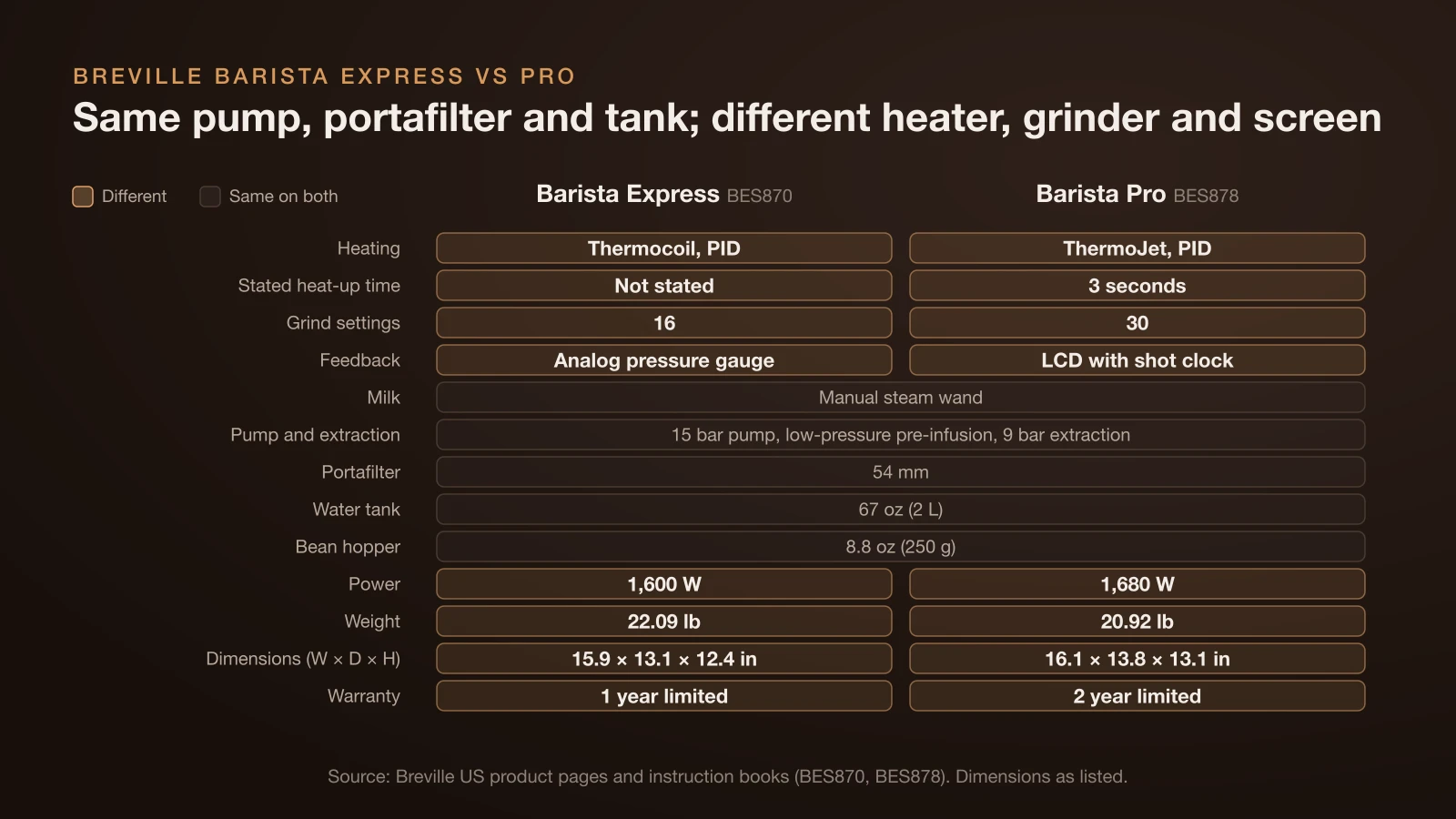
The biggest engineering difference between the Barista Express and the Barista Pro is the heater. The Express uses a Thermocoil, an integrated stainless steel water coil with PID temperature control, which Breville says delivers water at about 93 °C (200 °F). The Pro uses Breville’s ThermoJet system, which the company says reaches the ideal extraction temperature in 3 seconds.
Breville does not publish a heat-up time for the Express. Its manual says the POWER button flashes while the machine heats, and all the button lights come on once it reaches operating temperature. For comparison, the manual for the Express Impress, another Thermocoil machine, says its heating light can flash for up to 55 seconds.
Breville also claims ThermoJet uses up to 32% less energy a year than a Thermoblock heating system, based on its own internal testing in November 2022. The pump side is identical: both machines list a 15 bar Italian pump that runs a low-pressure pre-infusion followed by 9 bar extraction.
Grinder: 16 settings vs 30
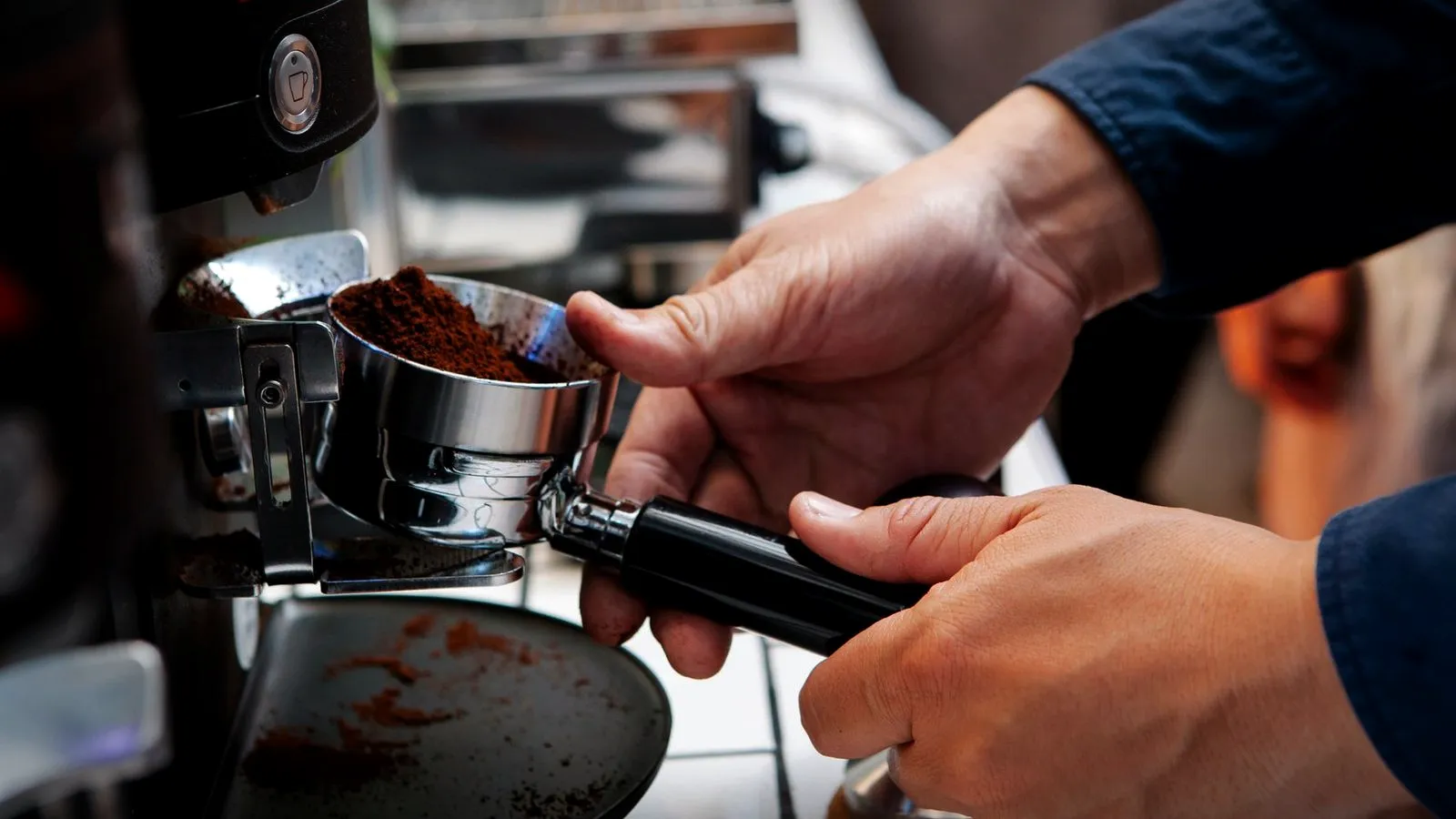
Both machines grind with steel conical burrs straight into the same 54 mm portafilter, but the Pro splits the range into almost twice as many steps.
- Barista Express: 16 grind settings. Breville’s manual suggests starting at setting 5.
- Barista Pro: 30 grind settings, with the chosen number shown on the LCD. The default is 15, and a bar on the screen shows whether a change will give a faster or slower pour. Default grind times are 9.5 seconds for a single and 13 seconds for a double.
Both manuals let you move the upper burr to shift the whole range finer or coarser if you run out of settings. More steps mean smaller changes between them, which helps when a shot is close but not quite right; our guide to espresso grind size explains what each adjustment does to the shot.
Dosing is the same on both. Breville’s manuals rate the 1 cup basket at about 8–11 g and the 2 cup basket at 16–19 g, and the product pages name 18 g as the ideal dose. Both include the Razor dose trimming tool and a dosing funnel, and both manuals suggest tamping with about 22–33 lb (10–15 kg) of pressure.
Pressure gauge vs LCD: how each machine gives feedback
The Express shows extraction pressure on an analog gauge, while the Pro replaces the gauge with an LCD that shows a shot clock and your settings.
On the Express, the dial has a marked espresso range. Breville’s extraction guide ties each zone to what you see in the cup: within range, flow starts after 8–12 seconds and the shot takes 25–30 seconds. Under range, it runs in 20 seconds or less, and over range, it takes more than 35 seconds and tastes bitter. Our guide to the espresso machine pressure gauge explains how to read one.
The Pro has no gauge. Its shot clock counts up from the moment pre-infusion starts, and the screen shows the grind setting, grind time and shot temperature, which you change from a menu. The Express also lets you adjust water temperature, but through a button combination: Breville’s Advanced Temperature Mode moves it in steps of about 1 °C (2 °F), up to about 2 °C (4 °F) either side of the default.
Milk and steam: what Breville claims
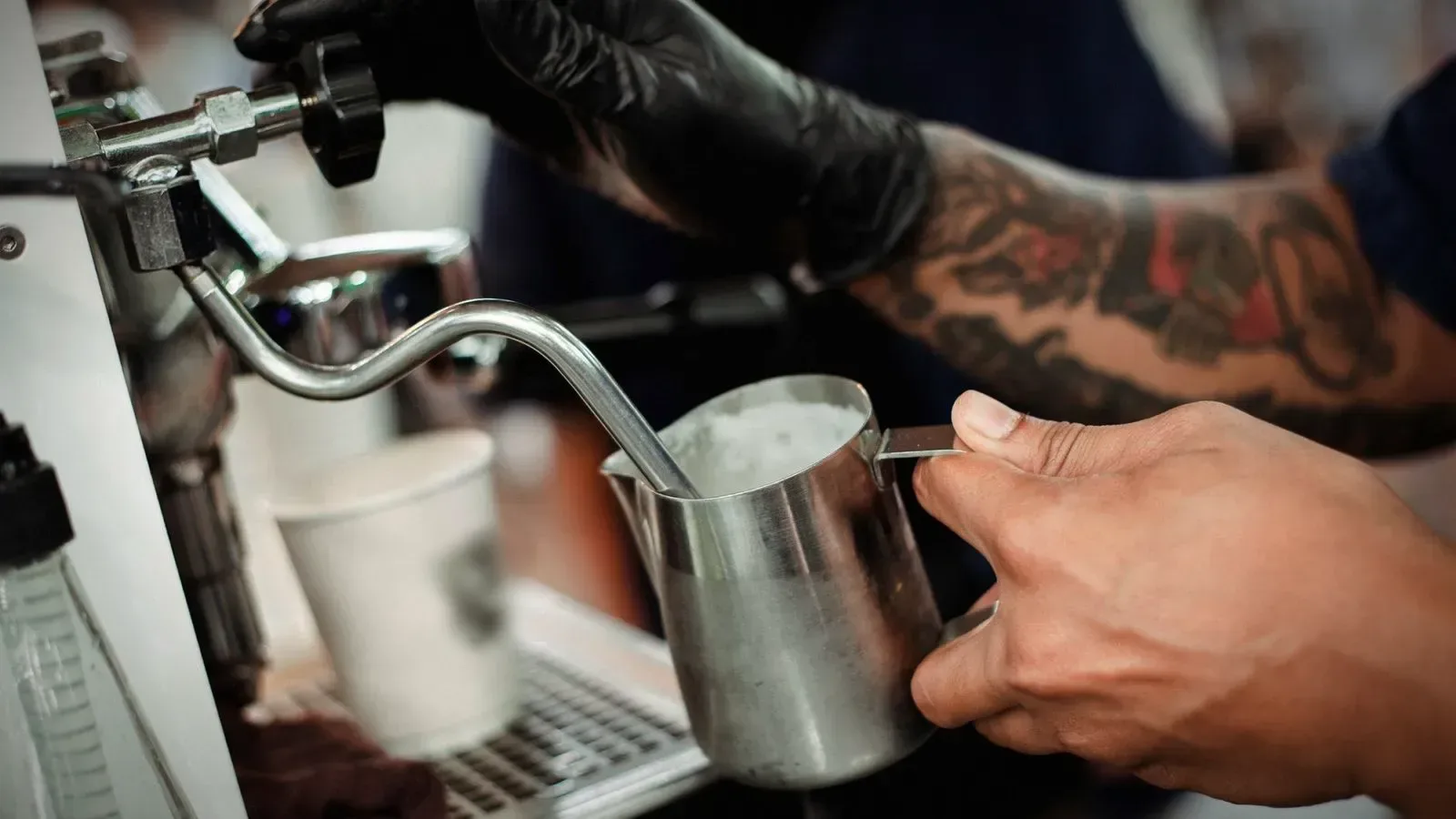
Both machines texture milk by hand with a 360° swivel steam wand, and Breville describes the wands on both product pages in the same words: designed to quickly turn milk into smooth microfoam. Neither page nor manual gives a steam-up or steaming time, so there is no official figure to compare speed.
The manuals do describe the process differently. On the Express, the Steam/Hot Water light flashes while the machine heats to make steam, and the wand is ready when it stops. The Express also shuts off steam after 5 minutes of continuous use. On the Pro, the LCD shows STEAM when the wand is activated.
Both have a separate hot water outlet for Americanos and warming cups, and both manuals give the same milk target of 60–65 °C (140–150 °F).
Barista Express Impress, Touch and Touch Impress
Breville’s other Barista models add either assisted tamping, on the Impress versions, or a touchscreen with automatic milk texturing, on the Touch versions.
| Express Impress (BES876) | Touch (BES880) | Touch Impress (BES881) | |
|---|---|---|---|
| Heating | Thermocoil, PID | ThermoJet, 3 seconds | ThermoJet, 3 seconds |
| Grind settings | 25 | 30 | 30 |
| Tamping | Assisted, 22 lb (10 kg) with 7° twist | Manual | Assisted, 22 lb (10 kg) with 7° twist |
| Interface | Buttons and pressure gauge | Touchscreen | Touchscreen |
| Milk | Manual wand | Automatic or manual | Automatic, with dairy, soy, almond and oat settings |
| Bean hopper | 8.8 oz (250 g) | 8.8 oz (250 g) | 12 oz (340 g) |
| Power | 1,750 W | 1,680 W | 1,750 W |
| Weight | 22.6 lb | 21.8 lb | 24.18 lb |
| Dimensions as listed (W × D × H) | 16.6 × 14.4 × 12.2 in | 15.7 × 12.6 × 12.4 in | 16.3 × 13.8 × 13.3 in |
| Warranty | 2 year limited | 2 year | 2 year limited |
Barista Express vs Express Impress
The Express Impress keeps the Express’s Thermocoil heater, button panel and pressure gauge, and adds the Impress Puck System. It calculates the dose from your last grind, shows it on a dose level indicator and corrects the next dose if the puck came out high or low. A lever then tamps with a fixed 22 lb (10 kg) press finished with a 7° twist. It also moves from 16 to 25 grind settings.
Barista Pro vs Barista Touch
The Pro and the Touch share the same espresso hardware: ThermoJet heating, 30 grind settings, a 54 mm portafilter and an 8.8 oz hopper. The Touch replaces buttons and the LCD with a touchscreen that offers 5 preset café drinks and saves 8 custom ones. Its automatic steam wand lets you set milk from 40–75 °C (104–167 °F) with 8 texture levels, or texture by hand.
Barista Touch vs Touch Impress
The Touch Impress adds assisted tamping to the Touch formula, plus a 12 oz (340 g) hopper and milk settings for dairy, soy, almond and oat. Breville lists Baratza European Precision Burrs for it, with 30 settings. Its menu adds cold drinks: Breville says cold brew extracts in under 3 minutes and cold espresso in just under 2 minutes.
Cleaning and maintenance differences
All five machines run a back-flushing cleaning cycle with a cleaning disc and a tablet when they ask for one, and each manual keeps it separate from descaling. The prompt differs: a flashing Clean/Descale light on the Express and Express Impress, a FLUSH alert on the Pro’s LCD and an on-screen message on both Touch models. On the Express, the cycle lasts about 5 minutes.
Water filter intervals differ too. The Express and Pro manuals say to replace the tank filter every 2 months, while the Express Impress, Touch and Touch Impress manuals say every 3 months. For the cycle itself and what a backflush does, see how to backflush an espresso machine; for the daily and weekly routine, see how to clean an espresso machine.
Which Breville Barista model fits which priority?
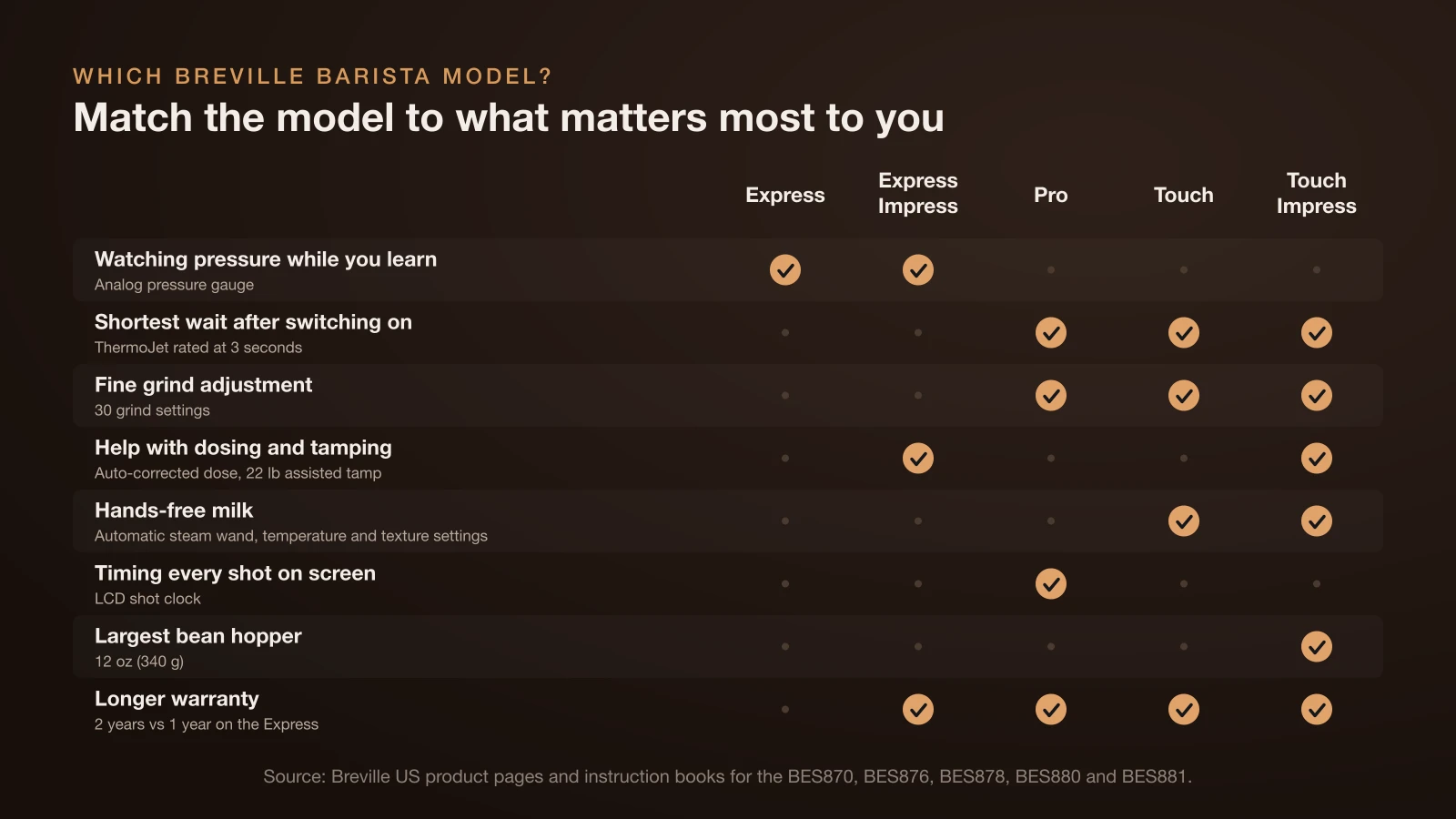
Neither the Express nor the Pro is better for everyone, so match the model to what matters most to you.
| Your priority | Models that fit | Why, per Breville |
|---|---|---|
| Watching pressure while you learn | Express, Express Impress | Analog pressure gauge |
| Shortest wait after switching on | Pro, Touch, Touch Impress | ThermoJet rated at 3 seconds |
| Fine grind adjustment | Pro, Touch, Touch Impress | 30 grind settings |
| Help with dosing and tamping | Express Impress, Touch Impress | Auto-corrected dose, 22 lb assisted tamp |
| Hands-free milk | Touch, Touch Impress | Automatic steam wand with temperature and texture settings |
| Timing every shot on screen | Pro | LCD shot clock |
| Largest bean hopper | Touch Impress | 12 oz (340 g) |
| Longer warranty | Pro, Express Impress, Touch, Touch Impress | 2 years vs 1 year on the Express |
Whichever you choose, the workflow is the same once the machine is hot; our guide on how to use an espresso machine covers dosing, tamping and pulling the first shot.
The bottom line
The Barista Pro and Barista Express make espresso the same way, with the same pump, portafilter, baskets and tank. The Pro heats faster, adjusts the grind in finer steps and swaps the gauge for a screen with a shot clock, while the Express keeps an analog gauge and simpler controls. The Impress versions add help with dosing and tamping, and the Touch versions add a touchscreen and hands-free milk.
Sources
- Breville US product pages: Barista Express BES870, Barista Pro BES878, Barista Express Impress BES876, Barista Touch BES880 and Barista Touch Impress BES881 (heating systems, 3 second heat-up, 200 °F water, energy claim, grind settings, pump, tank, hopper, power, weight, dimensions, warranty, steam wand description, milk settings, presets, cold drinks)
- Breville instruction books: Barista Express BES870, Barista Pro BES878, Barista Express Impress BES876, Barista Touch BES880 and Barista Touch Impress BES881 (heating light up to 55 seconds, starting grind settings, grind times, upper burr, basket doses, tamp pressure, espresso range guide, shot clock, temperature adjustment, steam behavior, milk temperature, cleaning cycles, filter intervals)