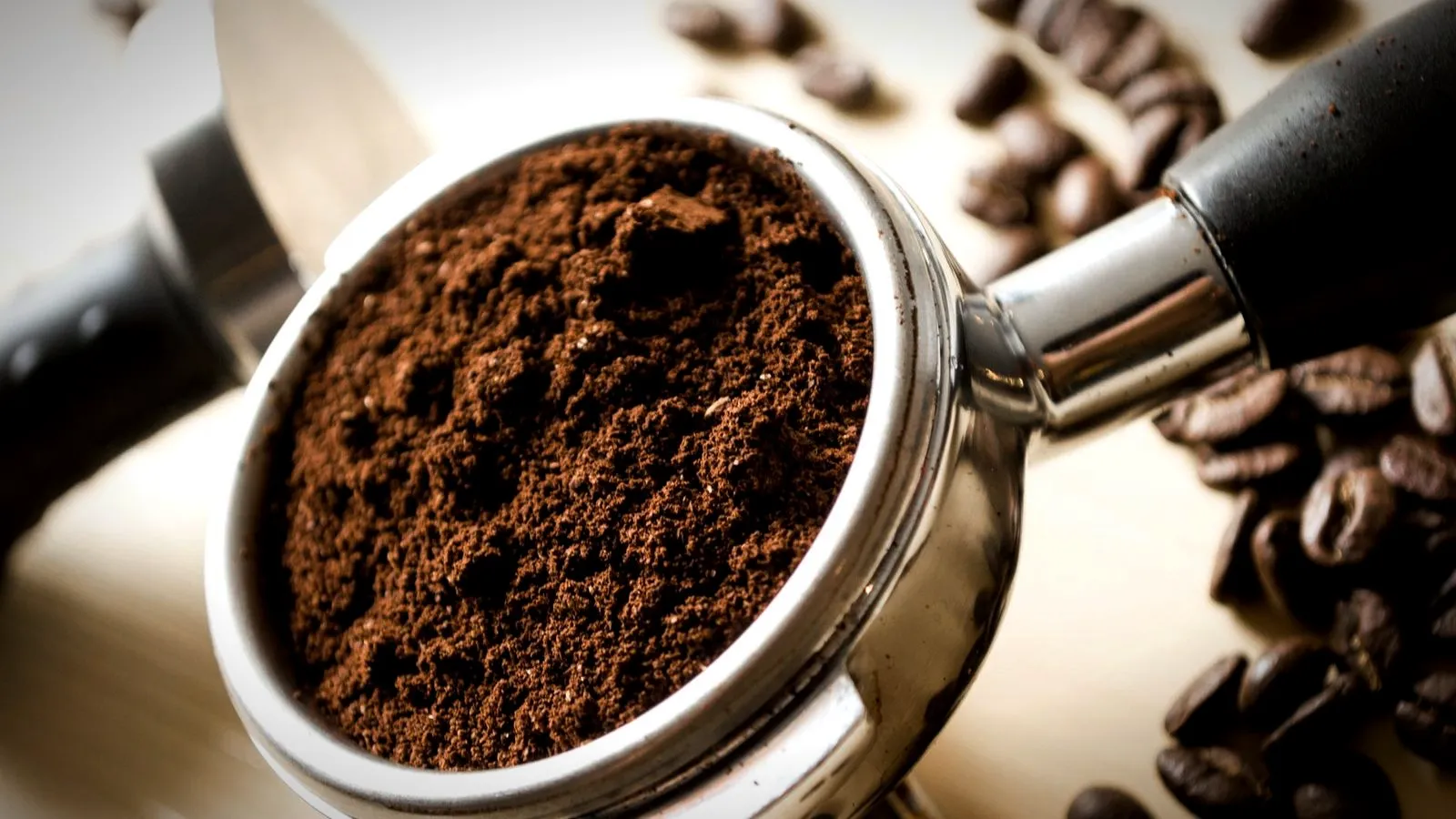
The right espresso grind size is fine, about like table salt and much finer than drip coffee, but never a flour-like powder. There is no single correct setting. The right grind is the one that turns a double dose of about 18 g of coffee into about 36 g of espresso in 25–30 seconds.
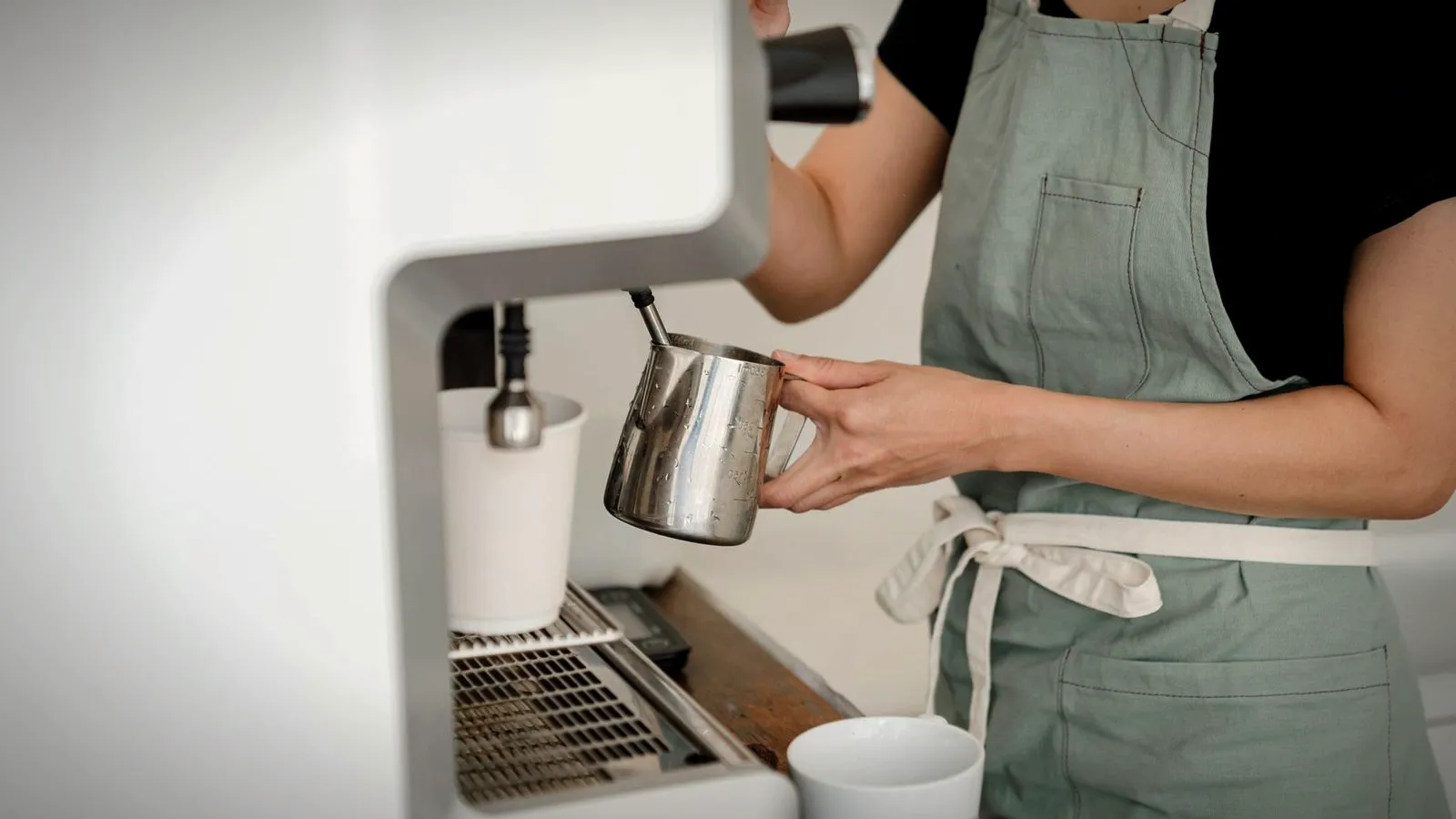
Grind is the main control you have over a shot. This guide covers what espresso grounds should look like, how grind changes shot time and taste, and how to adjust it in small steps. If you are new to pulling shots, our step-by-step guide on how to use an espresso machine covers dose, tamp and brewing first.
The short answer
| Question | Answer |
|---|---|
| How fine? | Fine, like table salt; gritty, not powdery |
| Target shot | About 18 g in, 36 g out, in 25–30 seconds |
| Too fast (under 20 s), sour, thin | Grind finer |
| Too slow (over 35 s), bitter, harsh | Grind coarser |
| How much to change | One small step, then pull another shot |
| Pre-ground coffee | Use a pressurized (dual-wall) basket |
| Moka pot | Coarser than espresso: medium-fine |
What grind size is espresso?
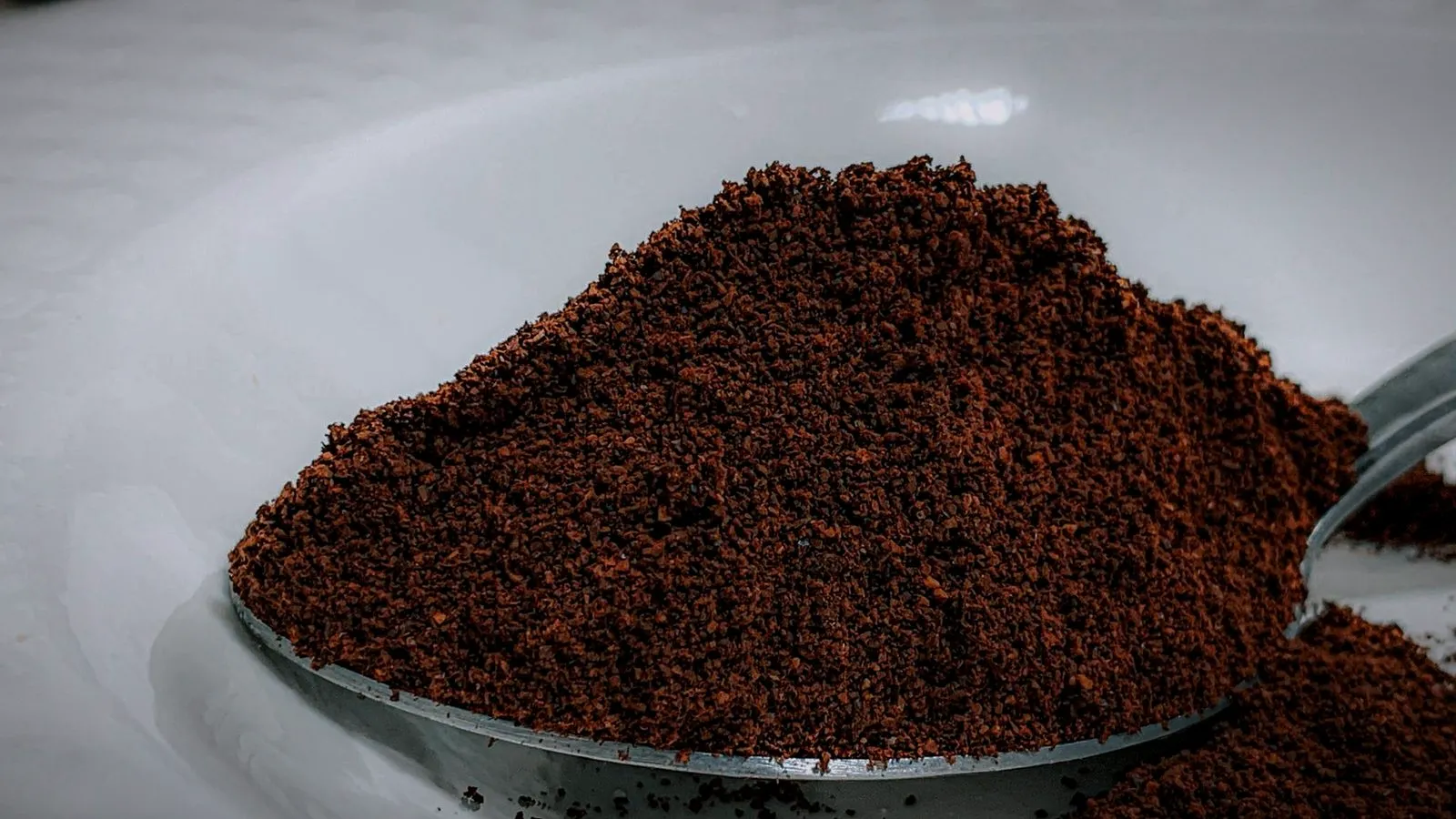
The best grind size for espresso sits at the fine end of the scale. The National Coffee Association describes it as fine, like table salt. Breville’s instruction book for the Barista Express adds the other limit: fine, but not so fine that it turns powdery.
Too fine looks like powder and feels like flour between your fingers, according to Breville. At that point water struggles to pass through the coffee even under pump pressure, and the shot comes out dark and bitter. Too coarse, and water rushes through, giving a pale, weak shot.
Why espresso needs a fine grind
Espresso brews in seconds, not minutes. Fine particles expose more surface to the water and pack into a dense bed that slows the flow, so the pump’s pressure has something to push against. That resistance is what lets the water extract enough flavor in such a short time.
The Specialty Coffee Association’s heritage definition of espresso doesn’t name a particle size at all. It defines the grind by its effect: fine enough that brewing takes 20–30 seconds. That is still the most useful way to think about it. Our guide to espresso shot time explains what to do when a shot runs outside that window.
Espresso grind size in microns: why one number misleads
Espresso grind size has no single micron value, even though grind charts often list one. A 2020 study in the journal Matter measured espresso grinds and found two separate groups of particles: “boulders” larger than 100 microns and “fines” smaller than 100 microns.
The fines dominate by count. At one espresso setting, 99% of the particles were under 100 microns, and they made up 80% of the total surface area. Grinding finer didn’t make the fines smaller; it shrank the boulders and produced more fines.
Two grinders set to the “same” size can therefore produce different mixes and different shots. That’s why the shot clock and your taste are better guides than any number printed on a grinder or a chart.
How espresso grind size changes shot time and taste
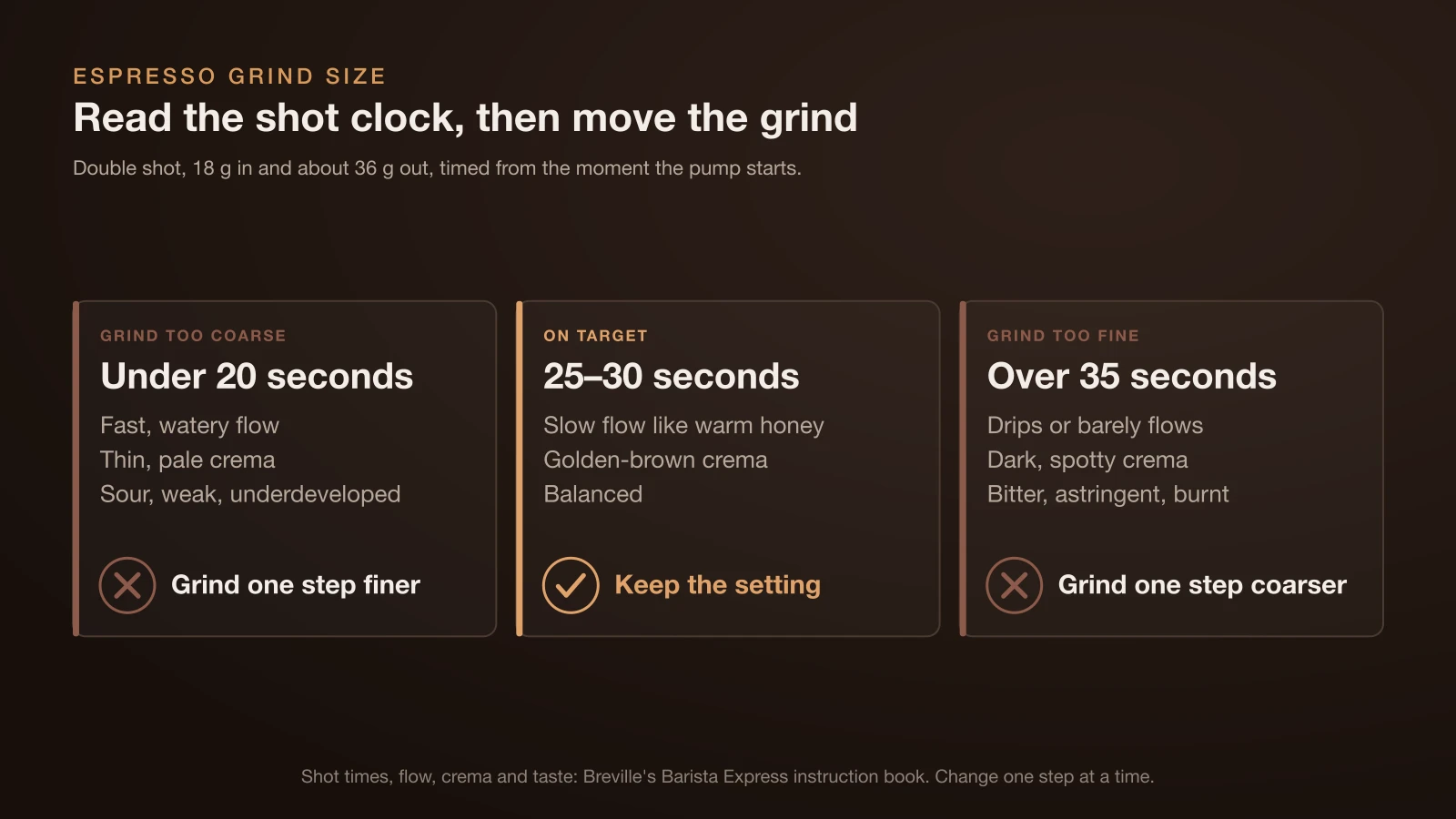
A finer grind makes the shot run slower and extract more, while a coarser grind makes it run faster and extract less. In the same study, shot time rose in a straight line as the grind got finer, with dose, yield and pressure held constant.
Breville’s extraction guide ties those times to what you see and taste:
| Shot time (double) | What you see | Taste | Grind change |
|---|---|---|---|
| Under 20 s | Fast, watery flow; thin, pale crema | Sour, weak, underdeveloped | Finer |
| 25–30 s | Slow flow like warm honey; golden-brown crema | Balanced | Keep it |
| Over 35 s | Drips or barely flows; dark, spotty crema | Bitter, astringent, burnt | Coarser |
The 25–30 second window matches what professionals report. In a Barista Guild of America survey published by the SCA, 51% of baristas said their average shot time was 25–30 seconds, and the average yield was 36.5 g at about a 1:2 ratio. For a double shot, 18 g in and 36 g out is a reliable starting recipe.
Finer isn’t always stronger
There is a limit. The Matter study found that extraction rose as the grind got finer only up to a point; past it, extraction fell. The coffee bed partly clogged, water took uneven paths, and the cup could taste bitter and acidic at the same time.
If a very fine grind gives you a slow shot that still tastes thin, or sour and bitter at once, the problem is uneven flow rather than grind. A bottomless portafilter makes those channels visible as spurts and pale streaks.
How to adjust your espresso grind size
Change the grind in small steps and keep everything else the same, so you know what caused the difference.
- Fix the recipe. Weigh the dose (about 18 g for a double basket) and stop the shot at about 36 g.
- Time from the moment the pump starts, including any pre-infusion.
- Taste the shot. Sour and thin points to finer; bitter and harsh points to coarser.
- Move one step. Breville recommends making only one adjustment at a time.
- Clear the old grounds. Many grinders hold a little coffee from the previous setting, so discard a small amount after a big change.
- Pull the next shot and compare time and taste.
Expect to repeat this for each new bag, and sometimes as a bag ages. Breville notes that it is normal for the grind size and grind amount to need a few adjustments before the extraction is right. Our step-by-step guide to dialing in espresso puts grind, dose and yield together in one routine.
Diagnose the shot before you change the grind
| Symptom | Likely cause | What to change |
|---|---|---|
| Under 20 s, sour, pale | Grind too coarse | One step finer |
| Over 35 s, bitter, dark | Grind too fine | One step coarser |
| Right time, still bitter | Very dark roast, long yield or dirty equipment | See our guide to bitter espresso |
| Spurts, bitter and sour at once | Uneven distribution or tamp | Level the bed and tamp straight before touching the grind |
| Fast shot, flat taste, little crema | Stale coffee | Fresher beans, then re-adjust |
Breville grind size settings
On the Barista Express, the grind size selector runs from 1 (finest) to 16 (coarsest), and Breville suggests starting at setting 5. Set the grind amount so the tamper’s metal cap sits level with the basket rim after tamping. If you run out of range, the upper burr can be moved to shift the whole scale finer or coarser. Other Breville models use different scales, so check the manual for yours.
Which grinders can grind fine enough for espresso?
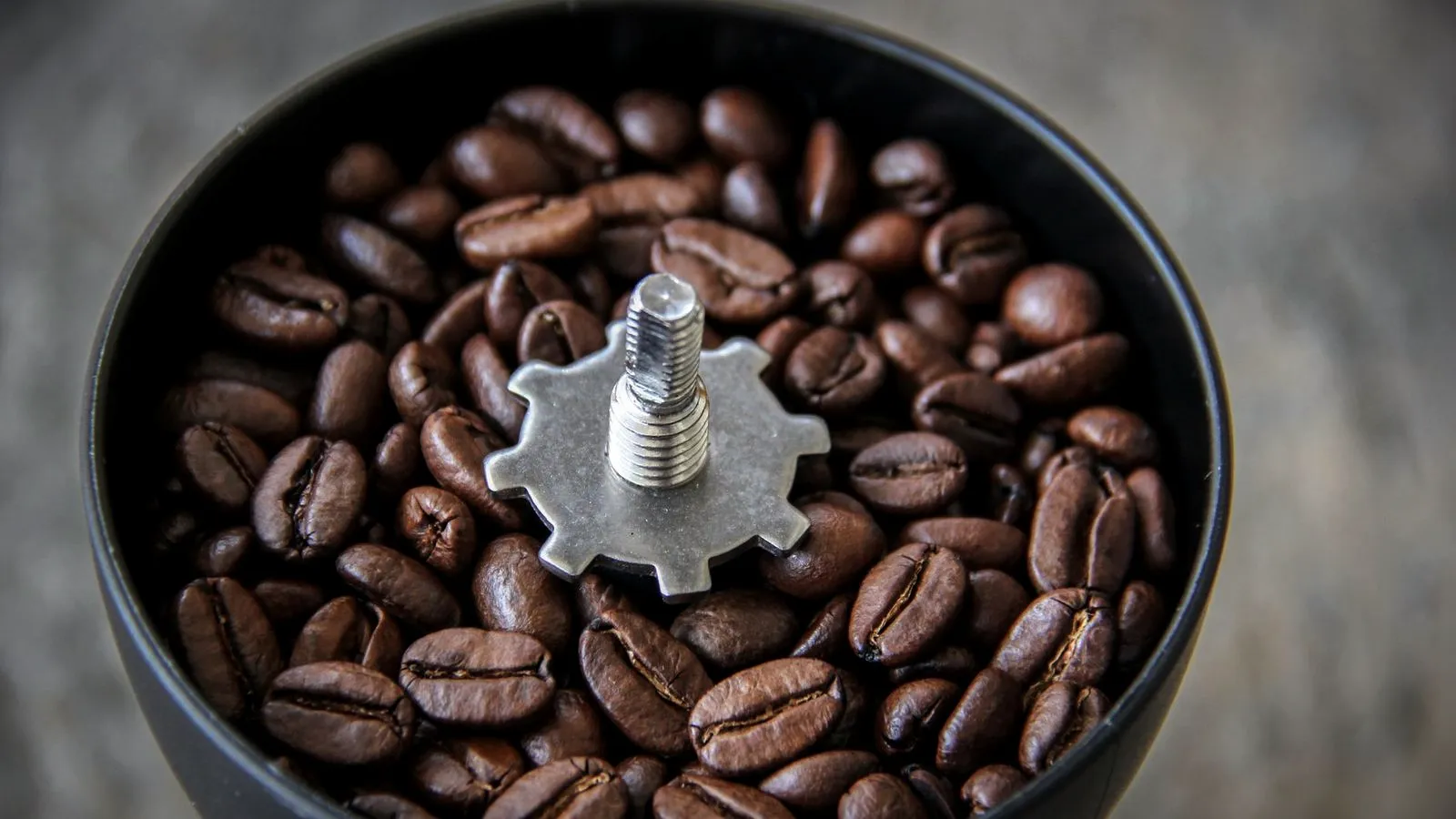
For espresso, choose a burr grinder with fine adjustment steps. A burr grinder crushes beans between two burrs and gives the consistent grind that fine brewing needs, according to the National Coffee Association. A blade grinder chops beans with a spinning blade, so the fineness depends on how long it runs and the result is uneven.
Those small steps matter because a change that barely matters for drip coffee can swing an espresso shot from sour to bitter.
Pre-ground coffee and pressurized baskets
If you don’t grind your own coffee, the basket matters more than the grind. Breville’s manual says to use dual-wall (pressurized) baskets with pre-ground coffee, because they regulate pressure and help the extraction regardless of grind, dose, tamp or freshness. Single-wall baskets are for freshly ground beans, where you control the grind.
Pre-ground coffee is often coarser than a fresh espresso grind, so it takes up more room. Breville’s double basket holds about 3 level scoops of pre-ground coffee but about 4 of fresh-ground. Our guide to espresso grounds covers how fast pre-ground coffee goes stale and what to look for on the bag.
Espresso grind vs moka pot grind
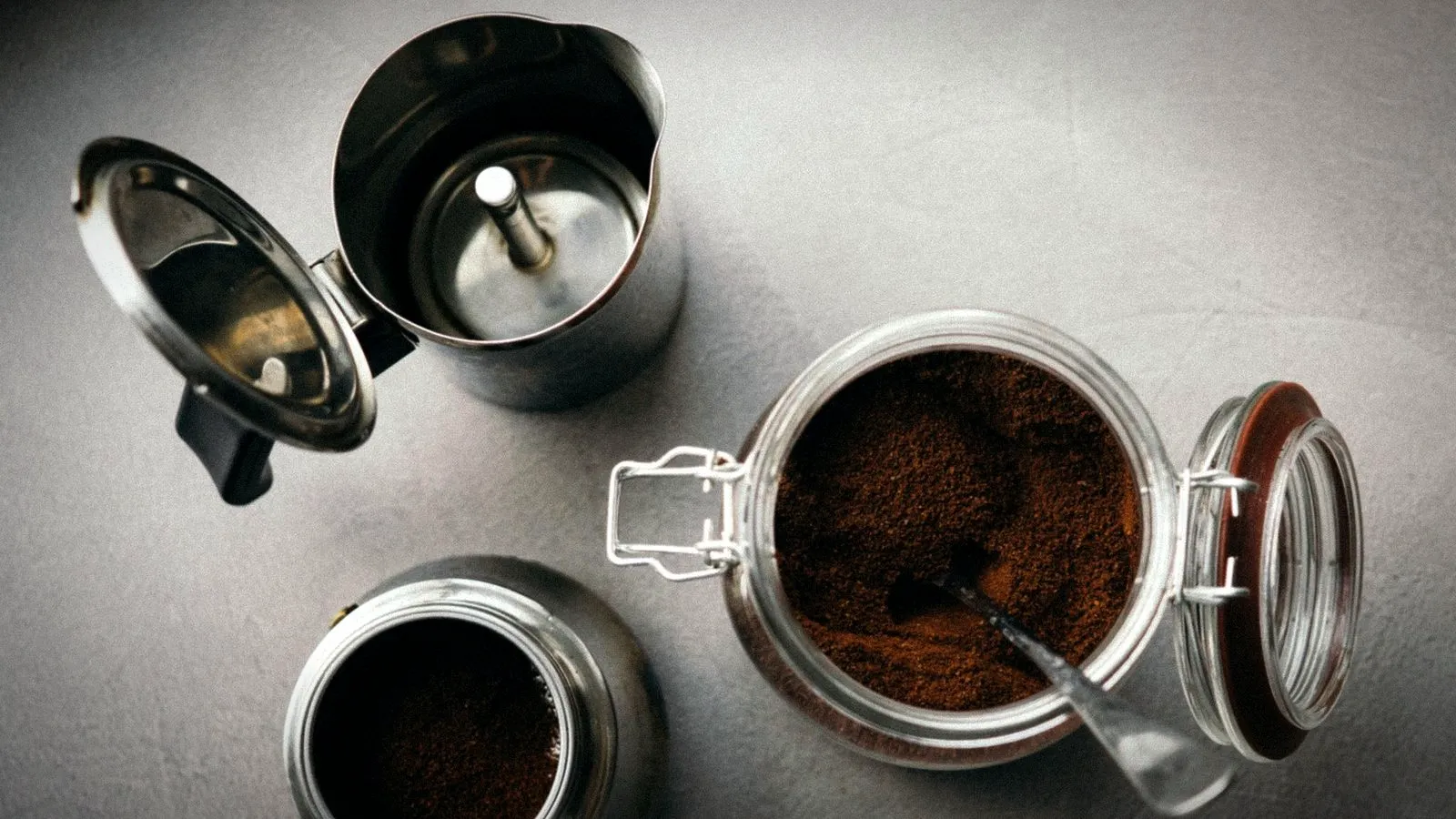
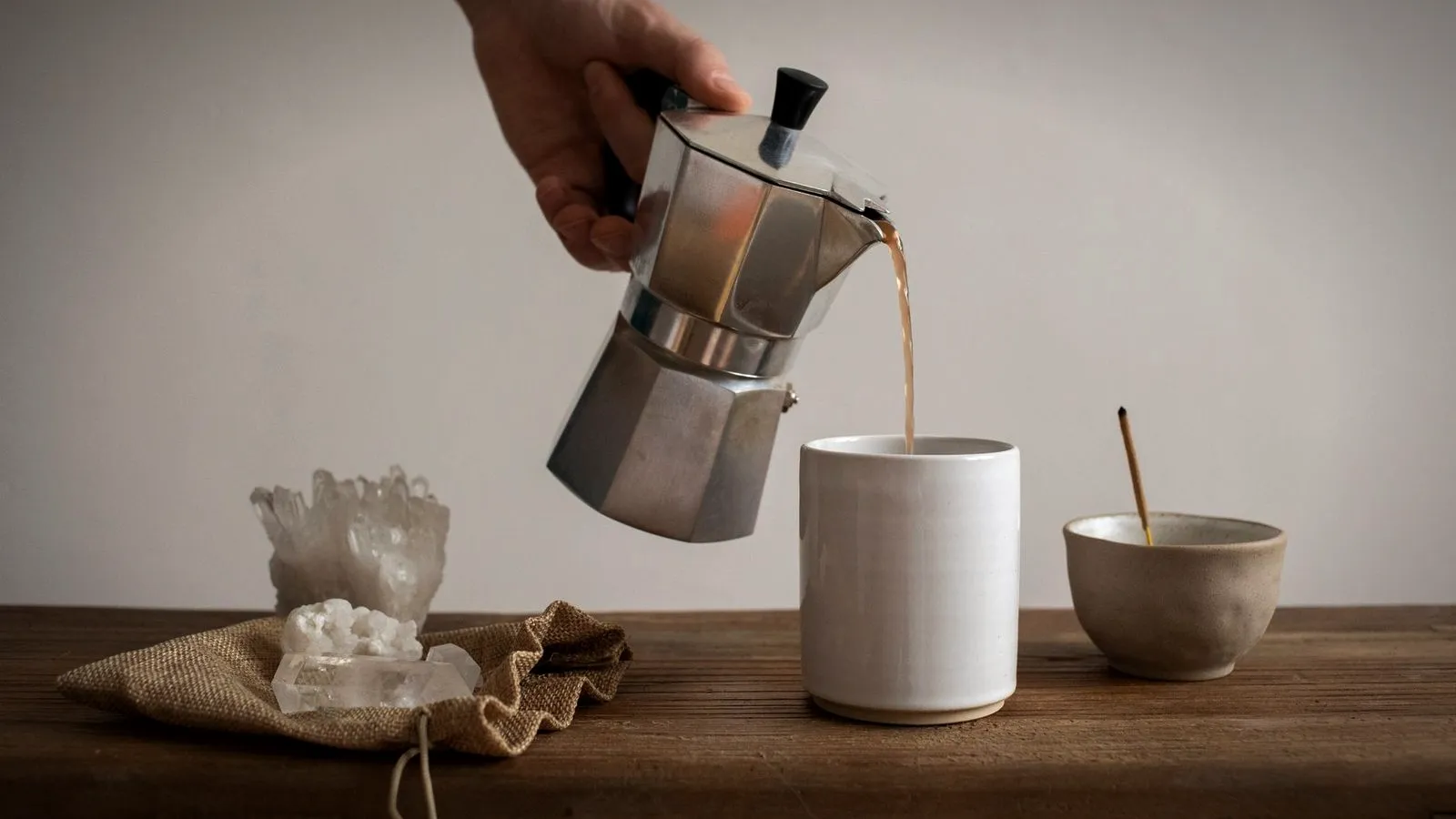
A moka pot needs a coarser grind than an espresso machine. Bialetti describes moka coffee as a coarser grind than espresso, and its pots brew at about 1.5 bar of steam pressure, against at least 9 bar in an espresso machine. A medium-fine grind, between espresso and drip, works best.
Espresso-fine coffee in a moka pot can slow the flow, taste bitter and clog the filter plate. Never tamp it. Our guide on how to use a moka pot includes a grind table and a troubleshooting chart.
Roast and freshness change the right setting
Roast level and freshness change the right grind setting, so a setting that works for one bag may run fast or slow with the next. Darker roasts give up flavor more easily, while light roasts are denser and harder to extract. Our guide to espresso roast explains how roast level changes a shot.
Freshness matters too. Old or pre-ground coffee tends to run faster and taste flat, and grinding finer only partly makes up for it. Fresh beans ground just before brewing make the grind far easier to control.
The bottom line
Espresso needs a fine grind, about like table salt, but the exact setting is whatever produces about 36 g of espresso from 18 g of coffee in 25–30 seconds. Grind finer when shots run fast and sour, coarser when they run slow and bitter, and move one step at a time. If a shot tastes wrong at the right time, look at the beans, the ratio or the puck before blaming the grinder.
Sources
- Breville: Barista Express BES870 instruction book (grind description, settings 1–16 and starting point 5, extraction guide with under 20, 25–30 and over 35 second marks, one adjustment at a time, dual-wall baskets, scoops of pre-ground vs fresh coffee)
- Specialty Coffee Association: Defining the ever-changing espresso (archived; heritage definition with a grind giving 20–30 seconds; barista survey: 51% at 25–30 seconds, 36.5 g average yield, 1:2 average ratio)
- National Coffee Association: Espresso (fine grind like table salt, burr vs blade grinders)
- Cameron et al., Matter (2020): Systematically improving espresso: insights from mathematical modeling and experiment (boulders and fines around 100 microns, 99% of particles and 80% of surface area, shot time vs grind, extraction peak and uneven flow)
- Bialetti: How the Moka works (about 1.5 bar vs at least 9 bar, coarser grind than espresso)