Bitter espresso is usually over-extracted: the water pulled too much out of the coffee because the grind was too fine, the shot ran too long or the water was too hot. Very dark roasts, robusta blends and a dirty machine add bitterness too. Start by grinding one step coarser and stopping the shot at about twice the coffee’s weight.
Some bitterness is part of espresso’s character, so the goal is balance rather than none at all. This guide walks through each cause, gives you a diagnosis table and a fix order, and explains how to tell bitter from sour. Most fixes start at the grinder, so keep our guide to espresso grind size close by.
The short answer
- Most common cause: over-extraction from a grind that is too fine or a shot that runs too long.
- First fix: grind one step coarser and aim for about 36 g out from 18 g in, in 25–30 seconds.
- Still bitter at the right time? Stop the shot a little earlier, lower the brew temperature if your machine allows it, or try a lighter roast.
- Bitter and sour at once: the puck is extracting unevenly (channeling); fix distribution and tamping.
- Stale, “dirty” bitterness: clean the basket, portafilter and group head, and backflush if your machine supports it.
Why is my espresso bitter? Seven common causes
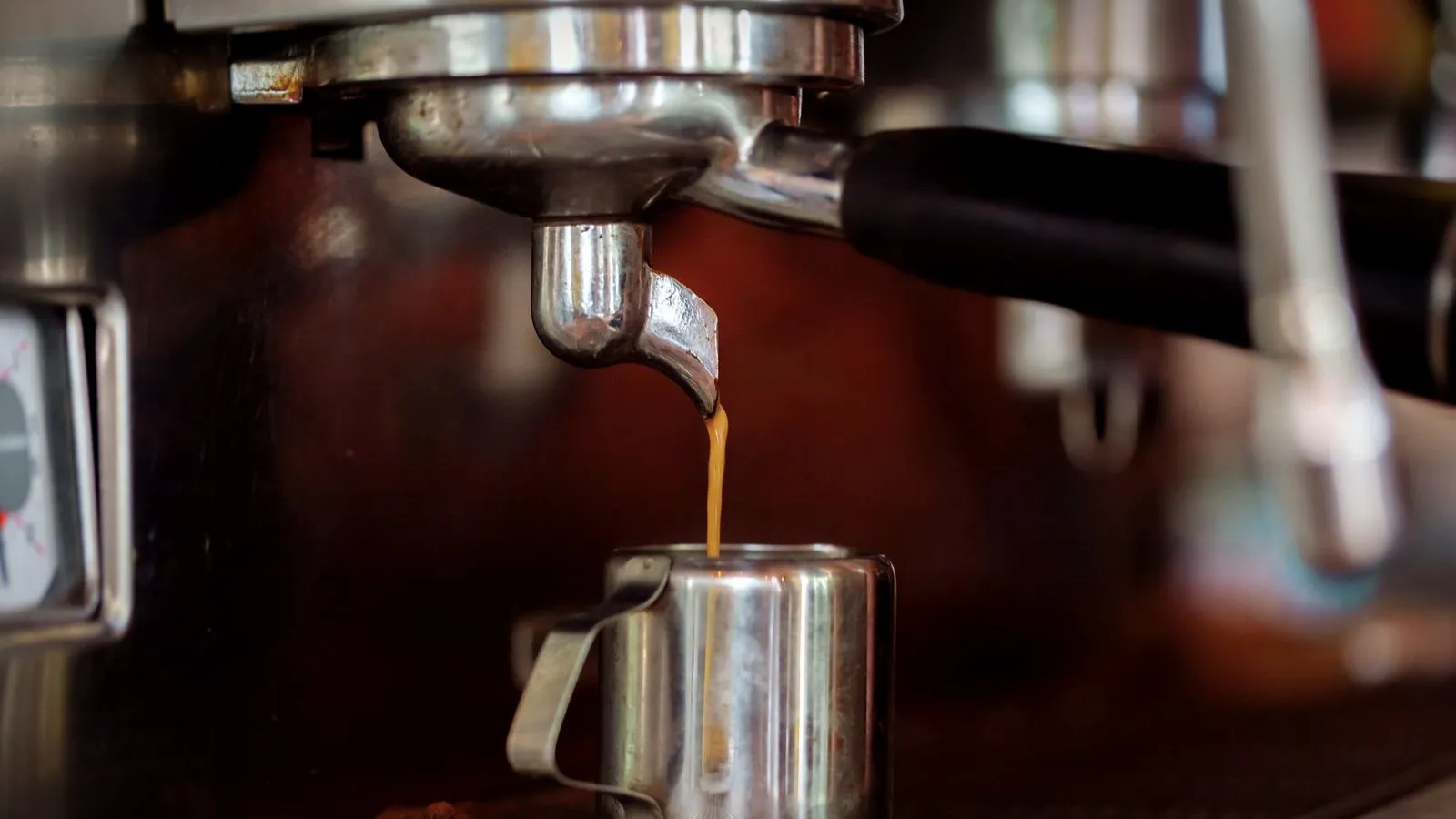
Espresso tastes bitter mostly when it is over-extracted, because the grind is too fine, the shot runs too long or the water is too hot. A very dark roast, robusta in the blend, a dirty machine and channeling are the other usual causes. Work through them in this order.
1. The grind is too fine
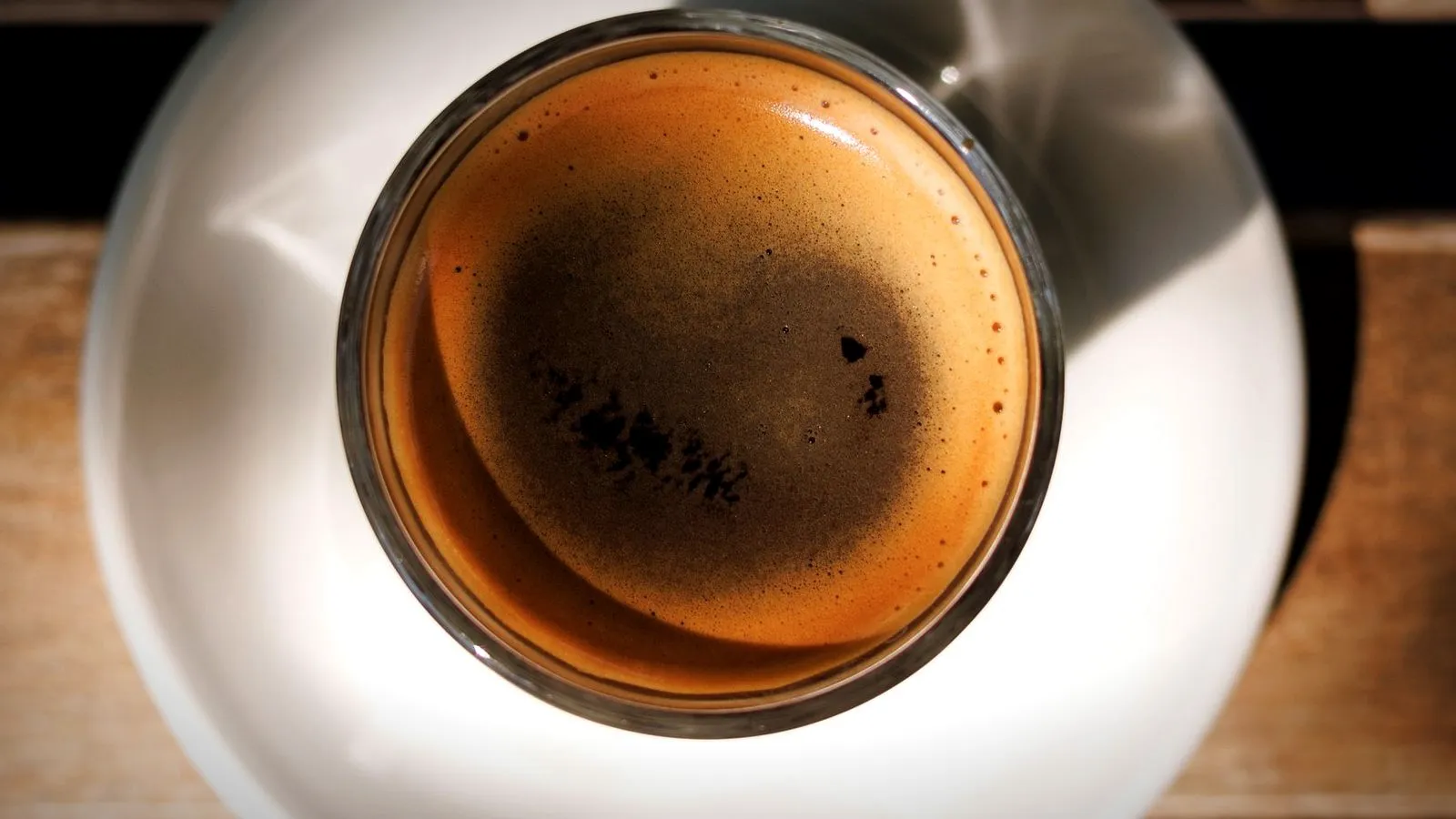
A grind that is too fine is the most common cause of bitter espresso. Breville’s instruction book for the Barista Express says a grind that is too fine barely lets water through, and the espresso comes out over-extracted, dark and bitter. In its extraction guide, a double that takes more than 35 seconds lands in the over-extracted zone: dripping flow, dark and spotty crema, and a bitter, burnt taste. The fix is one step coarser.
2. The shot runs too long
Even with the right grind, letting a shot run to a big yield keeps pulling flavor out of a puck that has little sweetness left. Food chemists at the Technical University of Munich found that coffee’s bitter compounds leave the grounds at different speeds. Some dissolve quickly, while others are released slowly or cling to the coffee, and the authors note that extraction conditions help shape how bitter a brew tastes.
A double of 18 g in and about 36 g out is the standard starting point. In the SCA’s barista survey, the average ratio was 1:2 and responses ranged from 1:1.5 to 1:2.5. If a 36 g shot still tastes too bitter, stop a few grams earlier, toward 1:1.5 (27 g from an 18 g dose). Our espresso ratio chart shows how each ratio changes the cup.
3. The water is too hot
Hotter water extracts faster, bitter compounds included. The SCA’s heritage definition of espresso puts brewing water at 195–205 °F (90–96 °C). Most home machines set the temperature for you, but if yours has a temperature setting, lower it one step and taste again.
4. The roast is very dark
Roasting creates bitterness, and dark roasting changes its character. In the same Munich research, the compounds behind coffee’s typical bitterness formed mostly at light to medium roasts. Under heavier roasting they broke down into compounds with a harsher bitter taste. Dark beans also give up their flavor easily, so they over-extract sooner; see our guide to espresso roast for how roast level changes a shot.
5. The blend contains robusta
The National Coffee Association describes robusta as strong and bold with bitter undertones, and notes that it is a common part of Italian espresso blends. If a harsh bitterness survives every grind and ratio change, check the bag. A 100% arabica coffee will usually taste less bitter.
6. Old coffee oils and a dirty machine
Coffee oils build up in baskets, on the shower screen and inside the group head, and stale oil taints every shot that passes through. Breville’s manual says to rinse the baskets and portafilter under hot water right after use to remove residual oils, and to run the machine’s cleaning cycle when prompted. Mineral scale is a separate problem: Breville notes it reduces brewing flow and temperature and affects taste. Our guide on how to clean an espresso machine covers the full routine.
7. Channeling: bitter and sour in one shot
When water finds weak spots in the puck, it rushes through those paths. The coffee around them over-extracts while the rest under-extracts. A 2020 study in the journal Matter linked uneven flow at very fine grinds to a mix of under- and over-extracted flavors: the shot that tastes bitter and acidic at once. Breville also warns that a wet basket encourages channeling, so dry it before dosing, distribute the grounds evenly and tamp level.
Bitter espresso diagnosis table
Match what you see and taste to the most likely cause, then make one change.
| What you notice | Likely cause | Fix |
|---|---|---|
| Over 35 s, dripping flow, dark spotty crema | Grind too fine or dose too high | One step coarser; check the dose |
| Normal time, bitter finish, large yield | Shot runs too long | Stop at about 36 g, or a few grams earlier |
| Right time and yield, dark oily beans | Roast level | Shorter ratio, lower temperature if possible, or a lighter roast |
| Harsh bitterness with every recipe | Robusta in the blend | Try a 100% arabica coffee |
| Stale, rancid or “dirty” taste | Old coffee oils in basket, screen or group | Clean, and backflush if your manual allows it |
| Bitter and sour together, spurting | Channeling | Dry basket, even distribution, level tamp |
| Only milk drinks taste burnt | Milk overheated | Steam to 60–65 °C (140–150 °F) |
How to fix bitter espresso, step by step
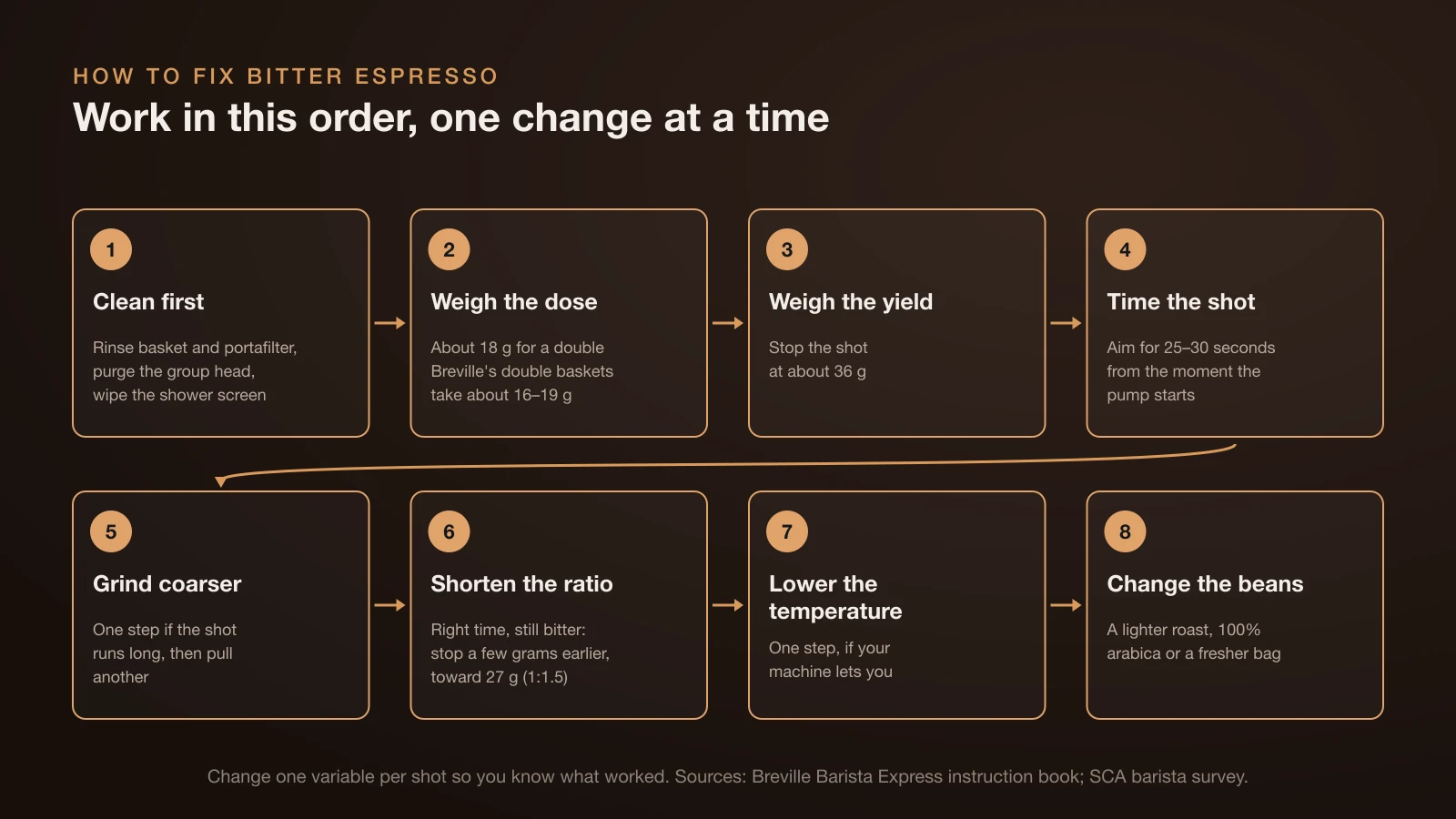
Work through the fixes in this order, changing one thing at a time. Breville recommends adjusting the variables one at a time so you know which change made the difference.
- Clean first. Rinse the basket and portafilter, purge the group head and wipe the shower screen, so old oils are not part of the test.
- Weigh the dose. Use about 18 g for a double basket; Breville’s double baskets take about 16–19 g.
- Weigh the yield. Stop the shot at about 36 g.
- Time the shot. Aim for 25–30 seconds from the moment the pump starts.
- Grind coarser by one step if the shot runs long, then pull another.
- Shorten the ratio if the time is right but the shot is still bitter.
- Lower the temperature one step, if your machine lets you.
- Change the beans last: a lighter roast, a 100% arabica coffee or a fresher bag.
If you are still learning the basic routine, our step-by-step guide on how to use an espresso machine covers dosing, tamping and timing.
Why does my espresso taste burnt?
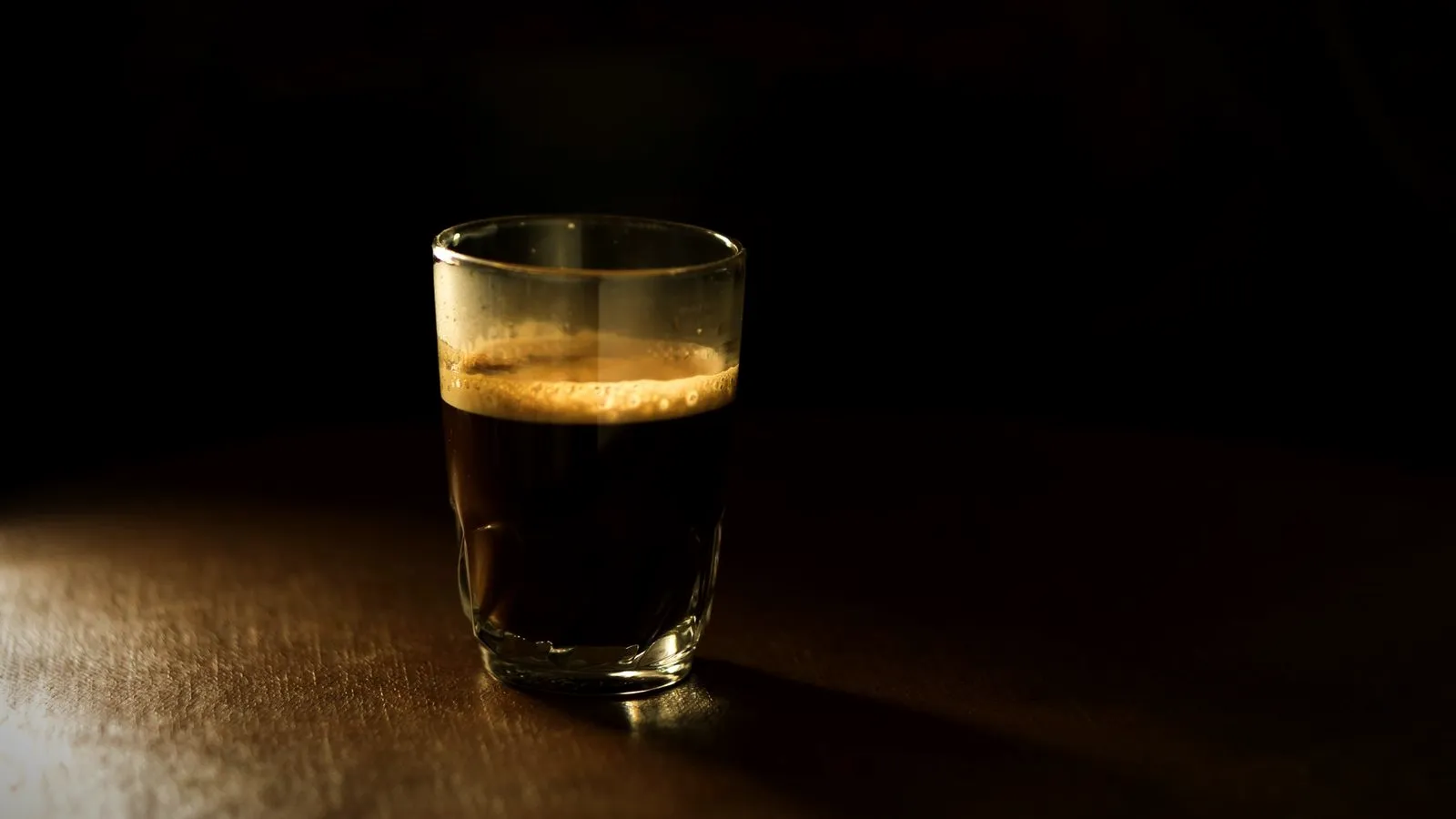
Espresso tastes burnt when it is over-extracted, when the beans are roasted very dark or when old coffee residue scorches on the group head. The most common is over-extraction: Breville’s extraction guide describes shots that run over 35 seconds as tasting bitter and burnt. The second is the beans themselves, since very dark roasts carry harsh, roasty bitter compounds before they ever reach the grinder.
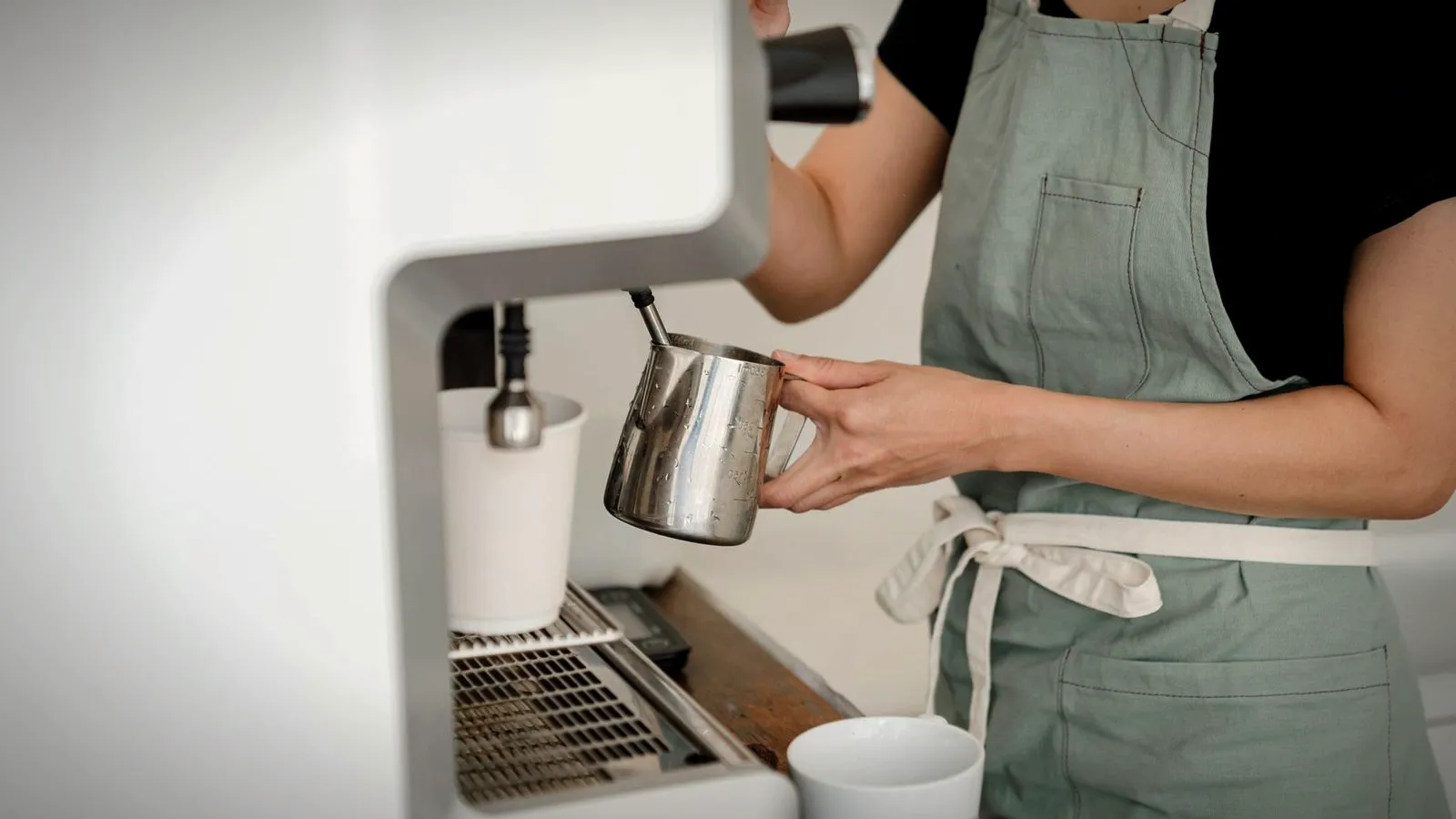
The third is residue. Old coffee on a hot shower screen and group head adds a scorched, stale note to every shot, which regular cleaning removes. If only your lattes and cappuccinos taste burnt, the milk may be the problem: steam it to 60–65 °C (140–150 °F) and no hotter.
Bitter or sour? How to tell them apart
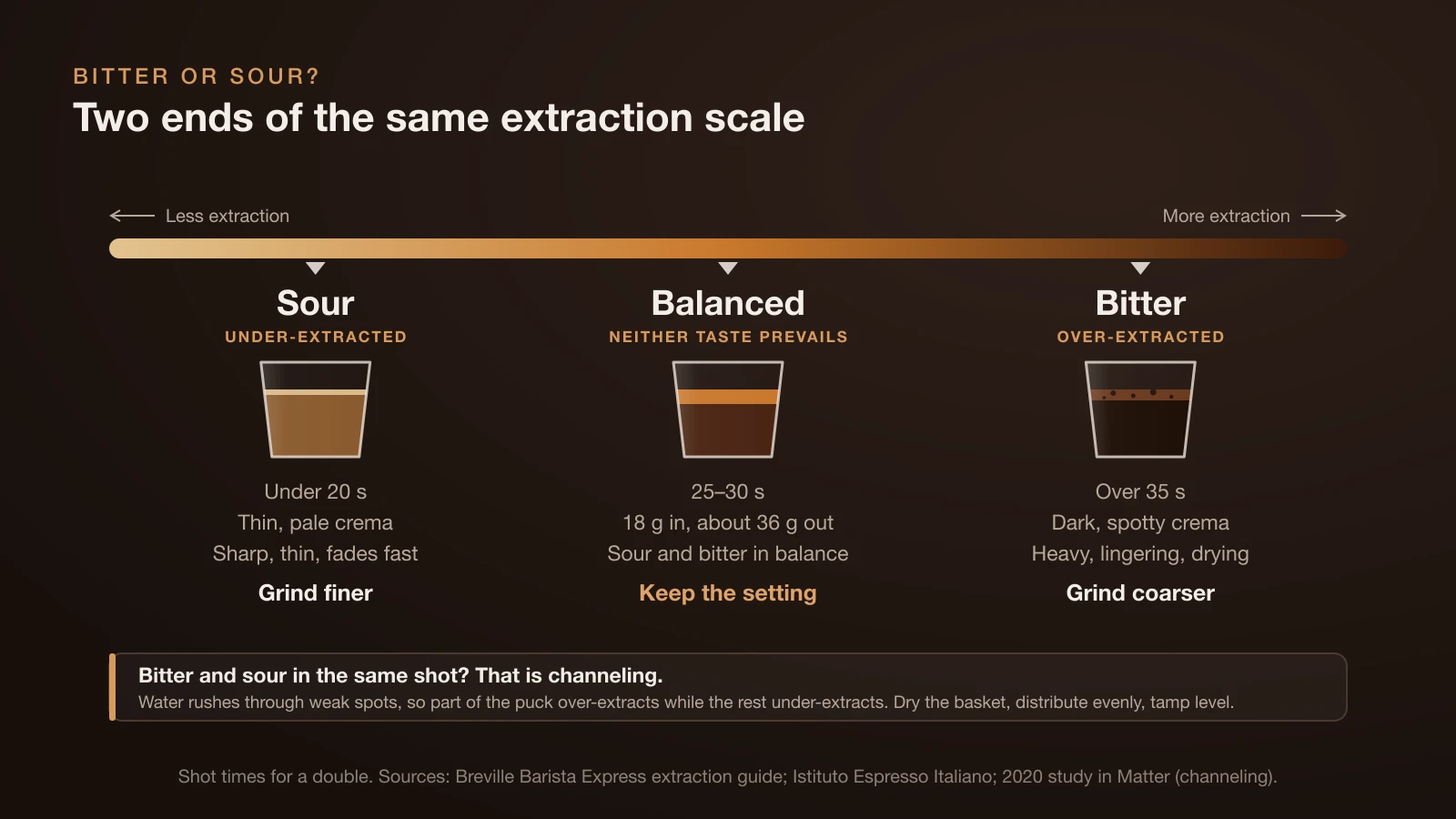
Bitter espresso is over-extracted and sour espresso is under-extracted, so they need opposite fixes: grind coarser for bitter, finer for sour.
| Bitter | Sour | |
|---|---|---|
| What it means | Over-extracted | Under-extracted |
| Typical shot time (double) | Over 35 s | Under 20 s |
| Crema | Dark, spotty | Thin, pale |
| How it tastes | Heavy, lingering, drying | Sharp, thin, fades fast |
| Grind change | Coarser | Finer |
A drying, puckering feel on the tongue is astringency, which Breville lists with bitterness as a sign of over-extraction. If you taste both bitter and sour, go back to channeling (cause 7) before touching the grind.
Is espresso supposed to be bitter?
Espresso is supposed to be a little bitter, balanced by its acidity. The Istituto Espresso Italiano describes its Certified Italian Espresso as a shot where sour and bitter tastes are well balanced and neither one prevails. Astringency should be absent or barely noticeable. Bitterness becomes a fault when it dominates, lingers harshly or dries out your mouth.
Some bitterness is also a matter of style. Dark roasts and robusta blends give a bolder, more bittersweet cup, and many people drink traditional Italian espresso for exactly that. If you prefer your espresso softer, milk helps; see espresso with milk for the main drink styles.
The bottom line
Bitter espresso is usually over-extracted, so start by grinding a step coarser and stopping the shot at about 36 g from 18 g in 25–30 seconds. If it is still bitter at the right time, shorten the ratio, lower the temperature if you can, and look at the roast and the blend. Keep the basket, screen and group head clean, and fix channeling whenever a shot tastes bitter and sour at once.
Sources
- Breville: Barista Express BES870 instruction book (grind too fine, extraction guide with under 20, 25–30 and over 35 second marks, bitter and burnt taste, channeling, rinsing coffee oils, cleaning cycle and descaling, 16–19 g double basket, 60–65 °C milk)
- Specialty Coffee Association: Defining the ever-changing espresso (archived; 195–205 °F heritage definition; barista survey: 1:2 average ratio, range 1:1.5 to 1:2.5)
- Istituto Espresso Italiano: Certified Italian Espresso (balance of sour and bitter, astringency)
- Peer-reviewed research: Blumberg, Frank and Hofmann, J Agric Food Chem (2010) (roast degree and release of bitter compounds); Cameron et al., Matter (2020) (uneven flow, bitter and acidic at once); Breslin and Beauchamp, Nature (1997) (salt suppresses bitterness)
- National Coffee Association: Varieties (robusta’s bitter undertones, use in Italian espresso blends)