Why is my espresso sour? In most cases the shot is under-extracted: water passed through the coffee too quickly, or not hot enough, to dissolve its sweetness, so the acids dominate. The usual fix is a finer grind and a fully heated machine, aiming for about 36 g of espresso from 18 g of coffee in 25–30 seconds.
This guide explains under-extraction, lists eight causes in a diagnosis table and gives a fix order that changes one thing at a time. If your shot is harsh rather than sharp, our guide to bitter espresso covers the opposite problem.
The short answer
- Main cause: under-extraction. The acids dissolve first, and the shot ended before the sugars caught up.
- First fix: grind one step finer and keep the dose and target weight the same.
- Right time but still sour? Let the shot run a few grams longer, toward a 1:2.5 ratio.
- Check the heat: let the machine warm up fully and preheat the portafilter and cup.
- Sour and bitter together: the puck is channeling; fix distribution and tamping before touching the grind.
What does sour espresso taste like?
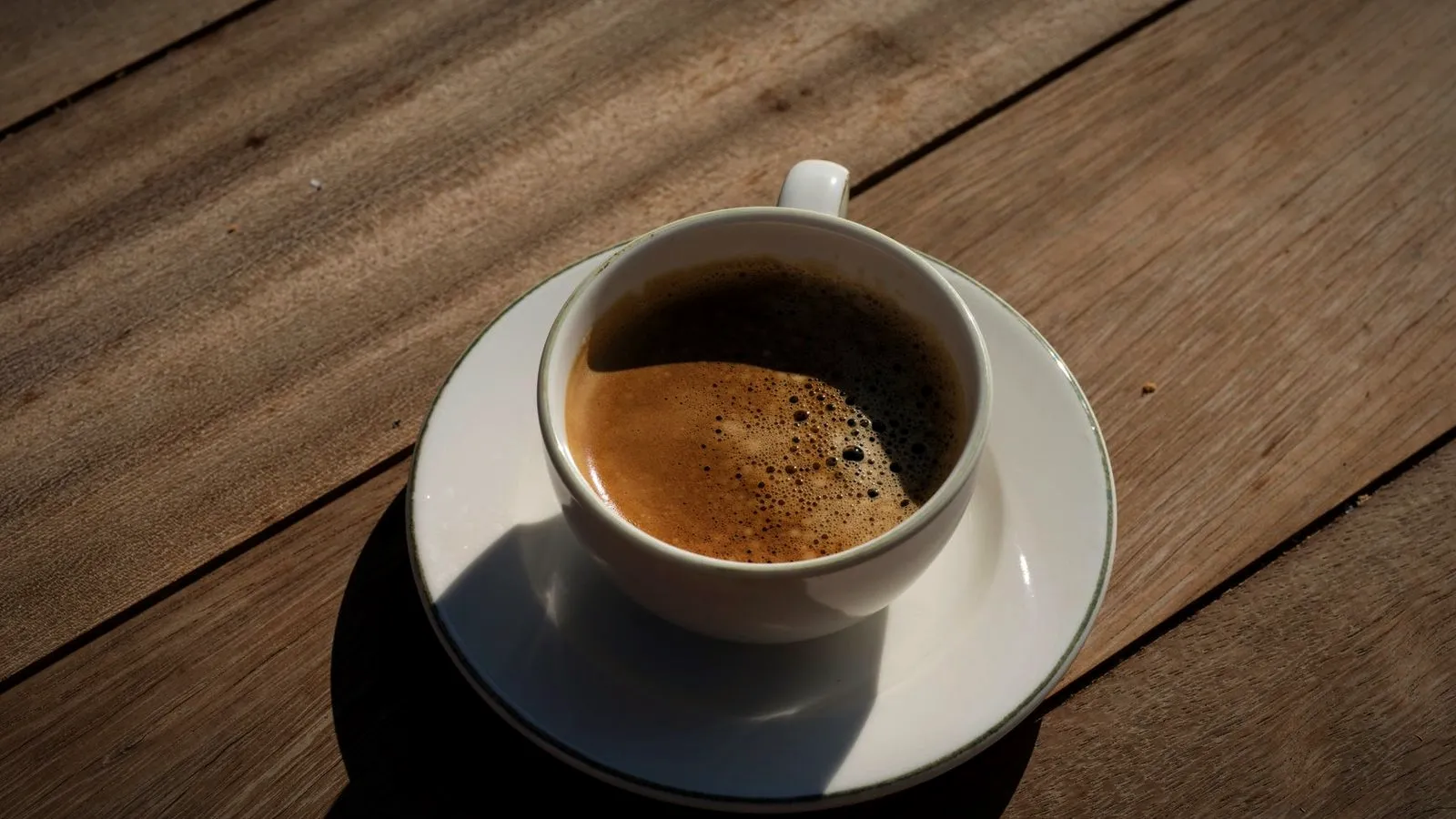
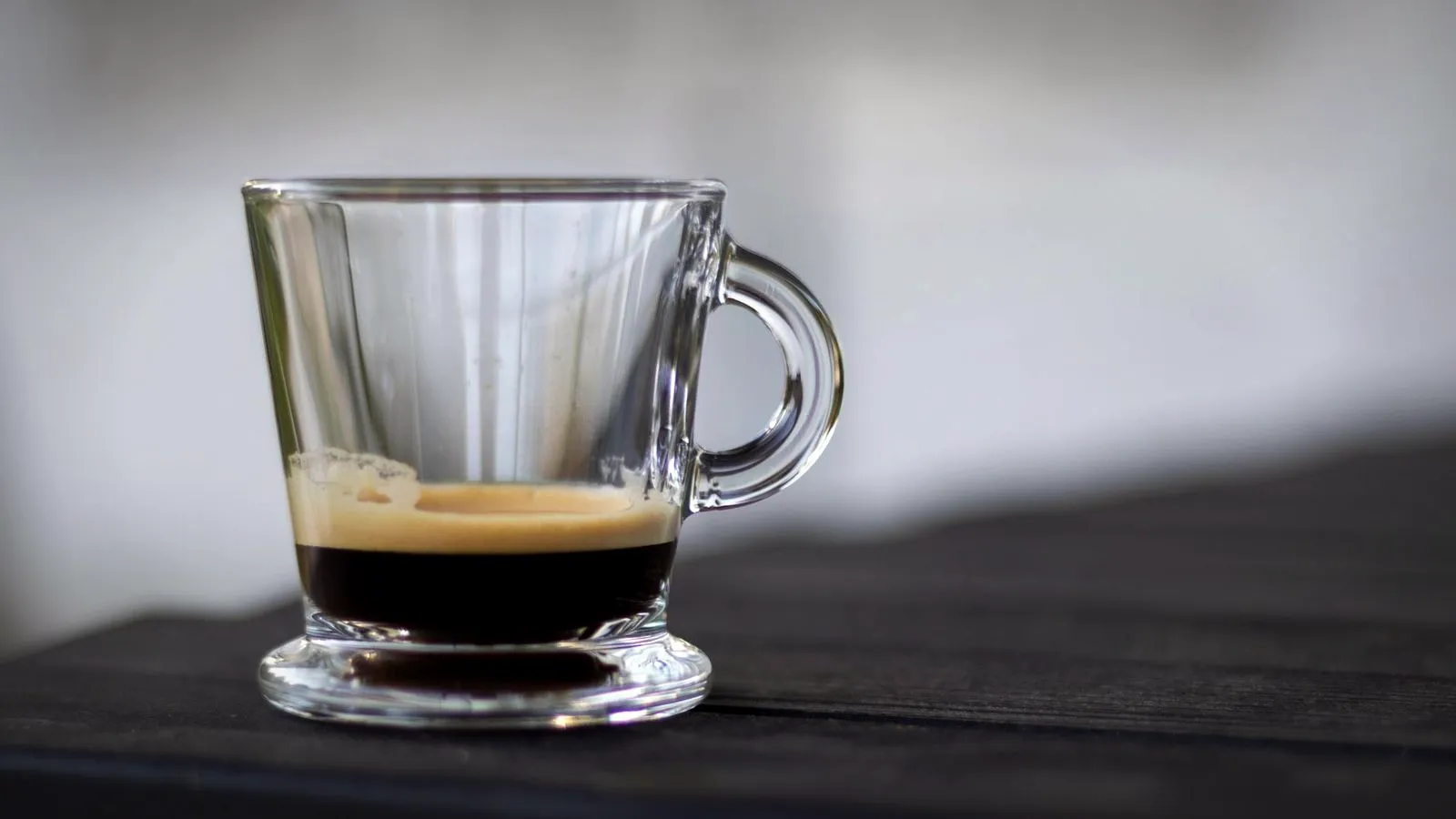
Sour espresso tastes sharp, thin and tart, like underripe fruit or lemon juice, and fades quickly without sweetness. Breville’s extraction guide describes the under-extracted shot the same way: sour and underdeveloped, pale brown, with thin, pale crema.
Bitterness is different: heavy, lingering and often drying, the mark of over-extraction. Pleasant acidity is different too, because in a balanced shot it tastes juicy and sits alongside sweetness.
Why espresso tastes sour: under-extraction explained
Espresso tastes sour when too little of the coffee dissolves into the cup, because the compounds that dissolve first are the acidic ones. La Marzocco puts the order as salts, acids, sugars and then bitters. Breville’s article on the extraction process also puts acidic notes first and sweetness after.
Stop early and the cup is all acids, without the sugars that balance them. The coffee industry measures this as extraction yield, the share of the dry coffee that ends up dissolved. According to the Matter study, citing the Specialty Coffee Association (SCA), brews below 17% are often sour and those above 23% typically taste bitter.
At home, shot time, flow and taste tell you where the shot sits; our guide to dialing in espresso explains the full loop.
Why is my espresso sour? 8 common causes
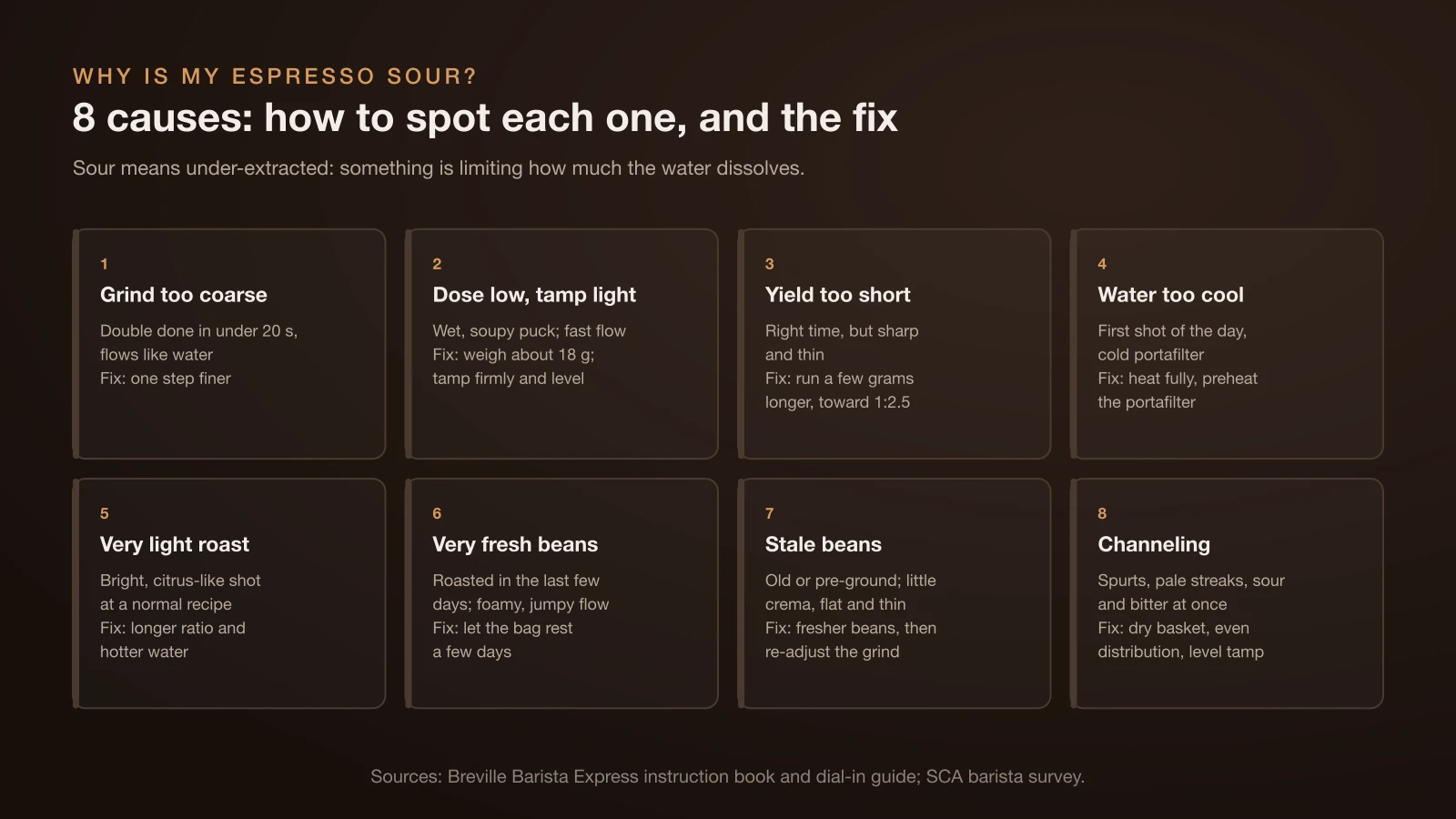
Your espresso is sour because something is limiting extraction, and eight causes cover almost every case:
| Cause | How to spot it | Fix |
|---|---|---|
| 1. Grind too coarse | Double done in under 20 s, flows like water | One step finer |
| 2. Dose too low or tamp too light | Wet, soupy puck; fast flow; basket looks underfilled | Weigh the dose (about 18 g); tamp firmly and level |
| 3. Yield too short | Right time, but tastes sharp and thin | Run a few grams longer, toward 1:2.5 |
| 4. Water too cool | First shot of the day, cold portafilter, right after switching on | Let the machine heat fully; preheat the portafilter; raise the temperature if adjustable |
| 5. Very light roast | Bright, citrus-like shot at a normal recipe | Longer ratio and hotter water |
| 6. Very fresh beans | Roasted in the last few days; foamy, jumpy flow | Let the bag rest a few days |
| 7. Stale beans | Old or pre-ground coffee; little crema, flat and thin | Fresher beans, then re-adjust the grind |
| 8. Channeling | Spurts, pale streaks, sour and bitter at once | Dry basket, even distribution, level tamp (see below) |
1. The grind is too coarse
A coarse grind is the most common reason espresso tastes sour. Breville’s instruction book for the Barista Express says water flows through a too-coarse grind too quickly, and the espresso comes out under-extracted, lacking color and flavor. Our guide to espresso grind size shows how to move the grinder in small steps.
A fast shot is the easiest sign of under-extraction to measure. In Breville’s extraction guide, a double that finishes in 20 seconds or less, with the first drops after only 1–6 seconds, sits in the under-extracted zone. Our guide to espresso shot time explains when to start the clock.
2. The dose is low or the tamp is light
Too little coffee in the basket gives water an easy path. Breville’s troubleshooting table lists three reasons espresso runs out too quickly: a coarse grind, not enough coffee and a tamp that is too light, with 22–33 lb of pressure as the target. Breville’s dial-in guide also suggests adding a gram or two when a fast shot tastes sour.
3. The yield is too short for the coffee
Stopping the shot early catches the acidic first part of the extraction and leaves the sweetness behind. The standard starting point is 1:2, such as 18 g in and 36 g out. If the time is right and the shot is still sharp, let it run longer: the SCA’s barista survey found ratios from 1:1.5 up to 1:2.5, and 1:2.5 is 45 g from an 18 g dose. Our espresso ratio guide has a full yield chart.
4. The water is too cool
Cooler water dissolves less, so a cold machine can make a sour shot even with the right grind. Breville says water below 195 °F (about 90 °C) leads to under-extraction that can taste sour or watery; the SCA’s heritage definition of espresso puts brewing water at 90–96 °C (195–205 °F). Breville’s manual adds that a cold portafilter and basket can lower the extraction temperature enough to hurt the shot. Our guide to espresso brew temperature covers how each machine type holds heat.
5. The roast is very light
A very light roast can taste sour even with a normal recipe, because it is harder to extract in a short shot. Breville notes that lighter roasts have more acid than dark roasts like Italian or French roast, and La Marzocco says light roasts and larger brew ratios normally need higher brew temperatures.
6. The beans are very fresh
Very fresh beans are still releasing carbon dioxide (CO₂): the SCA says roasted coffee degasses rapidly for about 20 days, and Breville’s manual suggests brewing between 5 and 20 days after the roast date.
7. The beans are stale
Stale coffee has lost much of its aroma and gas, so shots come out thin, flat and short on crema. The SCA says whole beans stay fresh for about three weeks after roasting, and ground coffee for about an hour. Buy smaller bags with a roast date and grind just before brewing.
How to fix sour espresso, in order
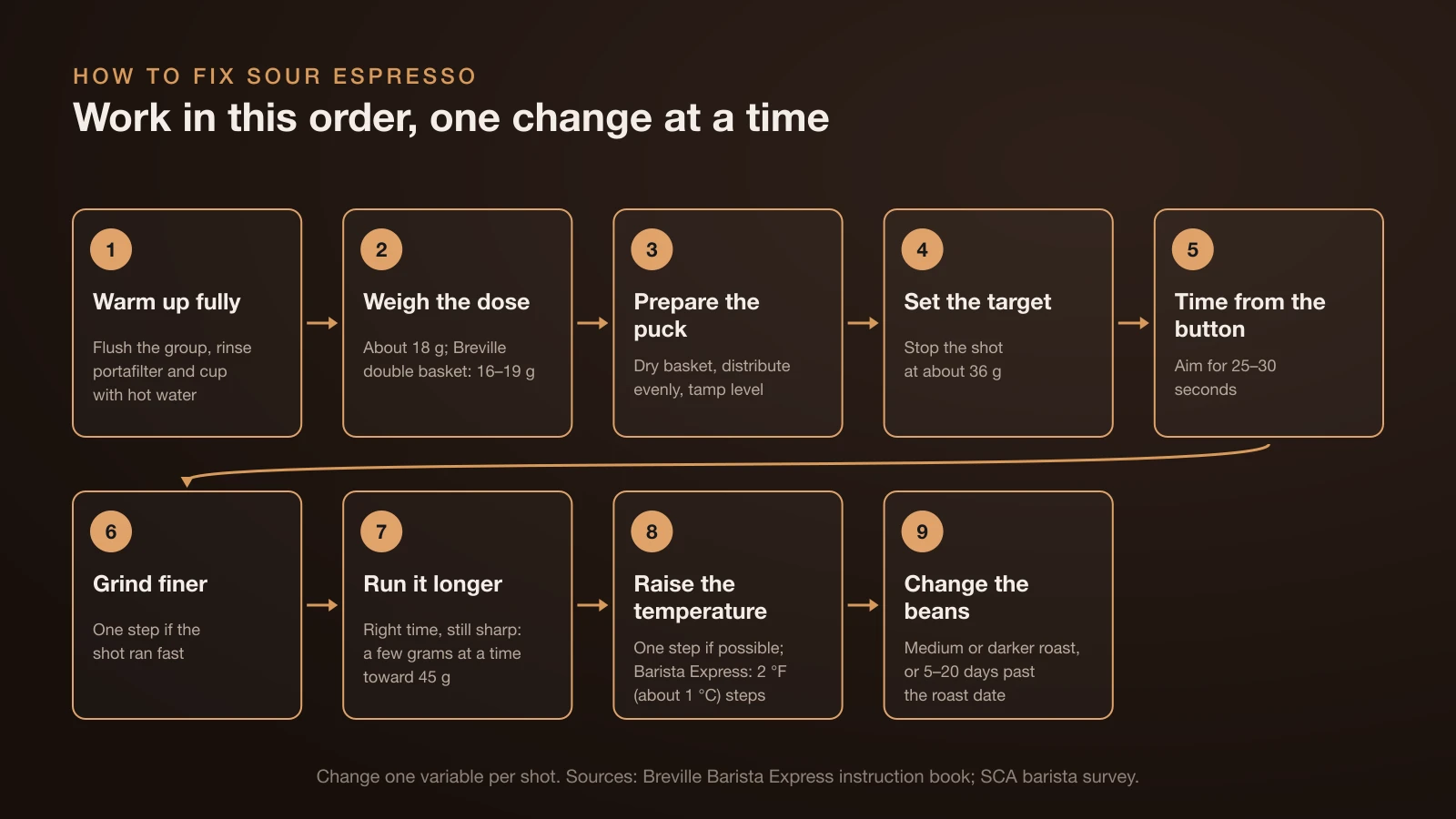
Fix sour espresso by changing one variable at a time, starting with the cheapest and most common causes. Breville’s manual recommends adjusting one factor at a time so you can tell which change worked.
- Warm up fully. Wait until the machine is ready, flush the group and rinse the portafilter and cup with hot water.
- Weigh the dose. Use about 18 g in a double basket; Breville’s double basket takes 16–19 g.
- Prepare the puck. Dry the basket, distribute evenly and tamp level; an espresso distributor or a few passes with a needle tool helps.
- Set the target. Stop the shot at about 36 g.
- Time it from the button. Aim for 25–30 seconds.
- Grind finer by one step if the shot ran fast, then pull again.
- Run it longer if the time is right but the shot is still sharp, a few grams at a time toward 45 g.
- Raise the temperature by one step if your machine allows it. The Barista Express adjusts in steps of 2 °F (about 1 °C), up to 4 °F either side of its default.
- Change the beans last: a medium or darker roast, or a bag that is 5–20 days past its roast date.
Sour and bitter at the same time: channeling
A shot that tastes sour and bitter at once is usually channeling, meaning water found weak paths through the puck. Coffee along those paths over-extracts while the rest under-extracts. The Matter authors link uneven flow at very fine grinds to a mix of under- and over-extracted flavors, which drinkers describe as bitter and acidic together.
Grinding finer makes this worse, so fix the puck first. Breville warns that a wet basket encourages channeling, so wipe it dry, break up clumps, level the bed and tamp straight. A bottomless portafilter makes the problem visible as spurts and pale streaks.
Sour espresso from pods, super-automatics and pressurized baskets
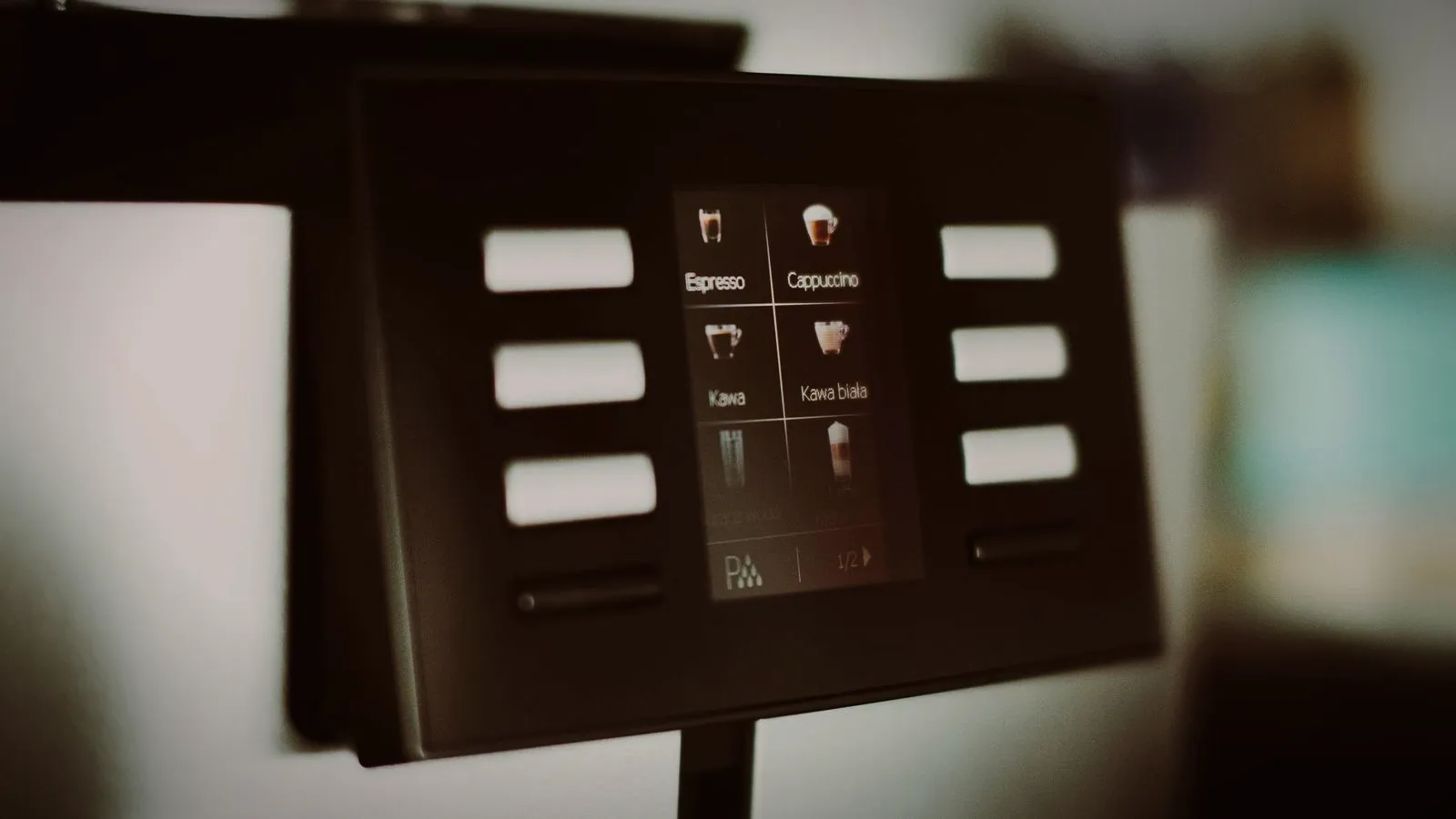
Sour espresso from a capsule, super-automatic or pressurized-basket machine has fewer fixes, because the machine controls part of the extraction. Breville says its dual-wall (pressurized) baskets regulate pressure and help the extraction regardless of grind, dose, tamp or freshness.
On a super-automatic machine with weak, watery coffee, De’Longhi suggests raising the strength or aroma setting, which grinds more coffee, and moving the grinder one notch finer while it runs. If the coffee also seems cool, De’Longhi recommends preheating the cup with hot water or a rinse cycle; its Magnifica Evo help page says coffee should leave the spouts at about 70–80 °C (158–176 °F).
Capsule machines fix grind, dose and tamp inside the capsule, so try a darker capsule, a warm cup and a fully heated machine.
Is some acidity in espresso normal?
Some acidity in espresso is normal and even desirable, as long as sweetness balances it. Breville’s manual describes a great espresso as a balance between sweetness, acidity and bitterness, so the goal is never zero acidity.
Pleasant acidity tastes like ripe fruit and leads into sweetness and body; sourness is thin, sharp and finishes fast. Light specialty roasts will always taste brighter than a dark Italian-style blend, so if you prefer a softer shot, a darker roast is the simplest change.
The bottom line
Sour espresso is almost always under-extracted, so grind finer first and keep the dose and target weight fixed, aiming for about 36 g from 18 g in 25–30 seconds. If the time is right and it is still sharp, run the shot longer and make sure the machine and portafilter are hot. When a shot tastes sour and bitter together, fix channeling before you touch the grinder.
Sources
- Breville: Barista Express BES870 instruction book (coarse grind, extraction guide times, 22–33 lb tamp, 16–19 g basket, cold portafilter, wet basket, 2 °F steps, 5–20 days, one change at a time), How to dial in espresso (finer grind or a gram or two more), A guide to coffee brewing temperature (under 195 °F tastes sour or watery), The coffee extraction process (acids first) and How to reduce acidic flavors in coffee (lighter roasts more acidic)
- Specialty Coffee Association: Defining the ever-changing espresso (archived; 195–205 °F; ratios 1:1.5 to 1:2.5) and Coffee Decoded: fresh coffee (CO₂ loss, freshness)
- La Marzocco: Basic espresso theory (extraction order, light roasts and hotter water) and Using espresso brew ratios (lighter roasts, larger ratio)
- Cameron et al., Matter (2020): Systematically improving espresso: insights from mathematical modeling and experiment (17% and 23% extraction yield, uneven flow, tamp force)
- De’Longhi: Why is the coffee from my coffee machine watery? (strength setting, one notch finer) and The coffee is not hot enough (70–80 degrees, preheat cups)