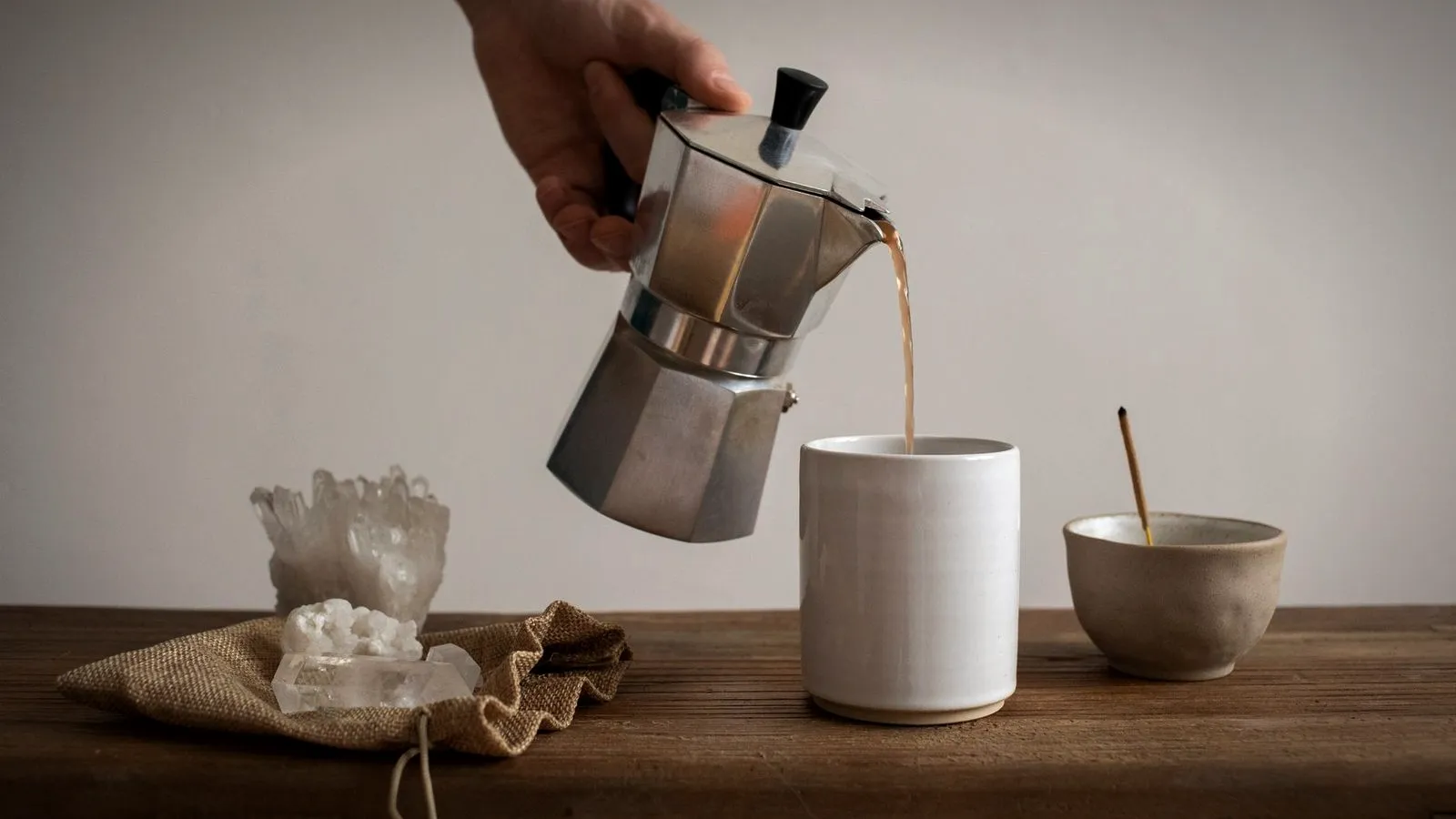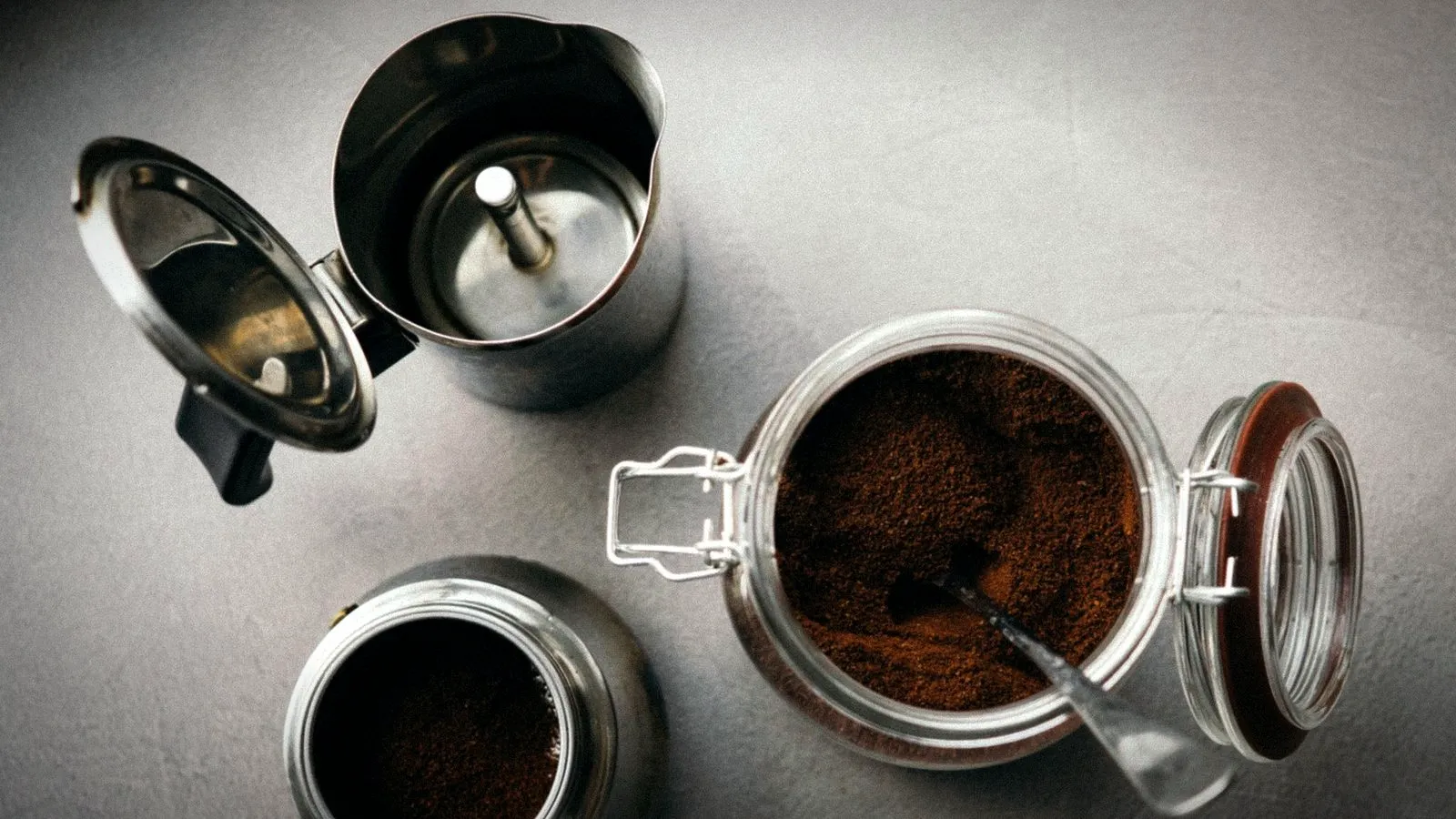
The best coffee for a moka pot is fresh, whole-bean coffee from a medium or medium-dark roast, ground medium-fine: coarser than espresso, finer than drip. Bialetti, maker of the Moka Express, asks for coffee that is “Moka-ground, and not too fine.” Blends, single origins and decaf all work if the grind and freshness are right.
No brand is ranked here; the checks below work for any bag. For the brewing steps themselves, see how to use a moka pot.
The short answer
| Choice | What works best in a moka pot |
|---|---|
| Roast | Medium to medium-dark; light is bright and tart, very dark can taste harsh |
| Grind | Medium-fine, coarser than espresso, never tamped |
| Whole bean or pre-ground | Whole bean ground just before brewing; pre-ground “moka” grind is fine for convenience |
| Freshness | Roast date on the bag; use within about three weeks of roasting |
| Blend or single origin | Either; blends are built for body, single origins for distinct flavor |
| Decaf | Works the same way |
Buying checklist for moka pot coffee
The best coffee for a moka pot meets a few simple checks on the bag, whatever the brand. Use this list in the store or when ordering online:
- A roast date, not just a best-by date. The Specialty Coffee Association (SCA) says whole-bean coffee can be considered fresh within about three weeks of roasting.
- Medium or medium-dark roast for your first bags. These are the most forgiving in a moka pot.
- Whole beans if you own a grinder. If not, a bag ground for moka or stovetop pots, not for drip machines.
- Tasting notes you enjoy. Chocolate, nuts and caramel suit a strong, concentrated brew and milk drinks; fruit and floral notes suit people who like a brighter cup.
- Arabica or a blend with robusta. Check the label if you are sensitive to caffeine.
- A bag size you can finish. The National Coffee Association (NCA) suggests buying enough for one or two weeks at a time.
- A resealable bag with a one-way valve, or plan to move the coffee into an airtight, opaque container.
What roast level is best for a moka pot?
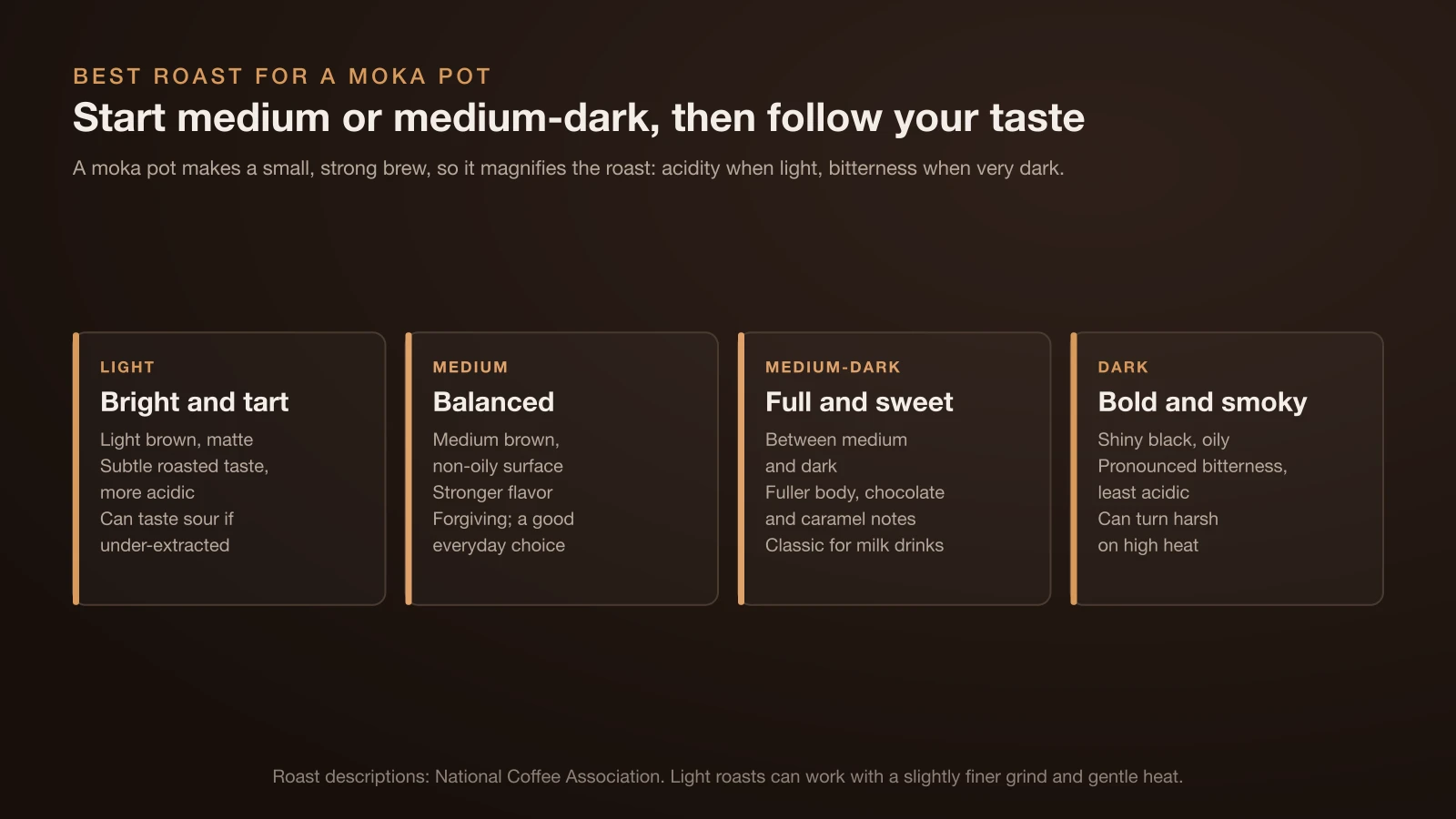
A medium or medium-dark roast is the best starting point for a moka pot. A moka pot makes a small, strong brew, so it magnifies whatever the roast tastes like: acidity in light roasts, bitterness in very dark ones.
| Roast | Typical look and taste | In a moka pot |
|---|---|---|
| Light | Light brown, matte, subtle roasted taste, more acidic | Bright and tart; can taste sour if under-extracted |
| Medium | Medium brown, stronger flavor, non-oily surface | Balanced and forgiving; good everyday choice |
| Medium-dark | Between medium and dark; fuller body | Full body, chocolate and caramel notes; classic for milk drinks |
| Dark | Shiny black, oily surface, pronounced bitterness, least acidic | Bold and smoky; can turn harsh on high heat |
The light, medium and dark descriptions follow the NCA, which also notes that the lighter the roast, the more acidic the cup. Bialetti says a long, controlled roast enhances the coffee’s aroma. Neither is a rule. If you like bright coffee, a light roast can work in a moka pot with a slightly finer grind and gentle heat. Our guide to espresso roast covers roast names and how to read them.
Moka pot grind size
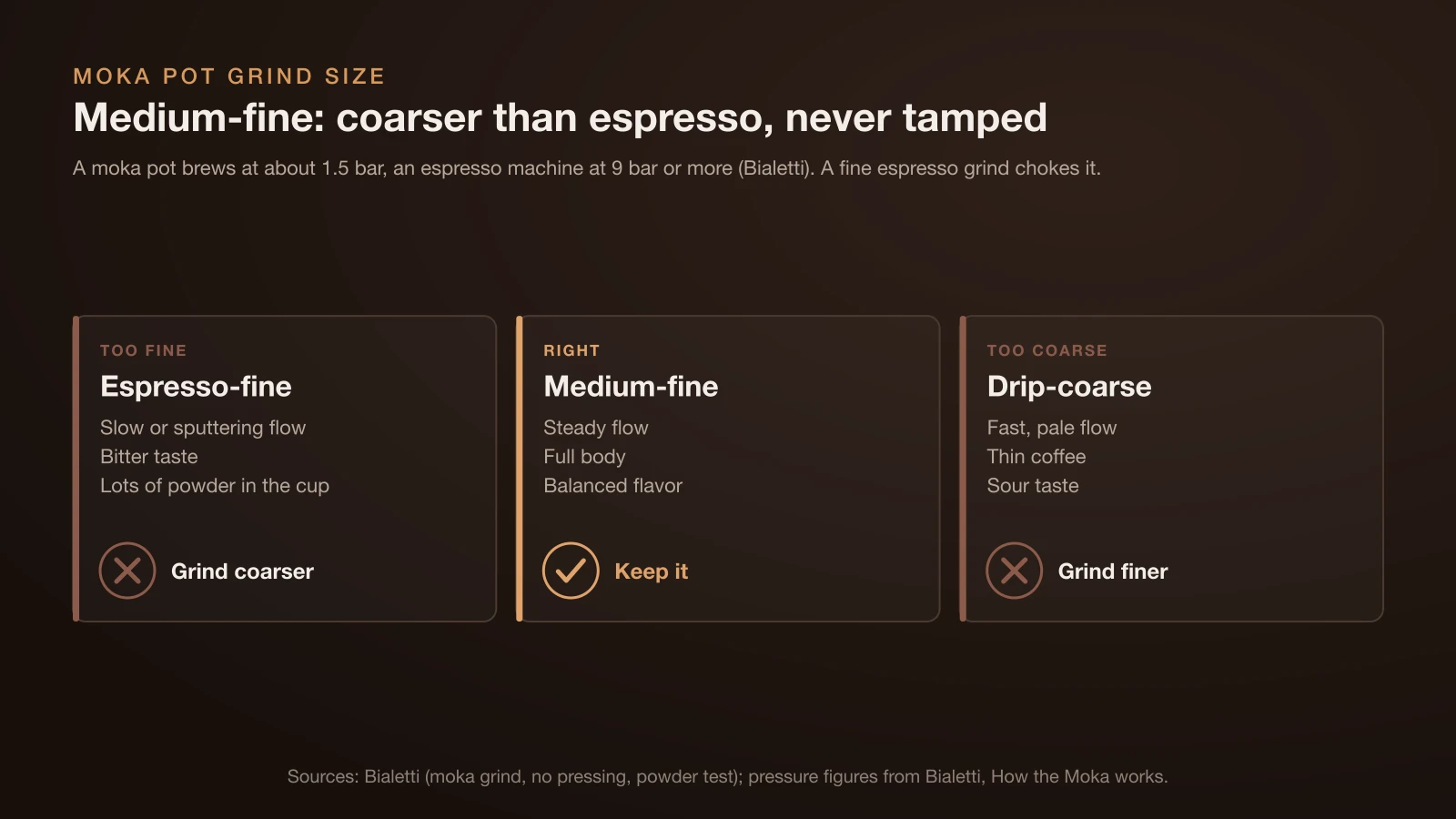
The right moka pot grind size is medium-fine: coarser than an espresso grind and finer than a drip grind. Bialetti’s guidance is consistent across its pages: the coffee should be “Moka-ground,” medium and coarser than an espresso blend, and it should never be pressed into the funnel.
The reason is pressure. Bialetti puts the moka pot’s brewing pressure at about 1.5 bar, against at least 9 bar for an espresso machine. A fine espresso grind gives that gentle pressure too much resistance, so the flow slows and the coffee over-extracts.
| Grind | What you will notice | Fix |
|---|---|---|
| Too fine | Slow or sputtering flow, bitter taste, lots of powder in the cup | Grind coarser |
| Medium-fine | Steady flow, full body, balanced flavor | Keep it |
| Too coarse | Fast, pale flow, thin and sour coffee | Grind finer |
Bialetti offers a simple check: if there is a lot of powder left at the bottom of the cup, the grind was too fine. For how moka and espresso grinds compare, see espresso grind size.
Do you need a burr grinder for a moka pot?
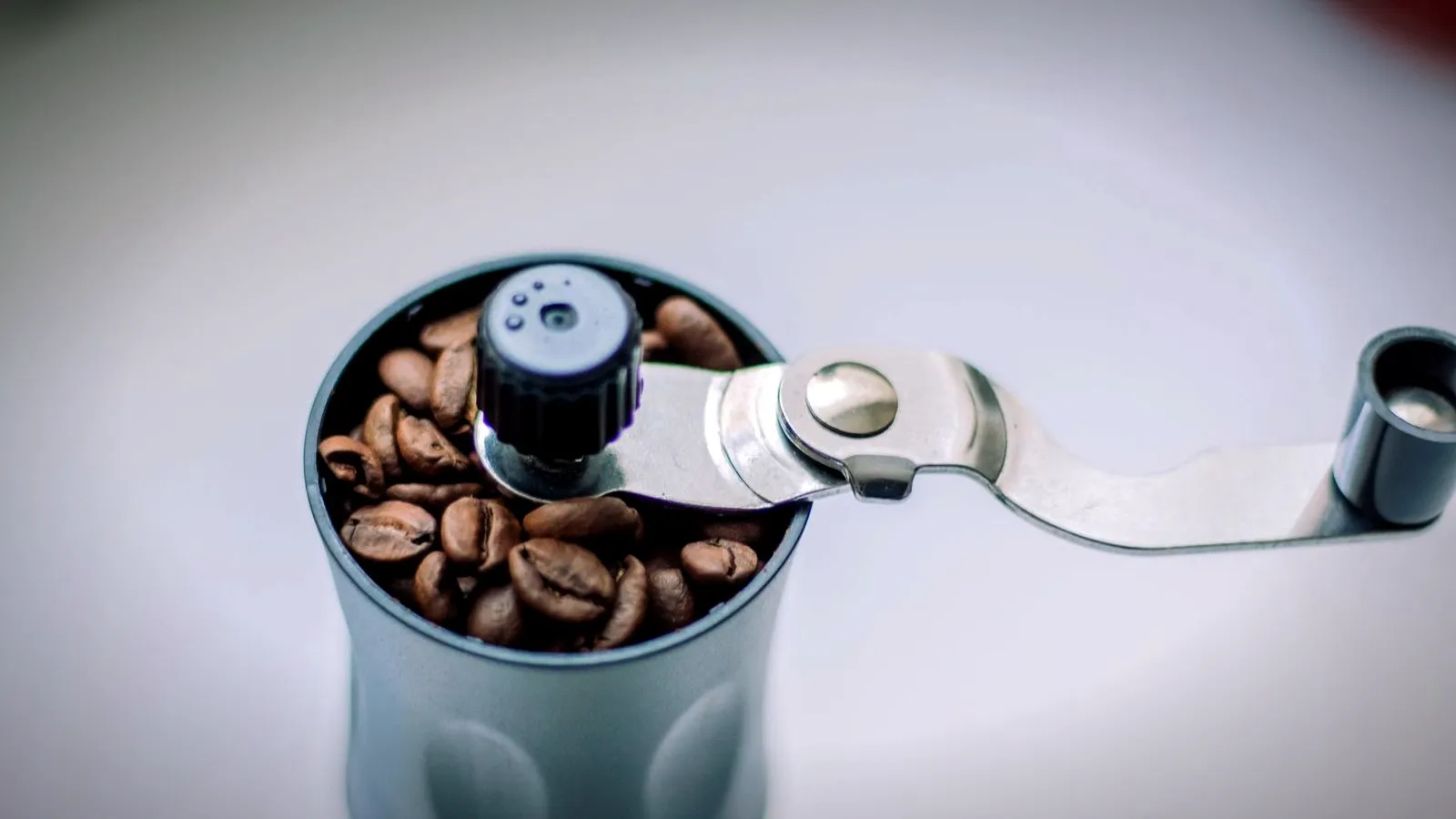
A burr grinder is not required for a moka pot, but it makes the grind much more even. The NCA explains that burr grinders crush beans between a moving and a fixed surface, giving a consistent grind and more even extraction, and are less likely to overheat the grounds. Blade grinders chop the beans with a spinning blade, so you cannot control the particle size well.
An uneven grind mixes powder with chunks. In a moka pot, the powder can clog the filter plate and add bitterness while the chunks under-extract. For that reason:
- Best: a burr grinder, electric or hand-cranked, with steps fine enough to land between espresso and drip.
- Workable: a blade grinder used in short pulses with a shake between them, then sifted if it produces a lot of dust.
- Simplest: a fresh bag ground for moka pots by the roaster or the store.
Pre-ground vs whole-bean coffee for a moka pot
Whole-bean coffee ground just before brewing gives the most aroma, but pre-ground coffee works well in a moka pot if the grind is right. The difference is freshness. The SCA says ground coffee might be considered fresh for only about an hour after grinding, because it loses carbon dioxide and aroma much faster than whole beans.
| Whole bean, ground fresh | Pre-ground | |
|---|---|---|
| Aroma and flavor | Best | Fades fastest; NCA gives ground coffee 1–2 weeks |
| Grind control | Full; adjust to taste | None; depends on the label |
| Equipment | Needs a grinder | None |
| Best for | Daily brewing, flavor-focused drinkers | Convenience, travel, occasional use |
If you buy ground coffee for a moka pot, Bialetti’s advice is simple: make sure it is actually coffee for moka pots. Drip grinds are too coarse and brew thin. Our guide to espresso grounds explains how to read pre-ground labels and store an open bag.
Can you use espresso coffee in a moka pot?
Yes, espresso beans and espresso blends work very well in a moka pot, as long as you grind them coarser than you would for an espresso machine. “Espresso” on a bag describes how the roaster intends the coffee to be brewed; the NCA notes it is not a specific roast level and is often medium to dark. Read more in our complete guide to espresso beans.
Pre-ground espresso is the exception to watch. It is milled for 9 bar machines, so it can be finer than a moka pot likes. If your moka coffee tastes bitter, flows slowly or leaves sludge, the grind is the likely cause. Switch to a moka-ground bag or grind the beans yourself.
Blend or single origin, arabica or robusta?
Both blends and single-origin coffees make good moka coffee; the choice comes down to the flavor you want. Blends are designed by the roaster for balance and body, which makes them consistent and good with milk. Single origins show one farm’s or region’s character, which can be more distinctive and sometimes brighter.
The species matters for strength. In laboratory measurements of green coffee, robusta held about 2.09% caffeine and arabica about 1.09%. A blend with robusta will therefore give a more caffeinated moka coffee than 100% arabica brewed the same way. If the bag does not say “100% arabica,” check the label for robusta.
Decaf coffee in a moka pot
Decaf coffee brews in a moka pot exactly like regular coffee, with the same grind and steps. The NCA says decaffeination removes around 97% of the caffeine, so a decaf moka coffee keeps the flavor and body with only a small amount of caffeine.
Buy small bags and grind fresh, as with any coffee. Our guide to decaf espresso beans explains the decaffeination methods and what to look for on the label.
How to keep moka pot coffee fresh
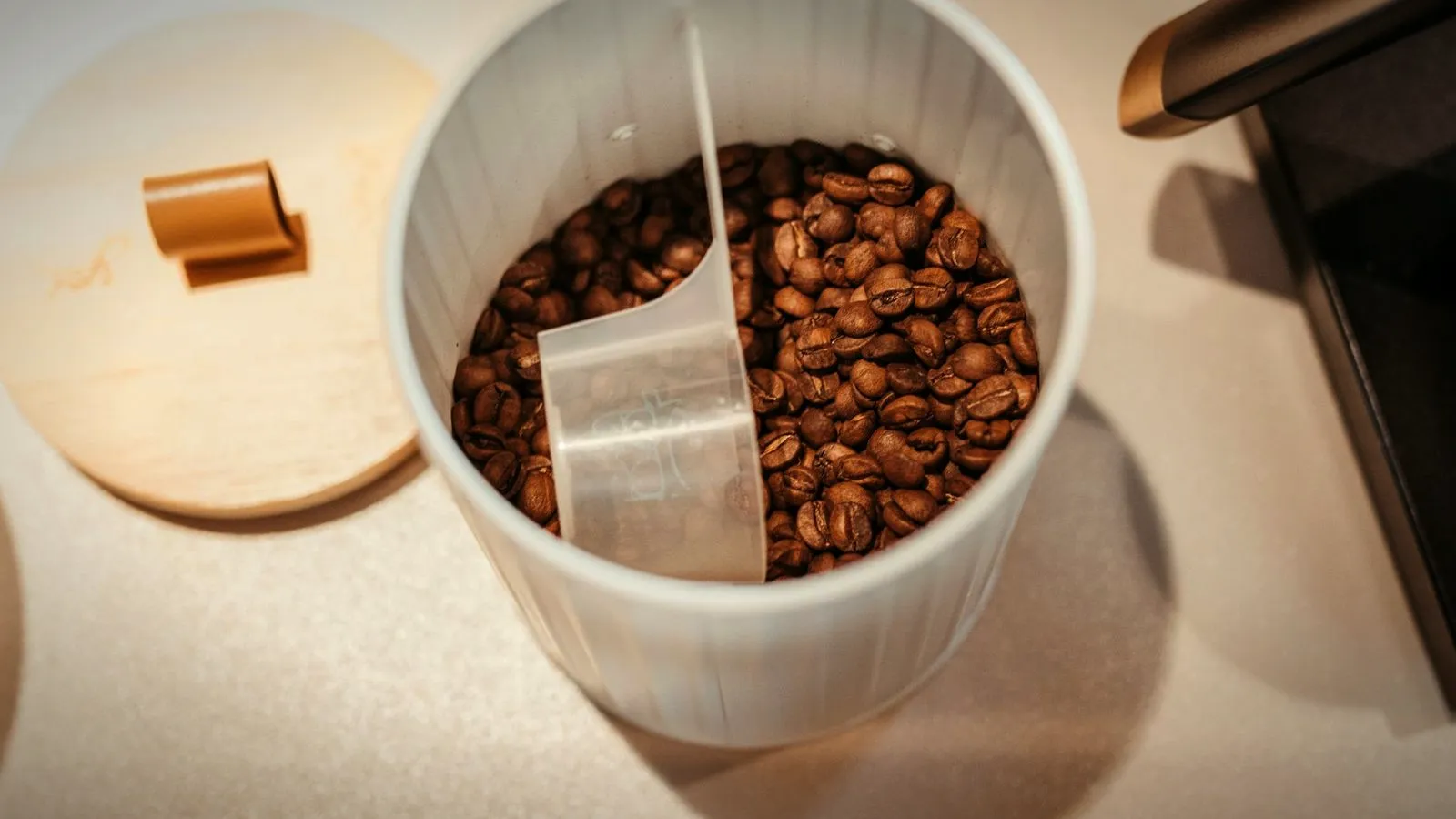
Fresh coffee matters more than any brand name, because a moka pot makes a strong brew that shows staleness clearly. The SCA notes that beans release carbon dioxide rapidly for about 20 days after roasting, then much more slowly, and considers whole beans fresh for about three weeks.
- Store beans airtight and opaque, in a cool, dark place, as the NCA recommends.
- Grind right before brewing when you can.
- Freeze extra beans in a truly airtight container; the NCA gives frozen beans about 3–4 months, and suggests taking out only a week’s worth at a time.
- Mind the water too. Bialetti recommends room-temperature water in the base and advises against hard, mineral-heavy water.
If you do not own a moka pot yet, or want to compare it with other ways of brewing strong coffee at home, see how to make espresso without a machine.
The bottom line
The best coffee for a moka pot is not one brand but a fresh bag of medium to medium-dark roast, ground medium-fine and never tamped. Buy whole beans with a roast date if you can grind them, or a bag labeled for moka pots if you cannot. Blends, single origins, robusta blends and decaf all work, so choose by the flavor you enjoy.
Sources
- Bialetti: Moka Express (“Moka-ground, and not too fine,” no pressing, room-temperature water), How the Moka works (about 1.5 bar vs at least 9 bar, coarser grind, coffee for moka pots, long and controlled roast, avoid hard water) and Ground coffee for Moka should never be pressed (medium grain coarser than espresso, powder residue test)
- National Coffee Association: Roasts (roast descriptions, acidity, espresso roast often medium to dark), Espresso (burr vs blade grinders), Coffee storage and shelf life (buy for one or two weeks, airtight and opaque, frozen 3–4 months) and Decaf coffee (around 97% of caffeine removed)
- Specialty Coffee Association: Coffee Decoded: fresh coffee (whole beans fresh about three weeks, ground coffee about an hour, rapid degassing for about 20 days)
- Biotropia: The chemical characteristics of arabica and robusta green coffee beans (2.09% vs 1.09% caffeine)