Decaf espresso beans are ordinary coffee beans that have had most of their caffeine removed while still green, then roasted and blended to taste good as espresso. There is no special decaf plant. The difference lies in the decaffeination process, which affects flavor, how the beans roast and how you need to grind and brew them.
This guide explains the four decaf processes, what the current rules say about safety, how much caffeine remains, and how to get a good shot from decaf beans at home.
The short answer
| Process | How the caffeine is removed | Solvent contact | US rule |
|---|---|---|---|
| Swiss Water | Green beans soak in a caffeine-free coffee extract; carbon filters trap the caffeine | None | Water process |
| CO2 (supercritical) | Pressurized carbon dioxide dissolves the caffeine | None | CO2 allowed as a processing aid (21 CFR 184.1240) |
| Ethyl acetate (“sugarcane”) | A solvent often made from fermented sugarcane | Yes, then removed | Allowed for decaffeination (21 CFR 173.228) |
| Methylene chloride | A synthetic solvent, then steamed off | Yes, then removed | Residue limit of 10 ppm (21 CFR 173.255) |
What are decaf espresso beans?
“Espresso” on a bag describes how the coffee is meant to be brewed, not a type of bean. We explain this in detail in espresso beans vs coffee beans. Decaf espresso beans follow the same rule: the roaster starts with green coffee that has been decaffeinated, then roasts and blends it for pressure brewing.
Decaffeination always happens before roasting, because caffeine is easiest to remove from green beans. That means every decaf coffee, espresso or not, goes through one of a handful of industrial processes before it reaches the roaster.
How coffee is decaffeinated
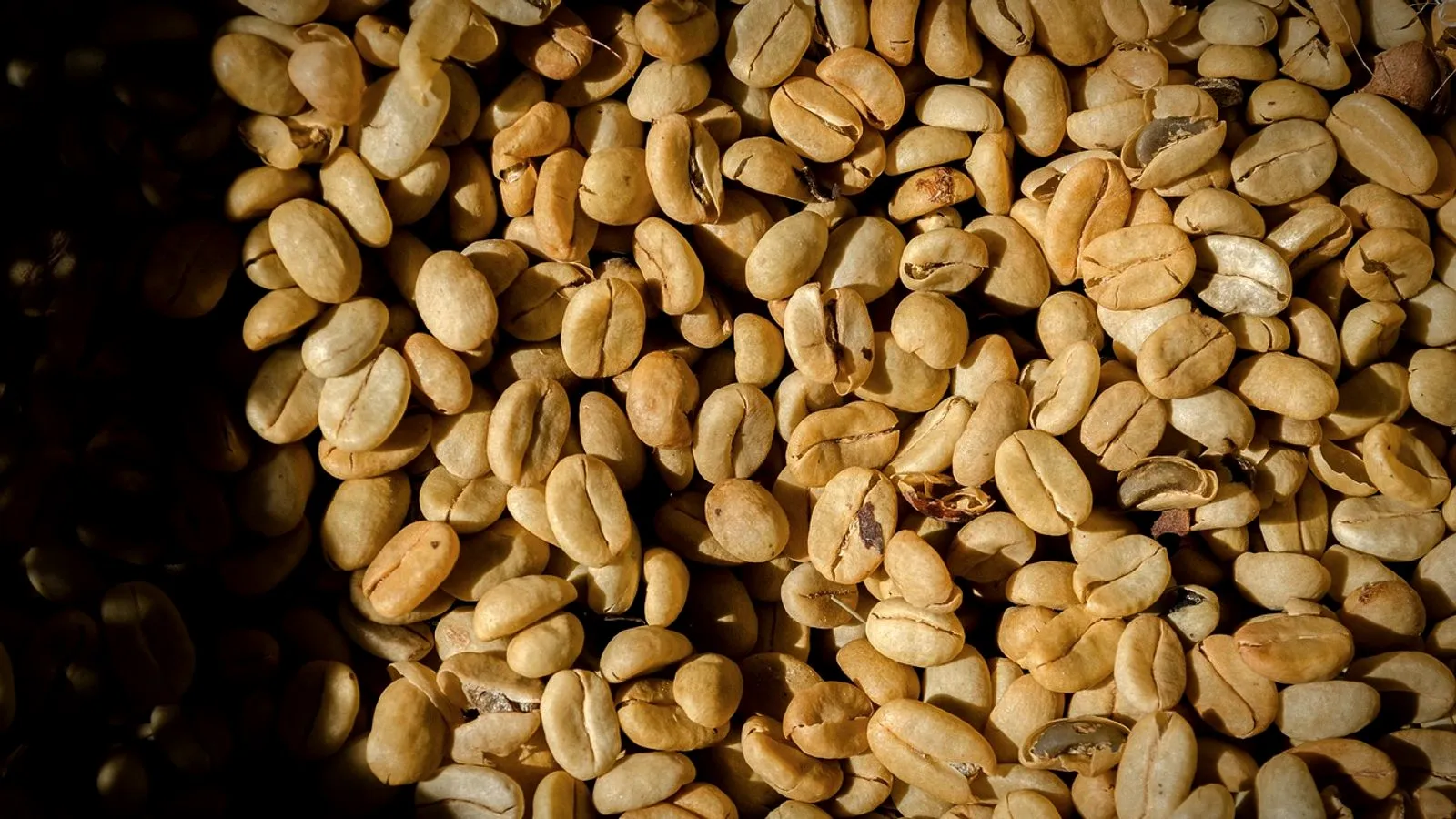
All four common methods start by steaming or soaking the green beans so the caffeine can move out of them. They differ in what carries the caffeine away.
Swiss Water Process
The beans soak in a caffeine-free extract of green coffee. Because that liquid already holds the other soluble compounds in coffee, mostly caffeine moves out of the beans. The caffeine is then caught by carbon filters, which Swiss Water describes as chemical-free, and the extract is reused. Swiss Water guarantees its decaf green coffee is 99.9% caffeine-free.
CO2 process
Carbon dioxide under high pressure acts as a solvent that bonds mostly with caffeine. The caffeine is then separated from the CO2. In the United States, carbon dioxide is classed as generally recognized as safe and is allowed as a processing aid.
Ethyl acetate (“sugarcane” decaf)
Ethyl acetate occurs naturally in fruit and is often produced from fermented sugarcane, which is why these coffees are sold as “sugarcane decaf”. The beans are washed with the solvent, which is then removed with steam. US regulations list ethyl acetate as permitted for decaffeinating coffee and tea.
Methylene chloride (“European process”)
This synthetic solvent removes caffeine efficiently and is then evaporated off. US regulations allow it for decaffeination as long as residues in roasted coffee do not exceed 10 parts per million.
Is decaf coffee safe? The methylene chloride question
All decaf processes used commercially are permitted by US and EU regulators. The debate is about methylene chloride.
- In December 2023, the FDA filed a petition from the Environmental Defense Fund and other groups asking it to remove methylene chloride and three other solvents from the food additive regulations.
- In May 2026, the FDA reopened public comments on that petition, with the window closing on June 29, 2026.
- As of late September 2026, the FDA has not announced a decision. Claims that the FDA has banned it, or proposed a ban, are not accurate.
- The EPA restricted many uses of methylene chloride in 2024, but that rule was made under a law (TSCA) that excludes food additives, so it does not cover decaffeination.
If you prefer to avoid solvents entirely, choose beans labeled Swiss Water or CO2 process. Many roasters print the method on the bag; if it is not listed, ask.
How much caffeine do decaf espresso beans have?
Decaffeination removes most of the caffeine, not all of it. The National Coffee Association describes the process as typically removing around 97% of the caffeine. That is an industry figure, not a US legal standard. In Germany the law caps decaf roasted coffee at 0.1% caffeine by dry matter.
In the cup, that works out to a few milligrams per shot. USDA data puts restaurant decaf espresso at about 0.3 mg per one-ounce shot, while lab tests of café shots have found 3 to 15.8 mg. See our full breakdown of how much caffeine is in decaf espresso.
How decaf beans behave in the roaster and the grinder
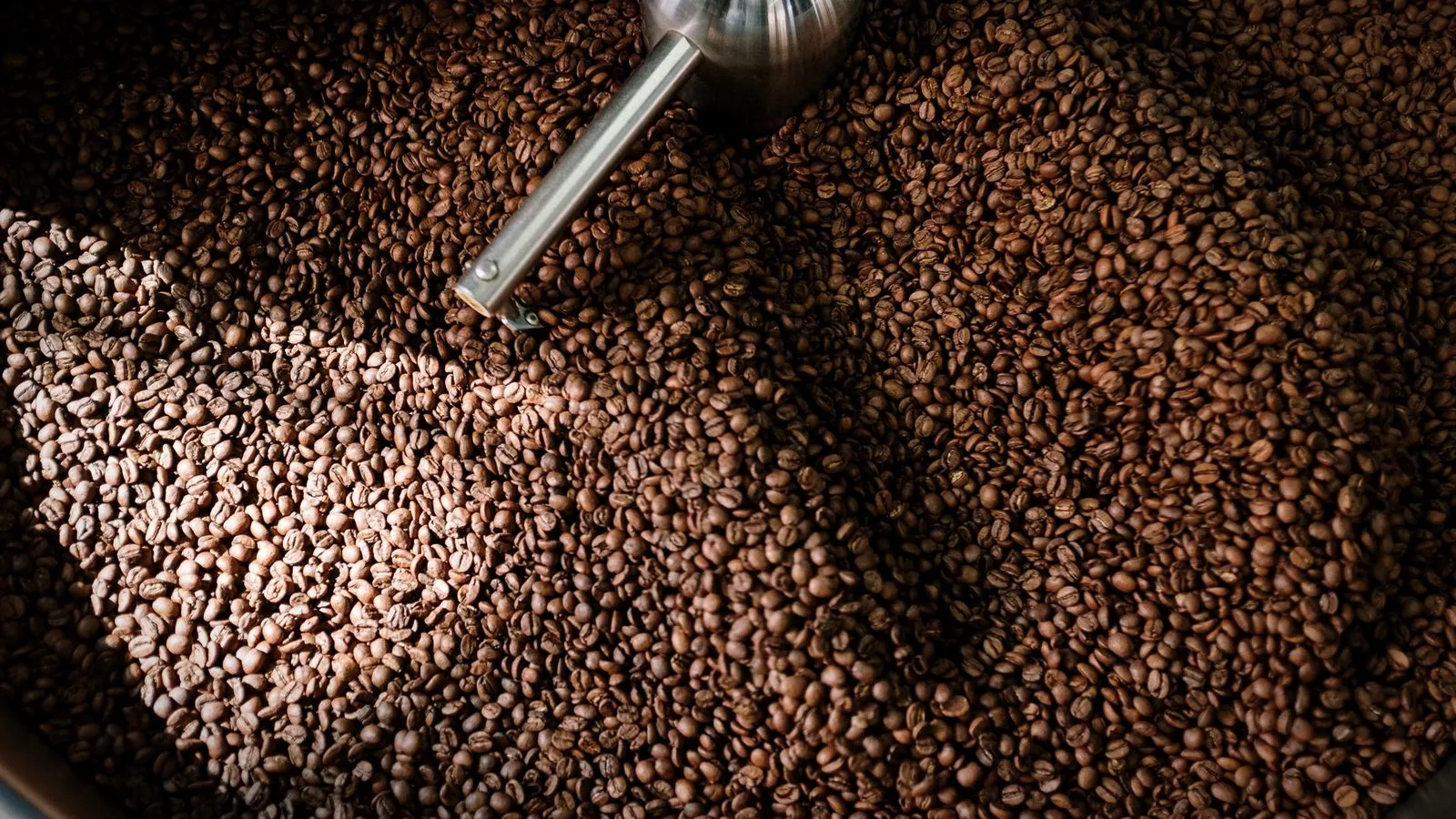
Decaffeination changes the bean’s structure, and that shows up at every later step:
- They look different from the start. Swiss Water decaf starts out a darker shade of green and stays darker through the whole roast, so bean color is a poor guide to roast level.
- They handle heat differently. Decaffeination soaks and then redries the beans, so they give up moisture earlier in the roast. Swiss Water advises roasters to go gently early in the roast rather than push hard.
- They extract differently. Swiss Water recommends a slightly finer grind, a little more coffee, or both, to make up for decaf’s slightly different chemical composition.
How to dial in decaf espresso at home
Start from the same recipe you use for regular beans, then adjust:
- Dose 18 g for a double, as usual.
- Grind slightly finer than your regular espresso setting.
- Aim for about 36 g out in 25–30 seconds (a 1:2 ratio), then adjust by taste.
- If the shot is sour and fast, grind finer. If it is bitter and slow, grind coarser.
- Keep the grinder clean. If you also grind regular beans, purge a few grams before the decaf dose so leftover regular coffee does not end up in your shot.
If you buy pre-ground decaf, read our guide to espresso grounds first; freshness matters just as much with decaf.
How to choose decaf espresso beans
- Look for a roast date, not just a best-by date. Use the beans within about one to four weeks of roasting.
- Check the process on the label if you care about solvents.
- Choose medium to medium-dark roasts for your first bags. They are the easiest to dial in and taste good with milk.
- Prefer 100% arabica if you want the lowest caffeine, since green robusta beans start with about twice as much (about 2.1% vs 1.1% caffeine in one analysis).
- Buy small bags you will finish within two to three weeks. Decaf goes stale like any other coffee.
Common myths about decaf espresso beans
“Decaf is made from a low-caffeine plant.” Almost all decaf starts as regular arabica or robusta that is processed to remove caffeine.
“Decaf means zero caffeine.” It means most of the caffeine has been removed. A few milligrams remain.
“The FDA banned methylene chloride decaf.” It has not. A petition is still under review.
“Darker-looking decaf beans are a darker roast.” Decaf beans start darker, so their color misleads.
The bottom line
Decaf espresso beans are regular beans that were decaffeinated before roasting, most often by the Swiss Water, CO2, ethyl acetate or methylene chloride process. All four are currently permitted; choose Swiss Water or CO2 if you want to avoid solvents. Expect a few milligrams of caffeine per shot, grind a little finer than usual and buy fresh, clearly labeled bags.
Sources
- Office of the Federal Register: eCFR 21 CFR 173.255, methylene chloride (10 ppm residue limit in decaffeinated coffee), 21 CFR 173.228, ethyl acetate (permitted for decaffeination) and 21 CFR 184.1240, carbon dioxide; Federal Register FDA filing of the Environmental Defense Fund solvent petition (filed December 21, 2023), FDA reopening of the comment period (comments until June 29, 2026) and EPA methylene chloride rule under TSCA (food additives excluded)
- Swiss Water Decaf: The Swiss Water Process, How much caffeine is in decaf? (99.9% caffeine-free green coffee), Optimizing the roast of decaf coffee and Brew guides (finer grind or more coffee for decaf)
- National Coffee Association: Decaf coffee (around 97% of caffeine removed)
- Bavarian State Office for Health and Food Safety (LGL): Decaffeinated coffee testing (German limit of 0.1% caffeine in dry matter)
- Biotropia: The chemical characteristics of arabica and robusta green coffee beans (1.09% vs 2.09% caffeine in green arabica vs robusta)