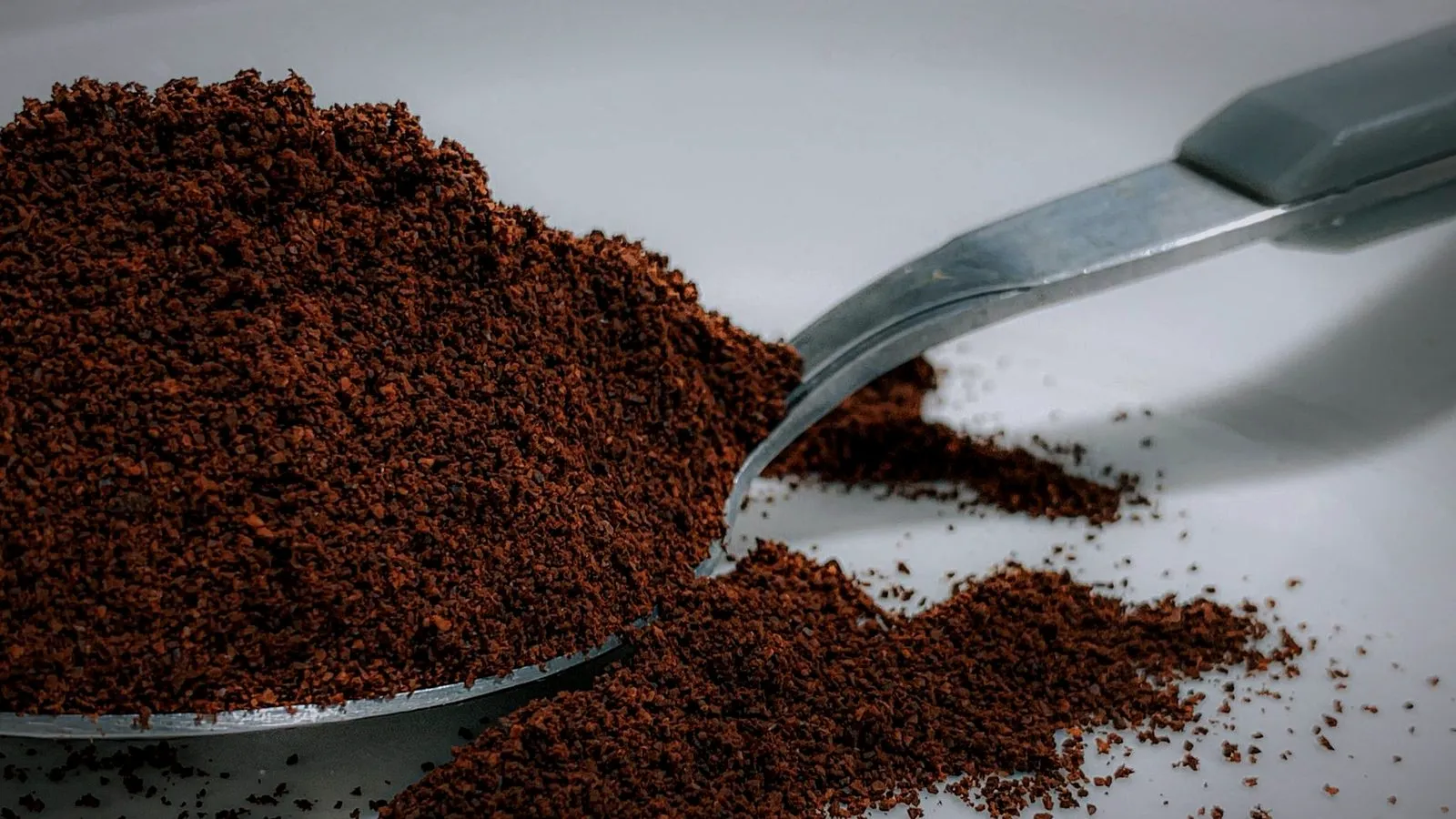
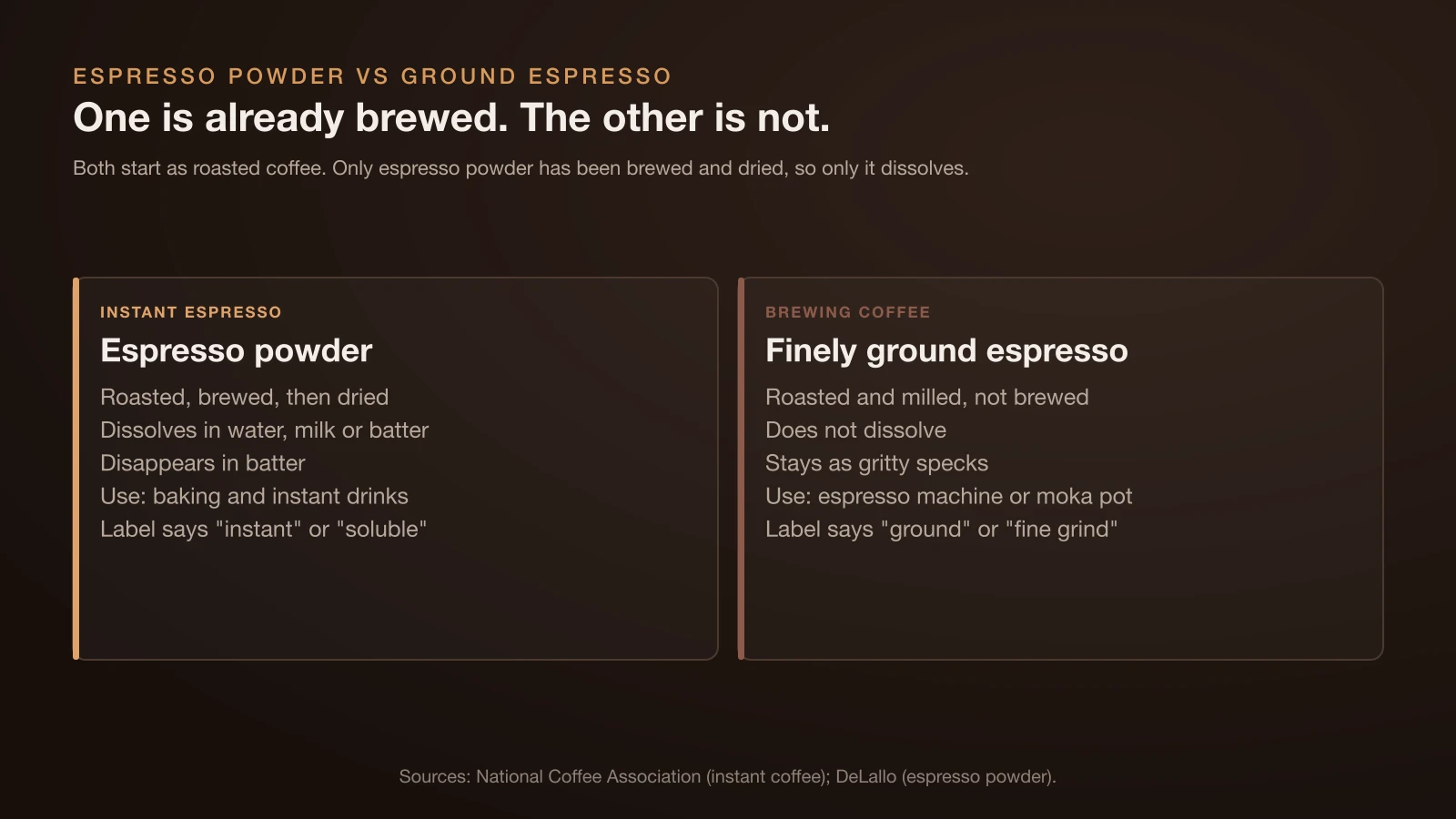
Espresso powder is instant espresso: dark-roasted coffee that has been brewed, then dried into a fine powder that dissolves in liquid. Bakers use it to deepen chocolate flavor in brownies, cakes and frostings, and you can also stir it into hot water for a quick espresso-style drink. It is not the same as finely ground espresso coffee.
That last point causes the most confusion. A bag of fine espresso grounds is roasted coffee that still needs brewing, while espresso powder has already been brewed. Both start as the same kind of bean, as our guide to espresso beans vs coffee beans explains.
The short answer
| Question | Answer |
|---|---|
| What is it? | Brewed espresso-style coffee, dried into a soluble powder |
| Same as instant espresso? | Yes, the names are used for the same product |
| Same as ground espresso? | No, ground coffee does not dissolve and must be brewed |
| Main use | Deepening chocolate flavor in baking; quick coffee drinks |
| How much in baking | Manufacturer guidance: a teaspoon or two in chocolate desserts |
| Caffeine | About 31 mg per gram of instant coffee powder (USDA) |
| Where to buy | Baking aisle or coffee aisle of most supermarkets, or online |
What is espresso powder?
Espresso powder is a concentrated instant coffee made from coffee roasted and brewed for espresso. After brewing, the liquid is dried, and what is left is a dark powder that dissolves in hot water, milk or a wet batter without leaving grounds behind.
How instant coffee powder is made
The National Coffee Association (NCA) describes instant coffee as real coffee that has been roasted, brewed into a strong concentrate and then dehydrated. Manufacturers use one of two drying methods:
- Freeze-drying: the concentrate is frozen at about −40 °C (−40 °F) and the ice is removed, which gives granules.
- Spray-drying: the concentrate is sprayed into hot air and dries into a fine powder.
Espresso powder follows the same idea with a darker, espresso-style roast. DeLallo, a maker of instant espresso powder, describes its product as espresso beans that are brewed and then dried to become a powder.
Why ground espresso is not espresso powder
Ground espresso is simply roasted coffee milled fine for an espresso machine. It is insoluble, so stirring it into water gives you muddy water, not coffee. In a cake or frosting it stays as gritty specks.
| Espresso powder | Finely ground espresso | |
|---|---|---|
| Has it been brewed? | Yes | No |
| Dissolves in liquid? | Yes | No |
| Texture in batter | Disappears | Gritty specks |
| Main use | Baking, instant drinks | Brewing in a machine or moka pot |
Is espresso powder the same as instant espresso?
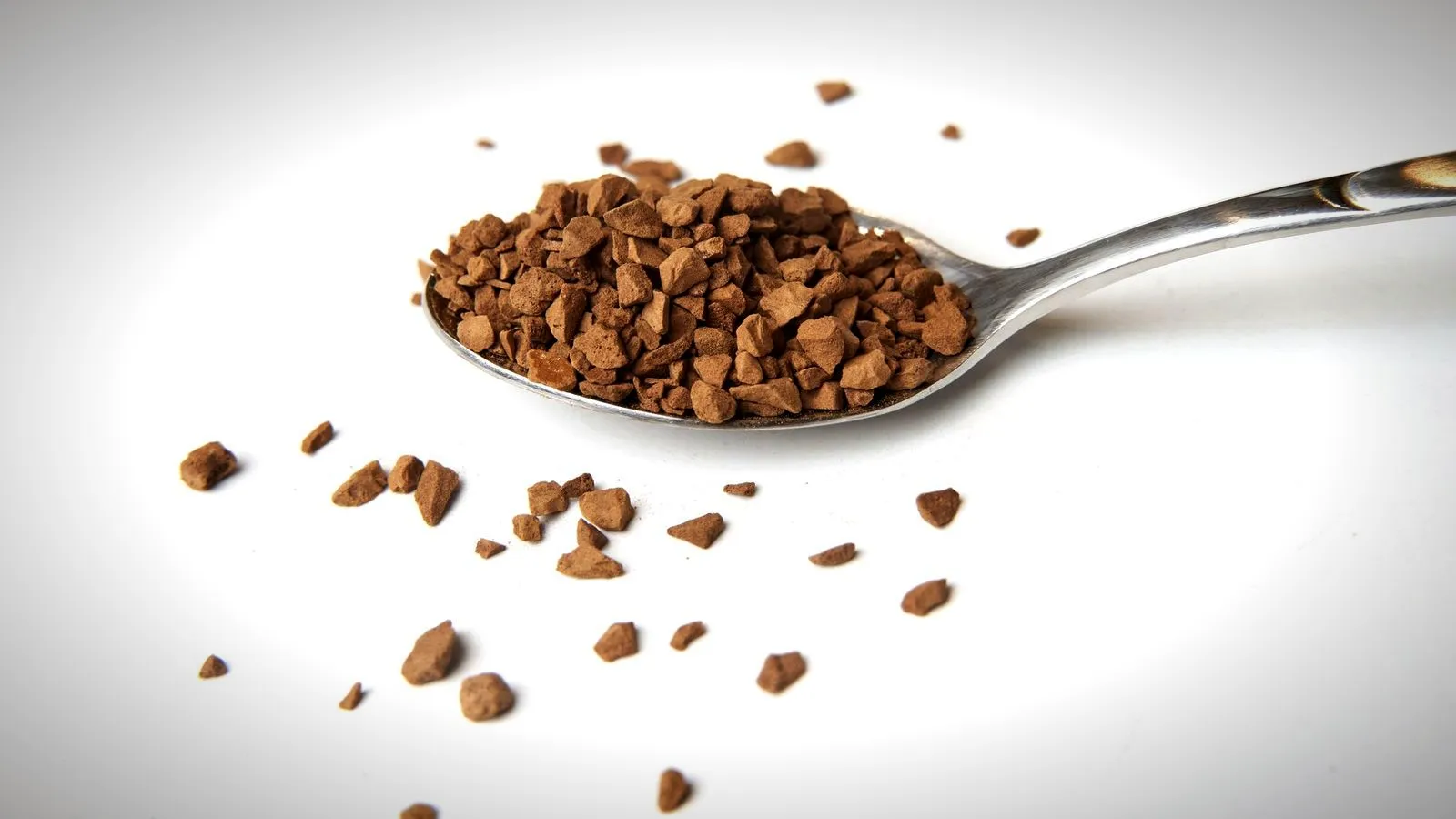
Yes, espresso powder and instant espresso are two names for the same product. DeLallo says both are made the same way and both are instant, whether or not the label uses the word: you can add them as a dry powder to any liquid or wet batter with no brewing.
Labels vary, from “instant espresso” to “espresso powder for baking,” but the word to look for is instant or soluble. A bag that says “ground” or “fine grind” is brewing coffee, not espresso powder.
Regular instant coffee is a close relative made the same way, from light, medium or dark roasts, and it is less concentrated. It works as a substitute, covered below.
Where to buy espresso powder
Espresso powder is sold in most large supermarkets, usually in small jars. Look in these places:
- The baking aisle, near cocoa powder, extracts and chocolate chips. DeLallo points shoppers to both the baking and the coffee aisles.
- The coffee aisle, next to jars of instant coffee.
- Specialty and Italian food shops, which often stock imported instant espresso.
- Online, from grocery delivery services and the makers’ own shops.
Before you buy, check three things on the label:
- The words “instant” or “soluble.” This confirms it dissolves.
- The ingredient list. Plain espresso powder lists only coffee. USDA’s database includes branded instant espresso powders whose labels list a single ingredient: 100% coffee.
- Regular or decaf. Decaf versions exist and are handy for desserts served in the evening.
How to use espresso powder in baking
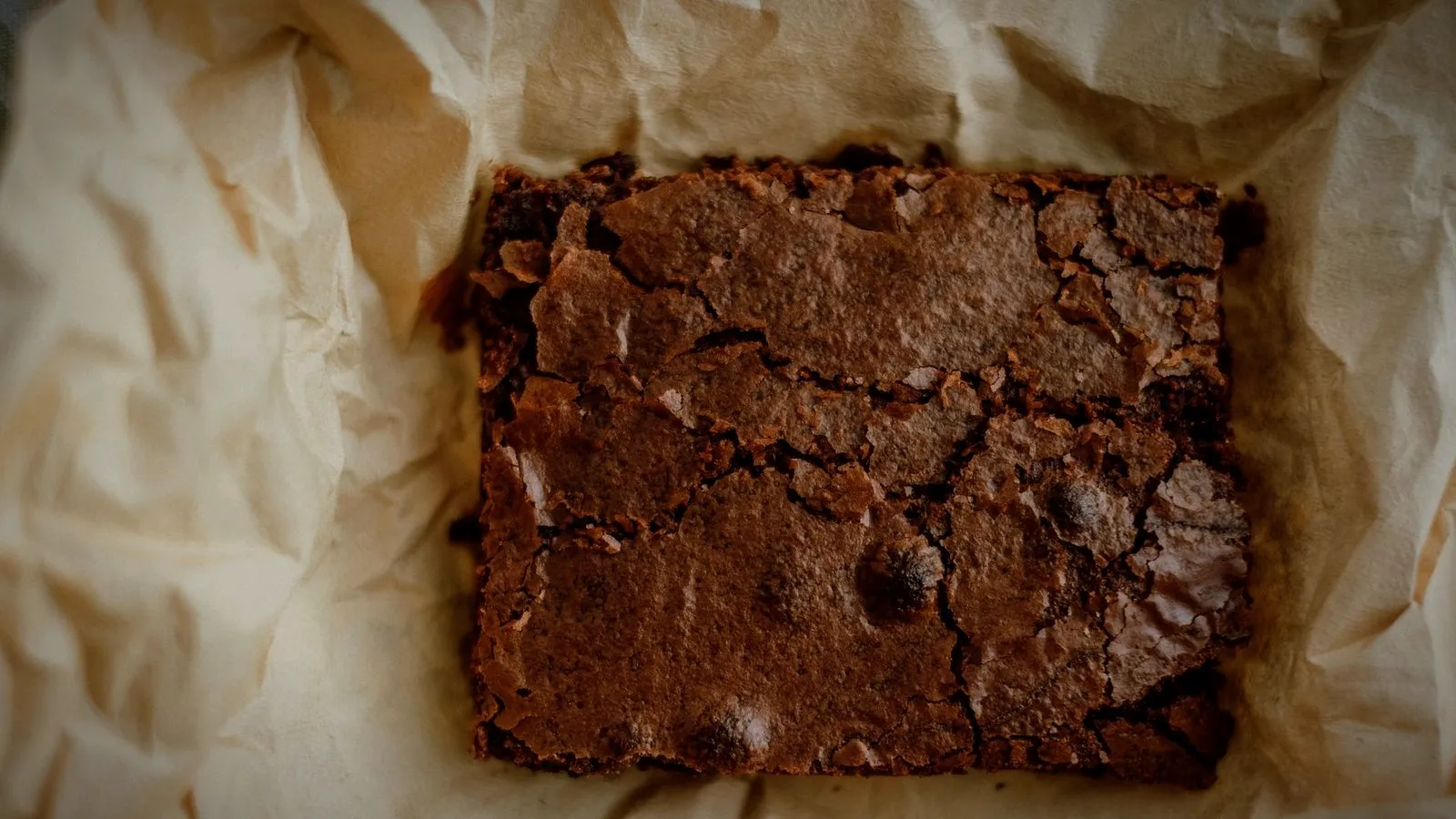
Espresso powder is used in baking mainly to make chocolate taste deeper and richer. DeLallo says just a teaspoon or two amplifies the chocolate flavor of desserts without adding a distinct coffee taste. Use more when you want coffee to be the main flavor.
| Goal | How much (starting point) | Good for |
|---|---|---|
| Richer chocolate, no obvious coffee | A teaspoon or two per recipe (manufacturer guidance) | Brownies, chocolate cake, cookies, ganache |
| Clear coffee flavor | More, as the recipe directs, often in tablespoons | Mocha cookies, coffee buttercream, tiramisu cream |
| Savory depth | A small amount, to taste | Chili, barbecue sauce, dry rubs for beef |
Tips for baking with espresso powder
- Dissolve it first. DeLallo notes it dissolves best in a little warm liquid, so mix it with a spoonful of the recipe’s liquid to avoid dark specks.
- Add it with the cocoa. In dry mixes, whisk it into the flour and cocoa so it spreads evenly.
- Start small. A little goes a long way, and the flavor gets stronger as baked goods cool and rest.
- Match the strength to the dessert. Tiramisu and mocha frostings can take more; a delicate vanilla cake usually needs none.
Chopped chocolate-covered espresso beans folded into the same batter add crunch.
How to make a drink with espresso powder
You make a drink with espresso powder by stirring it into hot water, then adding milk, ice or sugar as you like. DeLallo’s directions call for 1 tablespoon of powder in 4 tablespoons (2 oz, 60 ml) of hot water for an espresso-style shot. Use less powder for a milder cup.
For comparison, the NCA’s guidance for regular instant coffee is 1 teaspoon per 6 oz (180 ml) of water at about 80 °C (176 °F), slightly below boiling.
Instant espresso tastes flatter than a fresh shot and has no crema. It is still useful when you have no machine:
- Iced coffee: dissolve the powder in a little hot water, then add cold water or milk and ice.
- Quick latte: dissolve it in 2 oz of hot water and top with steamed or frothed milk.
For other no-machine methods, from a moka pot to an AeroPress, see how to make espresso without a machine.
How much caffeine is in espresso powder?
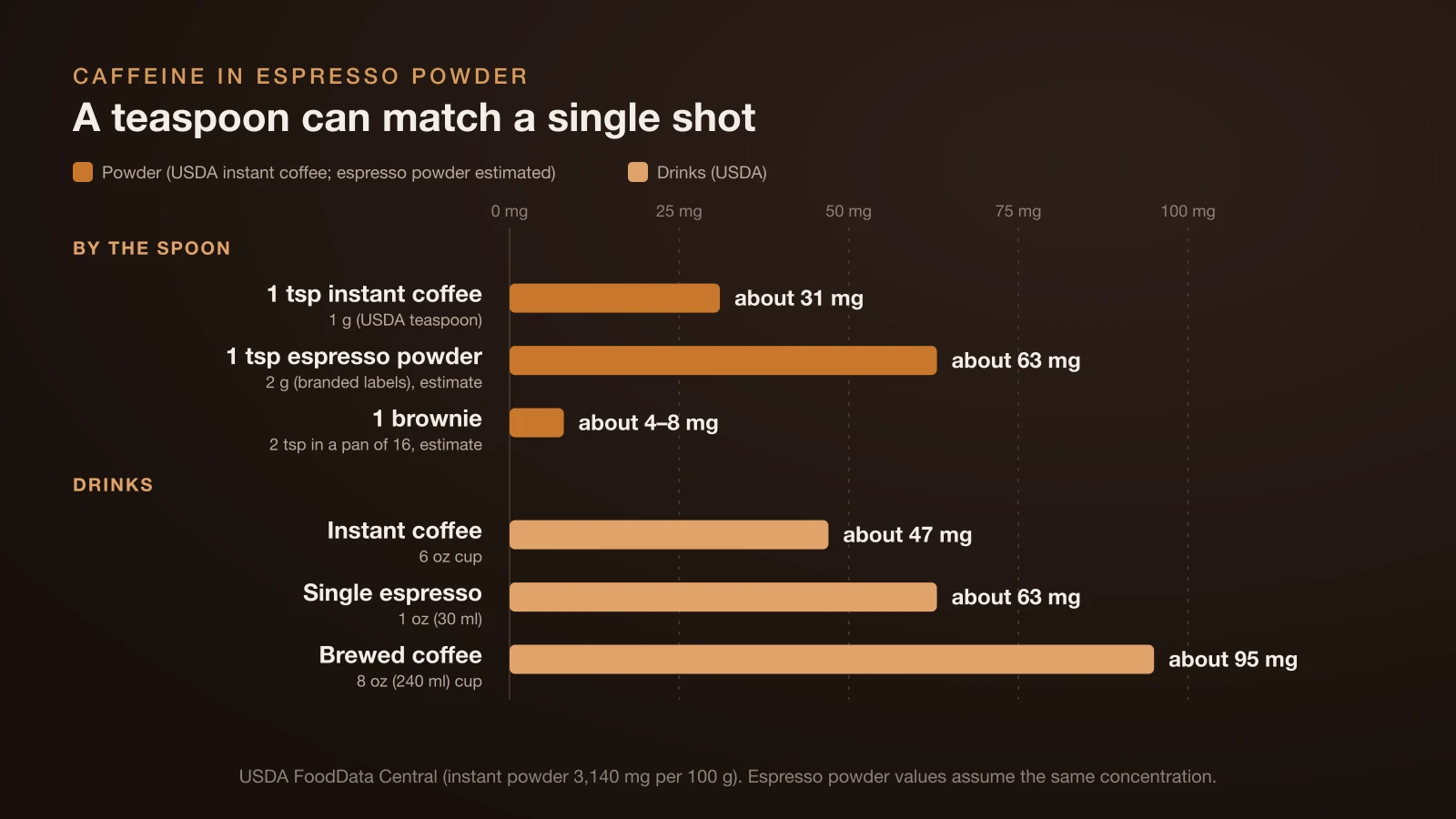
Espresso powder is highly concentrated, so it carries a lot of caffeine for its weight. USDA FoodData Central has no separate entry for espresso powder, but it lists regular instant coffee powder at 3,140 mg of caffeine per 100 g, or about 31 mg per gram.
| Product (USDA FoodData Central) | Caffeine |
|---|---|
| Instant coffee powder, regular | 3,140 mg per 100 g; about 31 mg in a 1 g teaspoon |
| Instant coffee powder, decaf | 122 mg per 100 g; about 1 mg per gram |
| Instant coffee, prepared with water | 26 mg per 100 g; about 47 mg per 6 oz cup |
| Espresso, brewed | about 63 mg per 1 oz (30 ml) single shot |
| Brewed coffee | about 95 mg per 8 oz (240 ml) cup |
Teaspoon weights differ. USDA uses 1.0 g for a teaspoon of instant coffee, while branded instant espresso powders in USDA’s database list 1 teaspoon as 2 g. As a labeled estimate, assuming espresso powder has the same caffeine concentration as USDA’s instant coffee, a teaspoon would hold roughly 31–63 mg, up to about one single shot of espresso.
In baking the amount per serving is small. Another labeled estimate: 2 teaspoons (about 62–126 mg) in a pan cut into 16 brownies adds roughly 4–8 mg of caffeine per piece. For context, the FDA cites 400 mg a day as an amount not generally linked to negative effects in most healthy adults.
Espresso powder substitutes
The best substitute for espresso powder is regular instant coffee, because it dissolves the same way. Other swaps work too, with some trade-offs:
| Substitute | How to use it | Trade-off |
|---|---|---|
| Instant coffee | About 1.5 times the amount (at least 50% more, per DeLallo) | Less depth; harsh or bitter if overdone |
| Brewed espresso or very strong coffee | Replace part of the recipe’s liquid | Adds liquid; weaker per spoonful |
| Finely ground espresso | Grind as fine as possible; best in rustic bakes | Does not dissolve; gritty in smooth batters |
| Extra cocoa powder | Add a little more cocoa | Deepens chocolate but adds no coffee flavor |
| Decaf instant coffee | About 1.5 times the amount, like regular instant | Same use, very little caffeine |
DeLallo says instant espresso gives a truer, darker coffee flavor than regular instant coffee, so expect a less rounded coffee note with the swap.
How to make espresso powder at home
You can make a homemade espresso powder by drying espresso grounds and grinding them very fine, but the result is not instant. It will not dissolve, so it behaves like finely ground coffee: fine in brownies, rubs and rustic cookies, gritty in frosting or a drink.
- Pick your grounds. Freshly ground espresso gives the most flavor. Used grounds from a shot have already given up much of their flavor, so they taste weaker.
- Spread them thin on a lined baking sheet.
- Dry them completely in a low oven, stirring now and then, until they feel dry and loose. Do not let them scorch.
- Grind to a powder in a spice or blade grinder once cool.
- Sift through a fine sieve and regrind any coarse bits.
- Store airtight and use it soon, because ground coffee loses aroma quickly.
Dry used grounds the same day you pull the shot, because damp grounds spoil. For pure flavor without grit, a store-bought instant powder remains the easier choice.
How to store espresso powder
Espresso powder keeps best in a closed jar somewhere cool, dark and dry. DeLallo recommends an airtight container in a cool, dark place to keep its potency. A soluble powder also pulls in moisture from humid air and can cake.
Close the lid right after each use, use a dry spoon and keep the jar away from the kettle and stove. If it clumps, break it up and sift it; the clumps still dissolve.
The bottom line
Espresso powder is instant espresso, brewed coffee dried into a soluble powder, and it is not the same as finely ground espresso. A teaspoon or two makes chocolate desserts taste richer, and larger amounts give a clear coffee flavor. Look for “instant” on the label in the baking or coffee aisle, and use regular instant coffee if you run out.
Sources
- USDA FoodData Central: Coffee, instant, regular, powder (3,140 mg caffeine per 100 g; 1 tsp = 1.0 g), Coffee, instant, decaffeinated, powder (122 mg per 100 g), Coffee, instant, regular, prepared with water (26 mg per 100 g; 6 fl oz = 179 g), Coffee, brewed, espresso, Coffee, brewed and branded labels for instant espresso powder and 100% instant espresso coffee (1 tsp = 2 g; ingredient: 100% coffee)
- National Coffee Association: Instant coffee (light, medium or dark roasts, brewed and dehydrated; freeze-dried at −40 °C or spray-dried; 1 teaspoon per 6 oz of water at about 80 °C)
- DeLallo: All about espresso powder (manufacturer guidance: brewed and dried; same as instant espresso; a teaspoon or two in chocolate desserts; 1 tablespoon in 4 tablespoons of hot water; baking and coffee aisles; airtight, cool, dark storage; instant coffee as a substitute at 50% more or above)
- U.S. Food and Drug Administration: Spilling the Beans: How Much Caffeine Is Too Much? (400 mg a day for most healthy adults)