How much caffeine is in a shot of espresso? A standard single shot of about 1 fluid ounce contains roughly 63 mg of caffeine, based on USDA data. A double shot has about 126 mg. Real shots vary a lot, though: café espressos measured in lab studies ranged from under 50 mg to more than 300 mg per serving.
That spread comes from how much coffee goes into the basket, which beans are used and how the shot is pulled. This guide gives the averages for single, double and triple shots, compares espresso with drip coffee and explains what actually raises or lowers the number. If you drink decaf, see our separate guide to caffeine in decaf espresso.
The short answer
| Serving | Typical size | Caffeine (average) |
|---|---|---|
| Single espresso shot | 1 fl oz (about 30 ml) | about 63 mg |
| Double shot (doppio) | 2 fl oz (about 60 ml) | about 126 mg |
| Triple shot | 3 fl oz | about 189 mg |
| Quad shot | 4 fl oz | about 252 mg |
| Brewed drip coffee | 8 fl oz cup | about 95 mg |
| Brewed drip coffee | per 1 fl oz | about 12 mg |
The espresso figures scale USDA’s average of 212 mg of caffeine per 100 g of espresso. Treat them as a midpoint, not a guarantee: the amount of ground coffee in your basket matters more than anything else.
How much caffeine is in one shot of espresso?
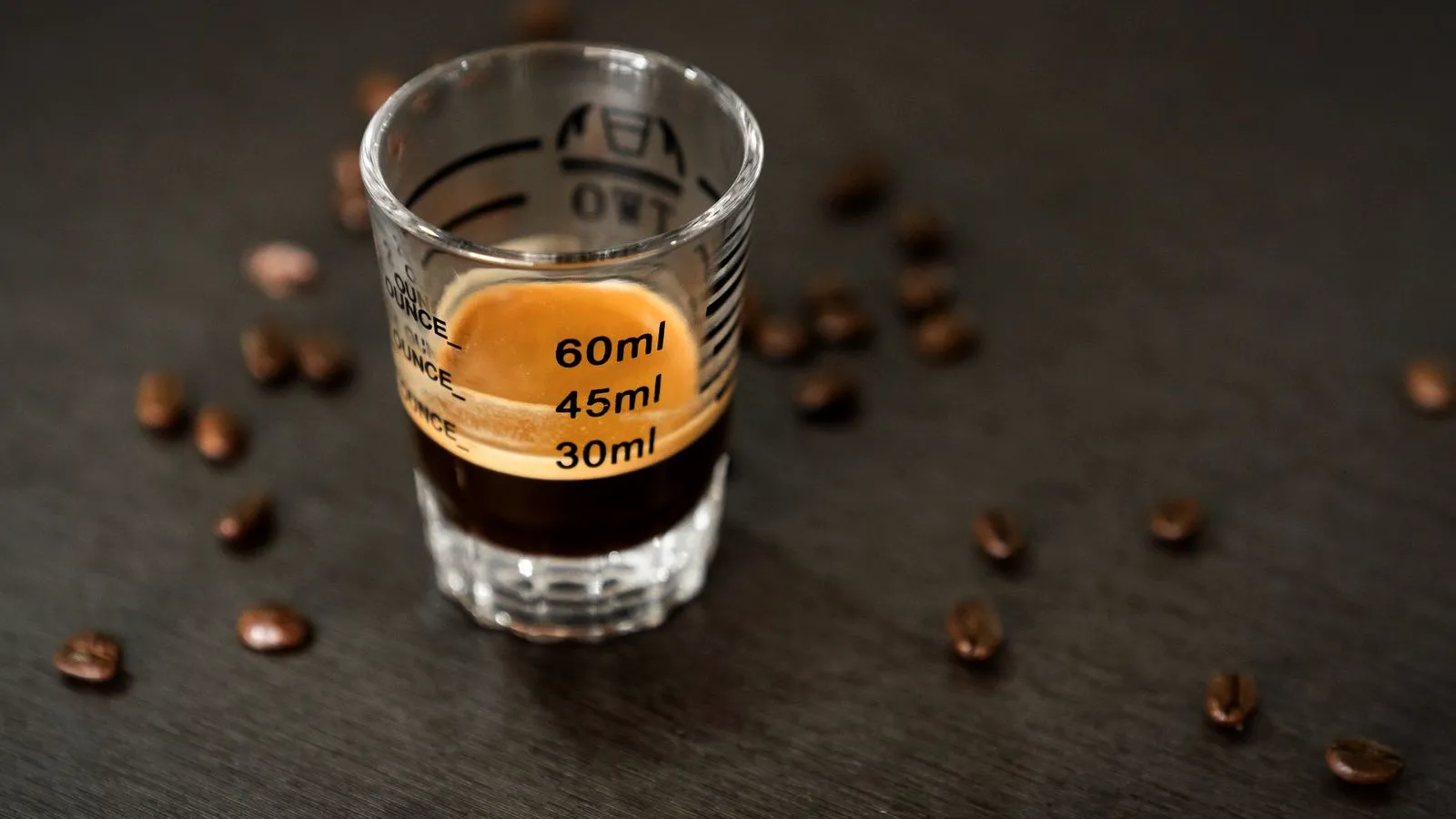
A single shot of espresso has about 63 mg of caffeine on average. USDA FoodData Central lists restaurant-prepared espresso at 212 mg of caffeine per 100 g, and a 1 fl oz serving weighs about 29.6 g, which works out to roughly 63 mg.
What counts as a “shot” is not fixed. The Istituto Espresso Italiano defines a certified Italian espresso as about 25 ml in the cup, slightly less than an ounce. Breville’s machine manual describes a one-cup shot as about 30 ml brewed from roughly 8–11 g of ground coffee. A smaller or lighter-dosed shot will land below the average; a generous one above it.
How much caffeine is in a double shot of espresso?
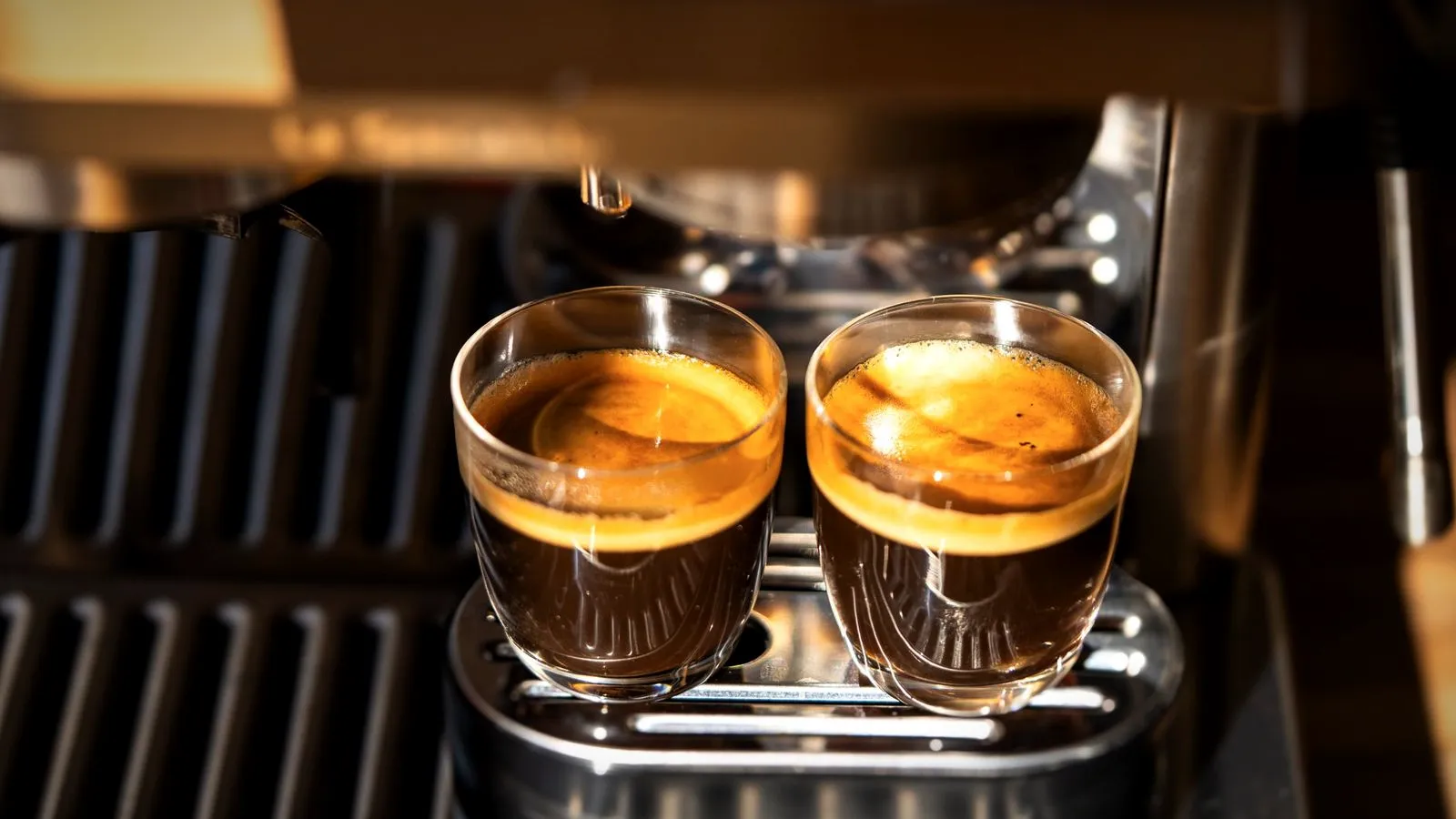
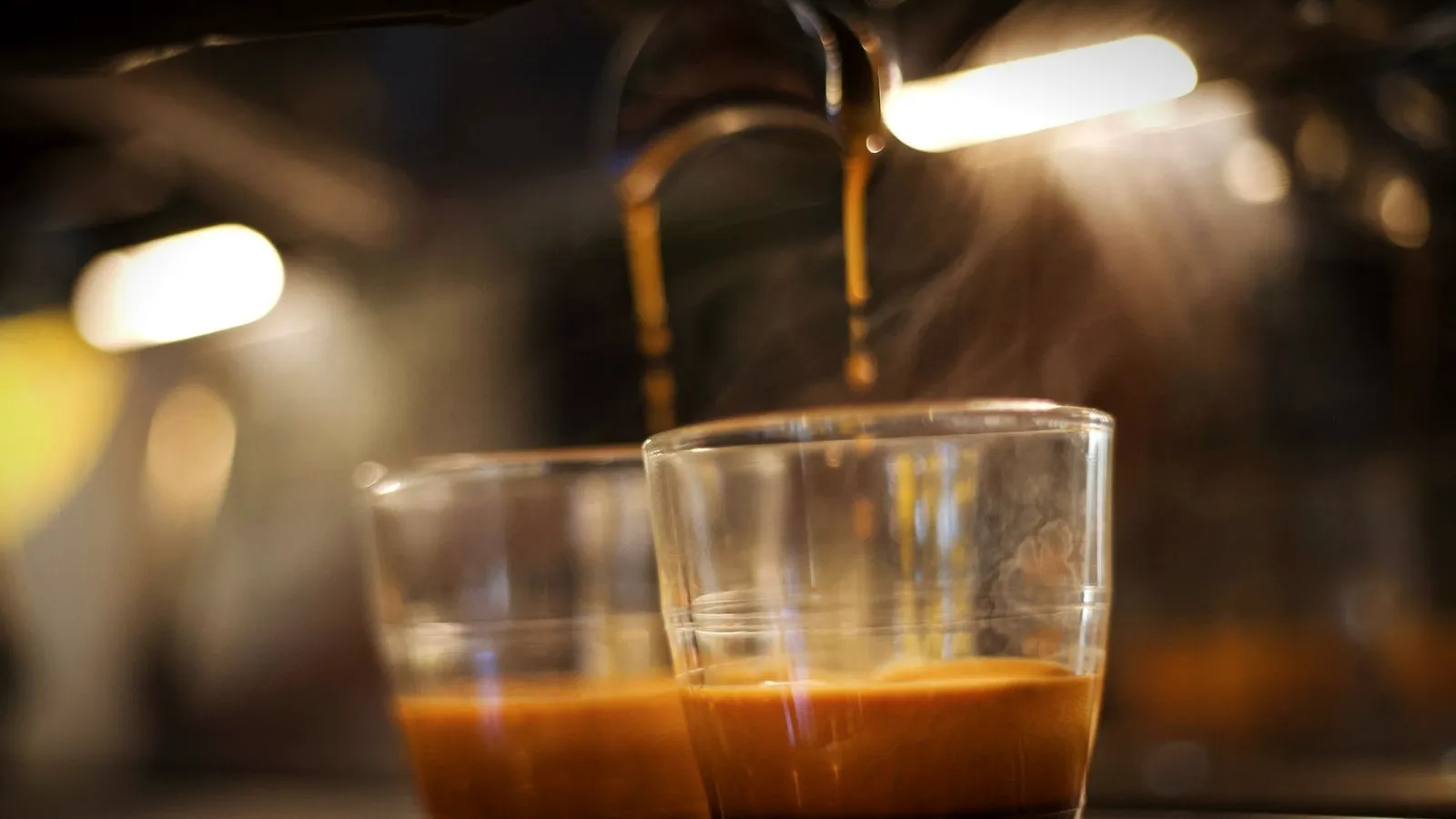
A double shot of espresso, or doppio, has about 126 mg of caffeine: simply two single shots’ worth in about 2 fl oz. Breville’s manual pairs its two-cup basket with roughly 16–19 g of ground coffee and about 60 ml of espresso.
Many cafés and home baristas now use a double as the default shot. If you order a latte or cappuccino, it is often built on a double, so “two shots of espresso” is the more realistic starting point for many drinks.
2, 3 and 4 shots of espresso
Caffeine adds up shot by shot:
- 2 shots: about 126 mg
- 3 shots: about 189 mg
- 4 shots: about 252 mg
These are averages. Two cafés can serve a “triple” with very different doses, so use the numbers as a rough guide rather than an exact count.
Why caffeine in an espresso shot varies so much
Lab measurements of real café espresso show far more variation than the average suggests:
- A 2012 study in Food & Function analyzed 20 commercial espressos and found a six-fold difference in caffeine. The strongest single espresso contained 322 mg, and three others exceeded 200 mg.
- A 2014 follow-up tested 104 espressos from coffee shops in Scotland, Italy and Spain and found 48–317 mg of caffeine per serving.
The 2012 researchers concluded that the main driver was likely the amount of coffee used per shot. These are the factors that move the number:
- Dose. More ground coffee means more caffeine. A 19 g double carries more caffeine into the cup than a 14 g one.
- Bean species. Robusta has roughly twice the caffeine of arabica (next section).
- Shot volume and extraction. Longer shots and finer grinds pull out more of the soluble compounds, though caffeine dissolves easily, so dose still matters most.
- How the café defines a shot. Some serve 25 ml singles; others pour larger, heavier-dosed shots.
Arabica vs robusta: the bean matters more than the roast
Species is the biggest bean-level factor. In a laboratory comparison of green coffee, arabica beans averaged 1.09% caffeine by weight and robusta beans 2.09%, nearly double.
That means a robusta-heavy blend, common in some traditional Italian espresso, can put far more caffeine into the same size shot than a 100% arabica coffee. Most specialty espresso sold in the US is arabica, but blends labeled simply “espresso” may include robusta. Our guide to espresso beans explains how to read the label.
Does roast level change caffeine?
Very little. The 2014 study above found that caffeine was stable during roasting, while other compounds broke down. A dark roast is not “stronger” in caffeine, even though it tastes more intense.
The only real difference comes from density. Dark beans lose more mass and swell more, so a scoop of dark roast holds slightly less coffee than a scoop of light roast. If you weigh your dose, the difference mostly disappears. For more on how beans are chosen for espresso, see espresso beans vs coffee beans.
Espresso vs drip coffee caffeine: per serving and per ounce
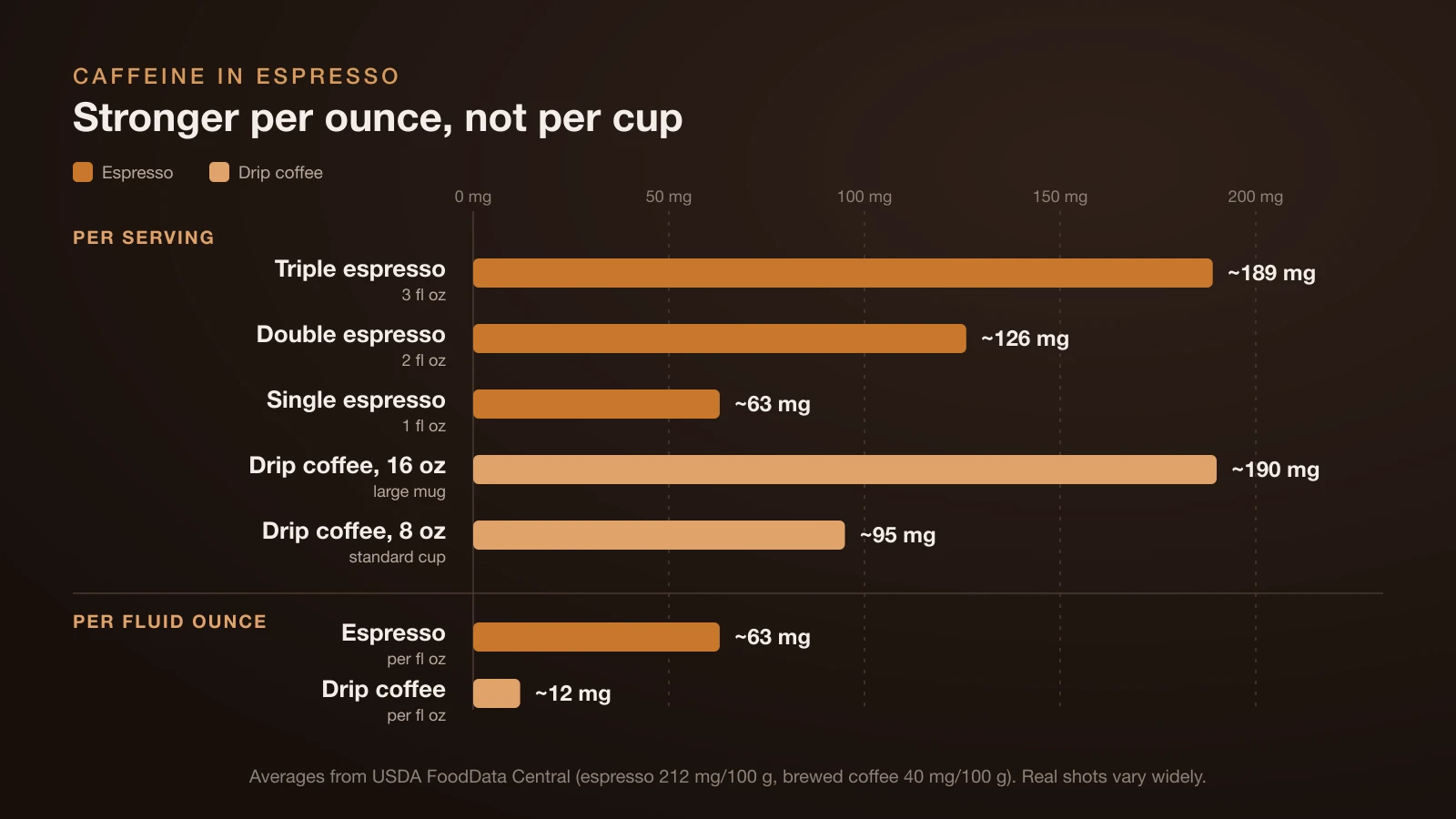
Which has more caffeine depends on how you measure:
| Measure | Espresso | Drip coffee |
|---|---|---|
| Per 100 g (USDA) | 212 mg | 40 mg |
| Per fluid ounce | about 63 mg | about 12 mg |
| Per typical serving | about 63 mg (1 oz single) | about 95 mg (8 oz cup) |
Per ounce, espresso is about five times as concentrated. Per serving, a cup of drip coffee usually wins, because you drink eight times the volume. A double shot (about 126 mg) overtakes an 8 oz cup, but a large 16 oz drip coffee (about 190 mg) still beats a double.
For the full picture on taste, brewing and strength, see our comparison of espresso vs coffee.
Caffeine in espresso drinks
Milk, water, ice and syrup add no caffeine. An espresso drink has exactly the caffeine of the shots inside it:
- Latte, cappuccino, flat white, cortado: usually one or two shots, so about 63–126 mg on average.
- Americano: espresso plus hot water, so the same caffeine as its shots.
- Macchiato: a shot marked with a little milk foam, so about 63 mg for a single.
A 16 oz latte is not stronger than an 8 oz latte unless it contains more shots. If you make drinks at home, you control the count; our guide on how to make a latte starts from a double. The types of espresso drinks guide lists the usual shot count for each, and our latte caffeine guide breaks it down by cup size.
How much caffeine is in a single espresso bean?
Eating whole beans delivers all of their caffeine, since none is left behind in the grounds. Using the species averages above, a gram of arabica contains roughly 11 mg of caffeine and a gram of robusta roughly 21 mg.
A single roasted bean weighs a little over a tenth of a gram. That is an assumption, since bean size varies with origin and roast. On that basis, one arabica bean carries on the order of 1.5 mg of caffeine and one robusta bean about twice that. Chocolate coating adds a small amount more.
How many shots of espresso is too much?
The FDA says 400 mg a day is an amount not generally associated with negative effects for healthy adults. At the USDA average of about 63 mg per shot, that is roughly six single shots or three doubles, counting no other caffeine from tea, soda or chocolate.
Because café shots can contain far more than the average, the same number of drinks can add up faster than you expect. The FDA also notes that people who are pregnant, trying to become pregnant or breastfeeding should talk with a healthcare provider about caffeine, and that sensitivity varies from person to person. This is general information, not medical advice.
How to estimate the caffeine in your own shot
If you make espresso at home, you can get closer than the average:
- Weigh your dose of ground coffee in grams.
- Check the species. Use about 11 mg of caffeine per gram for 100% arabica, more for blends with robusta.
- Multiply to get the caffeine in the grounds. An 18 g arabica dose holds roughly 200 mg.
- Expect less in the cup. Not all of the caffeine is extracted into a short espresso shot, so your drink contains less than that ceiling.
This gives you an upper limit, not a lab result. It is still more useful than a single generic number when your dose is well above or below average.
The bottom line
An average single shot of espresso has about 63 mg of caffeine, and a double about 126 mg. Espresso is far more concentrated than drip coffee per ounce, but a regular cup of coffee usually contains more caffeine per serving. The dose in the basket and the share of robusta in the beans change the number most; roast level barely does.
Sources
- USDA FoodData Central: Coffee, brewed, espresso, restaurant-prepared and Coffee, brewed, prepared with tap water (212 mg and 40 mg caffeine per 100 g; 1 fl oz espresso = 29.6 g)
- Food & Function studies of café espresso: Crozier et al. (2012) (six-fold variation, up to 322 mg) and Ludwig et al. (2014) (48–317 mg per serving; caffeine stable during roasting)
- Biotropia: The chemical characteristics of arabica and robusta green coffee beans (1.09% vs 2.09% caffeine)
- U.S. Food and Drug Administration: Spilling the Beans: How Much Caffeine Is Too Much? (400 mg a day)
- Breville: Barista Express BES875 instruction book (single and double dose and shot volume)