Types of espresso drinks all start with the same thing, a shot of espresso, and differ in what is added: more water, a little milk, a lot of milk, or something sweet. Once you know the four groups, any café menu makes sense. The chart below shows what goes into 12 of the most common drinks, and the guide covers 17 in total.
Recipes vary between countries and cafés, so we note where the traditional Italian version differs from what you get in the US.
The short answer
| Drink | What’s in it | Typical size |
|---|---|---|
| Ristretto | A short, concentrated shot | 15–20 ml |
| Espresso | A single shot | about 25–30 ml |
| Doppio | A double shot | about 50–60 ml |
| Lungo | A long shot, more water through the coffee | 50–60 ml |
| Americano | Espresso plus hot water | 4–6 oz |
| Macchiato | Espresso with a spot of milk foam | 1–2 oz |
| Cortado | Espresso plus about equal warm milk | about 4 oz |
| Flat white | 1 or 2 shots, steamed milk and thin microfoam | 8 oz or less |
| Cappuccino | Espresso, steamed milk and thick foam | 5–6 oz |
| Latte | Espresso plus lots of steamed milk | 8–12 oz |
| Mocha | Latte plus chocolate | 8–12 oz |
| Affogato | Espresso poured over ice cream | a dessert cup |
Espresso drinks chart
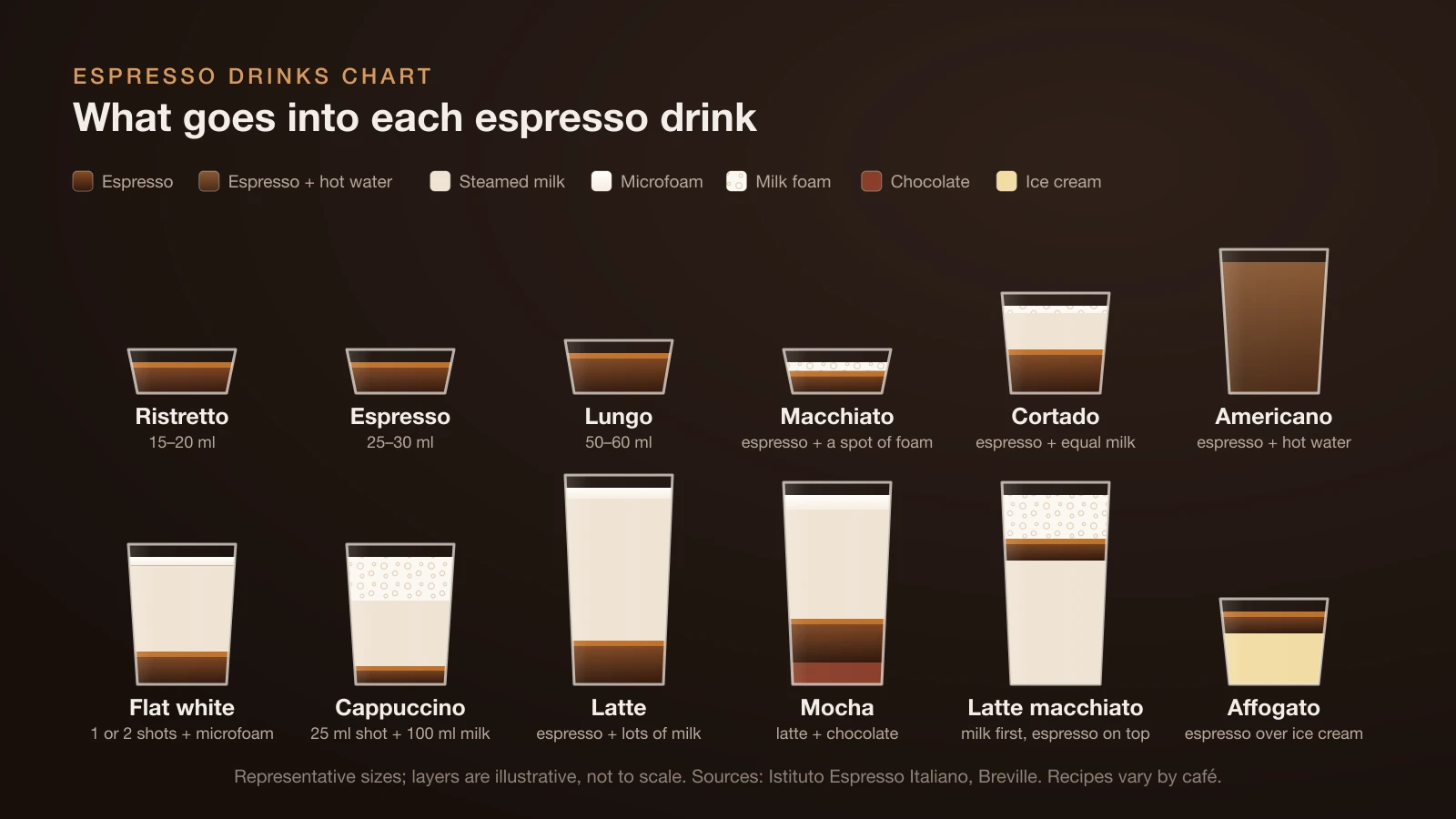
The chart shows what goes into each drink. Glass sizes are representative and the layers are illustrative, not drawn to scale. Read it from left to right: the drinks get longer and milkier as you go. The bigger the espresso layer compared with the rest of the glass, the stronger the coffee flavor.
Straight espresso drinks
Espresso
The base of every drink on this list. Italy’s espresso institute defines a certified Italian espresso as about 25 ml. In the US, a single shot is usually about 1 ounce (30 ml), the size World Barista Championship rules have used to define an espresso.
Doppio
Italian for “double”. A doppio is two shots, about 2 ounces, and it is the default espresso in many American cafés.
Ristretto
A “restricted” shot. The barista uses the same amount of coffee but stops the shot early, at roughly half the usual volume; Breville’s machine manual puts a ristretto at about 15 ml. The result is thicker, sweeter and more intense, with less bitterness.
Lungo
The opposite of a ristretto: more water runs through the same coffee, producing a longer, thinner and more bitter shot. It is not the same as an Americano, where water is added afterwards. Our ristretto vs long shot guide compares the two side by side.
Espresso with water
Americano
Espresso topped up with hot water. It tastes closer to drip coffee but with espresso’s character, and the amount of water varies from café to café. Poured over ice, it becomes an iced Americano, one of the easiest espresso drinks to make at home.
Long black
The Australian and New Zealand version: the espresso is poured on top of the hot water, which keeps more of the crema on the surface. Breville’s machine manual describes it as a single or double espresso extracted over 120–180 ml (4–6 oz) of hot water.
Red eye
A cup of drip coffee with a shot of espresso added, for when regular coffee is not enough. Some chains call a version with two shots a “black eye”. Our guide to coffee with a shot of espresso covers the red eye, black eye and dead eye.
Espresso with a little milk
Macchiato
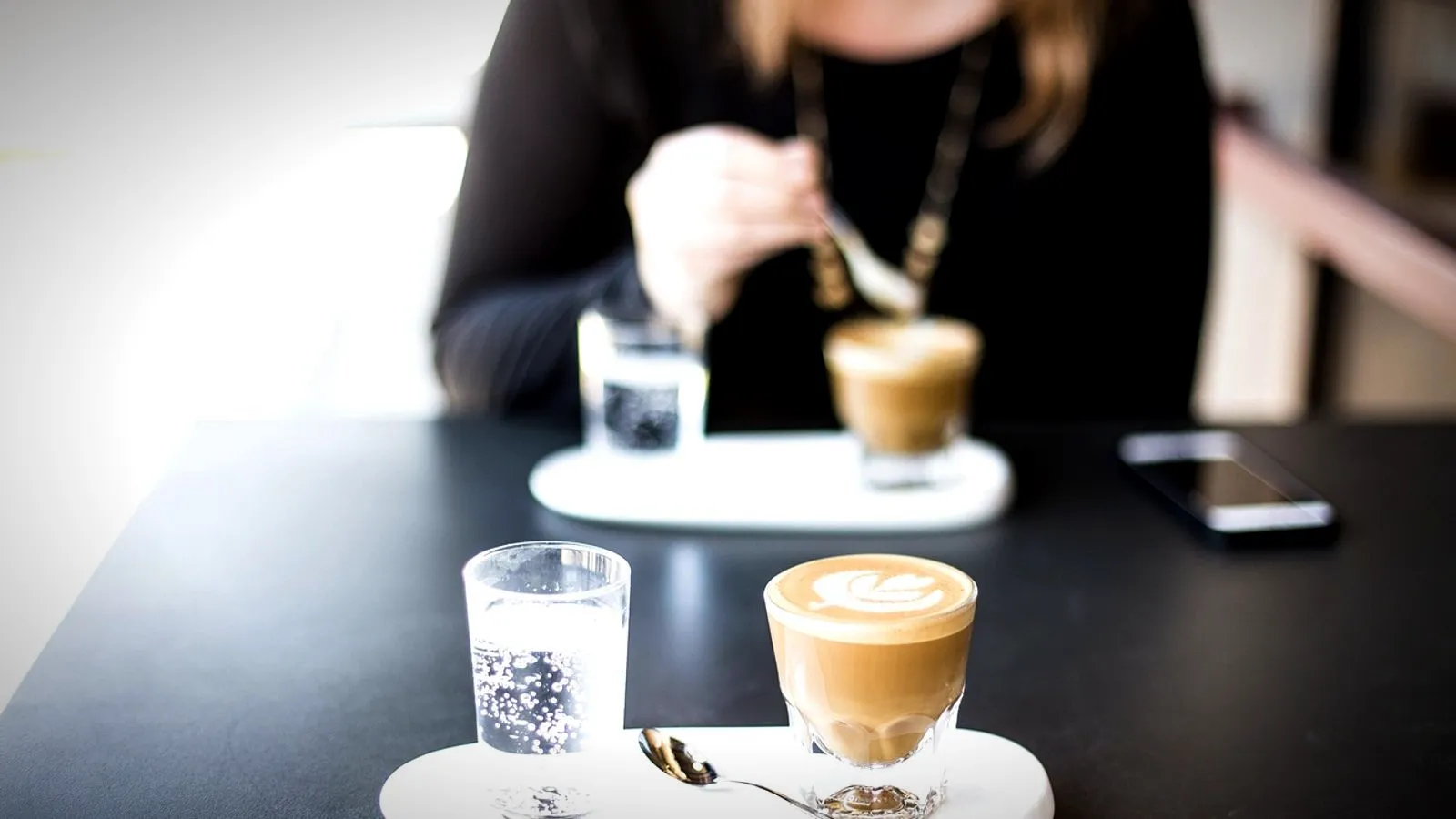
Macchiato means “stained” or “marked”. An espresso macchiato is a shot marked with a small spoonful of milk foam. It is the most espresso-forward milk drink. The large, sweet caramel macchiato at US chains is a different drink, closer to a latte macchiato. Our macchiato vs latte guide clears up the confusion.
Cortado
From Spanish cortar, “to cut”. A cortado is espresso cut with roughly the same amount of warm milk, with little or no foam. It is smooth but still strongly coffee-flavored, usually around 4 ounces. See cortado vs latte for how it compares with a bigger milk drink.
Gibraltar
A cortado served in a 4.5-ounce Gibraltar glass, which Libbey sells as a cortado glass. Some US cafés list the drink under the glass’s name, but it is essentially a cortado.
Espresso with more milk
Flat white
Espresso, often a double, with steamed milk and a thin, velvety layer of microfoam about a quarter inch (6 mm) thick. Breville suggests a single or double shot in a cup no larger than 8 oz; with less milk than a latte, it tastes stronger. Australia and New Zealand both claim to have invented it.
Cappuccino
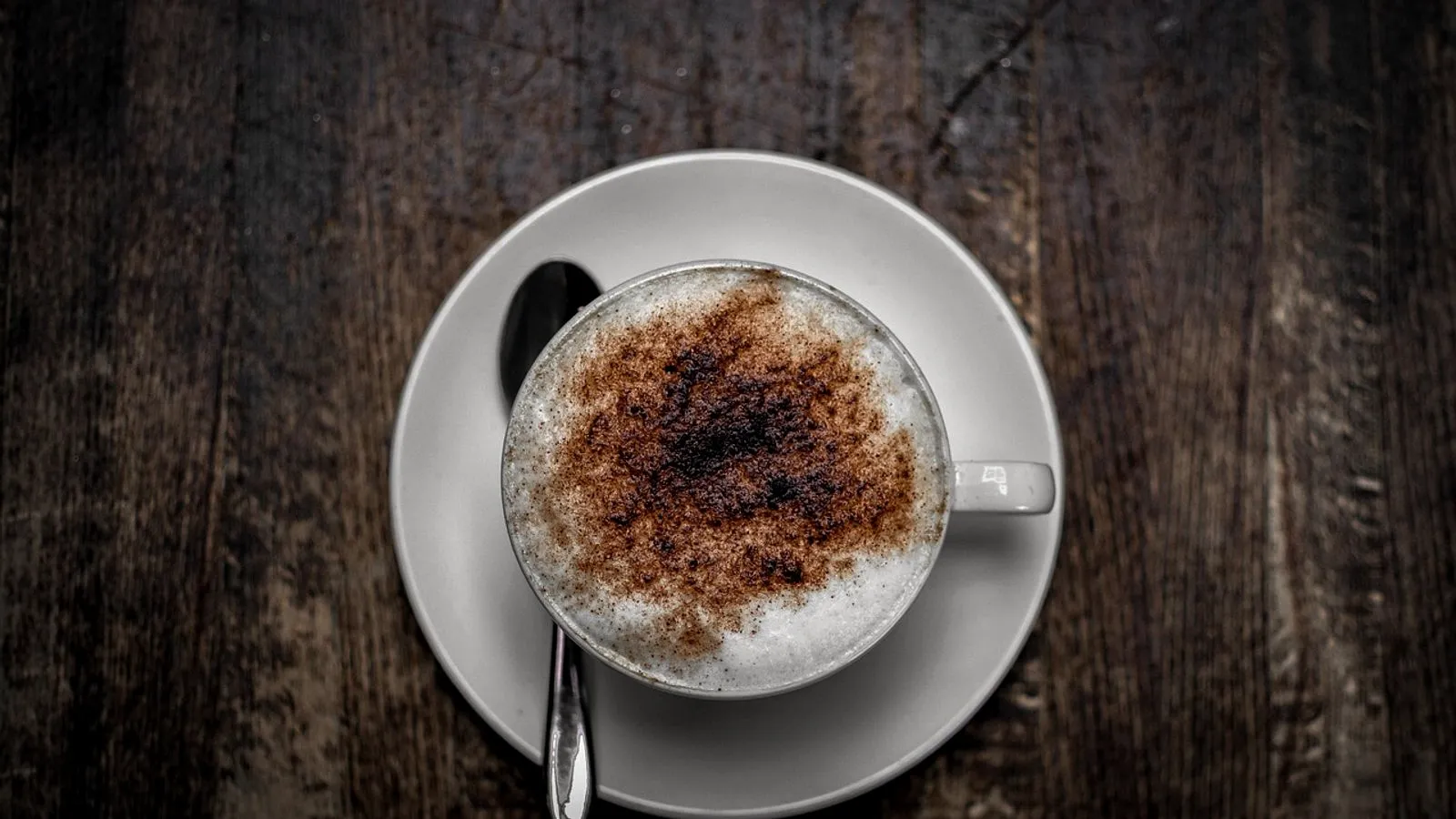
Espresso with steamed milk and a thick cap of foam. The Italian espresso institute’s reference cappuccino is 25 ml of espresso plus 100 ml of steamed milk, and World Barista Championship rules called for a 150–180 ml cappuccino with at least 1 cm of foam. The “one-third espresso, one-third milk, one-third foam” rule is a helpful picture, not a formal standard. US chains often serve much larger versions.
Despite the similar name, a Starbucks Frappuccino is a blended iced drink, not a cold cappuccino; see cappuccino vs Frappuccino.
Latte
Espresso with a lot of steamed milk and a thin layer of microfoam, usually 8 to 12 ounces. It is the mildest and creamiest espresso drink and the usual base for flavored syrups. Latte is simply Italian for milk, so in Italy ask for a caffè latte; ordering a “latte” gets you a glass of milk.
To make one yourself, follow our guide on how to make a latte. Popular variations include the Spanish latte, sweetened with condensed milk, and the dirty chai latte, a spiced chai latte with a shot of espresso.
Latte macchiato
Here the milk comes first. Steamed milk goes into a tall glass and a shot of espresso is poured in slowly, “staining” the milk and forming layers. It tastes milkier than a latte.
For ratios and steaming tips for all of these, see our guide to espresso with milk.
Sweet and dessert espresso drinks
Mocha
A latte with chocolate. Espresso, chocolate sauce or cocoa and steamed milk, sometimes finished with whipped cream. Cocoa adds a little caffeine of its own. See mocha vs latte for how the two compare, and macchiato vs mocha for the mocha next to the smallest milk drink.
Affogato
Italian for “drowned”. A scoop of vanilla or fior di latte gelato with a hot shot of espresso poured over it. In Italy it is served as a dessert rather than a coffee.
Espresso con panna
A shot of espresso topped with a spoonful of whipped cream. It is richer than a macchiato and a good introduction to straight espresso. A strip of lemon peel is another simple garnish, and it turns a shot into an espresso romano.
What are the main types of espresso drinks?
Every drink above fits into one of four groups:
- Straight espresso: ristretto, espresso, doppio, lungo.
- Espresso with water: Americano, long black, red eye.
- Espresso with milk: macchiato, cortado, flat white, cappuccino, latte, latte macchiato.
- Sweet or dessert drinks: mocha, affogato, con panna.
Within the milk group, the drinks line up from strongest to mildest: macchiato, cortado, flat white, cappuccino, latte, latte macchiato.
How espresso drinks differ between countries
- Italy: small, simple drinks. Milky coffee such as cappuccino is mostly a breakfast drink, and “latte” means milk.
- Australia and New Zealand: home of the flat white and long black, with a strong café culture built on double shots.
- United States: larger sizes, double shots as standard, and many flavored drinks. A US cappuccino or latte can be several times the volume of an Italian one.
None of these is wrong; they are regional styles. When a café’s drink surprises you, the cup size is usually the reason.
Which espresso drink should you choose?
- You want pure coffee flavor: espresso or ristretto.
- You want coffee strength with a little softness: macchiato or cortado.
- You like milky coffee but still want to taste the espresso: flat white or cappuccino.
- You want something mild and creamy: latte or latte macchiato.
- You prefer a larger black coffee: Americano or long black.
- You want dessert: affogato or mocha.
To make these drinks at home, start with how to use an espresso machine, then match each drink to the right cup with our guide to ceramic espresso cups.
The bottom line
There are dozens of espresso drinks, but they are all variations on four ideas: espresso on its own, espresso with water, espresso with milk, and espresso as dessert. The amount of milk and foam, and the size of the cup, are what separate a macchiato from a cortado or a cappuccino from a latte. Use the chart as a guide, and expect sizes to vary from one café to the next.
Sources
- Istituto Espresso Italiano: Certified Italian Espresso and Cappuccino (about 25 ml espresso; cappuccino with 25 ml espresso + 100 ml steamed milk)
- World Coffee Events: 2015 World Barista Championship Rules and Regulations (archived; espresso 1 fl oz, 30 ml ± 5 ml; cappuccino 150–180 ml with at least 1 cm of foam)
- Breville: Barista Express BES875 instruction book (ristretto about 15 ml; long black over 120–180 ml of hot water), How to make a flat white at home (single or double shot, cup of 8 oz or less, microfoam about a quarter inch thick, claimed by Australia and New Zealand) and Latte recipe (“latte” means milk)
- Libbey: Gibraltar DuraTuff cortado glasses, 4.5 oz (glass size, sold for cortados)