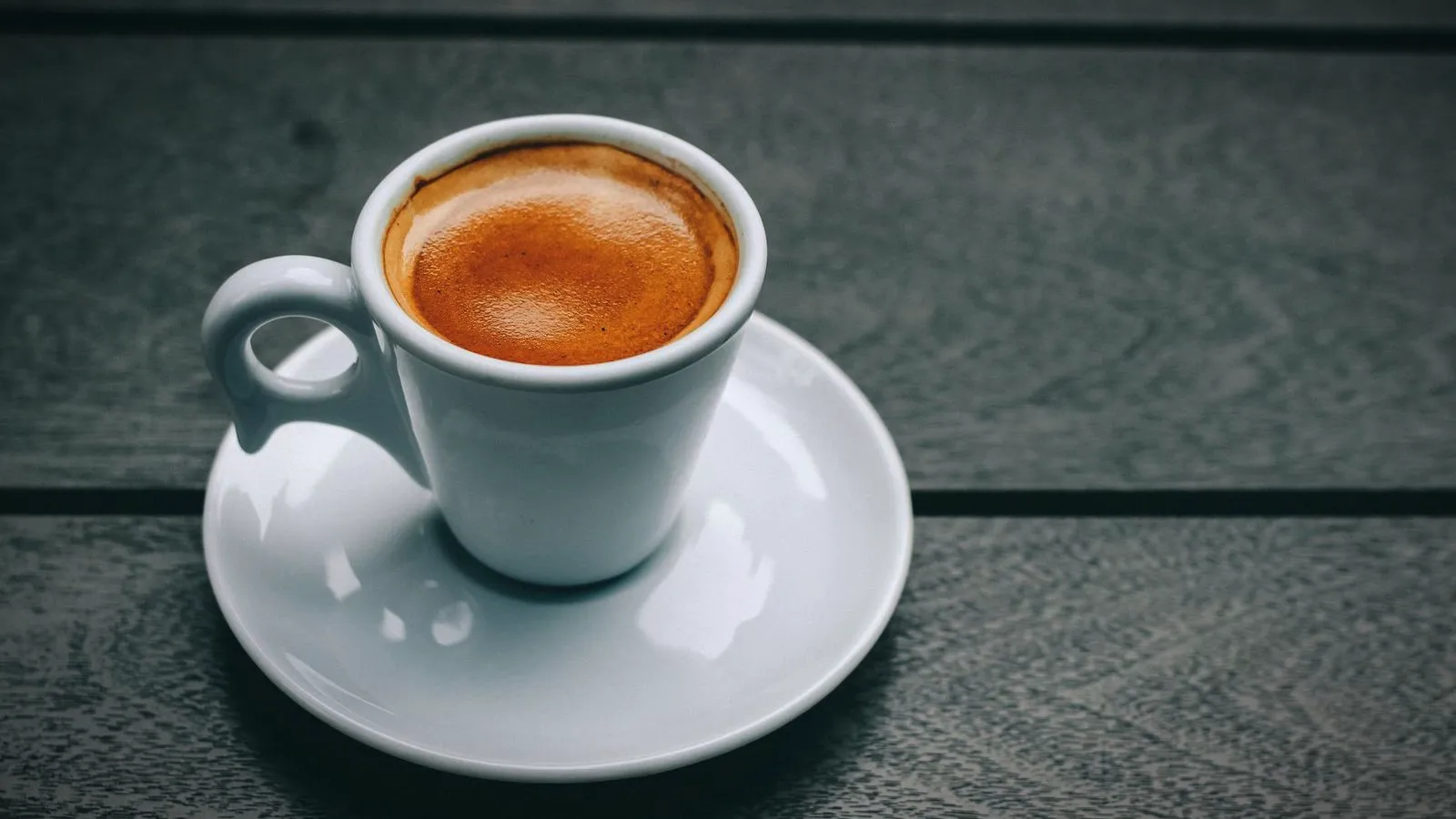
Ceramic espresso cups are the classic way to serve espresso: small, thick-walled cups that hold about 2 to 3 ounces and keep a shot warm once they are heated. Choosing well comes down to three things: the right capacity for your drink, a material that holds heat, and whether the cup fits under your machine.
This guide covers standard espresso cup sizes, how porcelain, stoneware, glass and steel compare, and a simple habit that matters more than the cup itself.
The short answer
| Cup | Typical capacity | Best for |
|---|---|---|
| Espresso cup (demitasse) | 2–3 oz (60–90 ml) | Single or double espresso, ristretto, macchiato |
| Cortado glass | about 4–4.5 oz (120–135 ml) | Cortado, Gibraltar |
| Cappuccino cup | 5–6 oz (150–180 ml) | Cappuccino |
| Flat white cup | 8 oz (240 ml) or less | Flat white |
| Latte cup or glass | 8–12 oz (240–350 ml) | Latte, latte macchiato |
What size is a standard espresso cup?
There is no formal standard, but most espresso cups hold 2 to 3 ounces (60 to 90 ml). That size fits a single shot with plenty of room, or a double shot with its crema.
For reference, the Italian Espresso National Institute defines a certified Italian espresso as about 25 ml. USDA uses 1 fluid ounce (about 30 ml) as its standard espresso serving. A shot fills roughly a third to half of a typical espresso cup, which is the point: the crema has room to sit on top and the aroma collects in the space above it.
Why are espresso cups so small?
Espresso is a concentrated drink of about 1 to 2 ounces, and the cup is sized around it for three practical reasons:
- Heat. A small volume of coffee loses heat quickly. A snug, thick cup keeps the shot warm while you drink it.
- Crema. In a narrow cup, the crema forms a thick, even layer across the surface. In a wide mug, it spreads thin and breaks up.
- Aroma. The small space above the coffee concentrates the aroma near your nose as you sip.
Most espresso cups are also deeper than they are wide for the same reasons. That shape is what separates a real demitasse from a miniature teacup.
Is an espresso shot 1 or 2 oz?
A single shot is about 1 ounce (25–30 ml). A double shot is about 2 ounces. Many cafés in the US serve a double by default, which is where the “2 oz” answer comes from. If you mainly drink doubles, choose cups at the larger end of the range, around 3 ounces.
Cup sizes for every espresso drink

Matching the cup to the drink keeps the ratio of coffee to milk right. An Italian cappuccino, for example, is defined as 25 ml of espresso plus 100 ml of steamed milk, and World Barista Championship rules called for a 150–180 ml cappuccino, which is why cappuccino cups hold 5 to 6 ounces rather than 12. Pour a cappuccino into a latte mug and you either end up with a weak drink or a half-empty cup.
A flat white has a little more room: Breville suggests a cup of 8 oz or less, so a cappuccino cup works for it too.
See our types of espresso drinks chart for what goes into each drink, and espresso with milk for milk ratios.
Ceramic vs porcelain vs glass vs steel
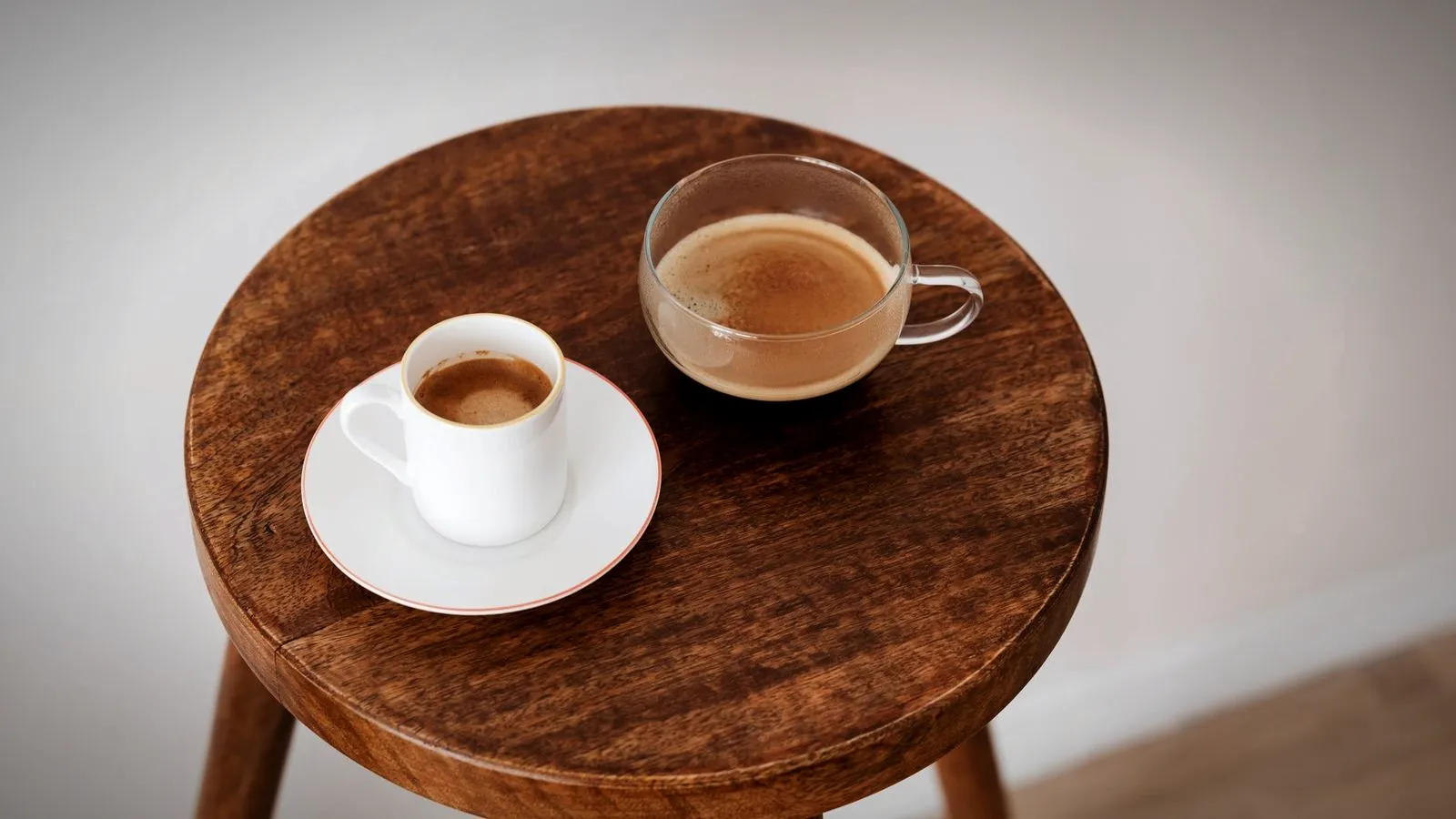
Porcelain
Porcelain is a ceramic fired at very high temperature into a dense, non-porous body. It is smooth, does not absorb flavors, and thick porcelain holds heat well once warmed. Most café espresso cups are porcelain for these reasons.
Stoneware and other ceramics
Stoneware cups are usually thicker, heavier and more textured, often with handmade glazes. They hold heat well and feel substantial in the hand. Check that the inside is fully glazed so the cup is easy to clean.
Double-wall glass
Double-wall glasses have an air gap between two layers, which insulates the coffee and keeps the outside cool to the touch. They show off crema and layers beautifully, but they are more fragile and can be awkward in a dishwasher.
Stainless steel
Steel cups are nearly unbreakable and good for travel or camping. Thin steel feels hot quickly and does not have the traditional feel of a ceramic cup, so most home baristas use it outdoors rather than at the counter.
Does a thick cup keep espresso hotter?
Only if it is warm first. A thick ceramic cup has a lot of mass. When it is cold, it absorbs heat from a small 1-ounce shot and cools it quickly. Once preheated, that same mass keeps the espresso warm far longer than a thin cup.
This is why espresso machines have a cup warmer on top and why baristas rinse cups with hot water before pulling a shot.
How to preheat an espresso cup
- Fill the cup with hot water from your kettle or the machine’s hot water outlet.
- Leave it for 20–30 seconds while you grind and prepare the shot.
- Empty and dry it, then pull the shot straight into it.
Or keep your cups on the machine’s cup warmer, if it has one. For the full shot routine, see how to use an espresso machine.
Espresso shot glasses: great for measuring
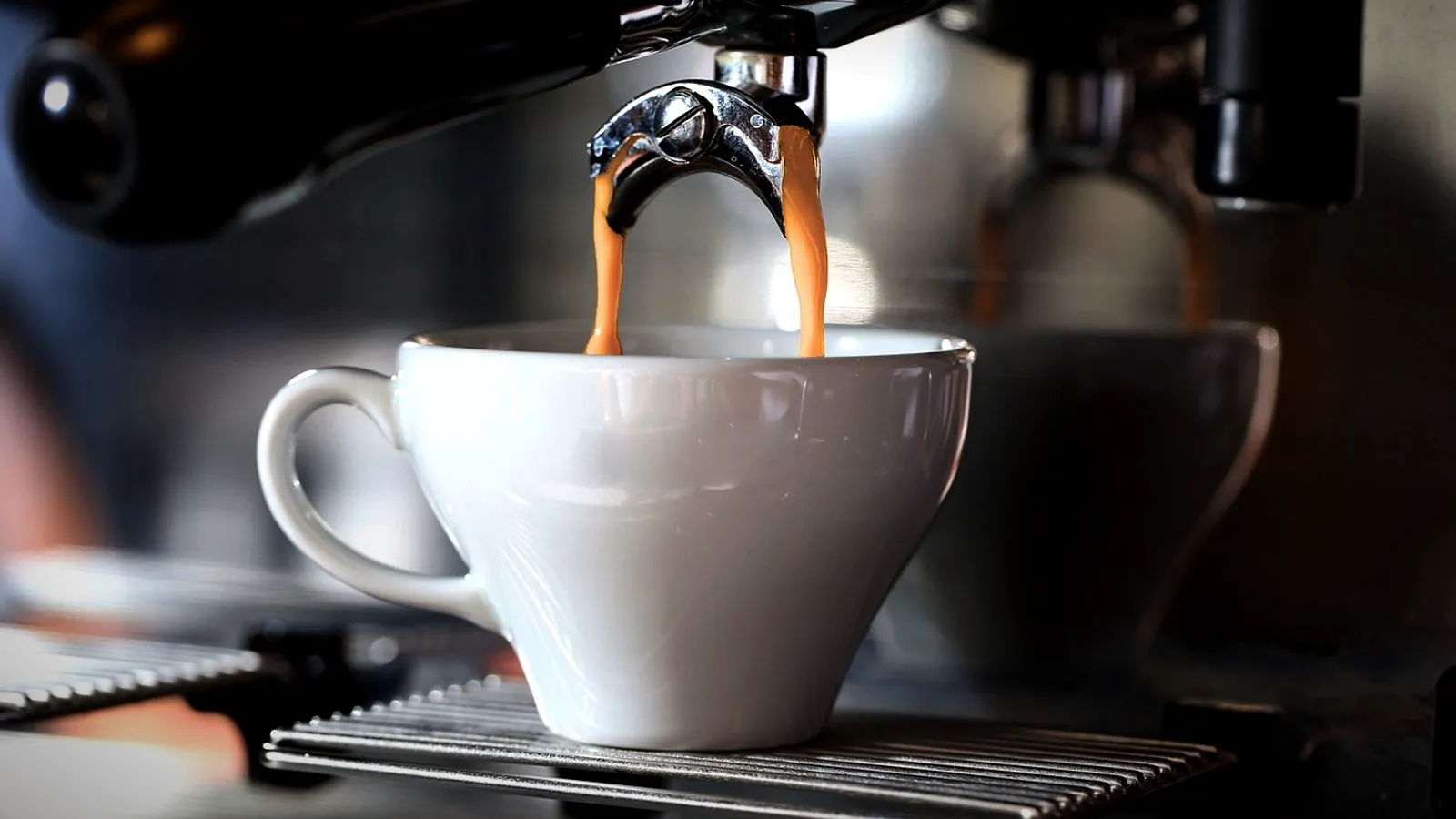
Small glass shot glasses with ounce and milliliter marks are useful when you are learning. You can watch the shot change color as it runs and see roughly how much you have pulled.
Two cautions:
- Crema inflates the volume. A fresh shot can look like 2 ounces while weighing much less. For accurate recipes, weigh the shot on a scale instead, as in our guide to espresso vs coffee ratios.
- Thin glass cools the shot quickly. Pour into a preheated ceramic cup if you are going to sip it slowly.
What to look for when buying ceramic espresso cups
- Capacity: 2–3 oz for straight espresso; check whether the listed size is the brim capacity.
- Wall thickness: thicker walls hold heat better once preheated.
- Shape: a rounded or tulip-shaped interior helps the crema hold together and guides the aroma.
- Height: measure the space under your machine’s spout. Many home machines only fit short cups, and a cup that is too tall means pulling the shot into a glass and pouring it over.
- Saucer: makes the cup easier to carry, catches drips and gives you somewhere to rest the spoon.
- Care: check dishwasher and microwave safety, especially for cups with metallic trim.
- A set of two or four: so a cup is always warm on the machine while another is in the dishwasher.
How to care for ceramic espresso cups
- Rinse soon after use. Coffee oils leave brown rings that are harder to remove once dry.
- Remove stains with baking soda and a soft sponge rather than an abrasive pad, which dulls glaze.
- Avoid sudden temperature shocks, such as moving a cold cup straight into boiling water, especially with thin porcelain or glass.
- Skip the microwave and dishwasher for gold or silver trim unless the maker says otherwise.
Ceramic espresso cups vs cappuccino cups

An espresso cup is not simply a smaller cappuccino cup. Espresso cups are deeper for their width so the small volume of coffee forms a proper layer and stays hot. Cappuccino cups are wider, with a larger opening that makes room for milk foam and latte art. If you drink both, buy one set of each.
The bottom line
Ceramic espresso cups should hold about 2 to 3 ounces, have thick walls and fit under your machine. Porcelain is the café standard, stoneware adds character, glass shows off the shot and steel is for travel. Whatever you choose, preheat the cup: a warm, thick ceramic cup keeps espresso hot, while a cold one does the opposite.
Sources
- Istituto Espresso Italiano: Certified Italian Espresso (espresso about 25 ml; cappuccino with 25 ml espresso + 100 ml steamed milk)
- World Coffee Events: 2015 World Barista Championship Rules and Regulations (archived; cappuccino 150–180 ml)
- Breville: How to make a flat white at home (flat white in a cup of 8 oz or less)
- USDA FoodData Central: Coffee, brewed, espresso, restaurant-prepared (1 fl oz serving)