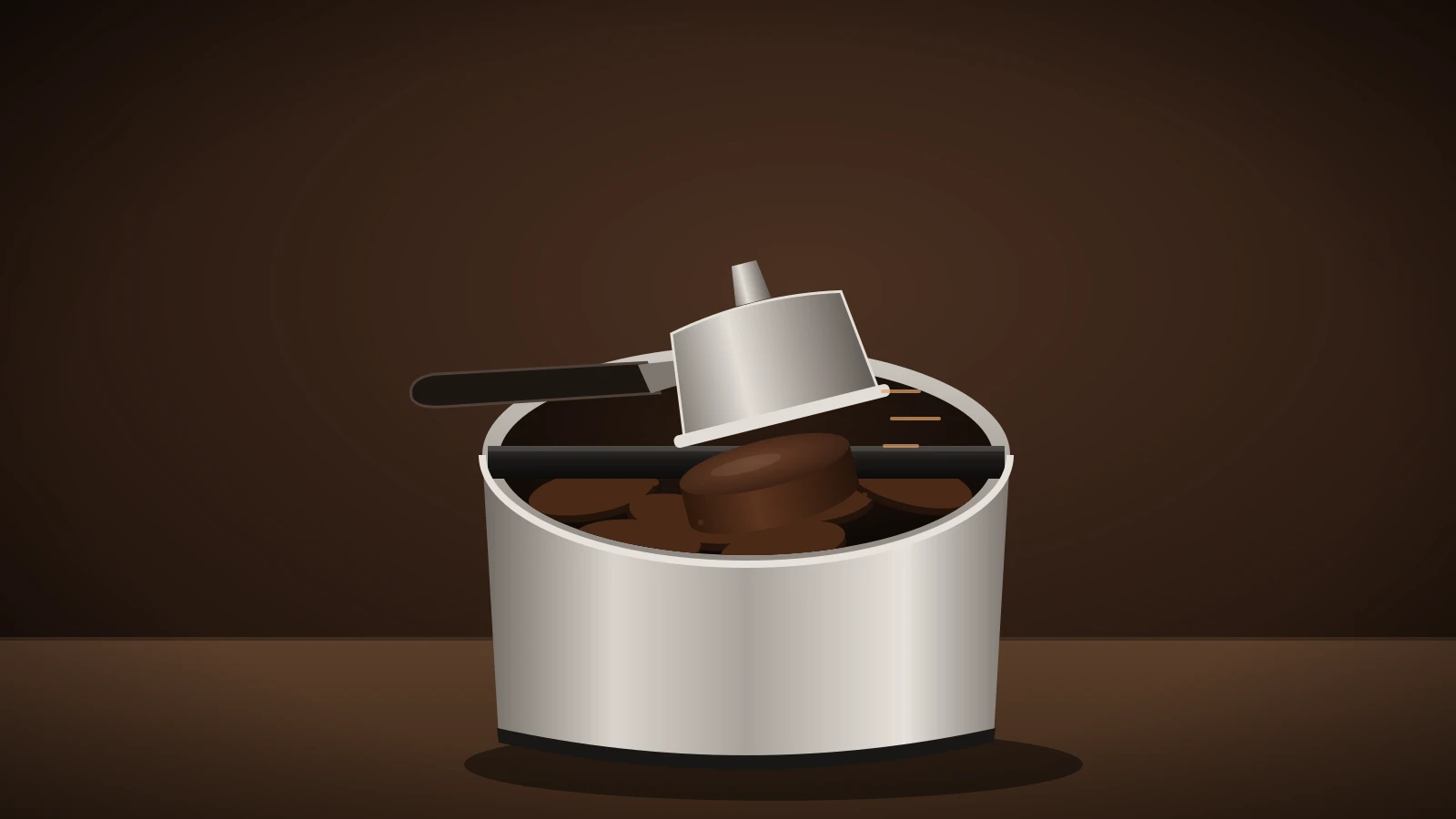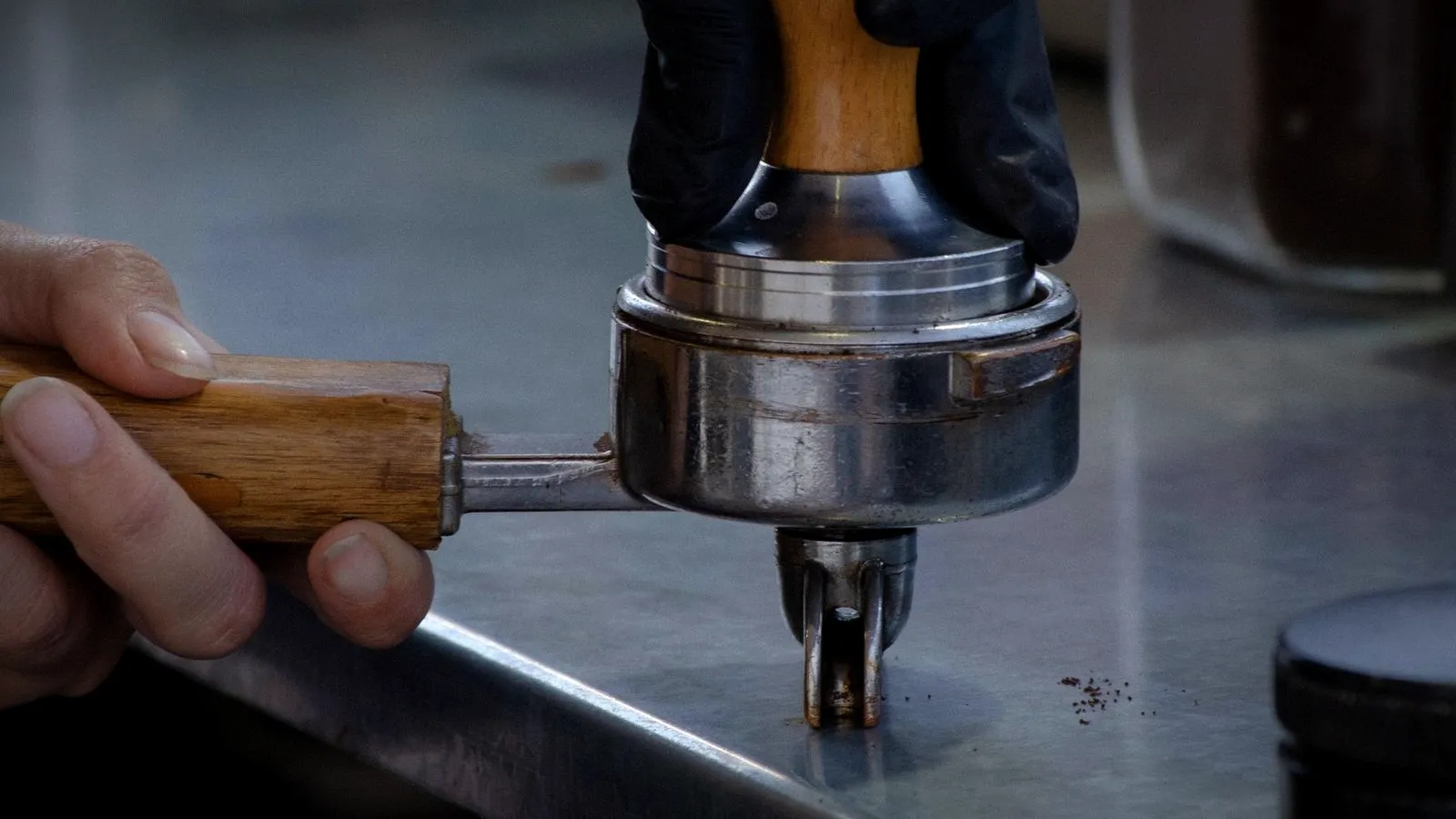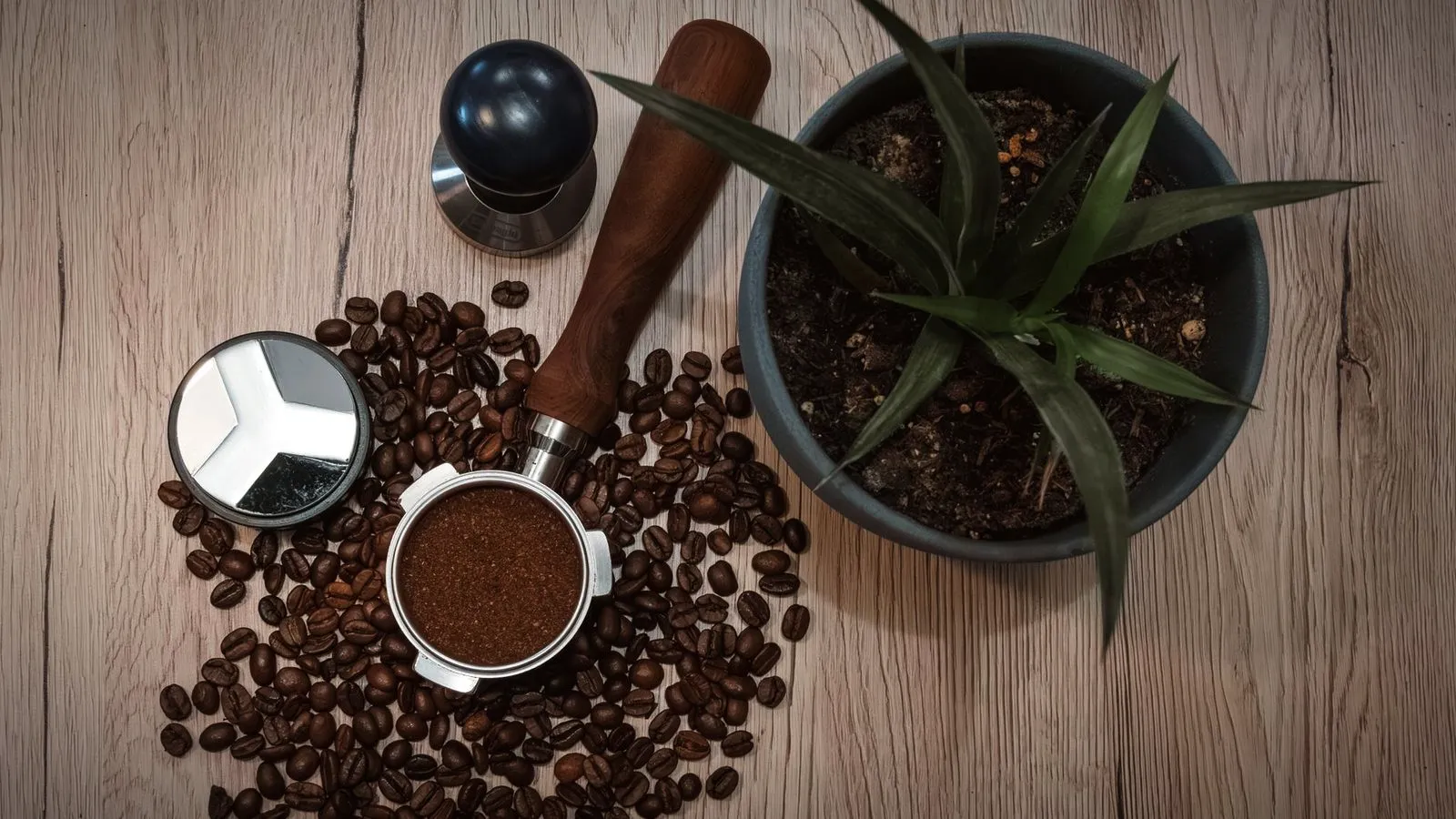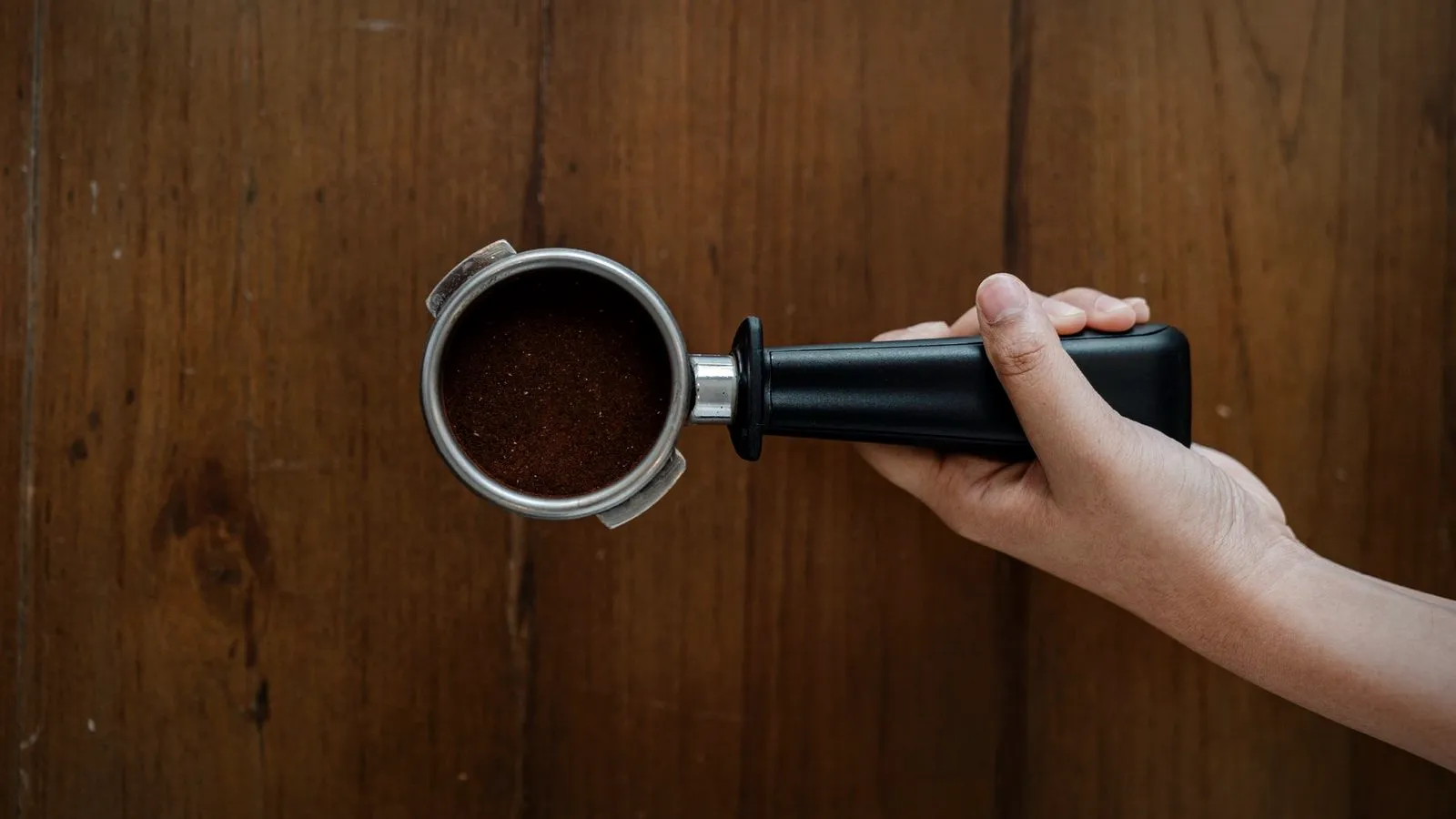
A portafilter is the handle with a metal basket that holds ground coffee and locks into the espresso machine. The size you need is the one your group head takes: 51 mm on many De’Longhi pump machines, 54 mm on Breville’s Barista and Bambino lines, and 58 mm on machines such as the Gaggia Classic Pro, Rocket models and the Breville Dual Boiler.
Portafilter size decides which baskets, tampers and tools fit, so it is the first number to know before buying a bottomless portafilter or an espresso tamper.
The short answer
| Question | Answer |
|---|---|
| What it is | A handle, a metal cup with spouts (or none) and a removable filter basket |
| Common home sizes | 51 mm, 54 mm and 58 mm |
| 51 mm | Many De’Longhi pump machines, such as La Specialista and Dedica Maestro |
| 54 mm | Breville Bambino, Bambino Plus, Barista Express, Pro and Touch |
| 58 mm | Gaggia Classic Pro, Rocket, La Marzocco Linea Micra, Breville Dual Boiler |
| Basket types | Pressurized (dual wall) or non-pressurized (single wall); single, double or triple |
| Fit rule | Same diameter and same locking ears as your group head |
What is a portafilter?
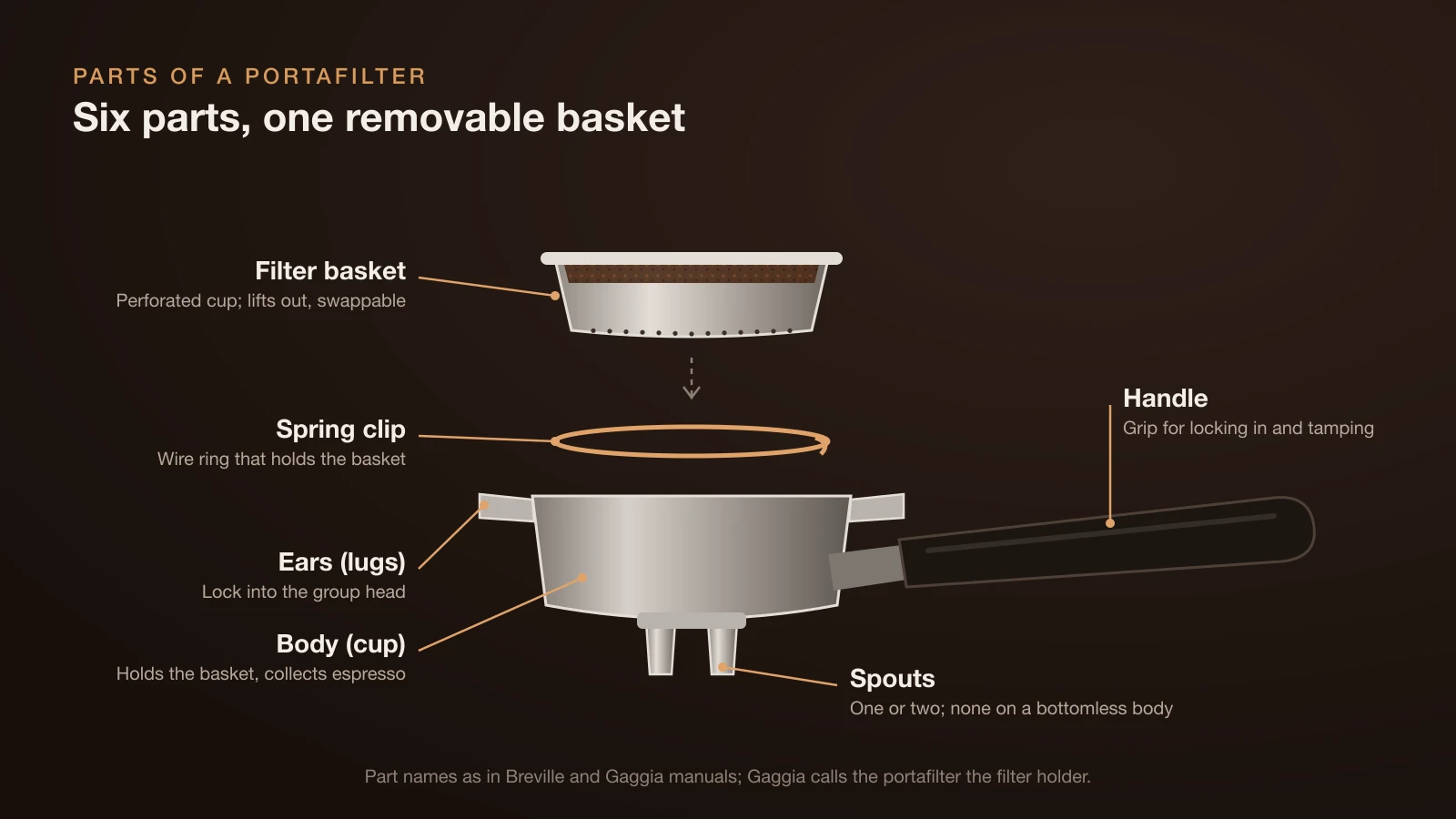
A portafilter is the removable brewing handle of an espresso machine: you fill its basket with ground coffee, lock it into the group head, and the machine forces hot, pressurized water through the coffee. Breville compares its size and shape to an ice cream scoop. Gaggia’s manuals call the same part the filter holder.
Parts of a portafilter
- Handle. The grip you hold when locking it in and tamping.
- Ears (lugs). Two tabs on the rim that slide into the group head and lock against the gasket.
- Body or cup. The metal cup that holds the basket and collects the espresso under it.
- Spouts. One or two outlets that guide the espresso into the cup; bottomless versions have none.
- Filter basket. The perforated metal cup that holds the coffee; it lifts out and can be swapped.
- Spring clip. A wire ring inside the cup that holds the basket in place. La Marzocco’s yearly maintenance checklist for the Linea Micra includes checking baskets and spring condition.
Portafilter sizes by machine
Portafilter sizes are named after the nominal diameter of the basket, and the three common home sizes are 51, 54 and 58 mm. Each row below comes from the machine maker’s own manual or product page.
| Size | Machine examples (manufacturer spec) | What it means for accessories |
|---|---|---|
| 51 mm | De’Longhi La Specialista and Dedica Maestro; De’Longhi sells a 51 mm tamper for its pump machines | Fewer aftermarket baskets; check De’Longhi’s compatibility lists |
| 54 mm | Breville Bambino, Bambino Plus, Barista Express, Barista Pro, Barista Touch | One 54 mm tamper and basket set fits the whole family |
| 58 mm | Gaggia Classic Pro, Rocket machines, La Marzocco Linea Micra, Breville Dual Boiler | The widest choice of baskets, tampers and tools |
Other sizes exist. Breville’s own portafilter guide lists 49 mm among common sizes, and you will see 53 mm on accessory listings: Normcore, for example, sizes its tamper for Breville’s 54 mm machines at 53.3 mm, because the number on a portafilter is nominal. If your machine is not on a list, the manual is the reliable answer.
Breville portafilter sizes
The Breville machines covered here use two sizes. The Bambino, Bambino Plus, Barista Express, Pro and Touch share a 54 mm portafilter, as our Breville Bambino vs Bambino Plus comparison shows. The Dual Boiler steps up to a 58 mm full stainless steel portafilter in a heated 58 mm group head.
How to measure your portafilter size
The fastest way to find your portafilter size is the model number: look it up in the manual or on the maker’s product page, which usually states the diameter. If you have no manual, measure the basket.
- Find the model number on the label under or behind the machine, then search the maker’s site for its manual.
- Lift the basket out of the portafilter and set it on a flat surface.
- Measure across the inside of the basket at the top with calipers or a fine ruler, at two or three angles.
- Compare the reading with the nominal sizes: a basket close to 51, 54 or 58 mm belongs to that system.
- Check the ears if you plan to buy a new portafilter, because the lug design must match your group head too.
For a tamper, the exact inside diameter matters more than the nominal size; our espresso tamper guide explains how to measure for a close fit.
What to check before you buy a portafilter
Before you buy a portafilter or basket, confirm the diameter, the ears, the spout style and the basket depth against your exact machine model. None of these depends on the brand.
- Diameter. It must match your group head: 51, 54 or 58 mm on most home machines.
- Ears and model list. The listing should name your model number, not just the size. De’Longhi, for example, lists its 51 mm bottomless portafilter for La Specialista and Dedica Maestro, not every 51 mm machine.
- Spouts or bottomless. Spouts let you split a double into two cups; a bottomless body shows the extraction.
- Basket included. Check whether it comes with a single wall or a pressurized basket, and which doses.
- Basket depth. VST notes that its 20 g and larger baskets may need a bottomless portafilter on some machines.
Portafilter baskets: pressurized vs non-pressurized
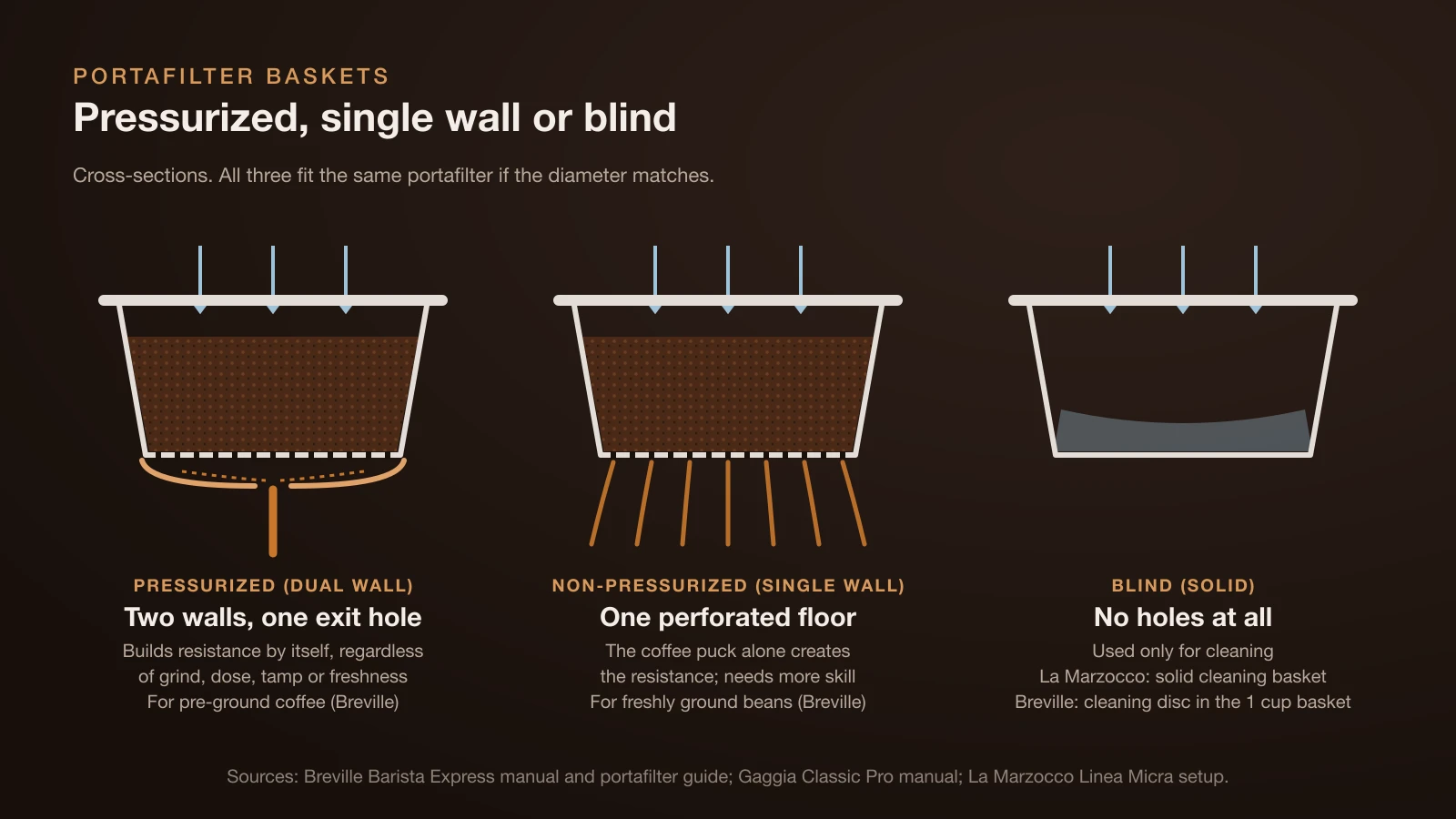
The main basket choice is pressurized or non-pressurized, and it decides how forgiving the portafilter is with grind and tamp. Both fit the same portafilter if the diameter matches.
Pressurized (dual wall) baskets
A pressurized basket has two walls: an inner wall with many holes and an outer wall with one small exit hole, which builds resistance on its own. Breville says its Dual Wall baskets regulate pressure regardless of grind, dose, tamp or freshness, and recommends them for pre-ground coffee. Gaggia’s version, the “crema perfetta” filter, must be used with its frothing jet device. Our guide to espresso grounds explains why pre-ground coffee needs this help.
Non-pressurized (single wall) baskets
A single wall basket has one perforated floor, so the coffee puck alone creates the resistance. Breville recommends its Single Wall baskets for freshly ground beans, because they let you adjust grind, dose and tamp. Gaggia calls its version the traditional filter and says it requires more skill. Even distribution matters more here, which is where an espresso distributor and a careful technique for how to tamp espresso pay off.
Blind (solid) baskets
A blind basket has no holes at all and is used only for cleaning. La Marzocco includes a “solid cleaning basket” with the Linea Micra, and Breville uses a cleaning disc inside the 1 cup basket for the same job.
Single, double and triple baskets
Basket size sets how much coffee the portafilter holds, and makers rate each basket for a dose range in grams.
| Basket | Example dose ranges from makers | Typical use |
|---|---|---|
| Single | Breville 1 cup: about 8–11 g; VST 7 g | One small shot |
| Double | Breville 2 cup: about 16–19 g; La Marzocco 14 g (Italian style), 17 g or 21 g (modern) | The everyday shot on most machines |
| Triple | VST 22 g and 25 g (58 mm only) | Larger drinks and stronger shots |
Dose the basket close to its rating. La Marzocco suggests the 14 g basket for Italian style espresso and the 17 g or 21 g basket for a modern espresso.
Spouted, bottomless and convertible portafilters
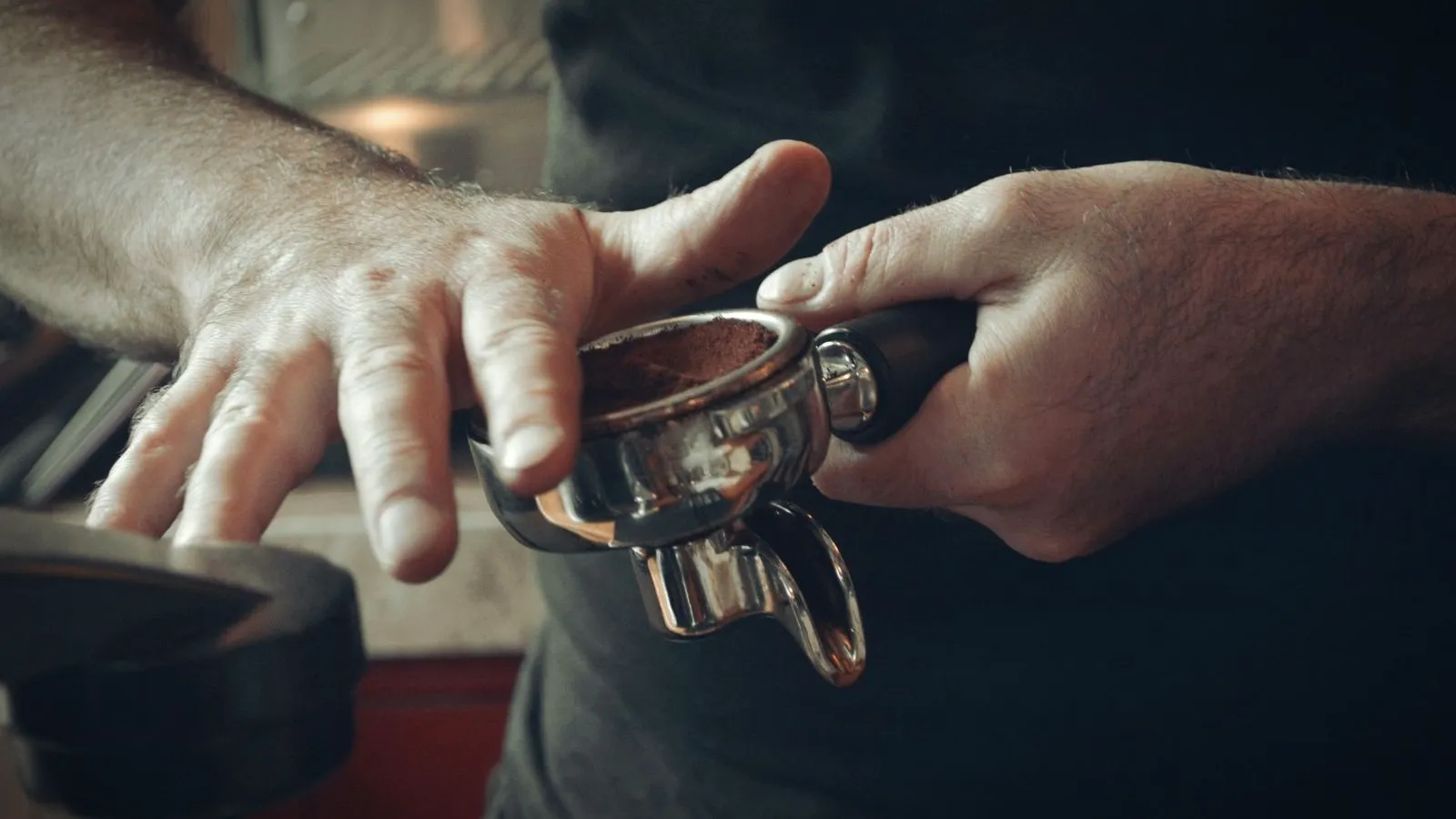
Portafilters differ below the basket: a spouted body collects the espresso and pours it through one or two spouts, while a bottomless body leaves the underside of the basket open. Breville notes that spouts help espresso flow into cups with less splashing.
A bottomless portafilter shows the extraction as it happens, which makes channeling visible; our separate guide covers it in detail. La Marzocco ships the Linea Micra with a convertible portafilter that works bottomless or with a connectable single or double spout, so one handle covers both styles.
Portafilter materials
Most portafilters pair a metal body with a separate handle. Breville’s guide names stainless steel, brass and aluminum as the common body materials and calls stainless steel durable, rust resistant and easy to wash. Breville’s own Barista Express and Dual Boiler portafilters are stainless steel.
Material matters less than fit and temperature. Breville’s manual says a cold portafilter and basket can lower the brewing temperature enough to affect taste, so preheat it with hot water and keep it locked in the warm group head between shots.
How to clean a portafilter
Clean a portafilter by knocking out the puck, rinsing the basket and body under hot water right after each shot, and soaking them in espresso machine cleaner when oils build up. A knock box makes the first step tidy.
- Knock out the puck and rinse the basket and portafilter under hot water to remove oils.
- Unblock holes in the basket with a pin if any are clogged; Breville supplies a cleaning tool with one.
- Soak the basket and portafilter in a solution of espresso machine cleaning tablet and hot water for about 20 minutes when holes stay blocked (Breville’s method), then rinse. Gaggia says not to use cleaning agents on its pressurized filter holder.
- Wipe the rim and ears so the portafilter seals cleanly against the gasket.
Gaggia adds a daily warm water wash for the filters and, if brewing goes wrong, 10 minutes in boiling water. For the group head, shower screen and backflushing, see our guide on how to clean an espresso machine. The group gasket that the ears press against wears out too; our guide to espresso machine parts lists the replacement intervals manufacturers publish.
The bottom line
Your portafilter size is set by your machine: 51 mm on many De’Longhi pump machines, 54 mm on Breville’s Bambino and Barista lines, 58 mm on the Gaggia Classic Pro, Rocket, La Marzocco and the Breville Dual Boiler. Confirm it from the model number, then buy by diameter, ears and your exact model on the compatibility list. Use a pressurized basket for pre-ground coffee and a single wall basket when you grind fresh, sized to the dose you brew.
Sources
- Breville: Barista Express BES870 instruction book (54 mm stainless steel portafilter, Single Wall and Dual Wall baskets, 8–11 g and 16–19 g, preheating, cleaning disc, 20 minute soak, no dishwasher), Dual Boiler BES920 instruction book (58 mm portafilter and heated group head), Bambino BES450, Bambino BES450 instruction book (1 cup and 2 cup basket doses) and Types of portafilters (parts, spouts, pressurized vs non-pressurized, 49, 54 and 58 mm, materials)
- De’Longhi: Bottomless Portafilter DLSC085 (51 mm, La Specialista and Dedica Maestro) and Professional Style Tamper FAQ (51 mm for De’Longhi pump machines)
- Gaggia: Classic Pro (58 mm portafilter) and Classic Pro operating instructions (filter holder, “crema perfetta” and traditional filters, daily wash, 10 minutes in boiling water, no dishwasher for the pressurized filter holder)
- La Marzocco and Rocket: Setting up your Linea Micra (convertible portafilter, 14 g, 17 g and 21 g baskets, solid cleaning basket, 58 mm tamper), Linea Micra preventative maintenance checklist (baskets and spring check) and Rocket Espresso Tamper (58 mm for all Rocket machines)
- Basket and tamper makers: VST Precision Filter Baskets (7 g to 25 g, 58 mm only, 20 g and larger may need a bottomless portafilter) and Normcore Spring Loaded Tamper V4 (53.3 mm for Breville 54 mm machines)