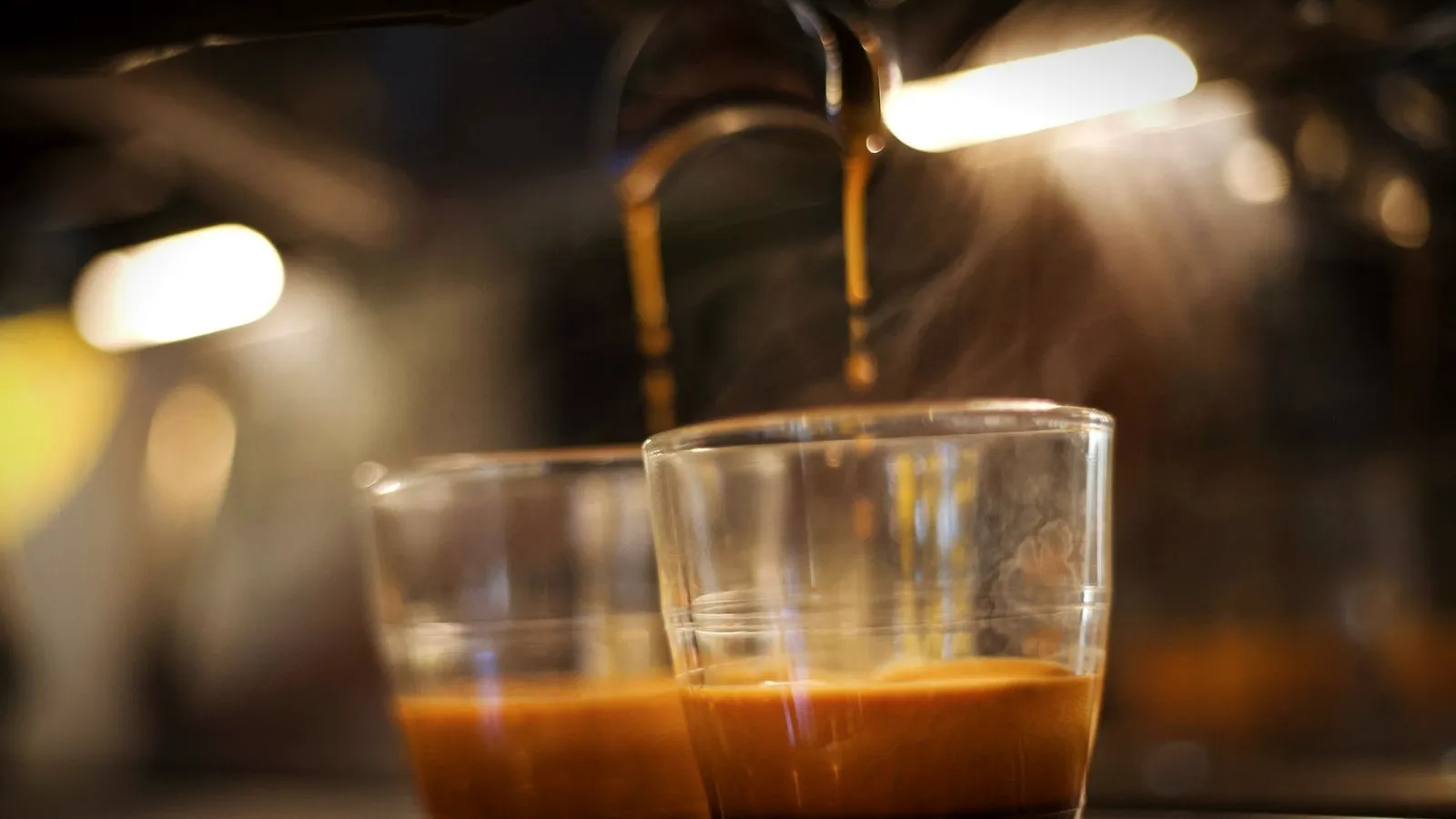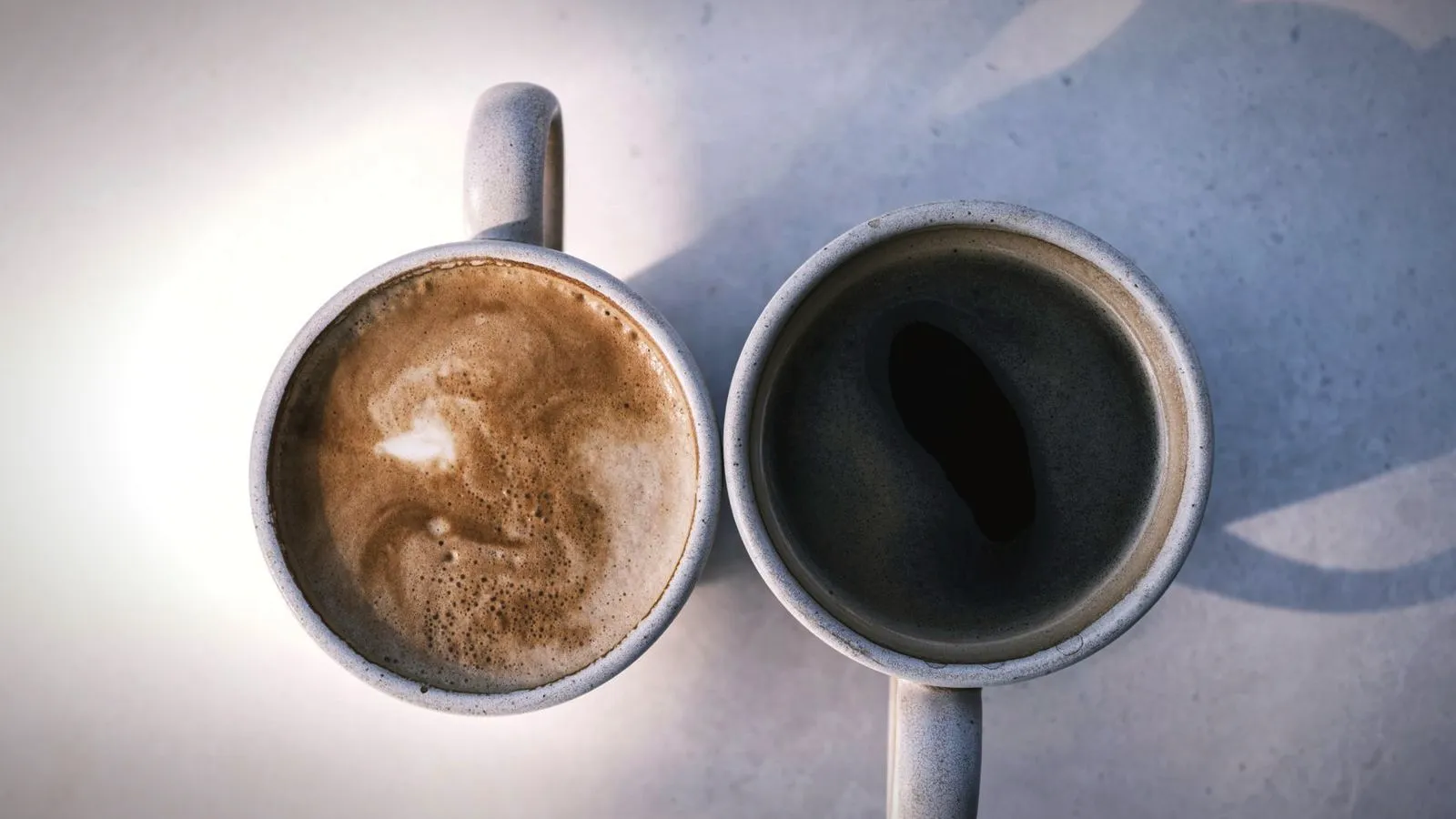
Espresso vs coffee is not a question of different beans but of different brewing. Espresso forces hot water through finely ground coffee at about 9 bar of pressure in 25 to 30 seconds, making a small, concentrated shot. Regular coffee lets water flow through or steep in coarser grounds for several minutes, making a larger, lighter cup.
That one difference changes the strength, the caffeine per serving, the taste and even the health profile. This guide compares them side by side.
The short answer
| Espresso | Regular (drip) coffee | |
|---|---|---|
| Brewing | Hot water forced through coffee at about 9 bar | Gravity or steeping, no added pressure |
| Grind | Fine | Medium (drip) to coarse (French press) |
| Brew time | 25–30 seconds | 3–5 minutes |
| Coffee to water | about 1 : 2 (18 g in, 36 g out) | about 1 : 16 to 1 : 18 |
| Typical serving | 1–2 oz | 8–12 oz |
| Caffeine per ounce | about 63 mg | about 12 mg |
| Caffeine per serving | about 63 mg (single) | about 95 mg (8 oz) |
| Texture | Thick, with crema | Light, clean |
What makes espresso different from coffee?
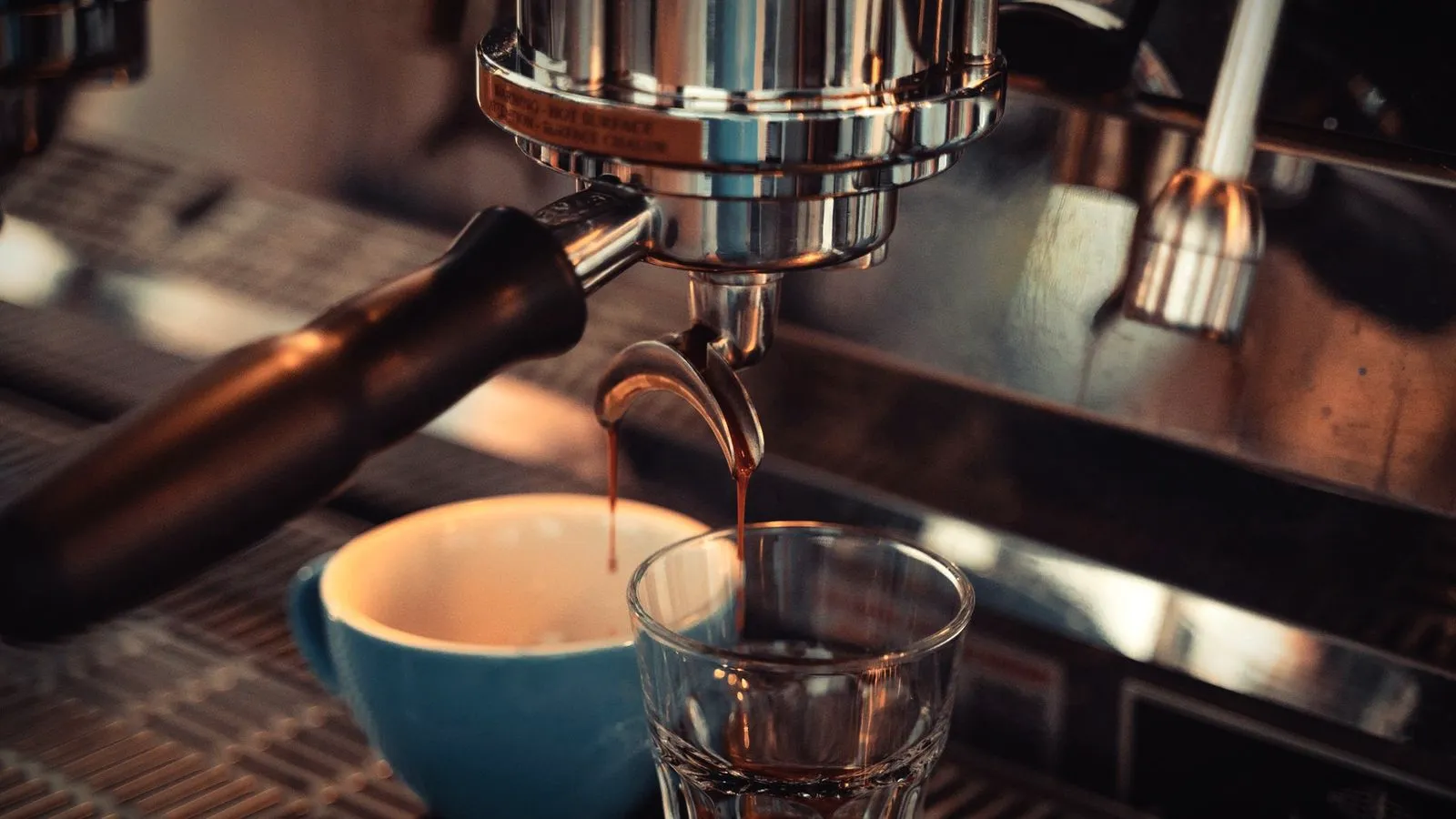
Pressure. The heritage definition published by the Specialty Coffee Association describes water at 195–205 °F forced through the coffee at 9 to 10 atmospheres, with a grind that makes brewing take 20 to 30 seconds. In the SCA’s survey of professional baristas, 9 bar was the most common brewing pressure, and about half reported an average shot time of 25 to 30 seconds. No drip machine, pour-over or French press adds meaningful pressure.
Grind. Espresso needs a fine grind so the coffee bed resists that pressure. Drip coffee uses a medium grind, and a French press a coarse one.
Ratio. A modern double espresso uses about 18 g of coffee to make about 36 g of drink. For brewed coffee, the Specialty Coffee Association recommends 55 g of coffee per liter of water to reach its Golden Cup Standard, roughly 1 : 18. The same coffee is dissolved in far less water, which is why espresso tastes so intense.
The beans are the same. Any bean can be brewed either way. Bags labeled “espresso” are simply roasted and blended with espresso in mind; we explain this in espresso beans vs coffee beans.
Espresso vs coffee: caffeine
The honest answer depends on how you measure.
- Per ounce, espresso wins by far. USDA data puts espresso at 212 mg of caffeine per 100 g, about 63 mg in a one-ounce shot. Brewed coffee has about 40 mg per 100 g, or roughly 12 mg per ounce.
- Per serving, coffee usually wins. An 8-ounce cup of drip coffee has about 95 mg, more than a single shot. A double shot, at around 126 mg, has more than the cup.
Real drinks vary far more than these averages suggest. Researchers who bought espresso from 20 coffee shops found six-fold differences in caffeine between shops. A larger study of 104 espressos from Scotland, Italy and Spain measured anywhere from 48 to 317 mg per serving. Dose, bean species and serving size explain most of the difference.
Our guide to how much caffeine is in a shot of espresso breaks these factors down. For decaf numbers, see how much caffeine is in decaf espresso.
Is espresso stronger than regular coffee?
In flavor and concentration, yes. Espresso has much more dissolved coffee per ounce, a heavier body and a longer-lasting taste. In total caffeine per drink, not necessarily: a single shot has less caffeine than a typical mug of drip coffee. “Stronger” depends on whether you mean taste or total caffeine.
Is 1 shot of espresso equal to 1 cup of coffee?
On average, no. A single shot (about 63 mg) has roughly two-thirds of the caffeine of an 8-ounce cup of drip coffee (about 95 mg). Two shots are closer to a large mug. Many American cafés pull doubles by default, so a café latte or Americano often has more caffeine than a home cup of coffee. We compare the two drinks directly in latte vs coffee.
Taste and texture
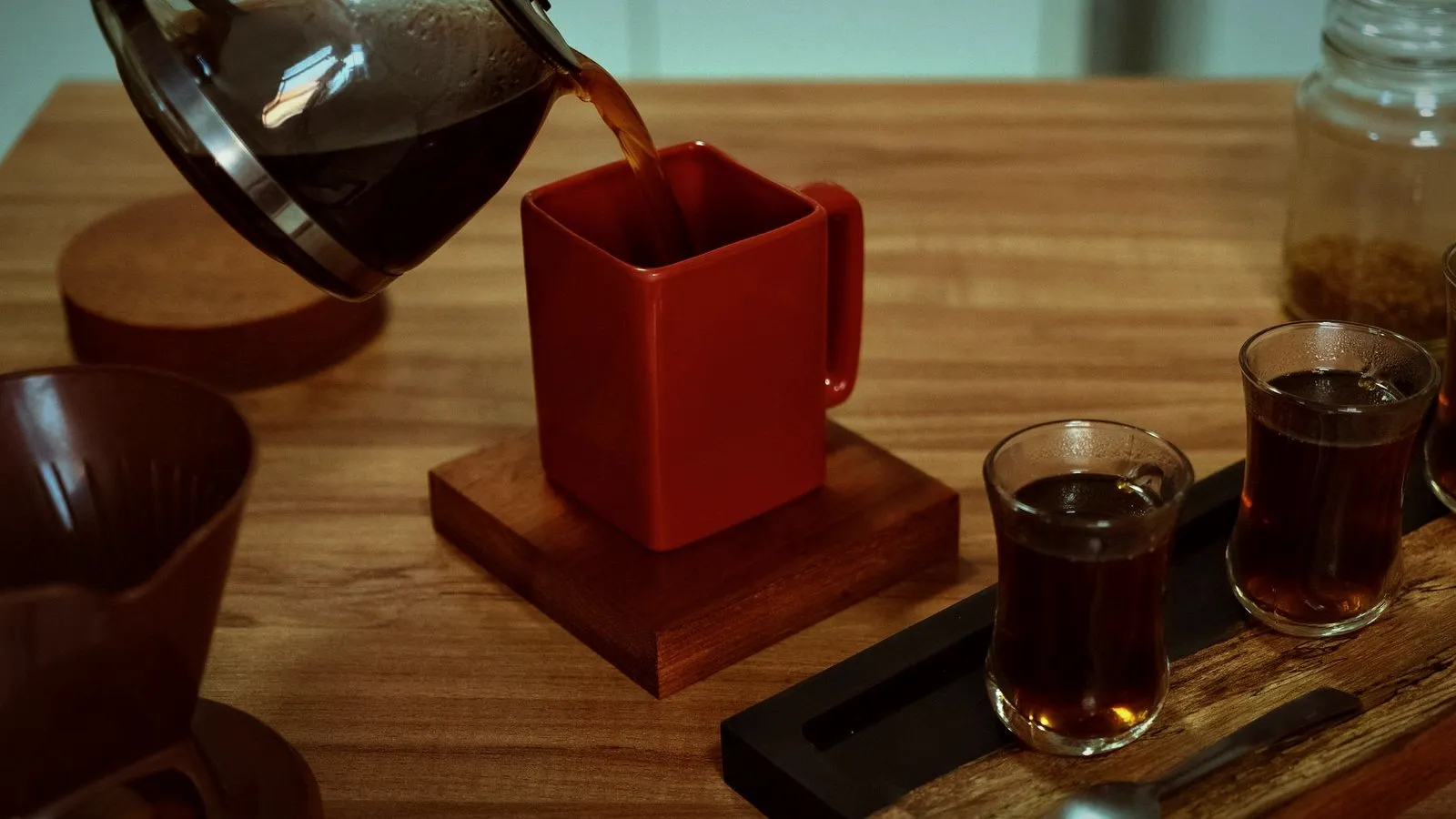
Espresso is thick and syrupy, with a layer of crema on top. Pressure emulsifies coffee oils and carries fine particles into the cup, giving espresso its heavy body and long aftertaste. Flavors are intense: sweetness, bitterness and acidity all feel amplified.
Drip coffee is lighter and cleaner. A paper filter holds back most of the oils and fine particles, so the cup tastes clearer and makes it easier to pick out delicate notes, especially in light roasts.
Neither is better; they are different drinks made from the same coffee. Many people who find drip coffee thin love espresso, and the reverse is just as common.
Espresso vs coffee: which is healthier?
Both are low in calories when drunk black, and both contain the same antioxidants from the coffee bean. One difference is worth knowing:
- Espresso is unfiltered. Coffee contains two natural compounds, cafestol and kahweol, that can raise cholesterol. Paper filters remove most of them; espresso machines do not.
- In a large Norwegian population study, drinking three to five espressos a day was associated with slightly higher total cholesterol, while filtered coffee showed little effect except at six or more cups a day in women.
For most people, the amount of caffeine and what you add to the cup matter more than the brewing method. If you have been advised to watch your cholesterol, paper-filtered coffee is the gentler choice. The FDA cites 400 mg of caffeine a day as an amount not generally linked to negative effects in healthy adults. This is general information, not medical advice.
What is “espresso-style” coffee?
“Espresso-style” usually describes a strong, concentrated coffee made without a pump espresso machine, for example with a stovetop moka pot or an AeroPress. These make excellent strong coffee, but by the traditional definition, which calls for 9 to 10 atmospheres of pressure, they are not true espresso. Our guide on how to make espresso without a machine walks through each method, and we compare the options in espresso maker vs espresso machine.
“Espresso roast” on a bag is a different thing: a roast level, usually medium-dark, chosen to taste good as espresso.
Which should you choose?
- Choose espresso if you like intense flavor, want milk drinks such as lattes and cappuccinos, or prefer a quick, small drink.
- Choose drip or pour-over coffee if you want a larger cup to sip slowly, prefer a lighter taste, or brew for several people at once.
- Have both if you can: many coffee lovers drink filter coffee in the morning and espresso drinks later.
Equipment is the other factor. Drip coffee needs only an inexpensive brewer, while good espresso at home needs a machine and a capable grinder. Start with how to use an espresso machine if you are new to it, and see our types of espresso drinks for what you can make.
The bottom line
Espresso and coffee use the same beans but different brewing. Espresso uses pressure, a fine grind and little water to make a small, intense shot with more caffeine per ounce; drip coffee uses gravity, a coarser grind and more water to make a larger, lighter cup with more caffeine per serving. Choose by the taste and drinks you enjoy.
Sources
- USDA FoodData Central: Coffee, brewed, espresso, restaurant-prepared and Coffee, brewed, prepared with tap water (caffeine per 100 g)
- Specialty Coffee Association: Defining the ever-changing espresso (archived; heritage definition: 9 to 10 atmospheres, 195–205 °F, 20–30 seconds; barista survey: 9 bar, 25–30 seconds, 18 g in, 36 g out) and Brewing best practices (archived; Golden Cup ratio of 55 g/L)
- Food & Function: Crozier et al. (2012), Espresso coffees, caffeine and chlorogenic acid intake, and Ludwig et al. (2014), Variations in caffeine and chlorogenic acid contents of coffees
- Svatun et al., Open Heart (2022): espresso and serum cholesterol in the Tromsø Study
- U.S. Food and Drug Administration: Spilling the Beans: How Much Caffeine Is Too Much?