How to make espresso without a machine depends on how close you need to get. Real espresso needs about 9 bar of pressure, and only a hand-powered lever press reaches espresso-level pressure without a pump. A moka pot, AeroPress or French press makes strong, espresso-style coffee instead, which works well in lattes and iced drinks.
The five methods differ mostly in how much pressure they put on the coffee, from espresso-level pressure down to none. If you are still deciding what to buy, our comparison of the espresso maker vs espresso machine explains the pressure gap in more detail.
The short answer
| Rank | Method | Pressure | True espresso? | What you need |
|---|---|---|---|---|
| 1 | Manual lever press (Flair, Cafelat Robot) | About 6–9 bar, by hand | Yes | Press, burr grinder, kettle |
| 2 | Moka pot | About 1.5 bar (steam) | No, but close in strength | Stovetop pot |
| 3 | AeroPress | Hand pressure, no published figure | No, by its maker’s own definition | AeroPress, kettle |
| 4 | French press concentrate | None (steeped) | No | French press, kettle |
| 5 | Instant espresso | None (dissolved) | No | Jar of instant espresso powder |
Pressures come from each maker’s guide; the AeroPress and French press figures are descriptions, not measurements.
Can you make espresso without a machine?
Yes, but only one kind of device makes true espresso without an electric machine: a manual lever press. The Specialty Coffee Association’s heritage definition of espresso calls for water at 90–96 °C (195–205 °F) forced through finely ground coffee at 9 to 10 atmospheres. A lever press builds espresso-level pressure with your arm; Flair’s guide targets 6–9 bar.
Everything else on this list brews at much lower pressure. A moka pot or AeroPress still makes a concentrated brew that stands in for espresso in milk drinks, without the same thick body or crema.
So the honest question is what you want in the cup:
- Straight shots with crema: a manual lever press.
- A strong base for lattes and iced coffee: a moka pot or AeroPress.
- Something strong with what you already own: a French press concentrate or instant espresso.
Espresso without a machine: methods compared
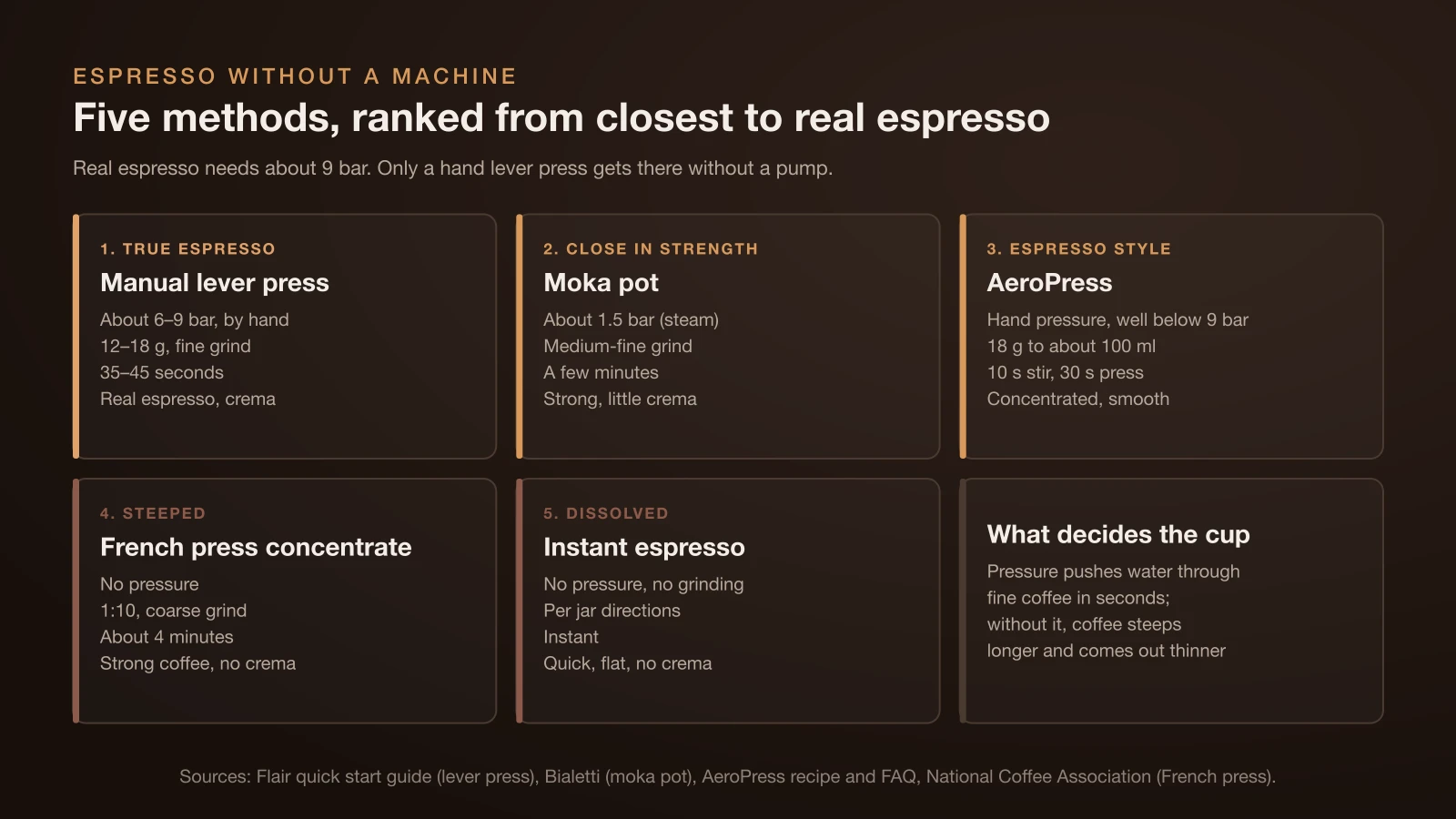
The five methods differ mainly in pressure, which decides how close the result gets to espresso. Pressure pushes water through a dense bed of fine coffee in seconds; without it, coffee has to steep longer and comes out thinner.
| Method | Coffee to water | Grind | Brew time | Result |
|---|---|---|---|---|
| Lever press (Flair Classic) | 12–18 g dose; espresso ratio about 1:2 | Fine, espresso | 35–45 seconds | Real espresso, crema |
| Moka pot | Set by the pot (fill basket, water to valve) | Medium-fine, coarser than espresso | A few minutes | Strong, full-bodied, little crema |
| AeroPress | 18 g to about 100 ml (about 1:5.6) | Fine | About 10 seconds stir, 30 seconds press | Concentrated, smooth |
| French press | 1:10 (strongest end of 1:10 to 1:16) | Coarse | About 4 minutes | Strong coffee, no crema |
| Instant espresso | Per jar directions | None | Instant | Quick, flat, no crema |
The espresso ratio is the National Coffee Association’s 1:2; the AeroPress ratio is simple division of AeroPress’s own recipe. Instant espresso is the quickest shortcut of all, but it is dried coffee rather than a brew; our guide to espresso powder explains what it is and how to use it.
1. Manual lever press: real espresso without a machine
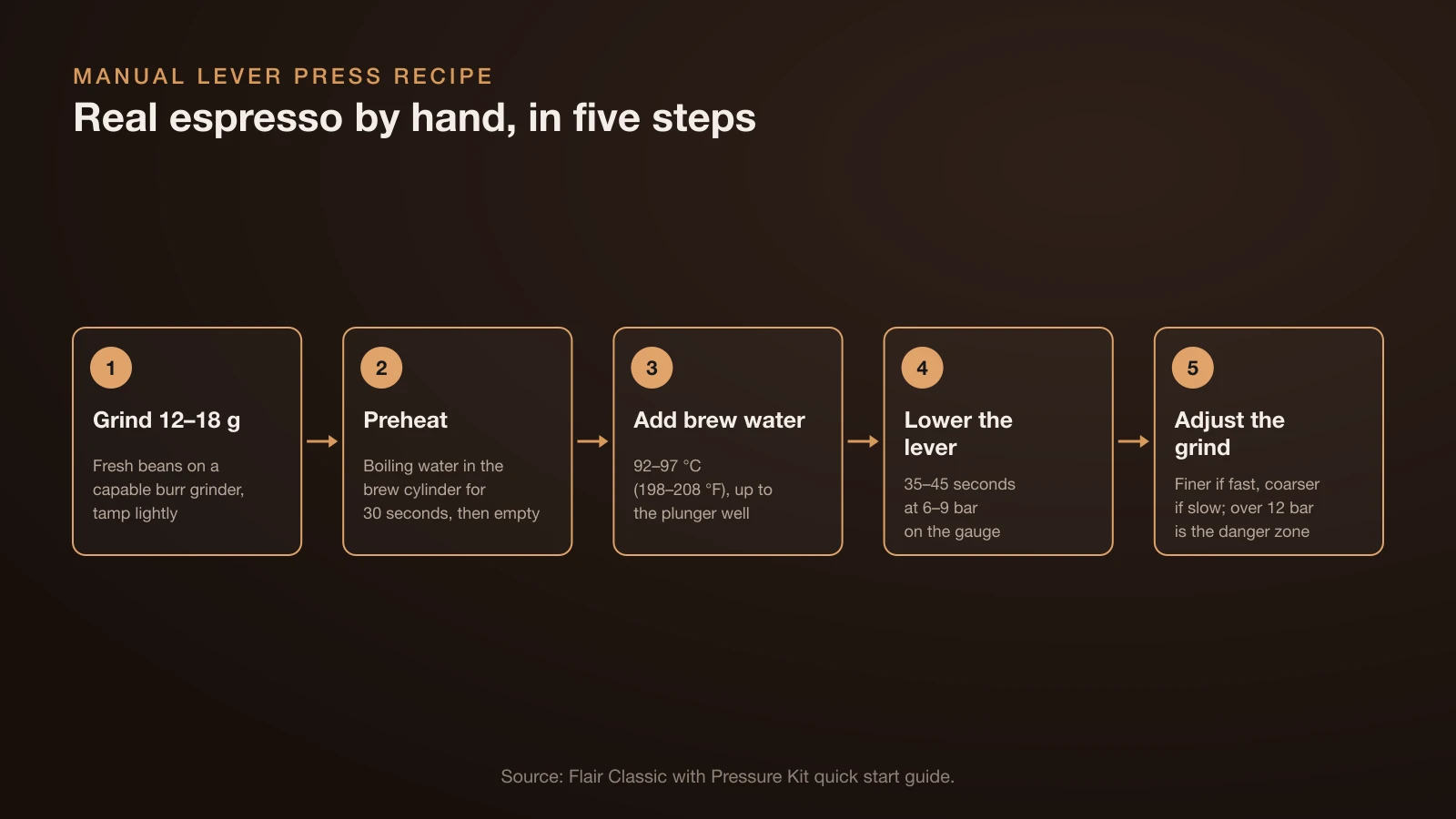
A manual lever press is the only way to make true espresso without an electric machine, because you supply the pressure with a long lever. The best-known examples are the Flair and the Cafelat Robot. Neither has a pump; you fill them with water from a kettle.
Flair’s quick start guide for its Classic model gives a clear recipe:
- Grind 12–18 g of fresh beans on a capable burr grinder, then tamp lightly.
- Preheat the brew cylinder by filling it with boiling water for 30 seconds, then empty it.
- Add brew water at 92–97 °C (198–208 °F) until it reaches the plunger well.
- Lower the lever so the shot takes 35–45 seconds at 6–9 bar on the gauge.
- Adjust the grind: finer if the shot runs fast, coarser if it runs slow. Flair marks anything over 12 bar as a danger zone.
Cafelat takes a slightly different view. Its Robot manual recommends aiming for 6–7 bar and notes that kettle water just off the boil loses around 4 °C as it hits the basket. Cafelat also sells a pressurized basket for pre-ground coffee, with a minimum of 10 g.
For a full buyer’s overview, see our guide to manual espresso machines. Once you can pull a standard shot, you can also try shorter and longer styles, explained in ristretto vs long shot.
2. Moka pot: the classic stovetop option
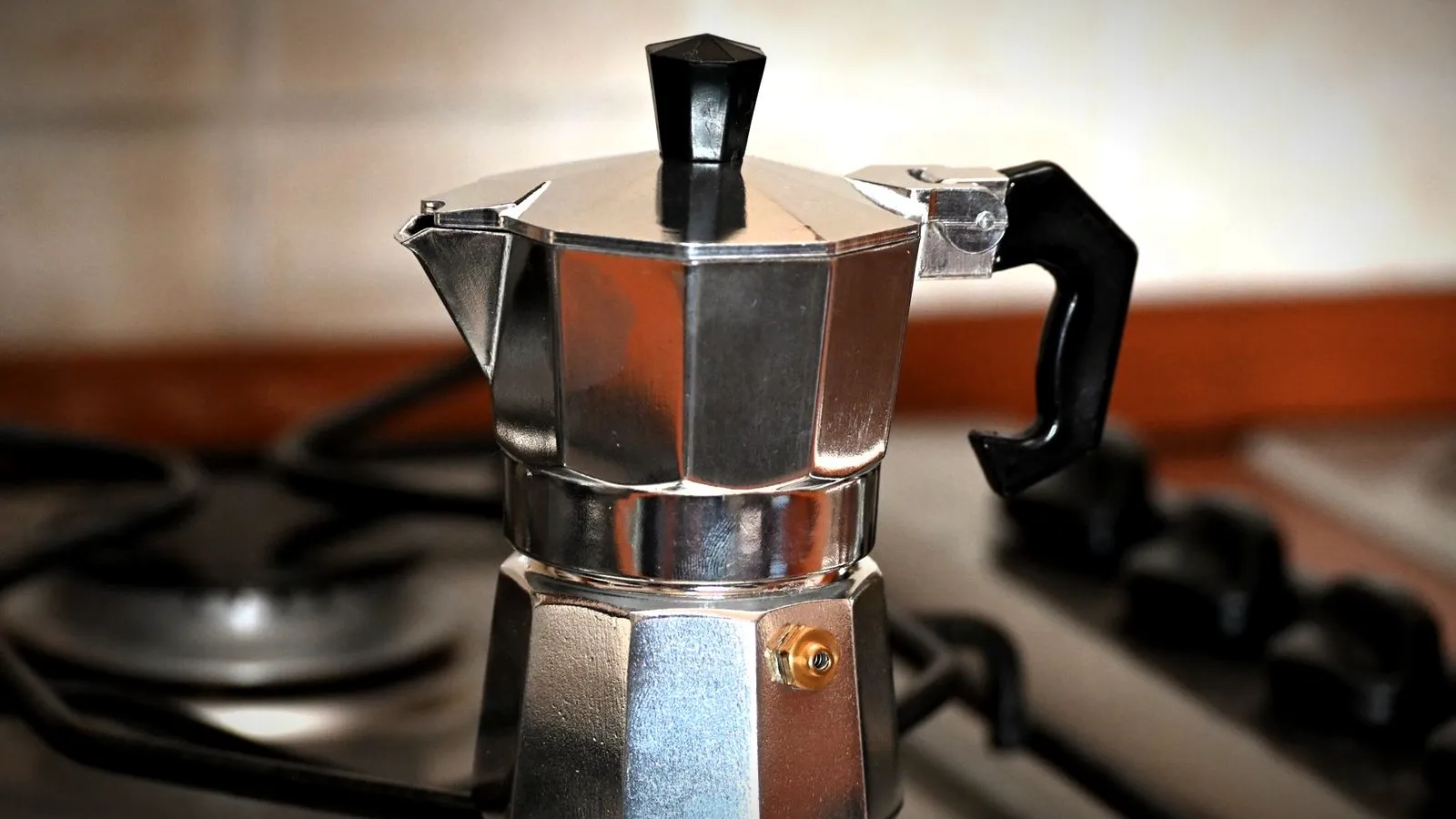
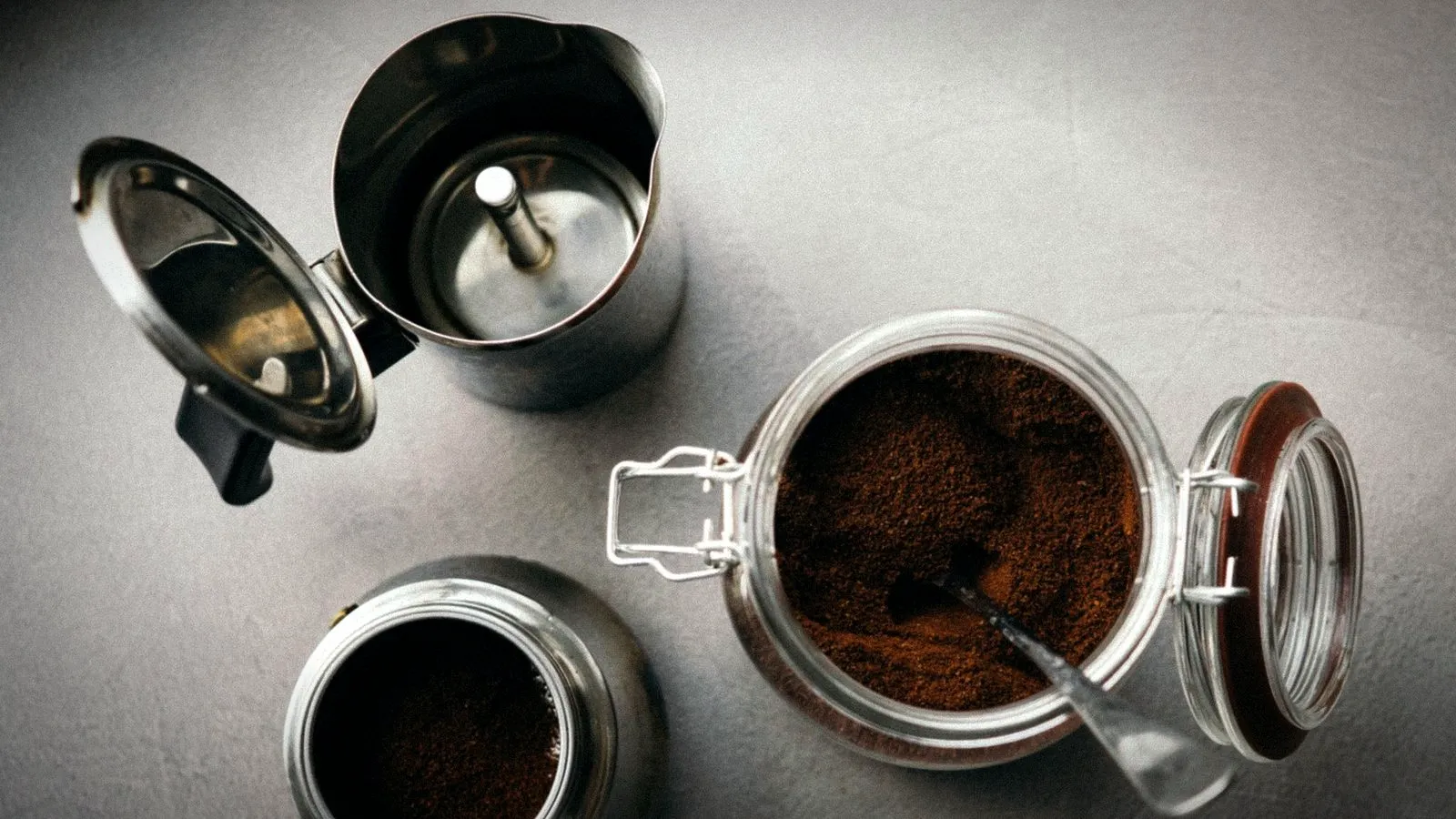
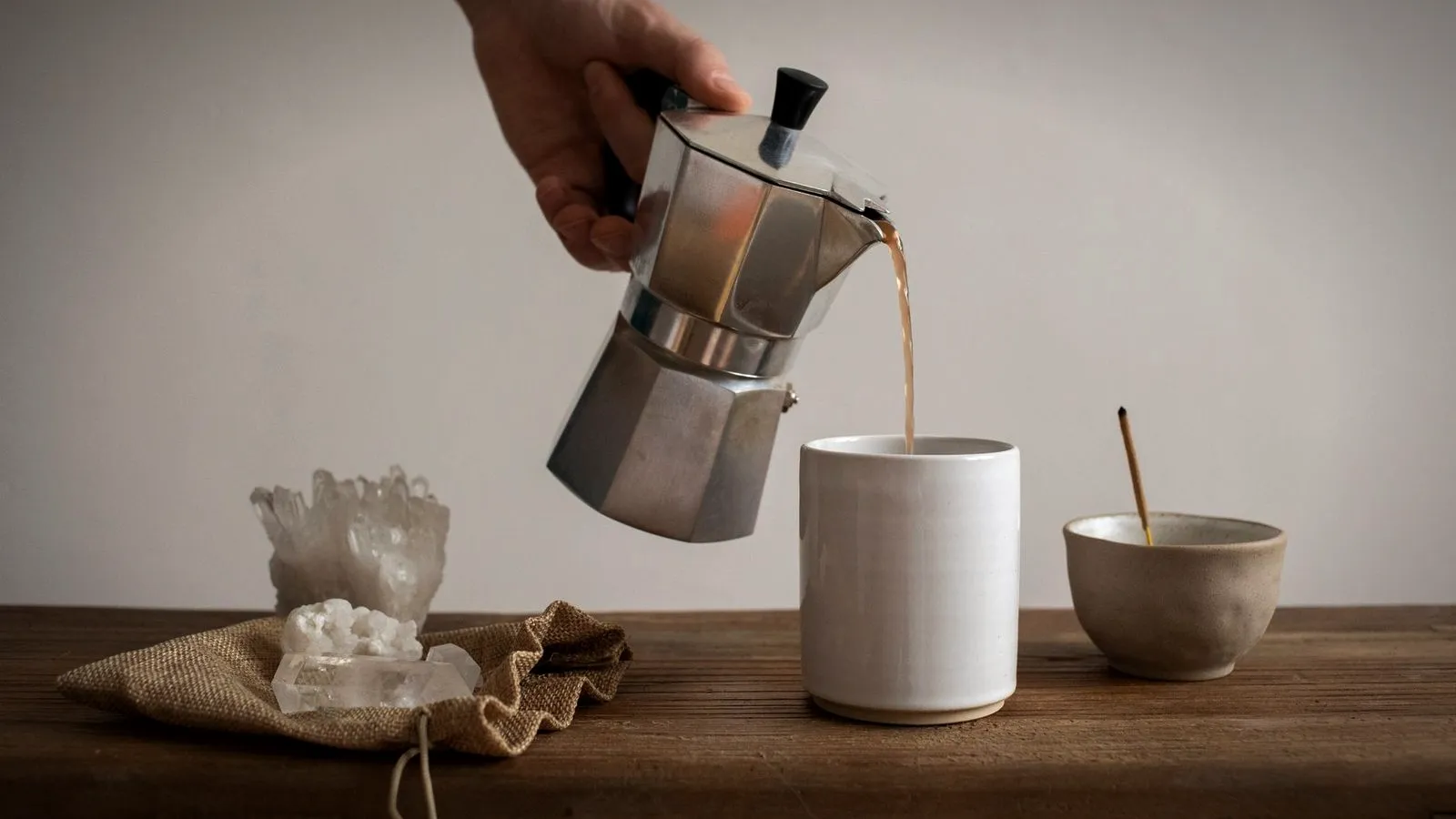
A moka pot makes the strongest coffee of the low-pressure methods by pushing hot water up through the grounds with steam. Bialetti, which makes the original Moka Express, puts that pressure at about 1.5 bar, a fraction of espresso’s 9. The result is strong and full-bodied, with little or no crema.
In short: fill the base with water to the safety valve, fill the funnel level with coffee ground coarser than espresso, do not press it down, and heat on low to medium until the coffee starts to gurgle. Our step-by-step guide on how to use a moka pot covers heat, timing and cleaning in detail.
The coffee matters as much as the technique. Our guide to the best coffee for a moka pot explains which roasts and grinds work best.
3. AeroPress: espresso-style concentrate
An AeroPress makes a smooth, concentrated coffee by pushing water through a paper filter with a hand plunger. AeroPress itself says that if espresso is defined by 9 bar of pressure, its coffee makers do not make espresso. It calls the result an “espresso style” coffee that works in lattes and cappuccinos.
AeroPress publishes this recipe for a roughly 2 oz (60 ml) espresso-style shot:
- Add 18 g of finely ground coffee to the chamber in the standard upright position.
- Pour in about 100 ml (3.4 oz) of water at 90–96 °C (195–205 °F).
- Stir for 10 seconds.
- Press for about 30 seconds.
The company’s optional Flow Control Filter Cap holds the coffee until you press, which AeroPress says creates a buildup of pressure for a more espresso-like brew. AeroPress still describes the result as “not real espresso.”
4. French press espresso: strong coffee, not a shot
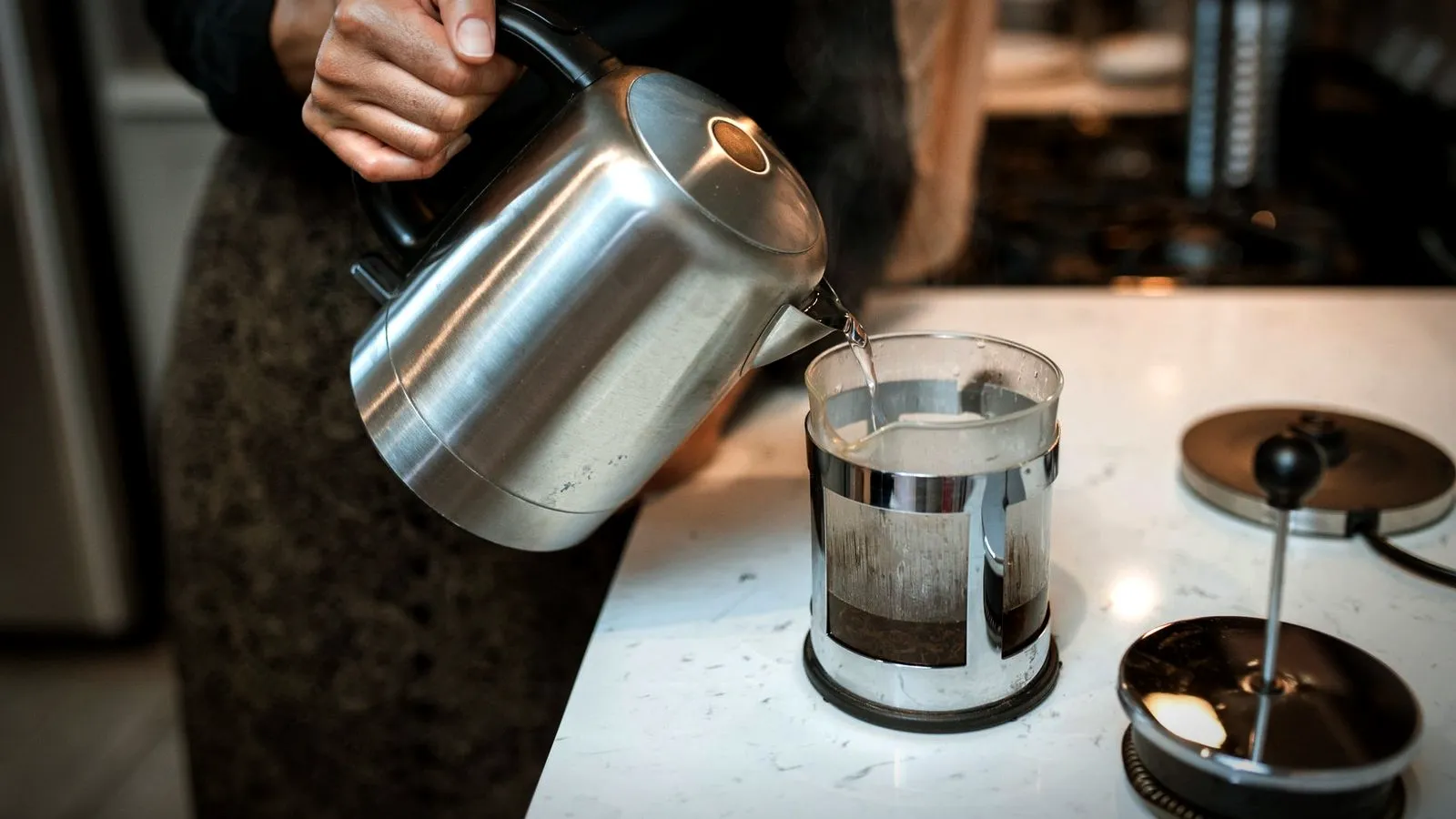
A French press cannot make espresso, because it steeps coffee in water instead of forcing water through it. What it can make is a strong concentrate for milk drinks. The National Coffee Association gives French press ratios of 1 g of coffee to 10–16 g of water, so a concentrate uses the strongest end, 1:10.
- Weigh 20 g of coarse coffee and put it in the carafe.
- Boil water and let it rest about 30 seconds, to around 93 ± 3 °C (about 194–205 °F).
- Pour 200 g (about 7 oz) of water over the coffee.
- Wait about a minute, then stir gently to break the crust.
- Put the lid on and steep about three more minutes, then press slowly and pour right away.
The National Coffee Association suggests grinding finer if French press coffee tastes flat or watery, and coarser if it tastes bitter. Expect a strong, heavy-bodied coffee, still far thinner than a 1:2 espresso.
What you need for espresso-style coffee at home
The equipment you need depends on the method, but fresh coffee and the right grind matter for every one of them.
- A grinder: essential for a lever press. Flair says its Classic needs an espresso-capable burr grinder and will not work with pre-ground beans. For a moka pot, AeroPress or French press, pre-ground coffee is fine if the grind matches the brewer.
- A kettle: needed for a lever press, AeroPress and French press. A thermometer or temperature-control kettle helps hit the ranges above.
- A scale: useful for the AeroPress and French press recipes, and essential for repeatable lever-press shots.
- Fresh beans: Flair recommends whole beans roasted within a few weeks of use and ground just before brewing.
Our guide to espresso grind size shows how fine to go for each brewer.
How to make espresso drinks without a machine
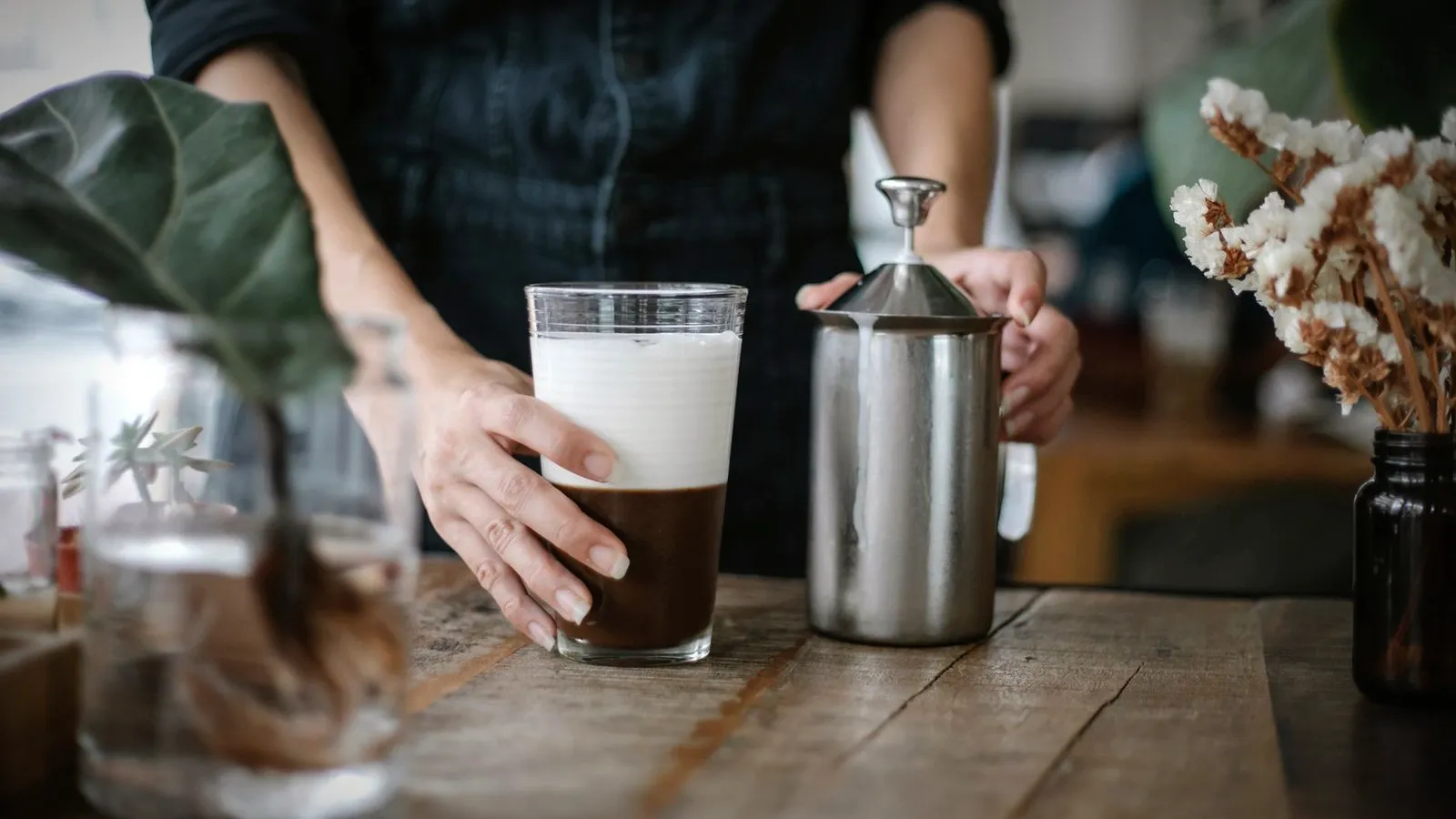
You can make most espresso drinks at home by pairing one of these brews with heated, foamed milk. A moka pot or AeroPress shot is strong enough to stand up to milk in a latte or cappuccino, and a French press concentrate works in iced drinks.
| Drink | Coffee base | Milk |
|---|---|---|
| Latte | Moka pot or AeroPress, about 2 oz | Heated and lightly foamed |
| Cappuccino | Moka pot or AeroPress, about 2 oz | Less milk, more foam |
| Iced latte | AeroPress or French press concentrate | Cold milk over ice |
| Americano-style | AeroPress or lever press shot | Hot water instead of milk |
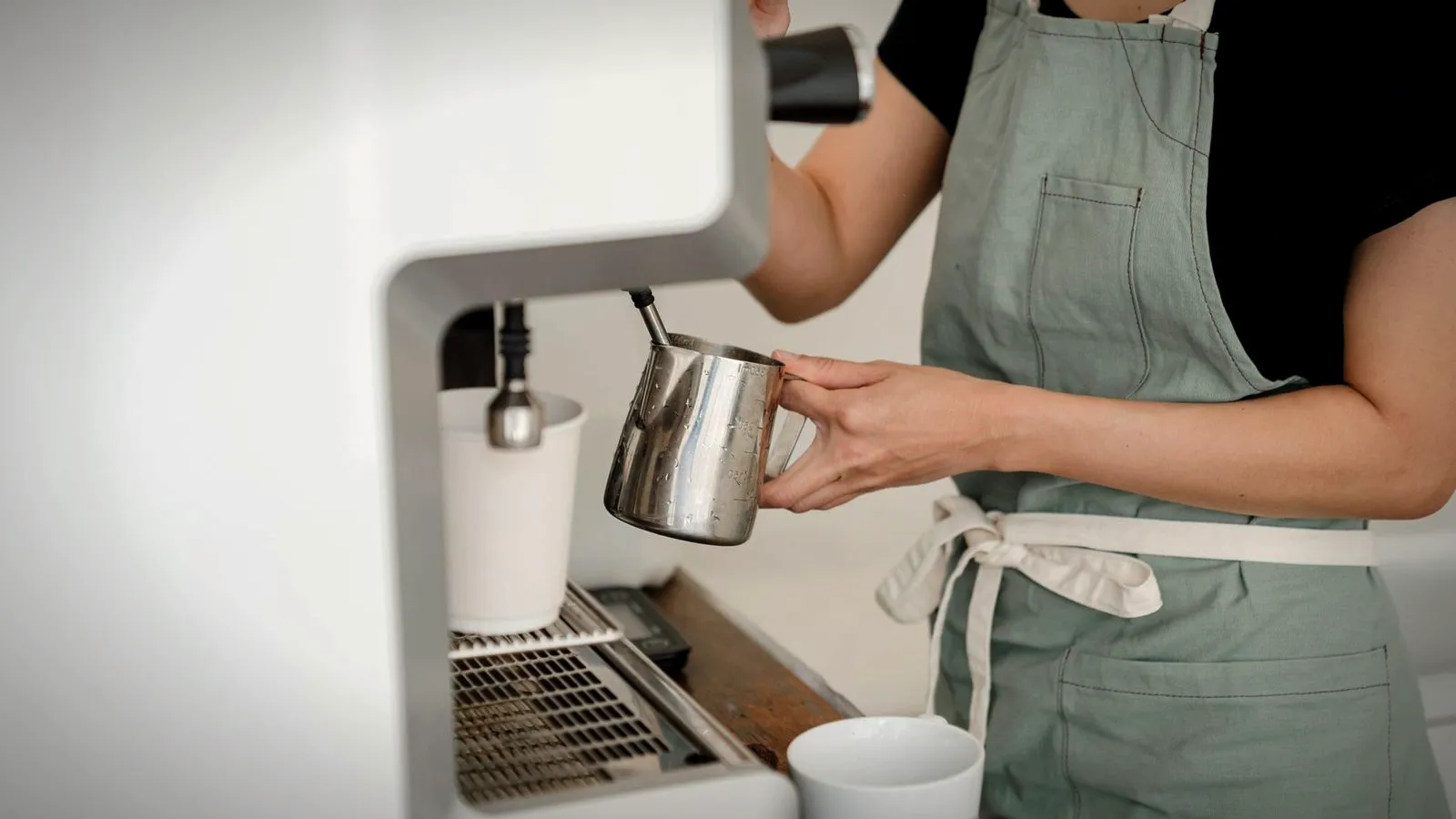
Without a steam wand, you can foam milk with a handheld frother, a French press or a lidded jar. Our guide to how to steam milk covers the French press, whisk and jar methods and the right temperature.
Which method should you choose?
Choose by the drink you want and how much practice you will put in. A lever press is the only route to real espresso; the other methods trade authenticity for convenience.
| If you want… | Choose |
|---|---|
| Real espresso with crema, no electric machine | Manual lever press |
| The strongest coffee from a cheap stovetop pot | Moka pot |
| A forgiving, travel-friendly brewer | AeroPress |
| A strong brew with equipment you already own | French press concentrate |
| Espresso flavor in seconds, or for baking | Instant espresso |
The bottom line
To make espresso without a machine, use a manual lever press: it is the only method that reaches real espresso pressure, about 6–9 bar by Flair’s guide. A moka pot and an AeroPress come next, making strong, espresso-style coffee that works well with milk. A French press concentrate and instant espresso are the easiest options, but neither tastes or looks like a real shot.
Sources
- Specialty Coffee Association: Defining the ever-changing espresso (archived; heritage definition of 9 to 10 atmospheres and 195–205 °F)
- Lever press makers: Flair Classic with Pressure Kit quick start guide (12–18 g, burr grinder, 30-second preheat, 198–208 °F, 35–45 seconds at 6–9 bar, over 12 bar danger zone, fresh beans) and Cafelat Robot user manual (no boiler, water drops about 4 °C, 6–7 bar, pressurized basket with at least 10 g)
- AeroPress: Frequently asked questions (9-bar definition, espresso-style coffee, Flow Control Filter Cap) and Pistachio Espresso Martini recipe (2 oz shot from 18 g coffee and about 100 ml water at 195–205 °F, 10-second stir, 30-second press)
- Bialetti: How the Moka works (about 1.5 bar against at least 9 for espresso machines, coarser grind than espresso, low heat)
- National Coffee Association: Espresso (1:2 ratio), French press coffee (1:10 to 1:16, 93 ± 3 °C, about 4 minutes, coarse grind, 30-second rest, crust and steep steps, grind adjustments)