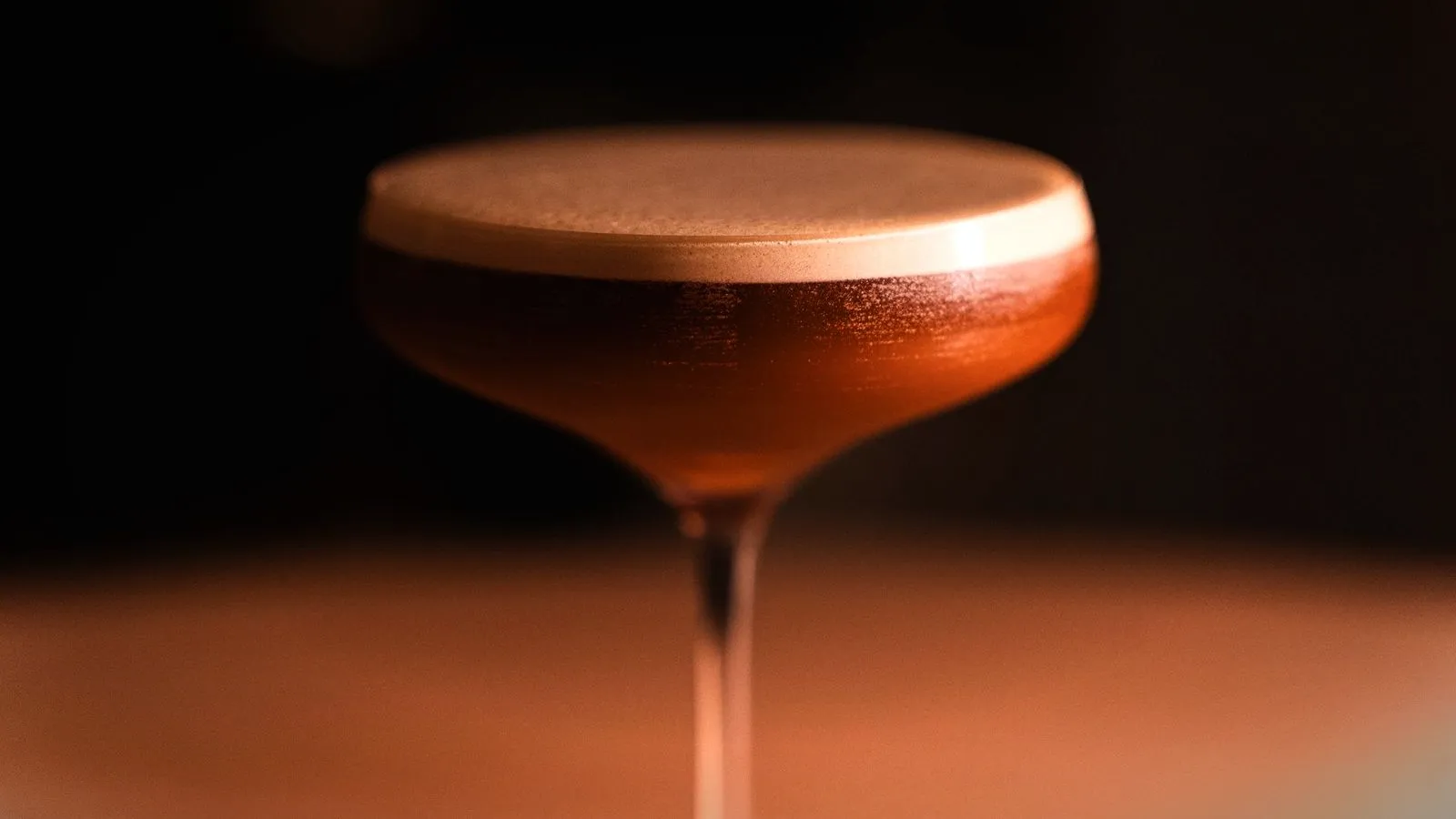
An espresso shakerato is a double shot of hot espresso shaken hard with ice and a little sugar syrup, then strained into a chilled glass. Shaking chills the coffee in seconds and whips its crema into a thick, creamy foam. To make one, brew the shot onto the syrup, add plenty of ice, shake for 20–30 seconds and strain.
The shakerato is Italy’s classic summer espresso, and one of the simplest cold drinks among the many types of espresso drinks. You need no milk and no special machine, only a shaker or a jar with a tight lid.
Below you will find the recipe, why shaking makes foam, how iced espresso drinks are made, what “iced espresso machines” actually do, and the caffeine in a shakerato.
The short answer
| Espresso shakerato | |
|---|---|
| Ingredients | Espresso, ice, sugar syrup (optional) |
| Espresso | Double shot, about 2 oz (60 ml) |
| Syrup | 2–4 tsp (10–20 ml) of simple syrup, to taste |
| Method | Shake hard with a shaker full of ice for 20–30 seconds, then strain |
| Glass | Chilled cocktail glass or small tumbler, no ice |
| Texture | Cold, silky, with a thick layer of foam |
| Caffeine | About 126 mg with a home double shot |
What is an espresso shakerato?
An espresso shakerato, or caffè shakerato, is espresso shaken with ice and sugar in a cocktail shaker until it turns cold and frothy. La Marzocco, the Italian espresso machine maker, says there is no definitive record of when it was invented, but the drink originated in Italy and became popular in the 1990s.
Its roots are practical. Italian bars serve both coffee and cocktails, so a shaker and an espresso machine sit side by side, and shaking a shot with ice was an easy step. De’Longhi notes that iced coffee goes by several names, including café con hielo, espresso shakerato and caffè freddo, and describes the shakerato as Italy’s version made with espresso, ice and sugar syrup.
The result is not an iced coffee in the American sense. It is served “up,” strained off the ice, with a head of foam like a small cocktail.
Espresso shakerato recipe: ingredients and amounts
A classic espresso shakerato needs only three ingredients: a fresh double shot, sugar syrup and a shaker full of ice. Published recipes agree on the basics and differ only on sweetness.
| Ingredient | Amount | Notes |
|---|---|---|
| Espresso | Double shot, about 2 oz (60 ml) | Brew it fresh, straight onto the syrup |
| Simple syrup (1:1 sugar and water) | 1/2 oz (15 ml), or 1–2 cl (10–20 ml) | La Marzocco uses 1/2 oz; De’Longhi 1–2 cl, plain or flavored |
| Ice | Fill the shaker about three quarters | Large, solid cubes melt less |
| Glass | Cocktail glass or small tumbler | Chill it in the freezer first |
Syrup mixes into cold coffee far better than granulated sugar, so make a batch ahead: warm equal parts sugar and water until the sugar dissolves, then cool it. Unsweetened is fine too, but a little sugar gives a fuller body. For dosing the double shot itself, see our guide to the espresso ratio.
How to make an espresso shakerato
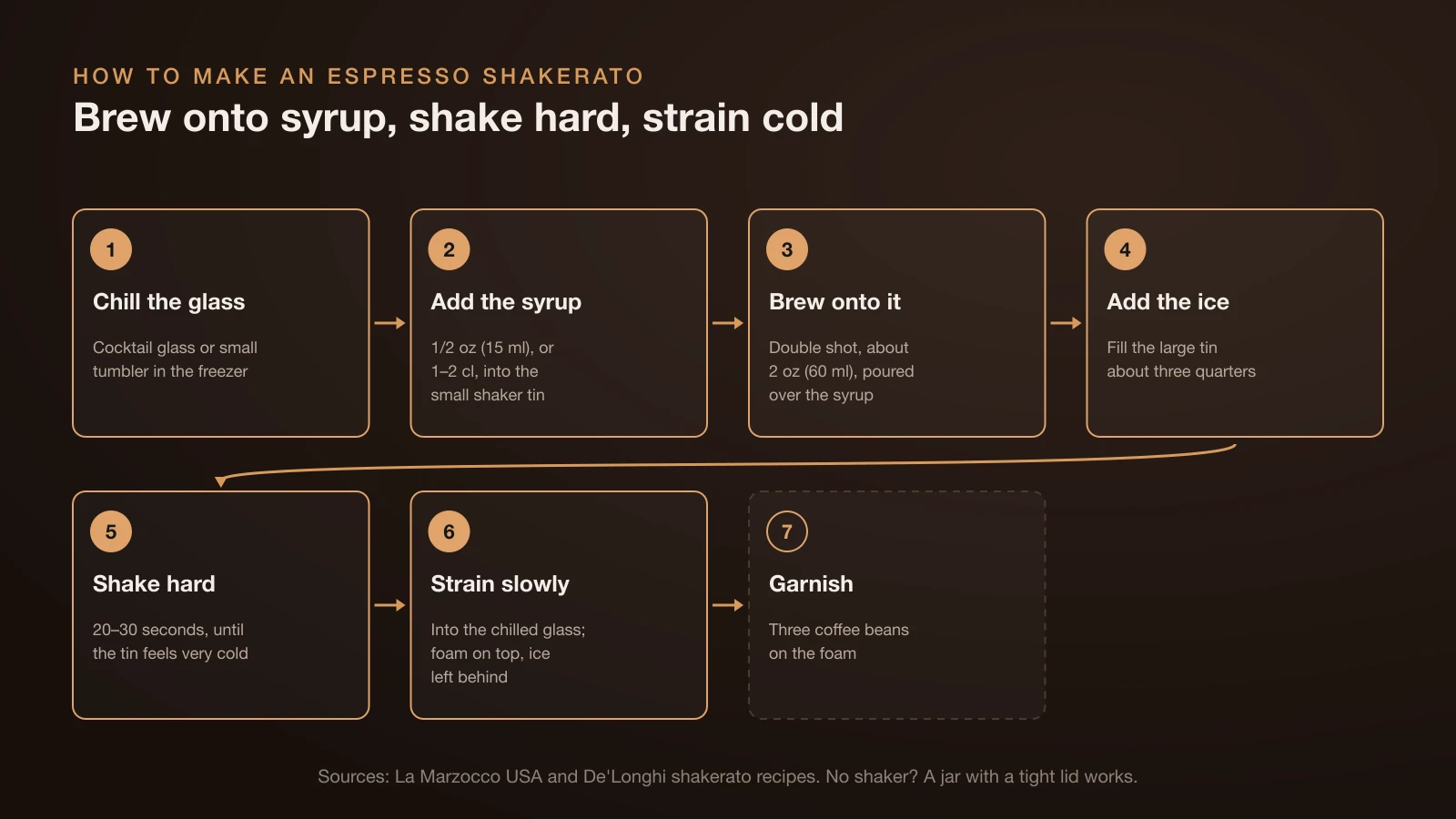
To make an espresso shakerato, pour the espresso onto the syrup, shake it hard with ice, then strain it into a chilled glass. Work quickly so the shot is still fresh when it meets the ice.
- Chill the glass. Put a cocktail glass or small tumbler in the freezer while you brew.
- Add the syrup. Pour the syrup into the small tin of a shaker, or into a jar.
- Brew onto it. Pull a double shot and pour it over the syrup so it dissolves. La Marzocco lets the shot cool for about 30 seconds.
- Add the ice. Fill the large tin about three quarters with ice. De’Longhi pours off any meltwater before the coffee goes in.
- Shake hard. Seal and shake vigorously for 20–30 seconds, until the tin feels very cold.
- Strain slowly. Strain into the chilled glass, pouring slowly so the foam stays on top. Leave the ice behind.
- Garnish (optional). De’Longhi finishes it with three coffee beans on the foam. Plain or chocolate-covered, those are edible espresso beans.
No shaker? A clean jar with a tight lid works. Hold the lid firmly, since the hot shot builds a little pressure against the cold ice. For a stove-top alternative to espresso, strong moka pot coffee makes a lighter version.
Why shaking espresso makes foam
Shaking whips air into the espresso, and the coffee’s natural oils trap those bubbles as a fine, stable foam. La Marzocco explains that espresso is technically a colloid, a liquid with fine solids suspended in it, which is why it foams so readily.
The crema you start with helps. A fresh shot already carries a layer of tiny bubbles, and vigorous shaking stretches it into a tight, creamy head. A shot that has sat for minutes has lost much of that crema and foams less.
Ice matters too. Large, solid cubes chill the coffee fast while melting slowly, so the drink stays concentrated. Small or half-melted ice adds water and gives a thin, watery shakerato.
Espresso shakerato variations
An espresso shakerato is a base you can change with the syrup, a splash of milk or the glass you serve it in. A few variations that keep the shaken texture:
- Flavored syrup: De’Longhi’s recipe allows flavored syrup and suggests hazelnut, vanilla or amaretto.
- With milk: add a splash of cold milk after straining for a softer drink. Starbucks’ Iced Shaken Espresso follows this idea, with espresso shaken with classic syrup and ice, then finished with a touch of 2% milk.
- Unsweetened: skip the syrup for the purest coffee flavor; the foam will be a little lighter.
- Longer drink: pour it over fresh ice in a tall glass and top with cold water, which moves it toward an iced Americano.
If you like sweet, milky iced drinks, the layered iced caramel macchiato is the opposite end of the scale: mostly milk, with vanilla and caramel.
Iced espresso: how cold espresso drinks are made
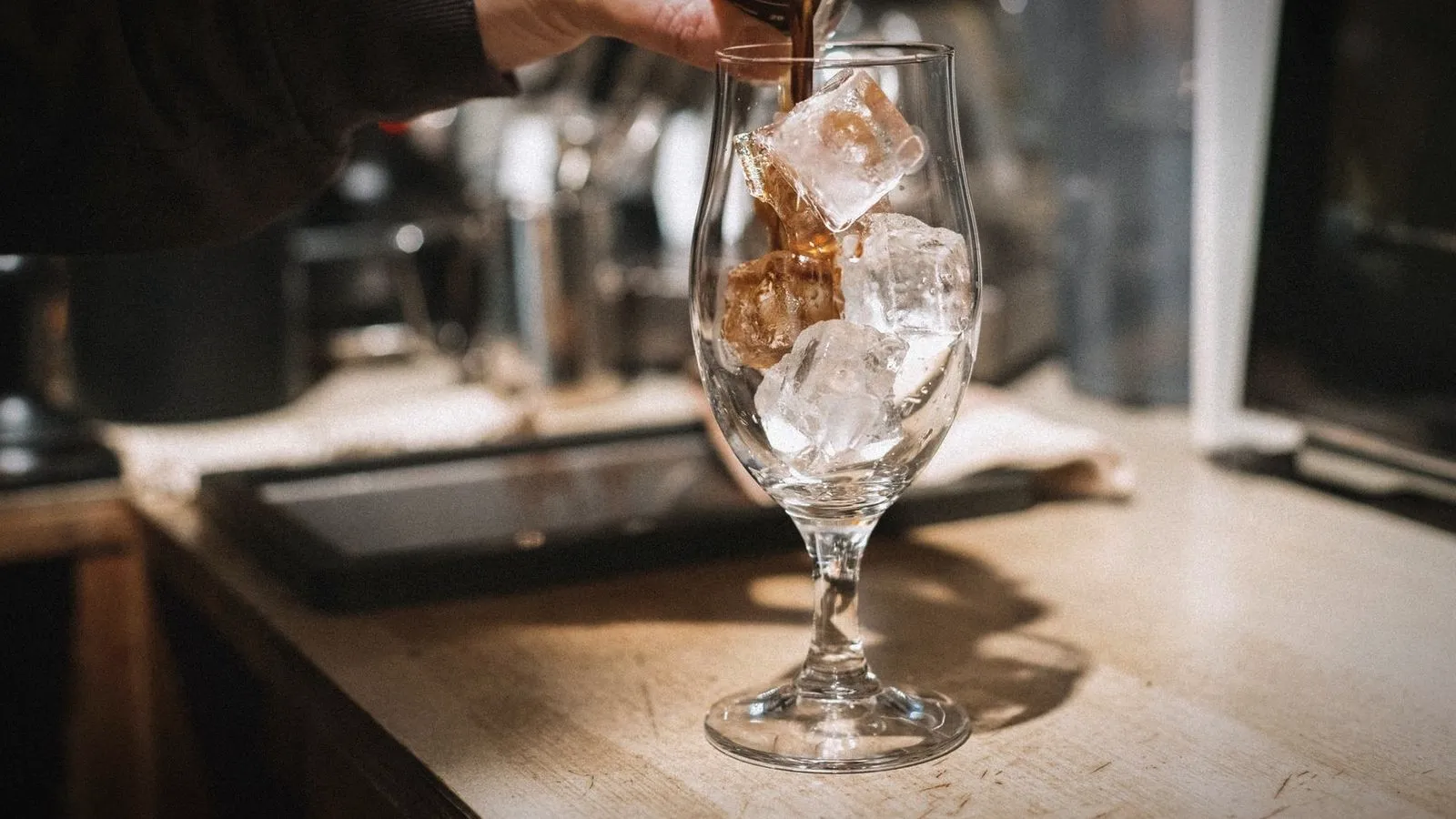
Almost every iced espresso drink starts as hot espresso that is chilled afterward. Espresso is brewed with hot water under pressure, so it comes out hot and then has to be cooled in one of three ways.
| Method | How it chills | Result |
|---|---|---|
| Shaken with ice | Shaker ice cools and aerates the shot | Cold, foamy, strained off the ice (shakerato) |
| Poured over ice | The shot lands on ice or cold liquid in the glass | Cold, some dilution, crema fades |
| Cold extraction | Water is not heated at all | A cold brew style drink rather than classic espresso |
De’Longhi draws the same line on its machines: an “Over Ice” drink is brewed hot and poured directly over ice, while its Cold Brew uses room-temperature water. Shaking is the fastest way to cool a shot fully, which is why a shakerato tastes so smooth.
Do you need an iced espresso machine?
You do not need a special iced espresso machine, because any espresso machine that makes a good hot shot can make iced espresso drinks. The chilling happens afterward, in the shaker or the glass.
Some newer machines add cold settings, and their makers describe them plainly:
- De’Longhi machines with Cold Extraction Technology make a Cold Brew style coffee at room temperature, which De’Longhi says takes under 5 minutes, and separate Over Ice drinks brewed hot onto ice.
- Breville describes the Barista Touch Impress as cold extraction enabled, with Cold Brew in under 3 minutes and a crema-topped Cold Espresso in just under 2 minutes.
These functions change the extraction, not the shaking. For a true shakerato, you still start with a hot shot and a shaker full of ice.
Shakerato compared with other iced espresso drinks
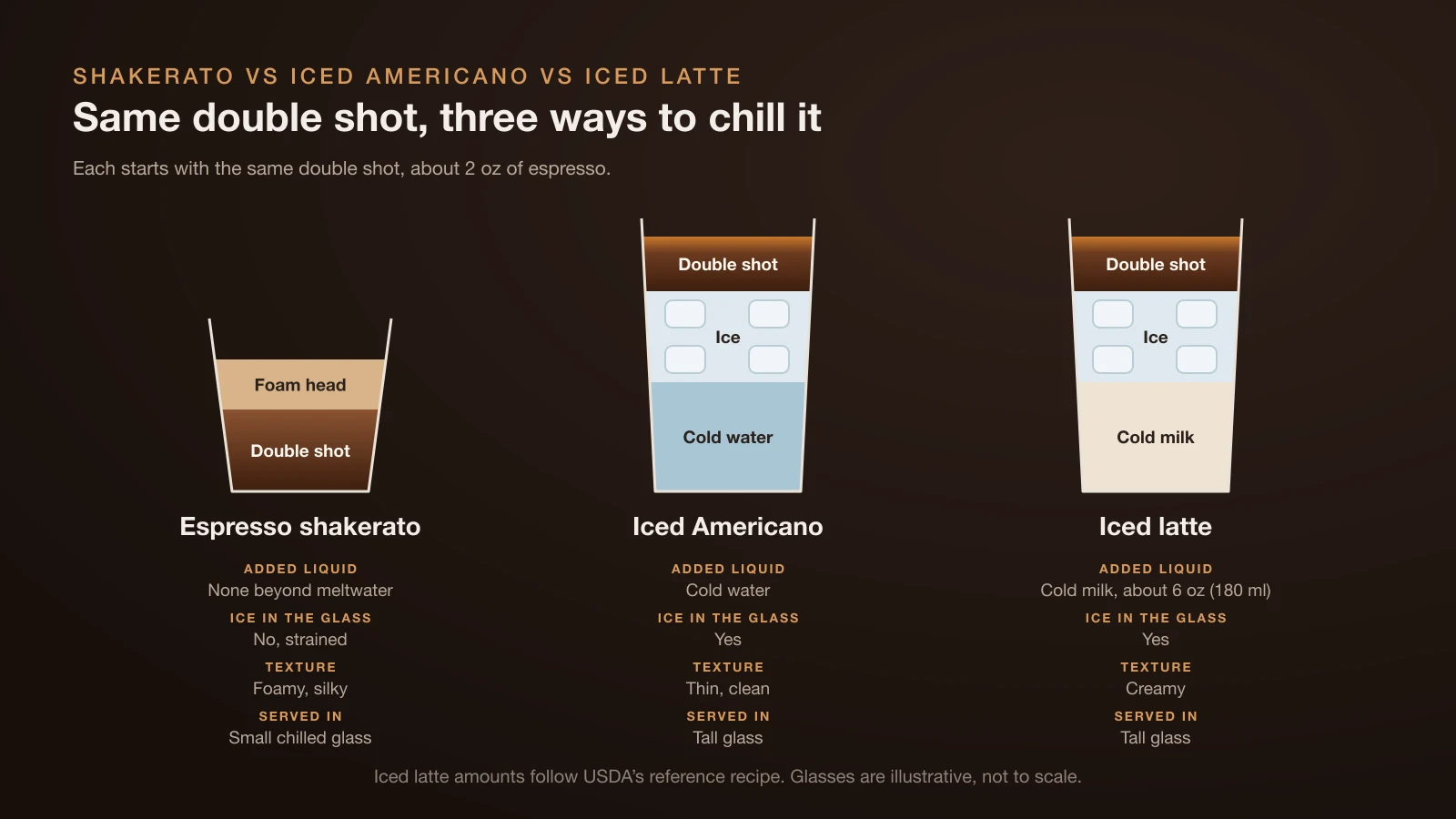
A shakerato is the most concentrated of the common iced espresso drinks, because it has no added water or milk beyond the melted ice. Here is how it compares with the two most popular alternatives.
| Espresso shakerato | Iced Americano | Iced latte | |
|---|---|---|---|
| Espresso | Double, about 2 oz | Double, about 2 oz | Double, about 2 oz |
| Added liquid | None beyond meltwater | Cold water | Cold milk, about 6 oz (180 ml) |
| Ice in the glass | No, strained | Yes | Yes |
| Texture | Foamy, silky | Thin, clean | Creamy |
| Served in | Small chilled glass | Tall glass | Tall glass |
The iced latte amounts follow USDA’s reference recipe of 62 g of espresso with 183 g of milk and a cup of ice. For the water-based drink, our iced Americano recipe covers ratios and why the shot goes in last.
Caffeine in an espresso shakerato
An espresso shakerato has exactly the caffeine of the shots you shake, since ice and syrup add none. USDA data puts espresso at 212 mg of caffeine per 100 g, or about 63 mg in a 1 oz single and 126 mg in a 2 oz double.
Café versions can be larger. Starbucks lists its Iced Shaken Espresso at 150 mg for a Tall with two shots, 225 mg for a Grande with three and 300 mg for a Venti with four. For what changes the number in a single shot, see how much caffeine is in espresso.
The bottom line
An espresso shakerato is a fresh double shot shaken for 20–30 seconds with plenty of ice and a little syrup, then strained into a chilled glass. The shaking chills it and turns the crema into a thick foam, with no milk and no special equipment. Any espresso machine can make it, and a home version carries about 126 mg of caffeine.
Sources
- La Marzocco USA: History of the caffè shakerato (origin in Italy, popular in the 1990s, name from “shake”, 1/2 oz of 1:1 syrup, about 60 ml of espresso, 30 second cool, 20–30 second shake, full ice cubes, espresso as a colloid)
- De’Longhi: Espresso shakerato o iced coffee (1–2 cl syrup, double espresso, shaker three quarters full of ice, cocktail glass, three coffee beans), Cold Brew vs Over Ice FAQ and Cold Extraction Technology (under 5 minutes)
- Breville: Barista Touch Impress BES881 (Cold Brew under 3 minutes, Cold Espresso just under 2 minutes)
- USDA FoodData Central: Coffee, brewed, espresso, restaurant-prepared (212 mg caffeine per 100 g) and Coffee, Iced Latte (62 g espresso, 183 g milk, 1 cup ice)
- Starbucks: Iced Shaken Espresso (description, shots and caffeine by size)