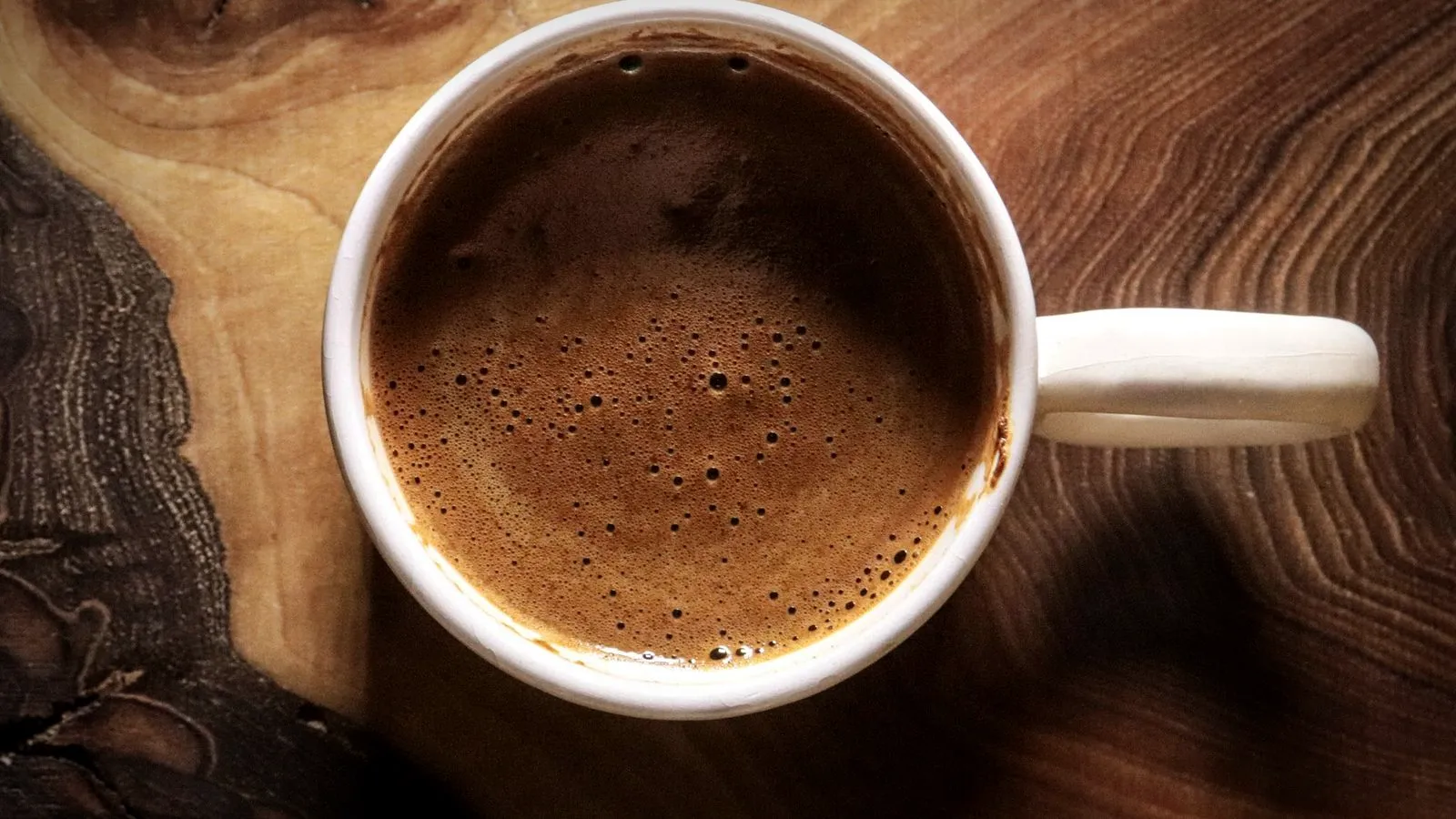
Coffee with a shot of espresso is usually called a red eye: a cup of brewed drip coffee with one espresso shot added. With two shots it is often called a black eye, and with three a dead eye (some cafés say green eye). These are café nicknames, not official standards, so names and sizes vary.
Each added shot raises the caffeine by about 63 mg, based on USDA data, and gives the coffee a deeper, roastier edge. Below are labeled caffeine estimates for each version, a home method, an iced version and ordering tips. For the shot on its own, see how much caffeine is in a shot of espresso.
The short answer
| Drink | What’s in it | Estimated caffeine |
|---|---|---|
| Brewed coffee | 8 oz (237 ml) drip coffee | about 95 mg |
| Red eye | 8 oz coffee + 1 espresso shot | about 158 mg |
| Black eye | 8 oz coffee + 2 shots | about 221 mg |
| Dead eye (green eye) | 8 oz coffee + 3 shots | about 284 mg |
Estimates assume about 95 mg in 8 oz of brewed coffee and about 63 mg in each 1 oz (30 ml) single shot, the USDA FoodData Central averages used across this site. Real drinks vary with the café, the beans and the cup size.
What is coffee with a shot of espresso called?
Coffee with a shot of espresso is most often called a red eye, and the name changes with each extra shot.
| Name | Espresso shots added | Notes |
|---|---|---|
| Red eye | 1 | The most widely recognized name |
| Black eye | 2 | Sometimes used by chains for the two-shot version |
| Dead eye | 3 | Also called a green eye in some cafés |
None of these names comes from a standards body or an official menu definition, so they are café slang rather than recipes. Some cafés use their own nicknames or brand names for the same drink, and cup sizes differ from shop to shop. Where the names came from is not documented, so treat any origin story you hear as folklore.
Because the drink is so simple, it rarely has a fixed size. One café may add a shot to a small drip coffee, another to a large one, which changes both the strength and the caffeine. Our overview of types of espresso drinks shows where the red eye sits next to the Americano and other espresso-and-water drinks.
Caffeine in coffee with a shot of espresso
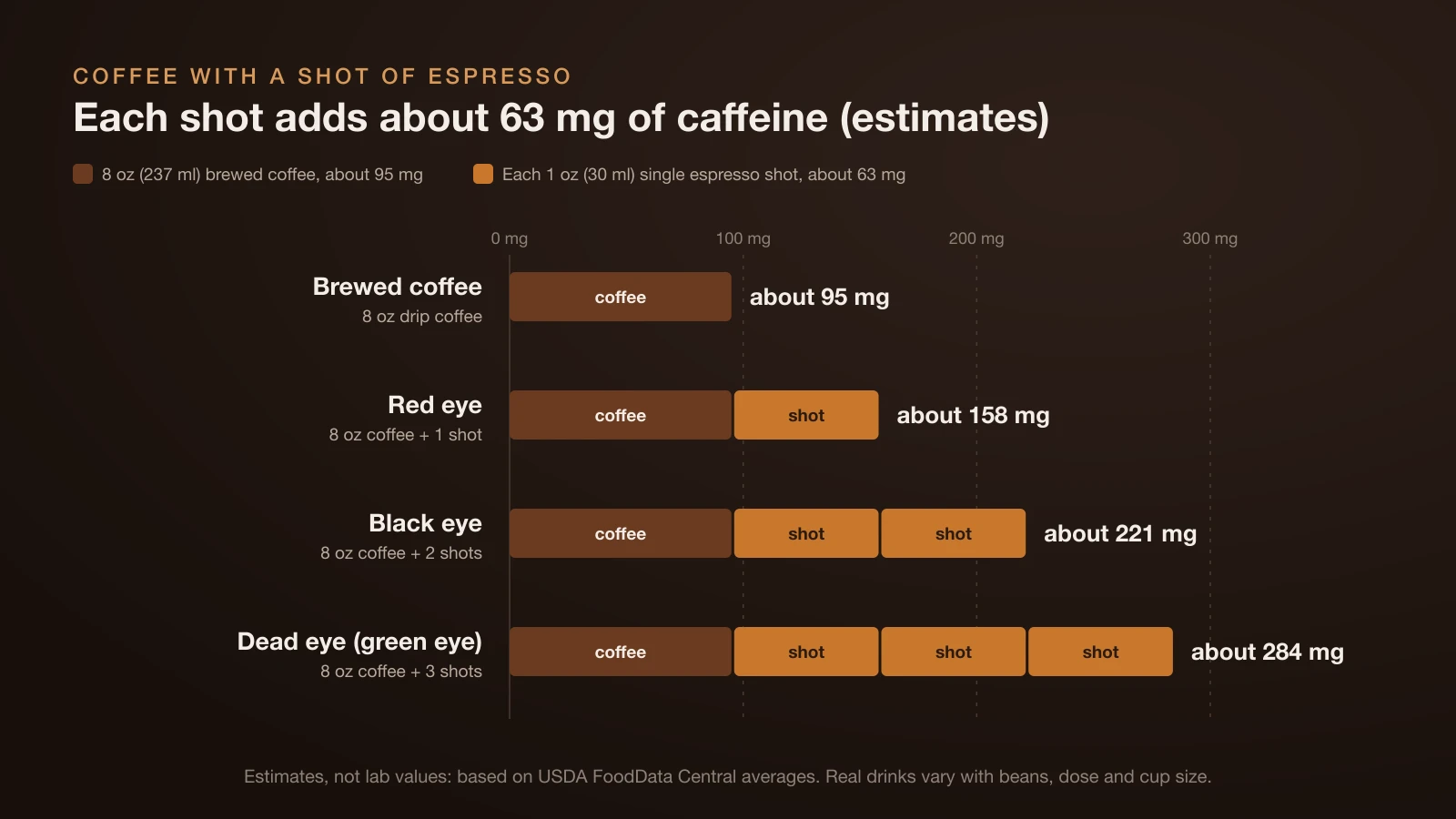
Coffee with a shot of espresso adds the caffeine of the shot to the caffeine of the brewed coffee, so each version is simple addition. USDA FoodData Central lists brewed coffee at about 40 mg of caffeine per 100 g and espresso at about 212 mg per 100 g. In servings, that is about 95 mg for 8 oz of coffee and about 63 mg for a 1 oz shot.
| Drink | Shots | Estimated caffeine, 8 oz coffee base |
|---|---|---|
| Brewed coffee | 0 | about 95 mg |
| Red eye | 1 | about 158 mg |
| Black eye | 2 | about 221 mg |
| Dead eye | 3 | about 284 mg |
These are estimates, not lab values. Assumption: 8 oz of brewed coffee at about 95 mg plus about 63 mg per 1 oz single shot. In a 12 oz (355 ml) cup, the coffee alone is roughly 1.5 times as much, so add about 48 mg to each row.
Brewed coffee varies far more than these averages suggest. The FDA puts a 12 oz cup of brewed coffee anywhere from 113 to 247 mg, depending on the beans and how it is made. Café shots also vary with the dose and the beans, which our guide to espresso vs coffee explains in more detail.
For general context, the FDA cites 400 mg a day as an amount not generally associated with negative effects in healthy adults, and advises people who are pregnant or breastfeeding to ask a health care provider. By these estimates, a dead eye on an 8 oz base is already more than two-thirds of that amount. This is general information, not medical advice.
How to make coffee with a shot of espresso at home
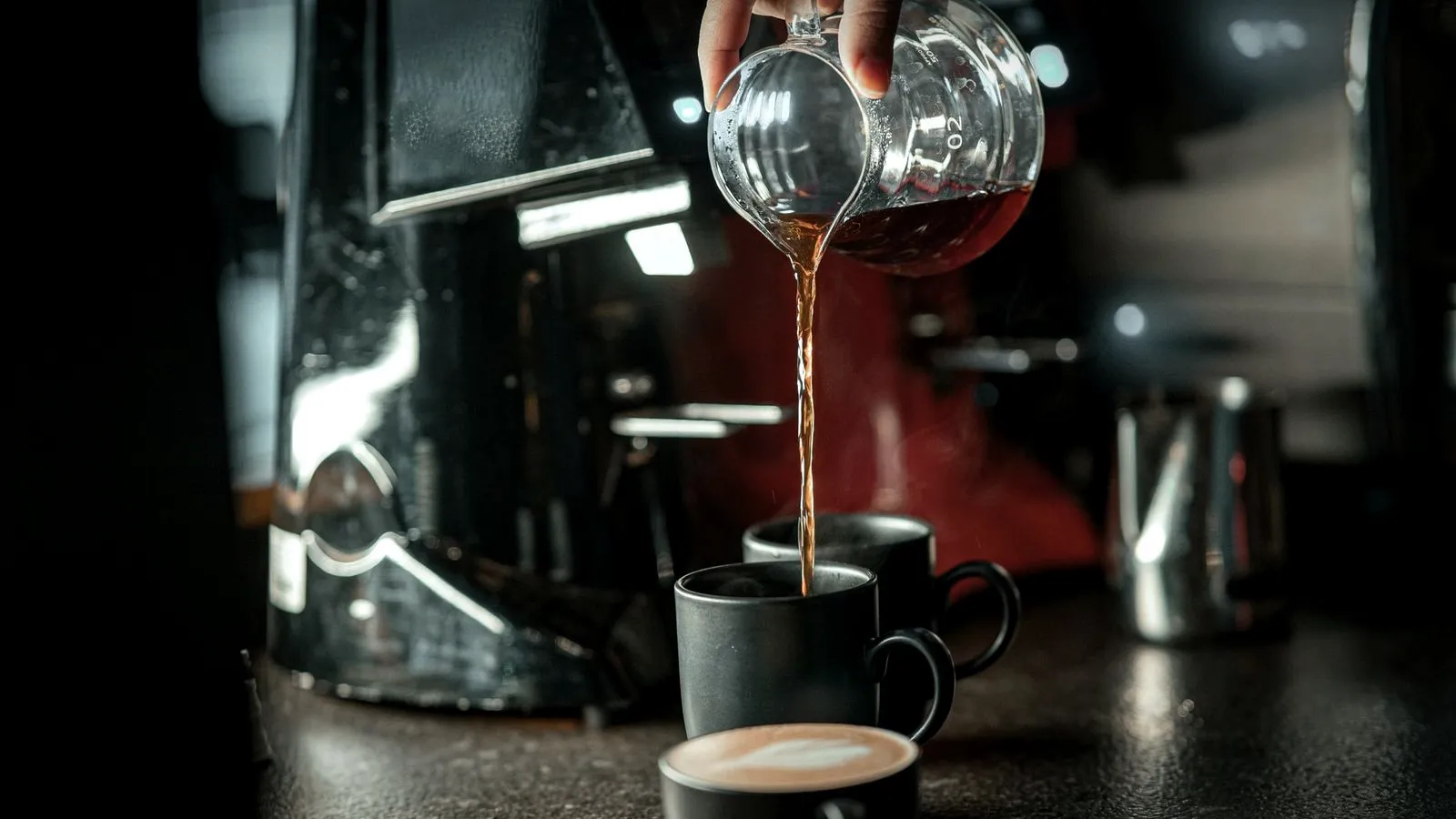
Making coffee with a shot of espresso at home takes a brewed coffee, a freshly pulled shot and a mug with room for both.
- Brew the coffee. Use drip, pour-over or any method you like, and brew about 8 oz for a classic red eye.
- Choose a big enough mug. An 8 oz coffee plus up to three 1 oz shots fits in a 12 oz mug with room to spare.
- Pull the shot. A single is about 1 oz (30 ml) and a double about 2 oz (60 ml), the volumes Breville’s manual targets for its 1 cup and 2 cup baskets.
- Combine. Pour the shot straight into the coffee and stir. Pouring it in last keeps a little crema on top.
- Taste and adjust. If it is too strong, use a smaller shot count or a milder, lighter-roast coffee; if it is too weak, add another shot.
No espresso machine? A strong moka pot coffee is a common stand-in, though it is not true espresso; our guide on how to use a moka pot covers the method, and how to make espresso without a machine compares the other options. Decaf works too: a decaf shot keeps the espresso flavor with far less caffeine, as our guide to caffeine in decaf espresso explains.
Iced red eye and cold brew version
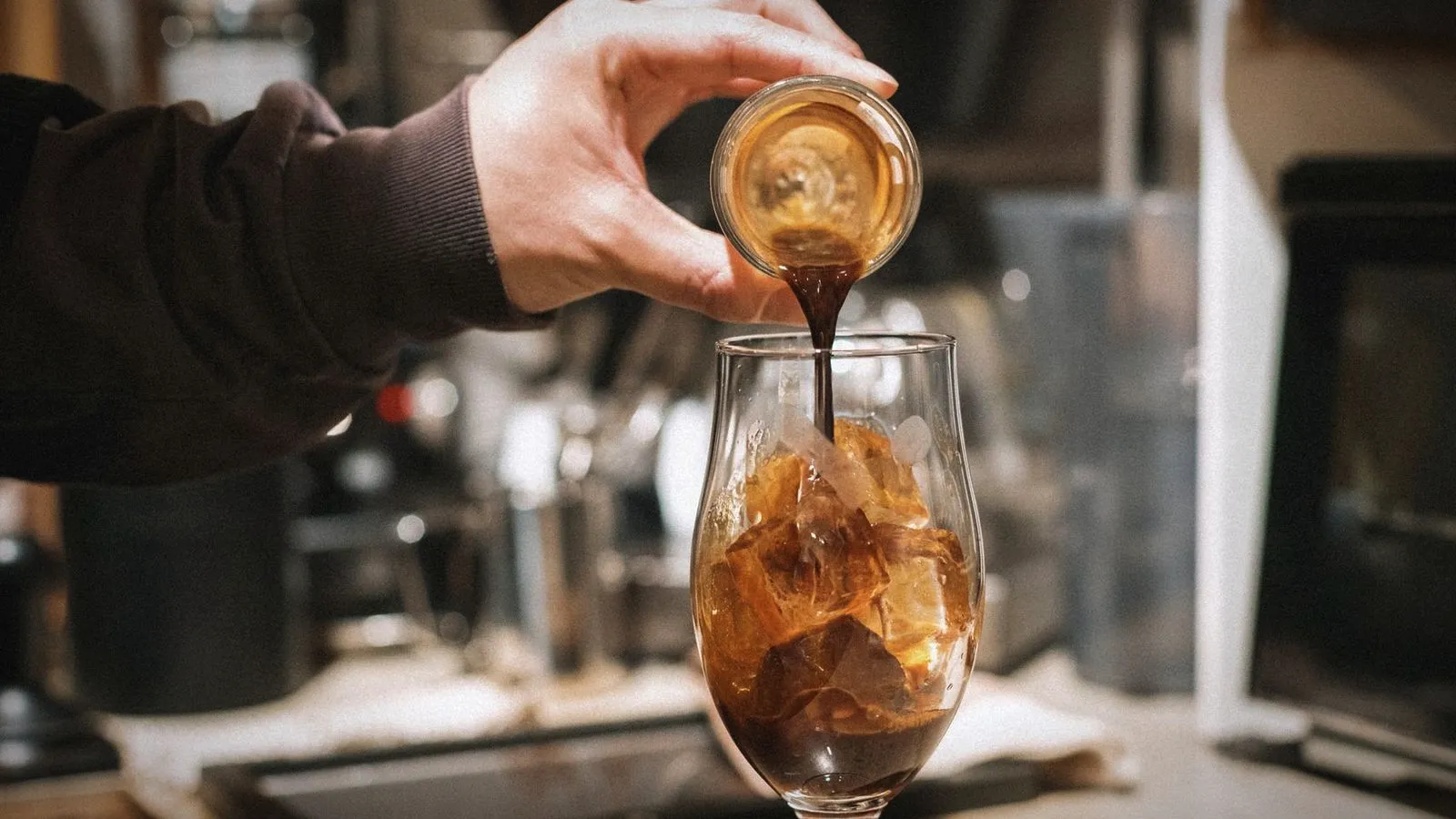
An iced red eye is chilled coffee over ice with an espresso shot poured on top, and it is easy to make at home.
- Fill a tall glass with ice.
- Add cold brew or drip coffee that has cooled to room temperature.
- Pull a shot and pour it over the top, then stir.
Pouring the shot on last is the same approach used for an iced Americano, and it leaves some of the crema on the surface. Cold brew caffeine varies too much between recipes to give a reliable number, so the estimates above apply only to hot brewed coffee.
Red eye vs Americano: taste and strength
A red eye and an Americano both lengthen espresso, but a red eye uses brewed coffee instead of hot water. That one change makes the red eye stronger in caffeine and fuller in flavor.
| Red eye | Americano | |
|---|---|---|
| Base | Brewed drip coffee | Hot water |
| Espresso | Usually 1 shot | Usually 1–2 shots |
| Taste | Drip coffee with extra body and roasty depth | Espresso character, thinned out |
| Estimated caffeine, 1 shot | about 158 mg (8 oz coffee base) | about 63 mg |
With the same number of shots, the red eye carries the extra caffeine of its coffee base, about 95 mg per 8 oz by USDA averages. In taste, a red eye still reads as a cup of coffee, just darker and more intense, while an Americano tastes like espresso stretched with water. How an Americano compares with regular coffee is a separate question from this one.
How to order coffee with a shot of espresso
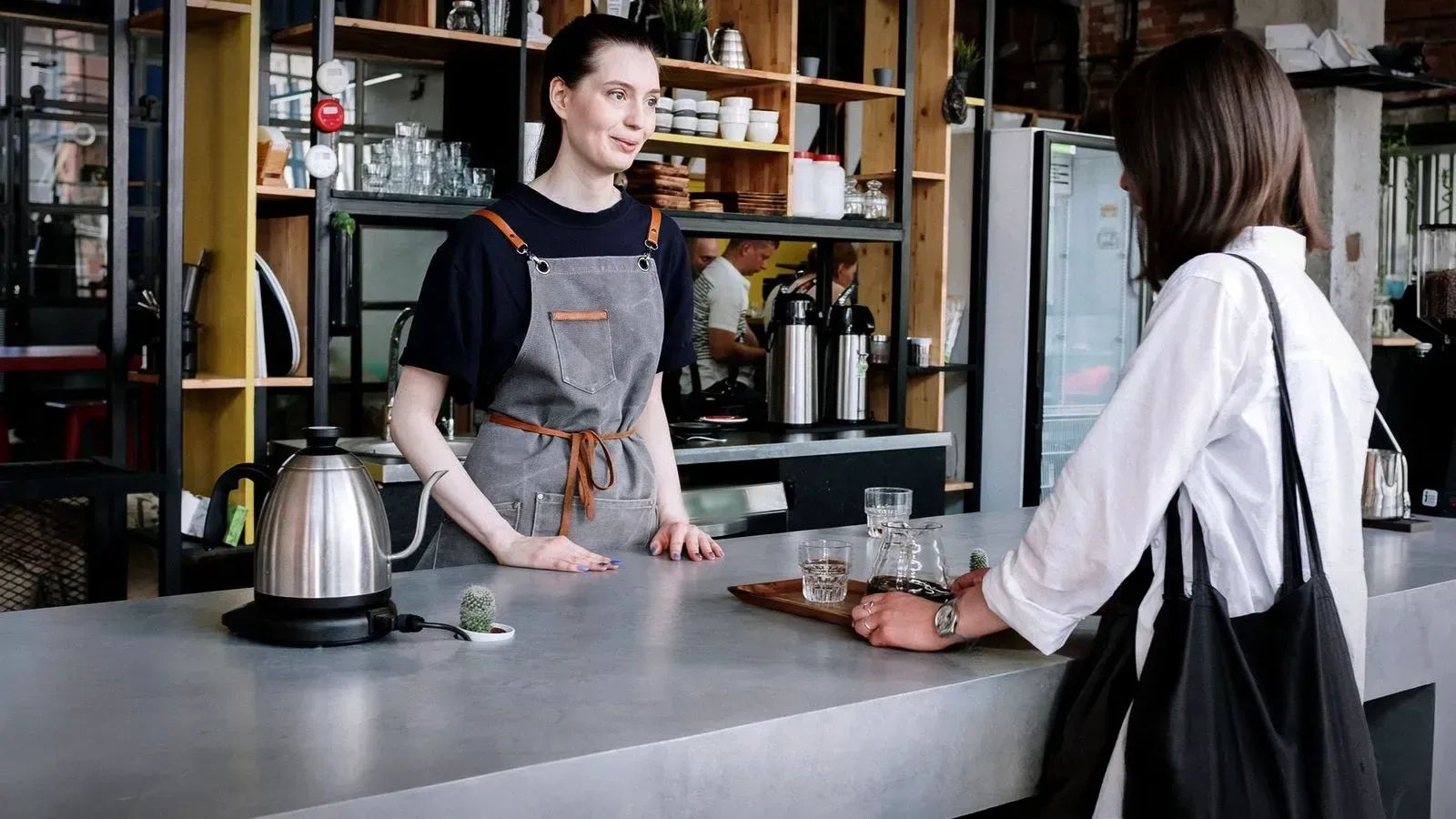
The clearest way to order coffee with a shot of espresso is to describe it, because not every barista uses the same nickname.
- Say what you want: “a medium drip coffee with one shot of espresso” works everywhere, even where “red eye” means nothing.
- Give the shot count, since black eye and dead eye are less widely known than red eye.
- Pick the cup size, because a larger cup adds more coffee and more caffeine.
- Ask for room if you take milk, so the extra shot doesn’t overfill the cup.
- Go decaf or half-caf by asking for a decaf shot or a decaf coffee base.
- Order it iced by asking for iced coffee or cold brew with a shot.
Other ways to add espresso to your cup
If you like the idea of adding espresso to something else, a few other drinks follow the same logic. A latte adds shots to steamed milk, and its caffeine comes only from those shots; our guide to latte caffeine shows the numbers for each size. For a different twist on the straight shot, an espresso romano pairs espresso with a strip of lemon peel.
The bottom line
Coffee with a shot of espresso is a red eye, with two shots it becomes a black eye and with three a dead eye, but these are café nicknames rather than fixed recipes. By USDA-based estimates, each shot adds about 63 mg of caffeine to the roughly 95 mg in an 8 oz cup of coffee. At home, brew a cup, pull a shot and pour it in; in a café, just ask for drip coffee with the number of shots you want.
Sources
- USDA FoodData Central: Coffee, brewed, prepared with tap water and Coffee, brewed, espresso, restaurant-prepared (40 mg and 212 mg caffeine per 100 g; about 95 mg per 8 oz and 63 mg per 1 oz)
- U.S. Food and Drug Administration: Spilling the Beans: How Much Caffeine Is Too Much? (400 mg a day; 113–247 mg per 12 oz of brewed coffee; pregnancy and breastfeeding advice)
- Breville: Barista Express BES870 instruction book (single about 1 oz or 30 ml, double about 2 oz or 60 ml)