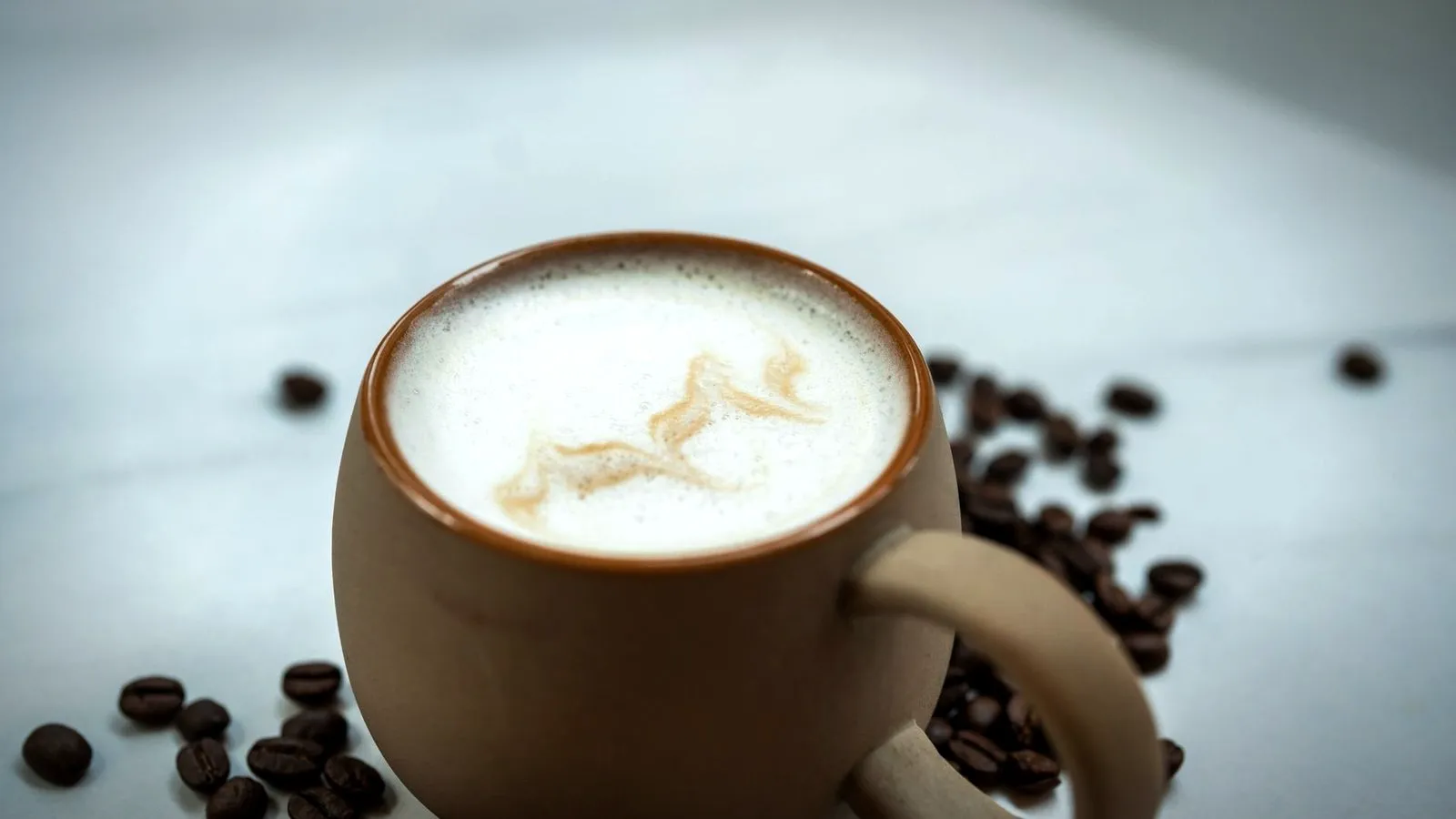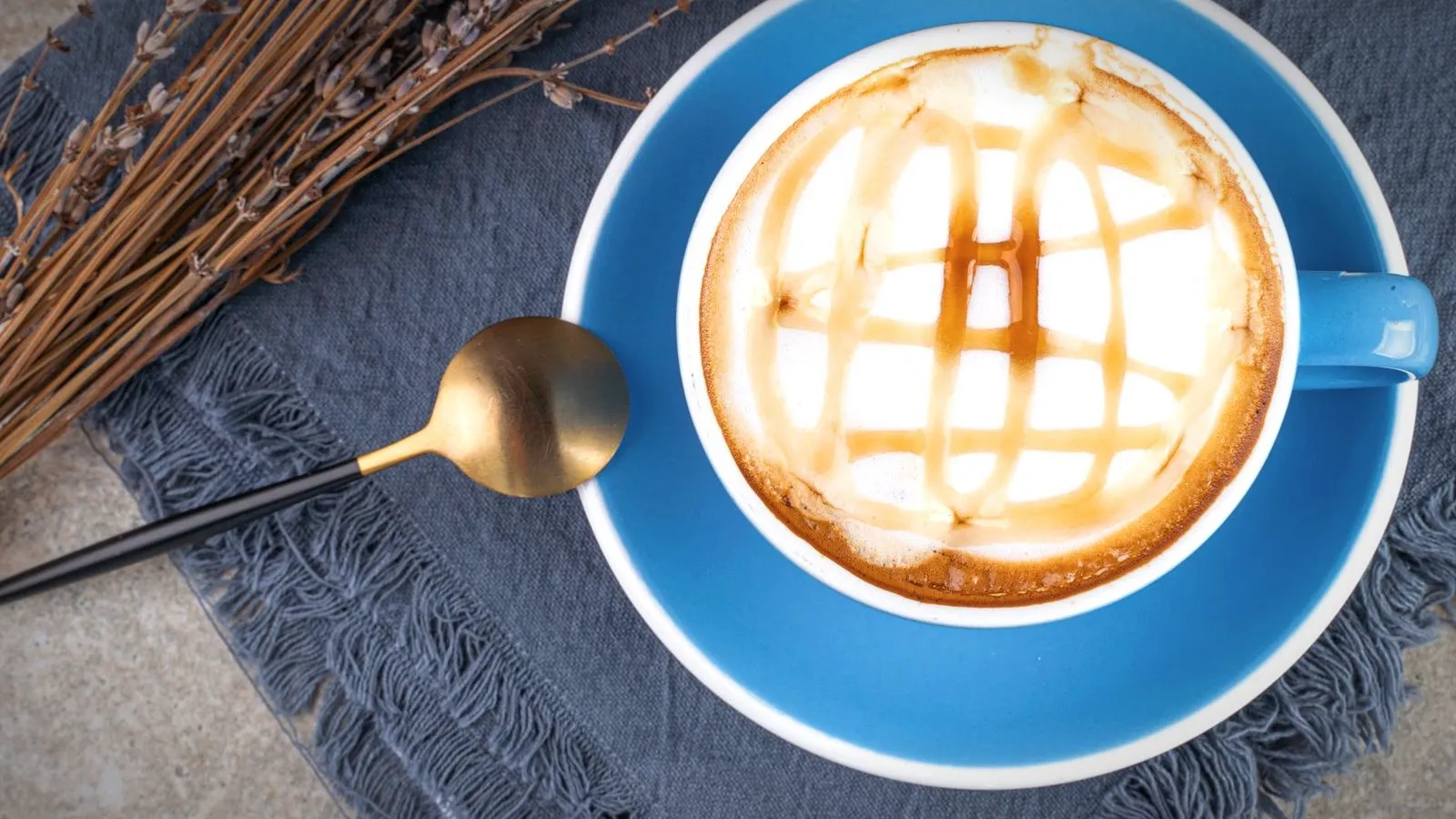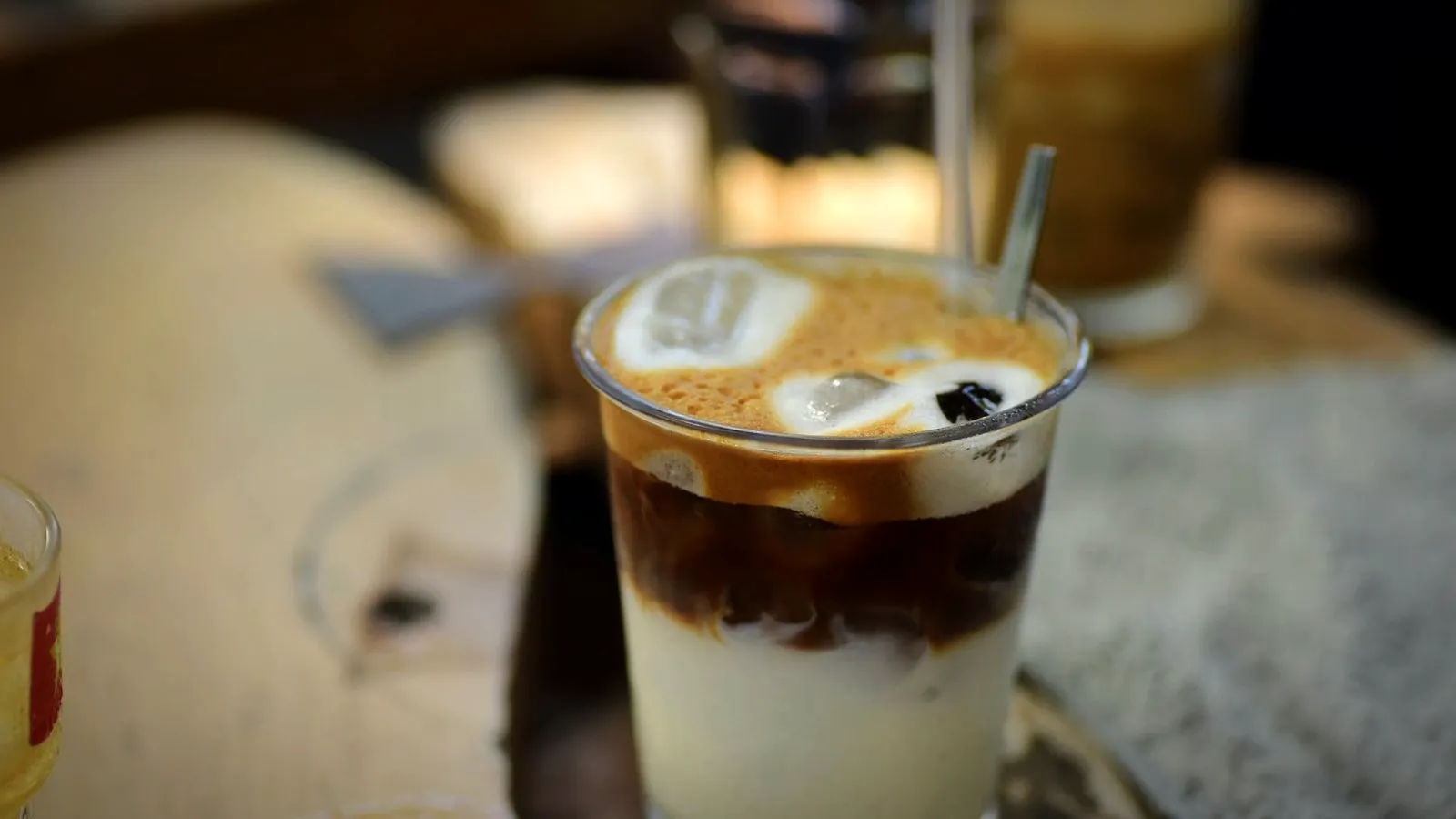
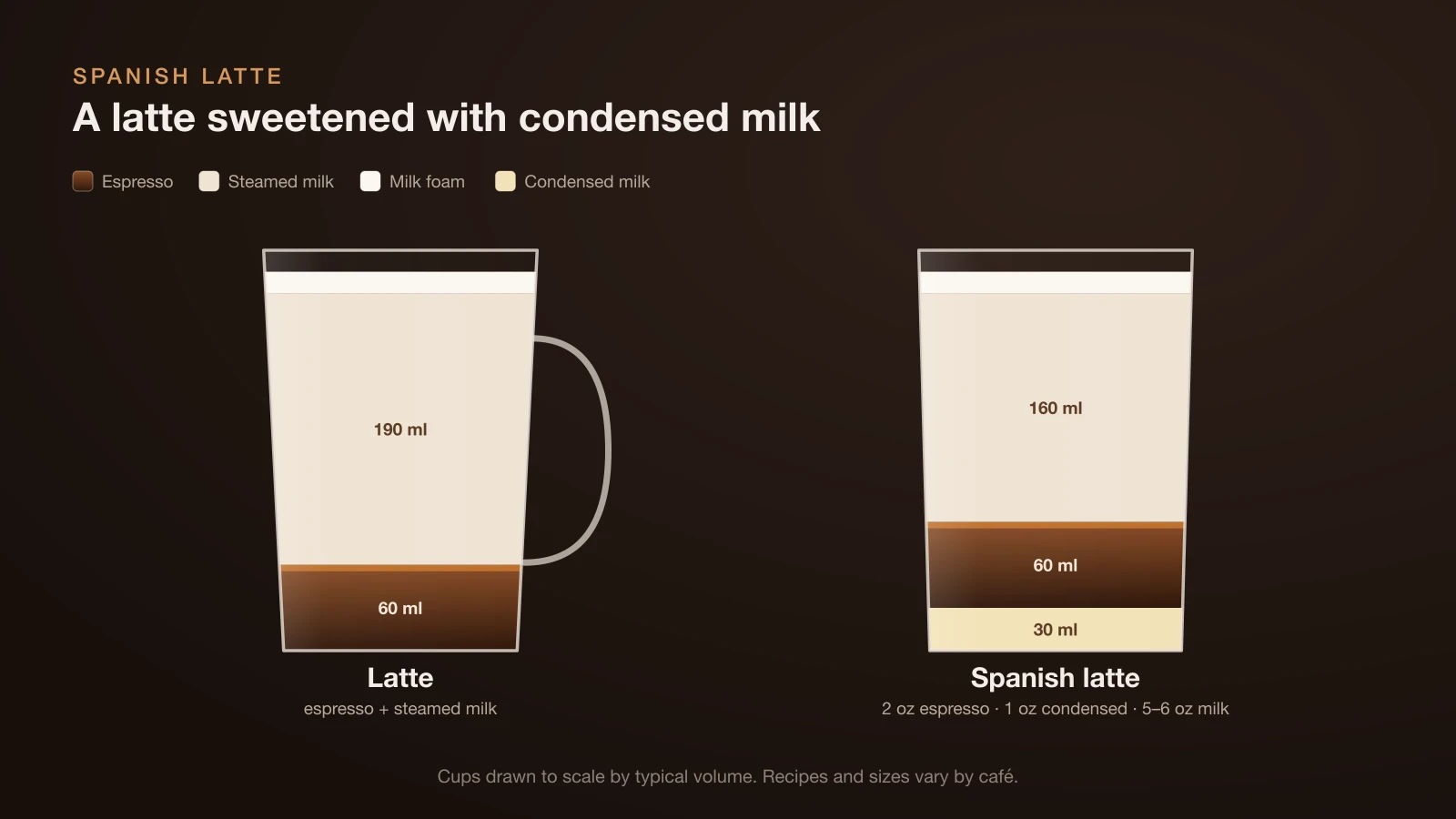
A Spanish latte is a latte sweetened with sweetened condensed milk: a double shot of espresso, one to two tablespoons of condensed milk and about five to six ounces of steamed or cold milk. The condensed milk makes it creamier and sweeter than a regular latte, with a light caramel flavor. It works hot or iced.
It’s one of the easiest café drinks to copy at home, because it’s a normal latte with a single swap. Below you’ll find what the drink is, the ratios, a hot and an iced recipe, and how it compares with a café con leche, café bombón and cortado. If you’re new to milk drinks, start with our guide on how to make a latte at home.
The short answer
| Hot Spanish latte | Iced Spanish latte | |
|---|---|---|
| Espresso | Double shot, about 2 oz (60 ml) | Double shot, about 2 oz (60 ml) |
| Sweetened condensed milk | 1–2 tbsp (about 20–40 g) | 1–2 tbsp (about 20–40 g) |
| Milk | 5–6 oz, steamed to 60–65 °C | 5–6 oz, cold |
| Ice | None | A full 12 oz glass |
| Cup | 8–10 oz | 12–16 oz glass |
These are typical café-style amounts, not an official recipe. Adjust the condensed milk to taste.
What is a Spanish latte?
A Spanish latte is espresso, sweetened condensed milk and milk. The condensed milk replaces the syrup or sugar you might add to a regular latte, so the drink is sweet without any grainy sugar.
Sweetened condensed milk is milk that has had much of its water removed and sugar added. According to USDA data it contains about 54 g of sugar per 100 g, which is why a small amount sweetens a whole cup. It also has more fat and protein per spoonful than regular milk, which gives the drink a thicker body.
Where does the Spanish latte come from?
The origin of the name isn’t well documented. Spain has a long-standing condensed-milk coffee, the café bombón, but that is a small espresso layered over condensed milk with no added milk. The larger, milkier drink sold as a “Spanish latte” became a staple in cafés across the Middle East and Southeast Asia, often served iced. Treat the name as a menu label rather than a claim about Spanish tradition.
Spanish latte ingredients
- Espresso: a double shot (about 18 g of coffee to 36 g of espresso). Medium or medium-dark roasts stand up to the sweetness best. See our guide to espresso beans for picking a bag.
- Sweetened condensed milk: not the same as evaporated milk, which is unsweetened.
- Milk: whole milk is traditional. Oat milk works well; condensed milk itself is dairy, but plant-based condensed milks made from oat or coconut are sold for dairy-free versions.
- Optional: a pinch of cinnamon, or a little vanilla extract.
How to make a Spanish latte (hot)
- Add the condensed milk. Put 1–2 tablespoons of sweetened condensed milk into a warm 8–10 oz cup.
- Pull the espresso on top. Brew a double shot directly into the cup, then stir until the condensed milk fully dissolves. Hot espresso melts it much faster than milk does.
- Steam the milk. Steam 5–6 oz of cold milk to 60–65 °C (140–150 °F) with a thin layer of foam, as for a regular latte.
- Pour. Tilt the cup and pour the milk into the center, finishing with a little foam on top.
No espresso machine? A moka pot gives the closest result. Follow our guide on how to use a moka pot, use about 2 oz of moka coffee, and foam the milk with a frother or French press.
How to make an iced Spanish latte
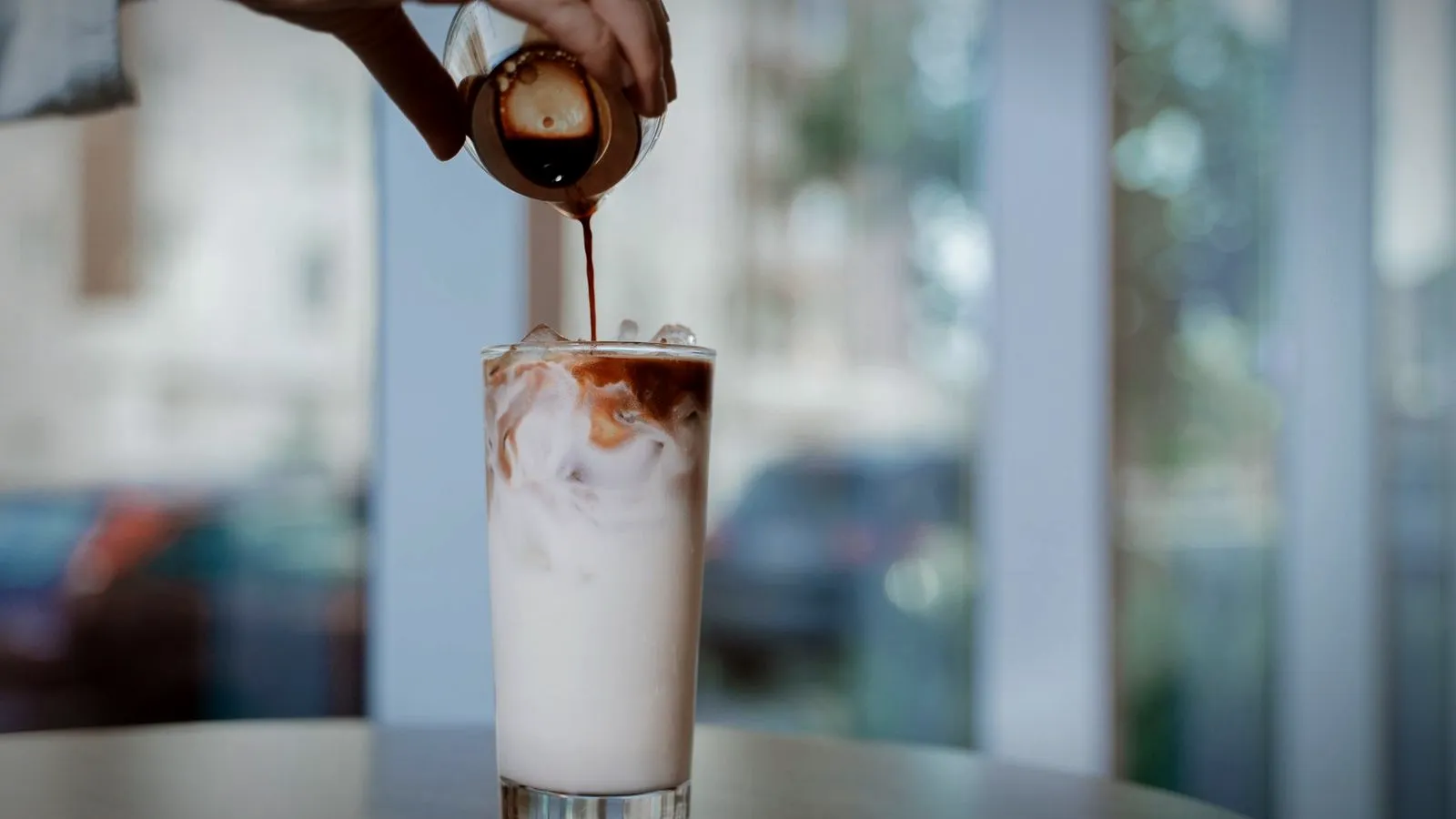
- Mix condensed milk and milk. Stir 1–2 tablespoons of condensed milk into 5–6 oz of cold milk until smooth. Cold condensed milk is thick, so a small whisk or a shaken jar helps.
- Fill a glass with ice. Use a 12–16 oz glass.
- Pour the sweetened milk over the ice.
- Add the espresso last. Pour a double shot slowly over the top so it floats in a layer, then stir before drinking.
If the drink tastes watery, the shot melted too much ice. Let the espresso cool for a minute, or use a little less ice.
Spanish latte ratio
A good starting point is roughly 1 part espresso, 0.5 part condensed milk and 2.5–3 parts milk by volume. That means 2 oz of espresso, 1 oz (2 tablespoons) of condensed milk and 5–6 oz of milk.
| Want it… | Change |
|---|---|
| Less sweet | Use 1 tablespoon of condensed milk, or less |
| Stronger | Add a third shot or reduce the milk to 4 oz |
| Creamier | Use whole milk and warm the condensed milk first |
| Lighter | Use 2% milk and 1 tablespoon of condensed milk |
Spanish latte vs latte and other drinks
| Drink | What’s in it | How it differs |
|---|---|---|
| Latte | Espresso + steamed milk + thin foam | No condensed milk; unsweetened unless you add syrup, as in a hazelnut latte |
| Spanish latte | Espresso + condensed milk + milk | Sweet and creamier; often served iced |
| Café con leche | Strong coffee or espresso + about equal parts hot milk | Usually unsweetened at the bar; sugar added to taste; little or no foam |
| Café bombón | Espresso + condensed milk, about 1:1 | Small, very sweet, no regular milk; served layered |
| Cortado | Espresso + a similar amount of warm milk | Small, unsweetened, strong coffee flavor |
| Vietnamese iced coffee | Strong drip coffee (phin) + condensed milk over ice | Uses filter coffee, often robusta, and no extra milk |
The short version: a Spanish latte is closest to a regular latte in size and to a café bombón in flavor. For the difference between a small and a large milk drink, see our cortado vs latte comparison, and for every drink on a café menu, our guide to types of espresso drinks.
How many calories are in a Spanish latte?
Calories depend mostly on the condensed milk and the type of milk. Using USDA FoodData Central values, here’s an example calculation for the recipe above with 2 tablespoons (about 40 g) of condensed milk and 150 g (about 5 oz) of whole milk:
| Ingredient | Amount | Calories | Sugar |
|---|---|---|---|
| Sweetened condensed milk (321 kcal, 54.4 g sugar per 100 g) | 40 g | about 128 kcal | about 22 g |
| Whole milk (61 kcal, 5 g sugar per 100 g) | 150 g | about 92 kcal | about 8 g |
| Espresso (9 kcal per 100 g) | 60 g | about 5 kcal | 0 g |
| Total | about 225 kcal | about 30 g |
The weight of a tablespoon of condensed milk (about 20 g) is an approximation. Using 1 tablespoon cuts roughly 64 kcal and 11 g of sugar. Café versions are often larger and may differ.
Tips for a better Spanish latte
- Dissolve the condensed milk in hot espresso, not cold milk, whenever you can. It mixes evenly with no syrupy sludge at the bottom.
- Use fresh, balanced espresso. Sweetness hides sourness but not bitterness from an over-extracted shot.
- Store opened condensed milk in the fridge in a covered container, not the open can.
- Add a pinch of salt or cinnamon if the drink tastes flat and only sweet.
The bottom line
A Spanish latte is a regular latte sweetened with condensed milk: a double shot, one to two tablespoons of condensed milk and five to six ounces of milk. Make it hot with steamed milk or iced with cold milk and the espresso poured on top. Start with less condensed milk than you think; you can always add more.
Sources
- USDA FoodData Central: Milk, canned, condensed, sweetened (321 kcal and 54.4 g sugar per 100 g)
- USDA FoodData Central: Milk, whole, 3.25% milkfat (61 kcal per 100 g)
- USDA FoodData Central: Coffee, brewed, espresso, restaurant-prepared (9 kcal per 100 g)
- Breville: Barista Express BES870 instruction book (milk steaming temperature)