
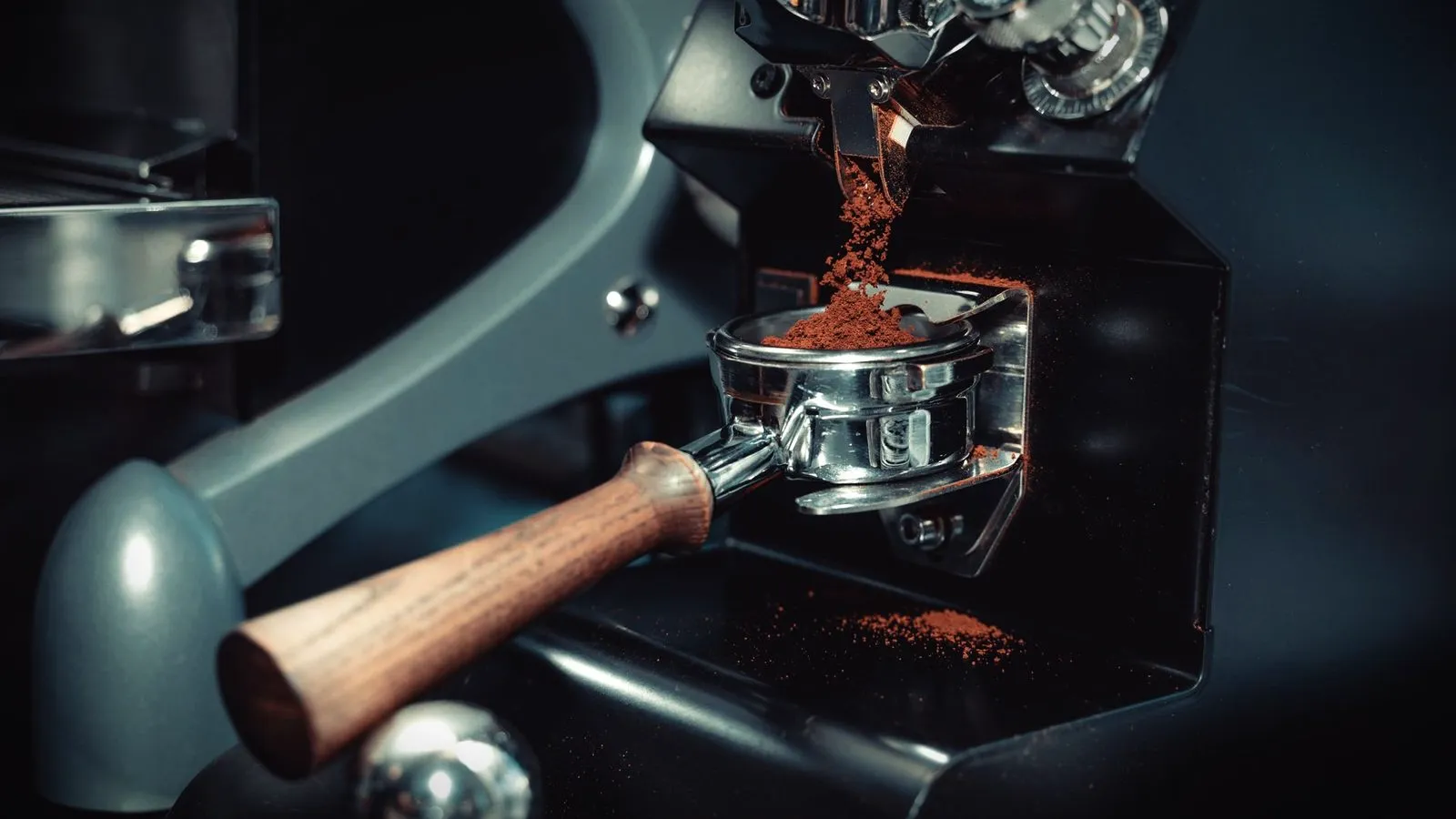
An espresso grinder is a burr grinder that grinds fine enough for espresso, evenly, and lets you change the grind in very small steps. Those small steps matter because each change in grind size changes how fast water runs through the coffee. Most espresso grinders also hold a portafilter or dosing cup and grind by time or in single doses.
No model is ranked here; the examples come from makers’ own specs and US store prices. If you want to know what the grind itself should look like, read our guide to espresso grind size.
The short answer
| Feature | What to look for in an espresso grinder |
|---|---|
| Grinding method | Burrs, not a blade |
| Burr shape | Conical or flat; both can grind for espresso |
| Adjustment | Small steps or stepless at the fine end of the range |
| Loading | Hopper for convenience, single dosing for frequent bean changes |
| Retention | Little coffee left inside between doses |
| Dosing | Timer, dosing cup or portafilter holder |
| Cleaning | Burrs you can reach or remove without tools |
Espresso grinder buying checklist
A good espresso grinder passes a short list of checks, whatever the brand or price. Search results for this keyword are mostly store pages, so use this list before you compare listings:
- Burrs, not blades. Every grinder in this guide uses burrs.
- An espresso range. The maker should list espresso settings. Breville marks settings 1–30 of 60 on the Smart Grinder Pro for espresso, and Baratza marks 1–20 of 40 on the Encore ESP.
- Fine steps where you need them. Look for small steps or a stepless micro adjustment in the espresso range.
- Single dose or hopper. Decide how you buy beans. A hopper suits one bag at a time; single dosing suits switching beans or decaf.
- Low retention and a purge routine. Old grounds left in the grinder mix into the next dose.
- Portafilter fit. Check the holder or dosing cup fits your basket size, such as 54 mm or 58 mm.
- Dosing method. A timer repeats a dose; a scale confirms it.
- Easy cleaning. Tool-free burr removal makes monthly brushing realistic.
Why espresso needs a capable grinder
Espresso needs a grinder that is fine, consistent and adjustable, because the grind sets how fast water passes through the coffee. The National Coffee Association (NCA) describes espresso grounds as fine, like table salt, and puts brewing at 20–30 seconds of contact between coffee and water. A grind that changes from shot to shot makes that window impossible to hit.
Adjustment matters as much as fineness. Baratza explains that the Encore ESP’s espresso range is designed so each setting from 1 to 20 changes the grind only by a small amount, while settings 21–40 take larger steps to reach filter and cold brew. Breville gives the Smart Grinder Pro’s espresso starting point as setting 12, with the grind moved coarser or finer to adjust the flow.
The grinder is the tool you use for dialing in espresso: change the grind one step, pull another shot, and taste. A grinder with coarse steps forces you to jump past the setting you need.
Why a burr coffee grinder, not a blade grinder
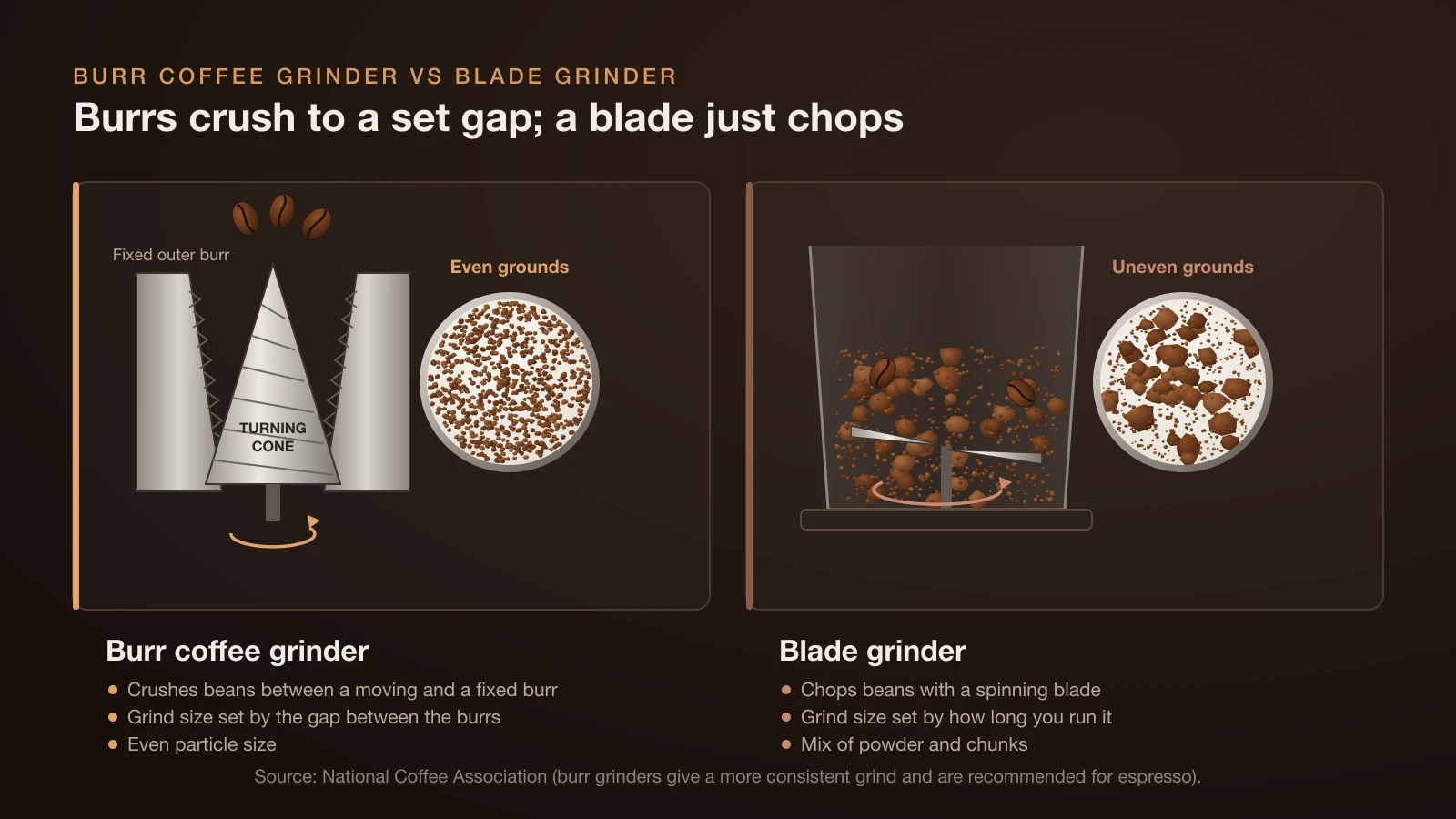
Use a burr coffee grinder for espresso, because it crushes beans between two burrs, one turning and one fixed, while a blade grinder chops them with a spinning metal blade. The NCA says burr grinders give a more consistent grind and recommends them for espresso, and notes that with a blade grinder you can’t ensure a consistent grind.
| Burr coffee grinder | Blade grinder | |
|---|---|---|
| How it works | Crushes beans between a moving and a fixed burr | Chops beans with a spinning blade |
| Grind size control | Set by the gap between the burrs | Set by how long you run it |
| Consistency | Even particle size | Mix of powder and chunks |
| Espresso in a standard basket | Yes, with an espresso range | Not reliable |
The burr gap is what makes a burr grinder repeatable: the same setting gives the same grind tomorrow. With a blade grinder, the result depends on pulse length and how many beans are in the cup. Our burr vs blade grinder guide covers the difference for every brew method.
Burr shape: conical or flat?
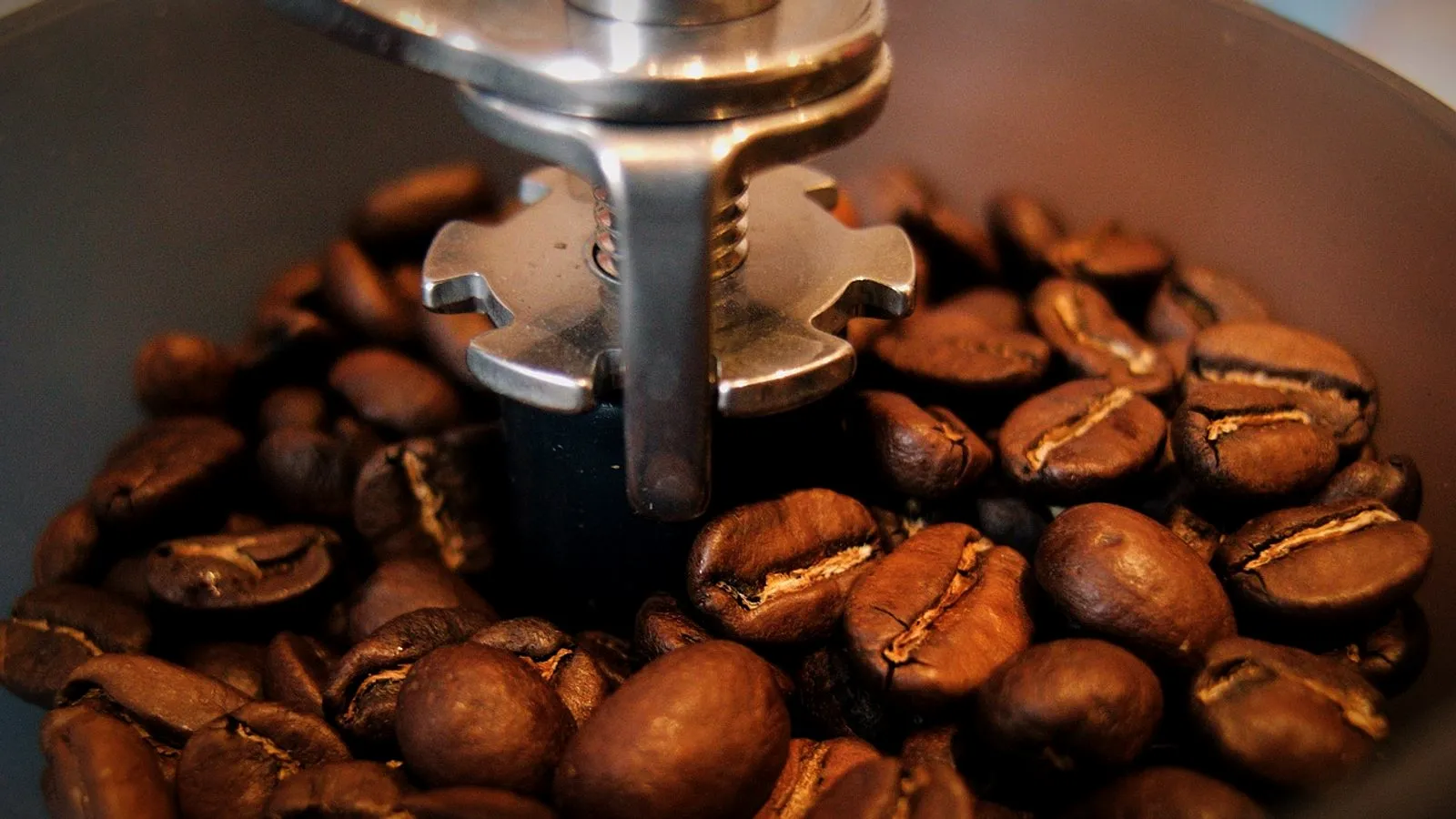
Conical burrs are a cone turning inside a ring, while flat burrs are two parallel discs, and both shapes can grind for espresso. Conical burrs are common in home espresso grinders. The Encore ESP and the Smart Grinder Pro use conical burrs, the Fellow Opus 2 uses 48 mm stainless steel conical burrs, and the Baratza Sette 270 uses 40 mm conical burrs.
Flat burrs appear in grinders such as the Baratza Vario+, which Baratza fits with 54 mm flat ceramic burrs. Burr size alone does not tell you how a grinder performs in the cup; burr design, alignment and the adjustment mechanism matter too. The conical vs flat burr guide explains how each shape grinds.
For home espresso, the practical points are simpler:
- Burr access. Can you lift a burr out to brush it?
- Material. Steel burrs must stay dry; Baratza warns that washing the Encore ESP’s burrs makes them rust.
Stepped vs stepless adjustment
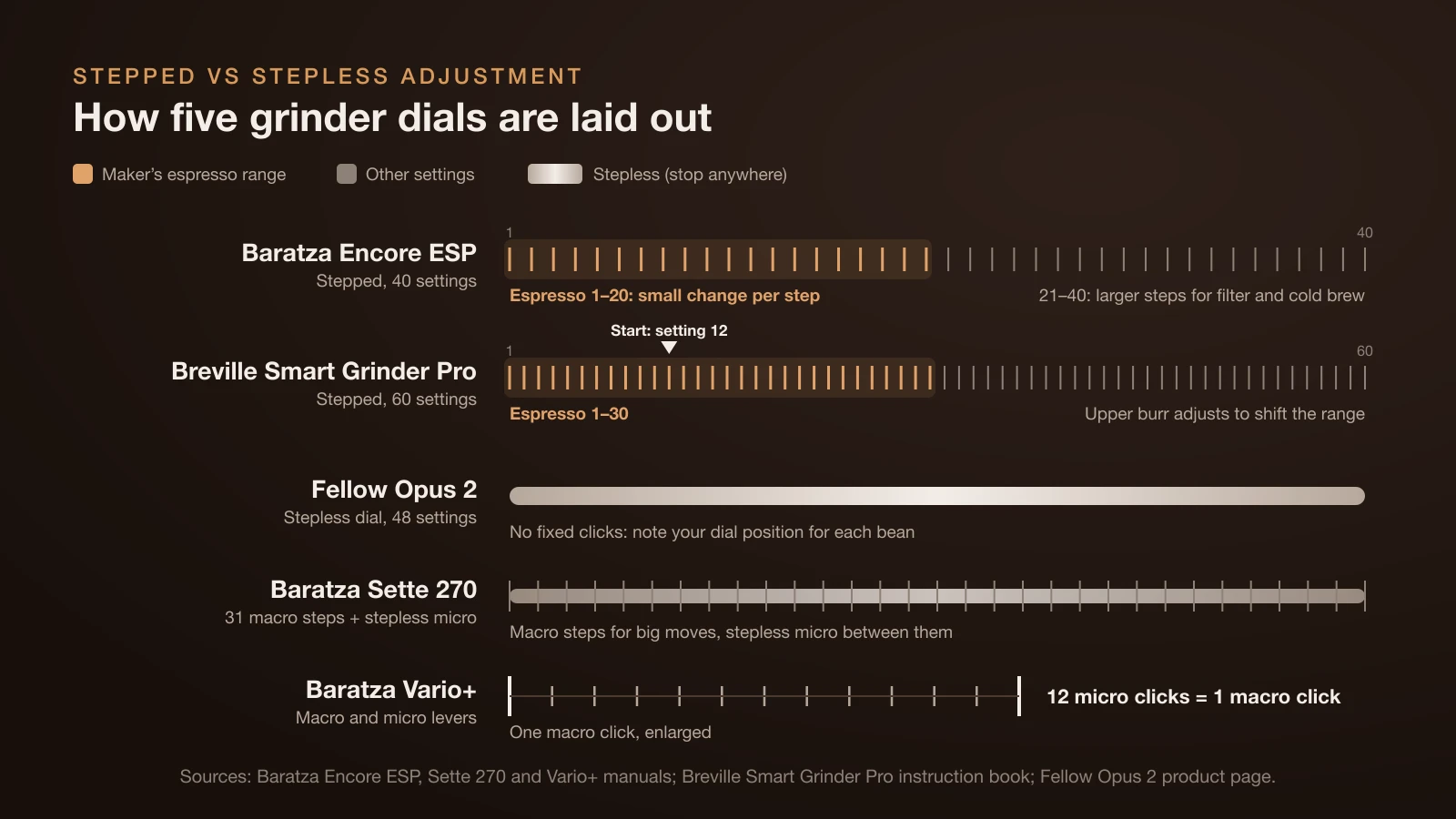
A stepped grinder clicks between fixed settings, while a stepless grinder lets you stop anywhere between them, and both work for espresso if the steps are small enough. The question is how much each step changes the shot.
Some grinders combine both. The Baratza Sette 270 pairs 31 macro steps with a stepless micro adjustment, and on the Baratza Vario+, 12 micro clicks equal one macro click. The Fellow Opus 2 uses a stepless dial, while the Encore ESP and Smart Grinder Pro click between fixed settings, with an adjustable upper burr on the Breville to shift the whole range.
Stepless adjustment gives the finest control but no exact click to return to, so note your dial position for each bean. A stepped grinder is easier to repeat. Our guide to espresso grind size shows how to move one step at a time.
Single-dose vs hopper grinders and retention
A hopper grinder holds a bag of beans on top and grinds on demand, while a single-dose grinder takes only the beans for the next shot. The Smart Grinder Pro has an 18 oz (about 510 g) bean hopper and grinds by time in 0.2 second steps. The Fellow Opus 2 has a 100 g load bin and is built for loading one dose at a time.
Retention is the coffee that stays inside the grinder after a dose. Fellow says the Opus 2 uses an internal impeller for near-zero retention. On other grinders, makers ask for a short purge: Breville suggests running the Smart Grinder Pro for 2 seconds before each use, and Baratza tells Sette owners to run it 1–2 seconds after changing the setting and discard those grounds.
Breville also advises against storing beans in the hopper. If you switch between beans or decaf, single dosing avoids emptying a hopper first.
Coffee grinder for espresso vs all-purpose grinders
A coffee grinder for espresso spends most of its fine adjustment on the espresso range, while an all-purpose grinder spreads its steps evenly from espresso to French press. Baratza’s Encore ESP shows the trade-off: 40 clicks span the finest espresso to the coarsest cold brew, so the filter steps are larger to free up small steps for espresso.
Your basket matters too. Fellow notes that pressurized baskets typically need a coarser grind than standard ones, and Breville tells owners to use single-wall baskets with freshly ground beans. If your machine has pressurized (dual-wall) baskets, a basic burr grinder may be enough. For a standard basket, look for a true espresso range.
Some espresso machines have a burr grinder built in. Our guide to the espresso machine with grinder explains when that saves counter space and when a separate grinder is the better path.
Manual espresso grinders
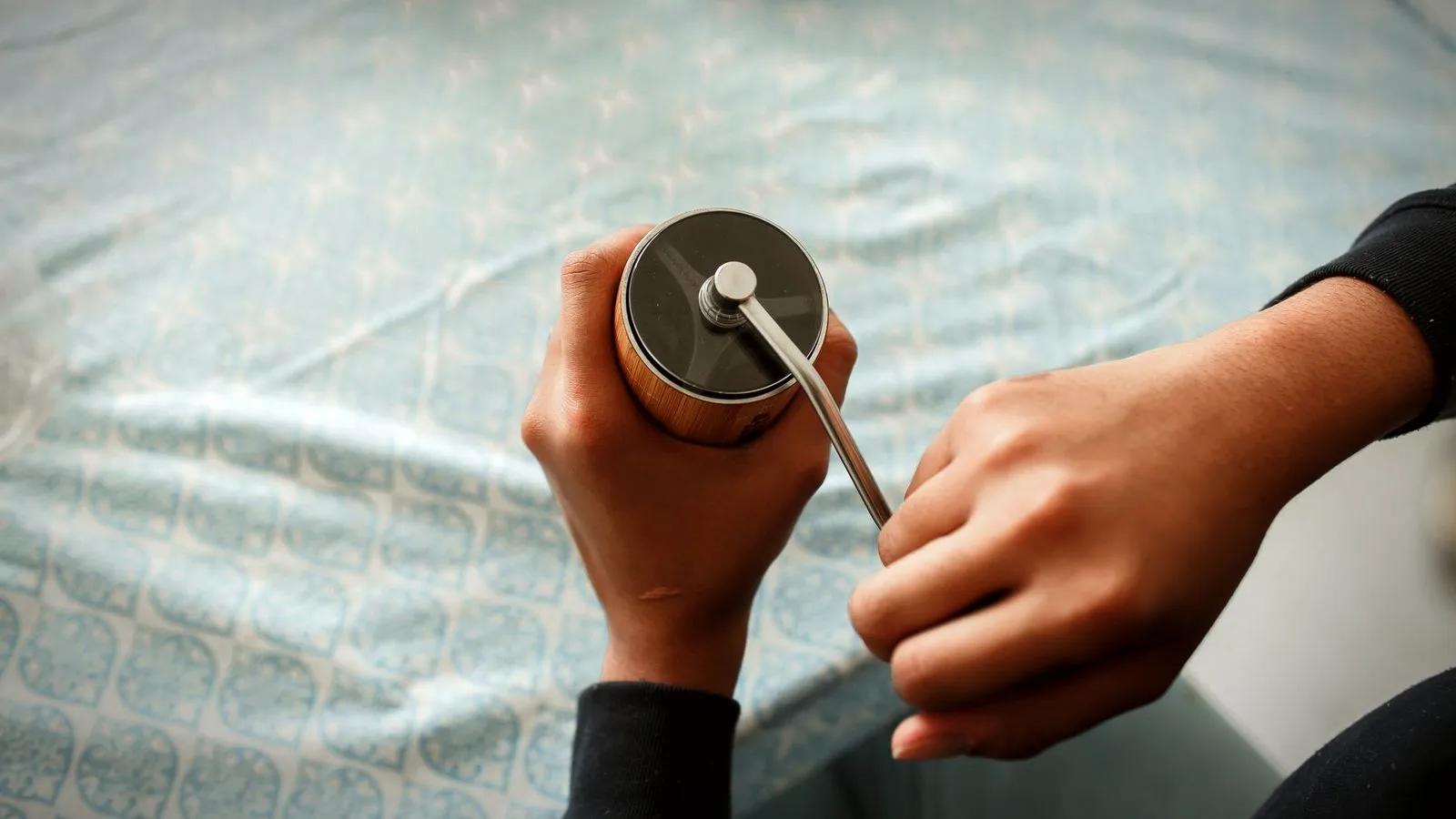
A manual espresso grinder is a hand-cranked burr grinder, and models built for espresso can reach a fine enough grind without a motor. They are quiet, compact and need no outlet, which suits small kitchens and travel. Most work as single-dose grinders, since you load only the beans for one shot.
The trade-offs are effort and speed. A fine espresso grind takes many more turns than a coarse one. Before buying, check that the maker lists espresso in the grind range, that the adjustment is fine near that end, and that the catch cup holds a full double dose.
Example espresso grinders and maker prices
The grinders below illustrate the features above; they are examples, not a ranking. Prices come from each maker’s own US store as of October 2026.
| Grinder | Burrs | Adjustment | Loading and dosing | US maker price |
|---|---|---|---|---|
| Baratza Encore ESP | Conical | 40 steps, espresso 1–20 | Hopper; dosing cup with 54/58 mm fit | $199.95 |
| Breville Smart Grinder Pro | Stainless steel conical | 60 settings, espresso 1–30 | 18 oz hopper; timed in 0.2 s steps; 50–54 mm and 58 mm cradles | $199.95 list |
| Fellow Opus 2 | 48 mm stainless steel conical | Stepless dial, 48 settings | 100 g load bin; espresso cup for 54/58 mm | $199.95 (black or white) |
| Baratza Sette 270 | 40 mm conical | 31 macro steps plus stepless micro | Hopper; time-based dosing | $399.95 |
| Baratza Vario+ | 54 mm flat ceramic | Macro and micro levers | Hopper; timed presets | $529.95 |
Prices change, so confirm them before you buy. Whatever grinder you choose, an espresso distributor can even out clumps in the basket before tamping.
How to clean a burr grinder
Clean a burr grinder by brushing the burrs and the chute dry, about once a month with daily use, and by keeping water away from the burrs. These steps combine the Baratza and Breville manuals; follow your own model’s manual for the exact parts.
- Empty it. Remove the beans and run the grinder until nothing comes out.
- Unplug it. Both makers require this before cleaning.
- Remove the hopper and the upper burr. Many grinders release it without tools.
- Brush the burrs and grind chamber. Use the included brush on both burrs and the outlet chute.
- Wash only the plastic parts. Hopper, lid and bins go in warm, soapy water by hand. Keep the burrs dry.
- Reassemble and purge. Refit the burr firmly, lock the hopper and grind a little coffee to discard.
Baratza recommends brushing the Encore ESP’s burrs about once a month with daily use. If you often grind dark, oily or flavored coffee, it suggests grinder cleaning tablets to absorb the oils, which can otherwise build up into a clog. Tablets add to brushing; they do not replace it.
The bottom line
The right espresso grinder is a burr grinder with a real espresso range, small or stepless adjustment at the fine end, and burrs you can reach to clean. Choose a hopper or single-dose design by how you buy beans, and check the portafilter fit. Then put the grinder to work with fresh beans; our guide to the best coffee for espresso covers the bag, and how to make espresso covers the shot.
Sources
- Baratza: Encore ESP and its operations manual (40 steps, espresso range 1–20, setting 15 start, 54/58 mm dosing cup, burr rust warning, monthly brushing, cleaning tablets), Sette 270 and its manual (40 mm conical burrs, 31 macro steps, stepless micro, 1–2 second purge), Vario+ and its manual (54 mm flat ceramic burrs, 12 micro clicks per macro click); US prices as of October 2026
- Breville: Smart Grinder Pro and its instruction book (60 settings, espresso 1–30, setting 12 start, 0.2 second steps, 18 oz hopper, 2 second purge, single-wall baskets, burr cleaning, US price)
- Fellow: Opus 2 Conical Burr Grinder (48 mm conical burrs, stepless dial, 48 settings, 100 g load bin, near-zero retention, pressurized baskets need a coarser grind, US price)
- National Coffee Association: Espresso (burr vs blade grinders, fine like table salt, 20–30 seconds)