
The best coffee beans for espresso are fresh whole beans with a printed roast date, from a medium to medium-dark roast if you are learning or drink mostly milk drinks. Use them about 5–20 days after roasting and grind them just before brewing. Blend or single origin and arabica or robusta are taste choices, and the “espresso” label is optional.
No brand is ranked here; the checks below work for any bag in any store. For the basics of roast levels, storage and grinding, see our complete guide to espresso beans.
The short answer
| If you… | Choose |
|---|---|
| Are learning to dial in | Medium to medium-dark blend, whole bean, roast date within weeks |
| Drink mostly lattes and cappuccinos | Medium-dark to dark, chocolate or caramel notes |
| Drink straight espresso | Any roast you enjoy; medium for balance, light for brightness |
| Use pressurized (dual-wall) baskets | Pre-ground espresso works; whole bean still tastes fresher |
| Own a super-automatic machine | Dry-surfaced medium to medium-dark beans, no oily or flavored beans |
| Want more caffeine and crema | A blend with some robusta |
| Want little caffeine | Decaf beans roasted for espresso |
How to choose the best coffee beans for espresso: a buying checklist
The best coffee beans for espresso pass a few label checks, whatever the brand or price. Most search results for this keyword are ranked brand lists, so use this list in the store or online instead:
- A roast date, not just a best-by date. Breville’s grinder manual asks for a “roasted on” date for the best flavor.
- A roast level that matches your drinks. Medium-dark for milk drinks, wider choice for straight shots (see the next section).
- Whole beans if you own a burr grinder. Pre-ground only if your machine has pressurized baskets.
- Tasting notes you enjoy. Chocolate, caramel and nuts carry through milk; fruit and floral notes show best in straight shots.
- Blend or single origin. Blends are easier to dial in; single origins are more distinctive.
- Arabica or a robusta blend. Check the label if caffeine matters to you.
- A bag size you can finish. The National Coffee Association (NCA) suggests buying enough for one or two weeks.
- A dry surface for super-automatics. Very oily beans can stick inside built-in grinders.
Which roast to buy for your drinks
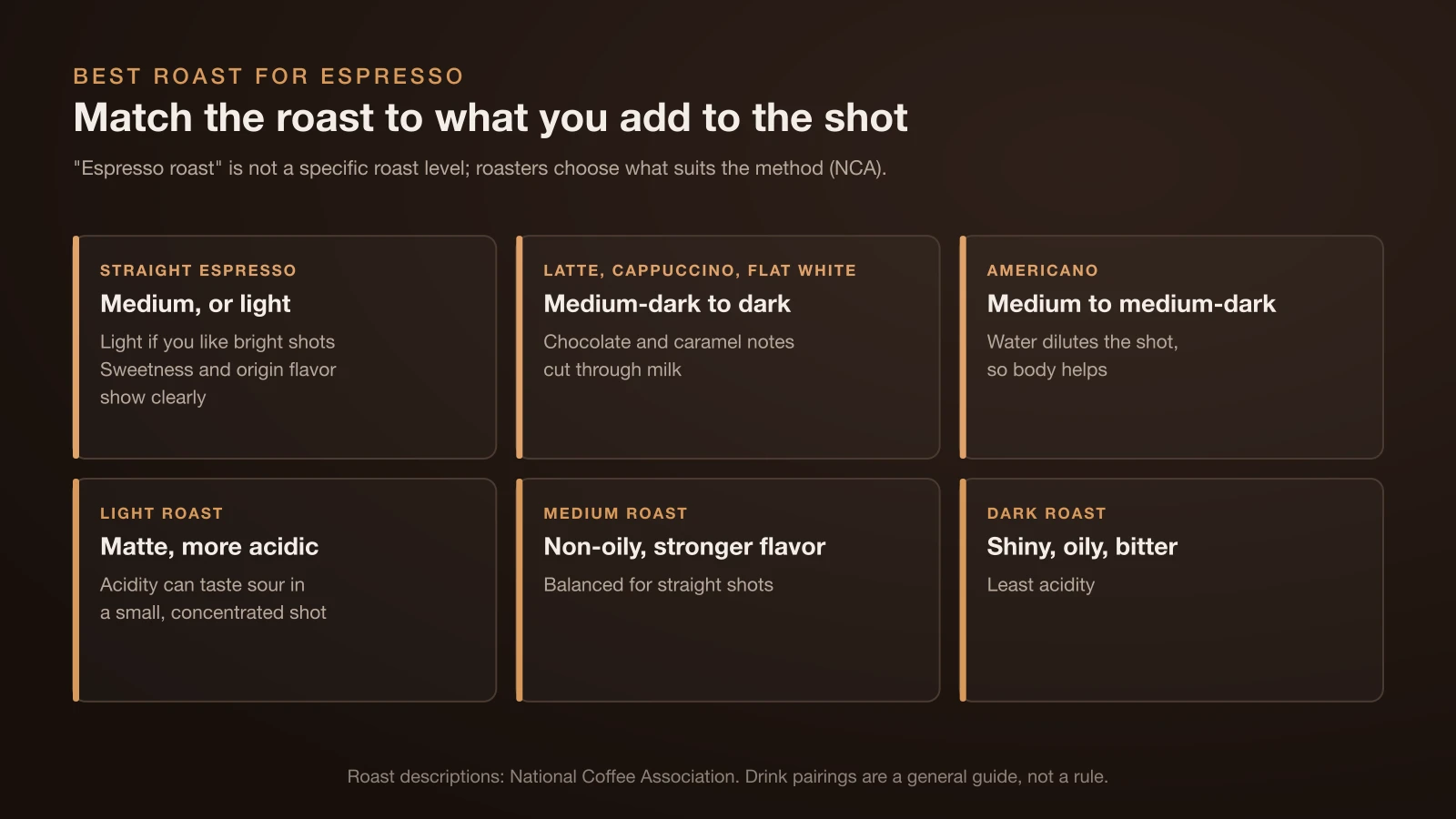
The roast to buy depends on what you add to the shot: milk drinks favor medium-dark to dark roasts, while straight espresso works across the range. The NCA notes that “espresso roast” is not a specific roast level; roasters choose what they think suits the method, often medium to dark.
| Drink | Roast that usually works | Why |
|---|---|---|
| Straight espresso | Medium, or light if you like bright shots | Sweetness and origin flavor show clearly |
| Latte, cappuccino, flat white | Medium-dark to dark | Chocolate and caramel notes cut through milk |
| Americano | Medium to medium-dark | Water dilutes the shot, so body helps |
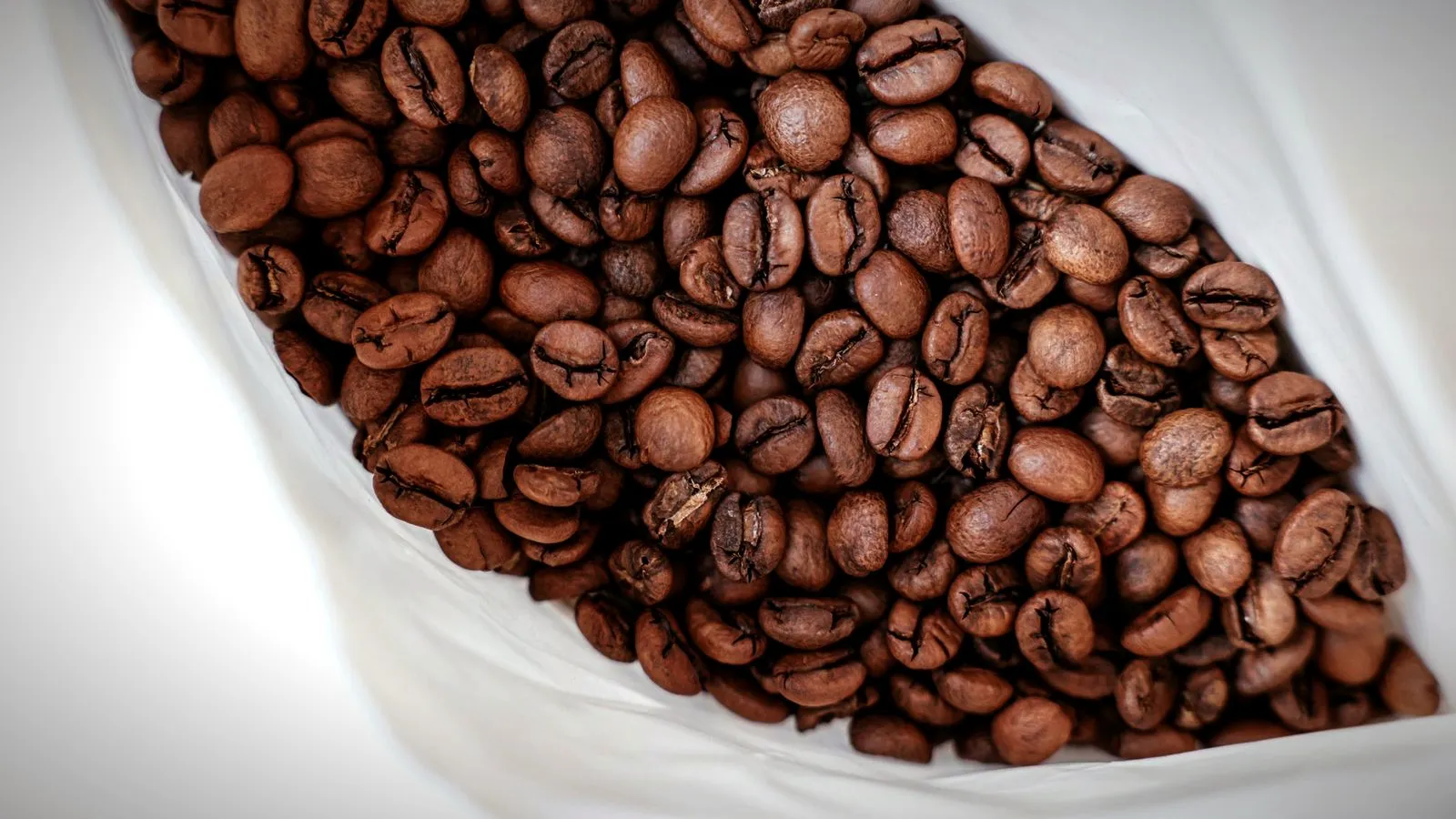
The NCA describes light roasts as matte and more acidic, medium roasts as non-oily with stronger flavor, and dark roasts as shiny, oily and bitter with the least acidity. That acidity shows up as sourness in a small, concentrated shot. Our guide to espresso roast explains how to adjust grind and ratio for each level.
Should you buy a blend or a single origin?
A blend is the easier choice for espresso, because roasters build blends for balance and consistency, while single origins reward careful dialing in with a more distinctive flavor.
Origin gives a clue to the cup. The NCA describes coffees from these regions as follows:
| Origin | NCA description | Typical espresso use |
|---|---|---|
| Brazil | Clear, sweet, medium-bodied, low-acid | Blend base; milk drinks |
| Colombia | Mild, well-balanced acidity | Blends and single-origin shots |
| Guatemala | Medium to full body, almost spicy or chocolatey | Milk drinks and straight shots |
| Indonesia | Rich, full body, mild acidity | Adds body to blends |
| Ethiopia | Bold, full-flavored, high supple acidity | Bright single-origin shots |
| Kenya | Full body, sharp fruity acidity | Bright single-origin shots |
The last column is a general guide, not a rule. Roast level and processing change the cup as much as the country does.
Should the bag say 100% arabica?
Not necessarily: arabica gives sweeter, more complex espresso, while robusta adds body, bitterness and much more caffeine. Most specialty espresso is 100% arabica, and many traditional Italian-style blends include some robusta.
| Arabica | Robusta | |
|---|---|---|
| Caffeine in green beans (lab average) | 1.09% | 2.09% |
| Typical taste | Sweeter, more acidity | More bitter, earthy |
| Role in espresso | Most specialty blends and single origins | Body and crema in traditional blends |
If a bag does not say “100% arabica,” check the label for robusta. Our comparison of espresso beans vs coffee beans covers why the robusta question matters more than the “espresso” label.
How fresh should espresso beans be?
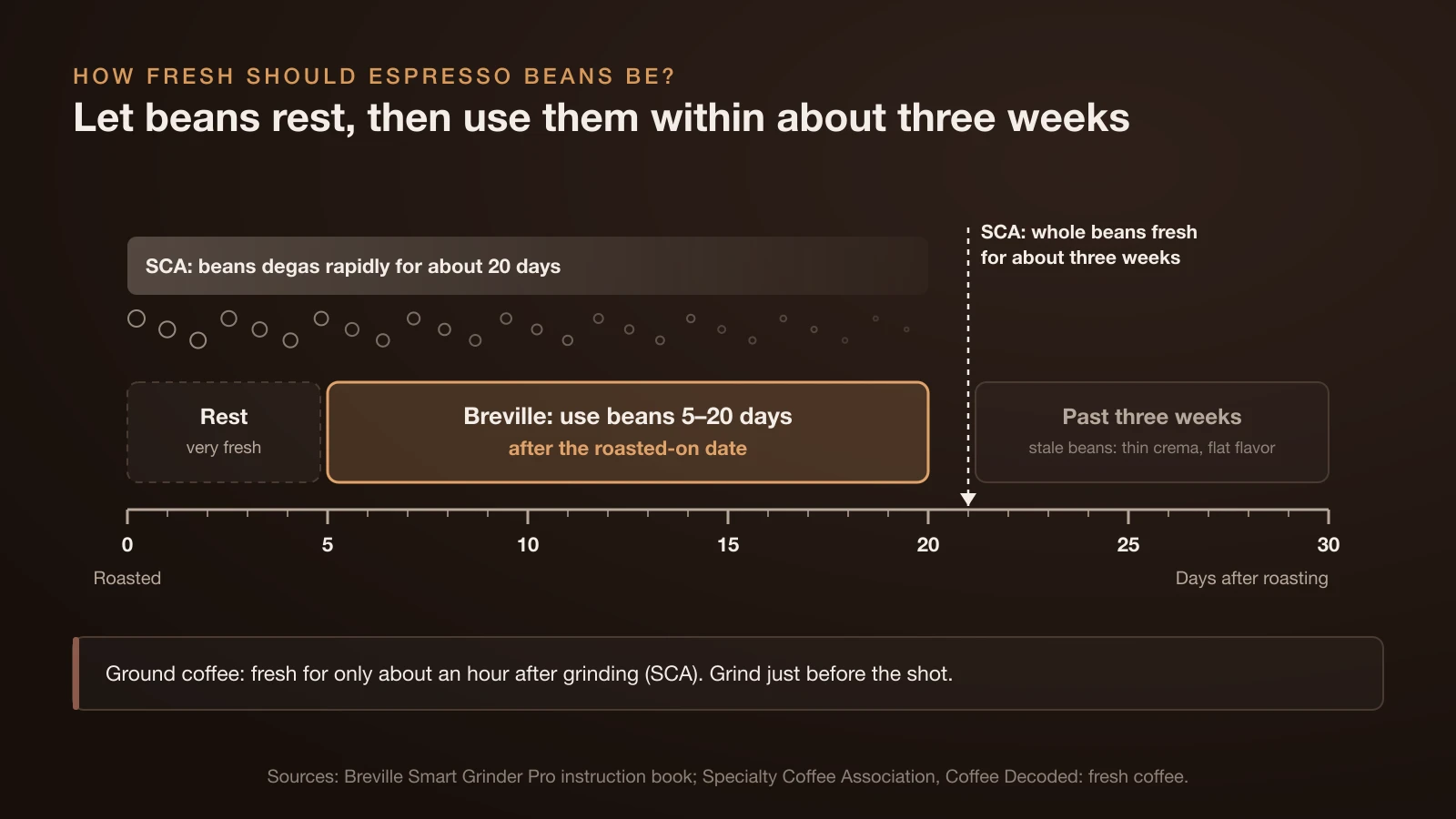
Espresso beans taste best after a short rest and within about three weeks of roasting. Breville’s grinder manual suggests using beans 5 to 20 days after the roasted-on date. The Specialty Coffee Association (SCA) says beans degas rapidly for about 20 days after roasting and can be considered fresh for about three weeks.
The rest matters more for espresso than for filter. Very fresh beans release so much carbon dioxide under pressure that shots can run unevenly. Stale beans give thin crema and flat flavor.
When you shop:
- Pick the newest roast date on the shelf.
- Avoid bags with only a best-by date. Breville’s grinder manual asks for a “roasted on” date rather than a best-before date.
- Buy for one or two weeks of brewing. A smaller bag stays inside the fresh window.
Whole bean vs pre-ground coffee for espresso
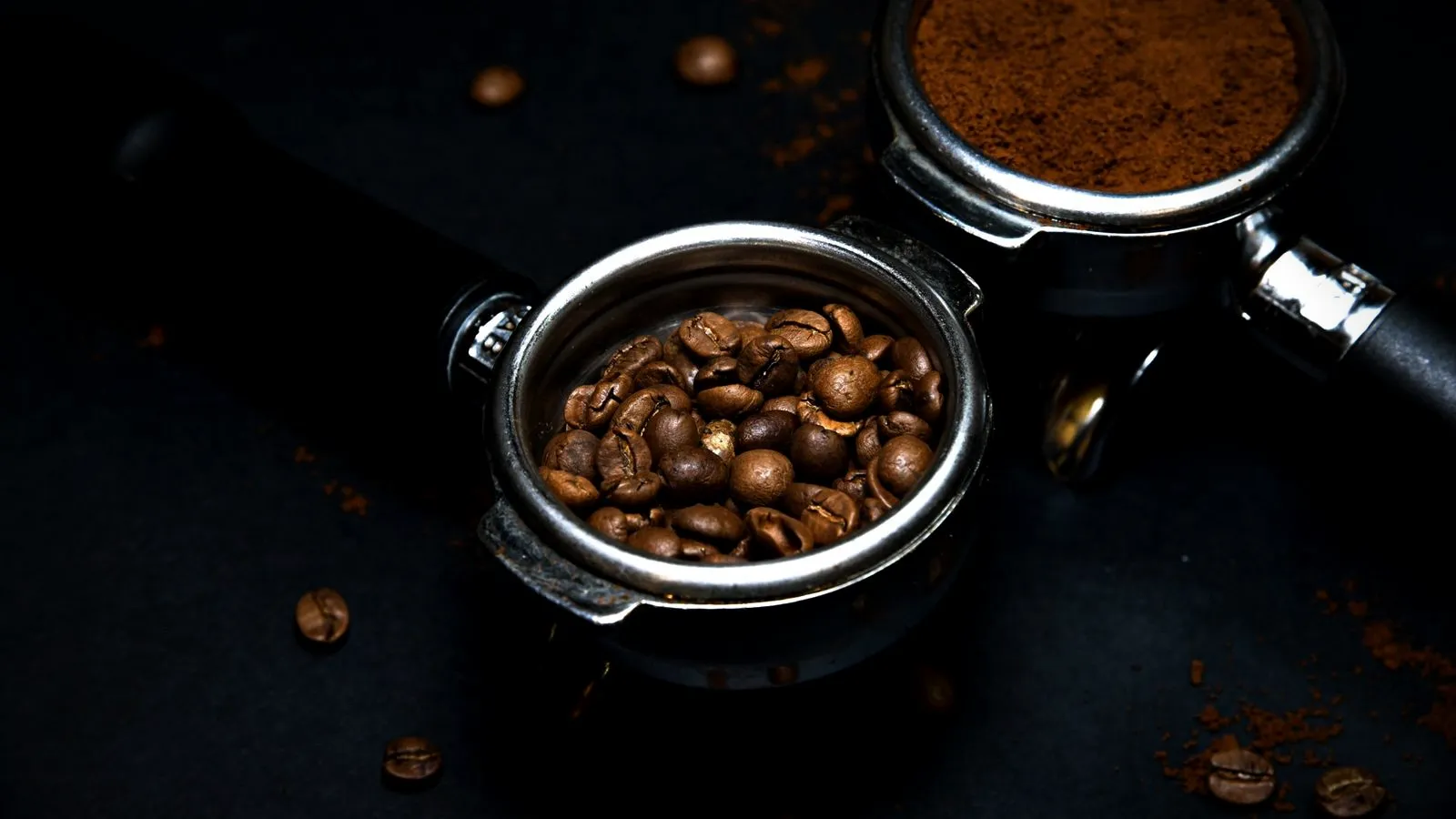
Whole beans ground just before brewing make the best espresso, but pre-ground coffee works in machines with pressurized baskets. The SCA notes that ground coffee might be considered fresh for only about an hour after grinding, because it loses gas and aroma far faster than whole beans.
Your basket decides how much this matters. Breville’s instructions pair single-wall baskets with freshly ground beans and dual-wall (pressurized) baskets with pre-ground coffee, because the dual-wall design builds resistance even when the grind is not ideal.
| Your setup | Best bean choice |
|---|---|
| Standard single-wall basket + burr grinder | Whole beans, ground per shot |
| Pressurized dual-wall basket, no grinder | Pre-ground espresso, small bags |
| Machine with built-in grinder | Whole beans |
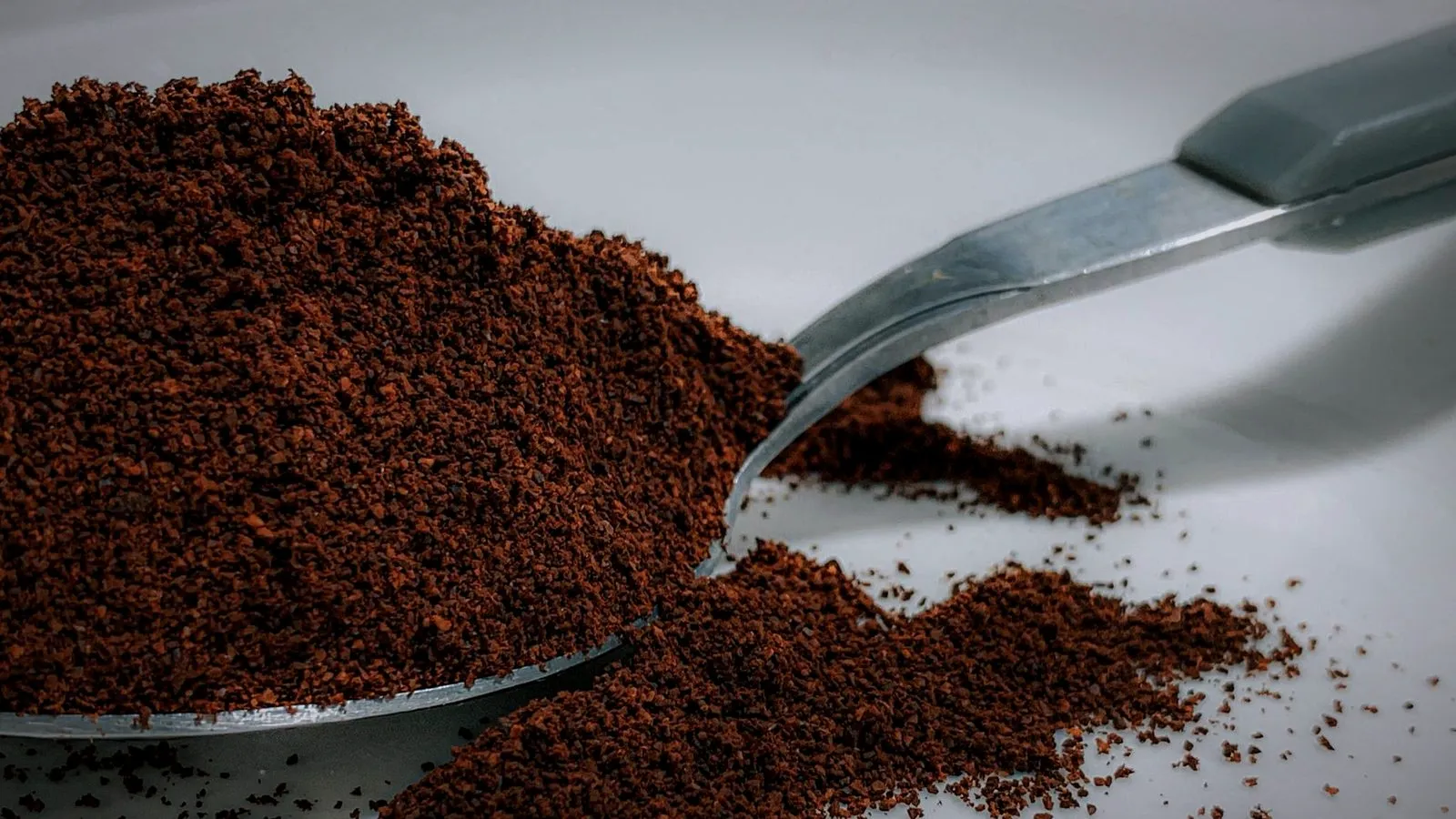
If you are choosing equipment as well as beans, our espresso grinder guide covers what a grinder needs for espresso, and espresso grounds explains how to read pre-ground labels.
Best beans for super-automatic espresso machines
The best beans for a super-automatic or bean-to-cup machine are fresh medium to medium-dark roasts with a dry or only slightly oily surface. De’Longhi asks owners to avoid beans that are too oily, caramelized or coated, because they can stick to the grinder and cause permanent damage.
That rules out flavored beans and very dark, shiny roasts for most built-in grinders. If you prefer a dark taste, choose a medium-dark roast whose beans still look dry. Our guide to super-automatic espresso machines covers the rest of their care.
Can you use any coffee beans for espresso?
Yes, you can use any roasted coffee beans for espresso, because espresso is a brewing method, not a type of bean. Bags labeled “espresso” are simply roasted with that method in mind. A bag sold for drip brews fine as espresso once you grind it fine and dial it in.
What changes is how easy the beans are to work with. Light roasts meant for filter can taste sour as espresso until you grind finer or pull a longer shot. Beans ground for drip are too coarse for a standard basket. For the opposite case, using espresso beans in a stovetop pot, see our guide to the best coffee for a moka pot.
How many grams of coffee for espresso?
A double espresso usually takes about 18 g of coffee, brewed to about 36 g of espresso in 25–30 seconds. Breville’s Barista Express manual gives 8–11 g for the single basket and 16–19 g for the double. Your basket size sets the dose, so weigh it rather than counting scoops.
That dose also tells you how far a bag goes. At 18 g per double, a 12 oz (340 g) bag makes about 18 doubles, before any coffee used while dialing in. Our guide to the espresso ratio explains how to change the yield for stronger or longer shots.
What about decaf?
Decaf beans make espresso the same way as regular beans and are chosen with the same checklist. The NCA says decaffeination removes around 97% of the caffeine, so a decaf shot keeps the flavor with only a small amount left.
Look for a recent roast date and a roast meant for espresso. Our guide to decaf espresso beans covers the decaffeination methods and how to dial them in.
The bottom line
The best coffee beans for espresso are not one brand but a fresh, dated bag in a roast that suits your drinks: medium-dark for milk, wider choice for straight shots. Buy whole beans if you grind, pre-ground only for pressurized baskets, and dry-surfaced beans for super-automatics. Then weigh about 18 g for a double and let taste guide the next bag.
Sources
- National Coffee Association: Roasts (roast descriptions, acidity, espresso roast not a specific level), Coffee regions of the world (origin descriptions), Espresso (1:2 ratio), Coffee storage and shelf life (buy for one or two weeks) and Decaf coffee (around 97% of caffeine removed)
- Specialty Coffee Association: Coffee Decoded: fresh coffee (rapid degassing for about 20 days, whole beans fresh about three weeks, ground coffee about an hour)
- Breville: Barista Express BES875 instruction book (single-wall vs dual-wall baskets, 8–11 g and 16–19 g doses, 25–30 second shot) and Smart Grinder Pro instruction book (roasted-on date, use beans 5–20 days after roasting)
- De’Longhi: Common issues with fully automatic coffee machines (avoid oily, caramelized or coated beans)
- Biotropia: The chemical characteristics of arabica and robusta green coffee beans (1.09% vs 2.09% caffeine)