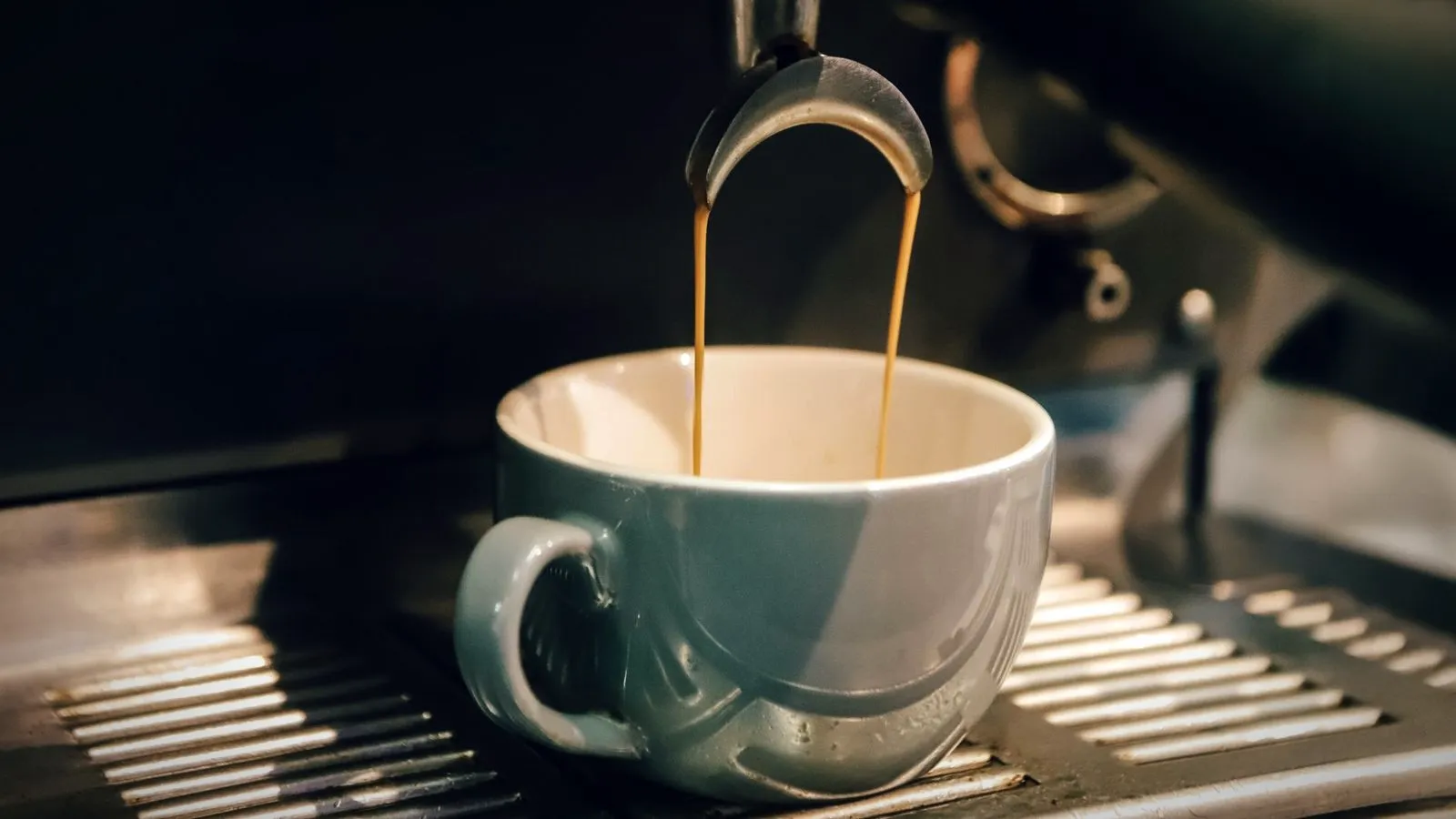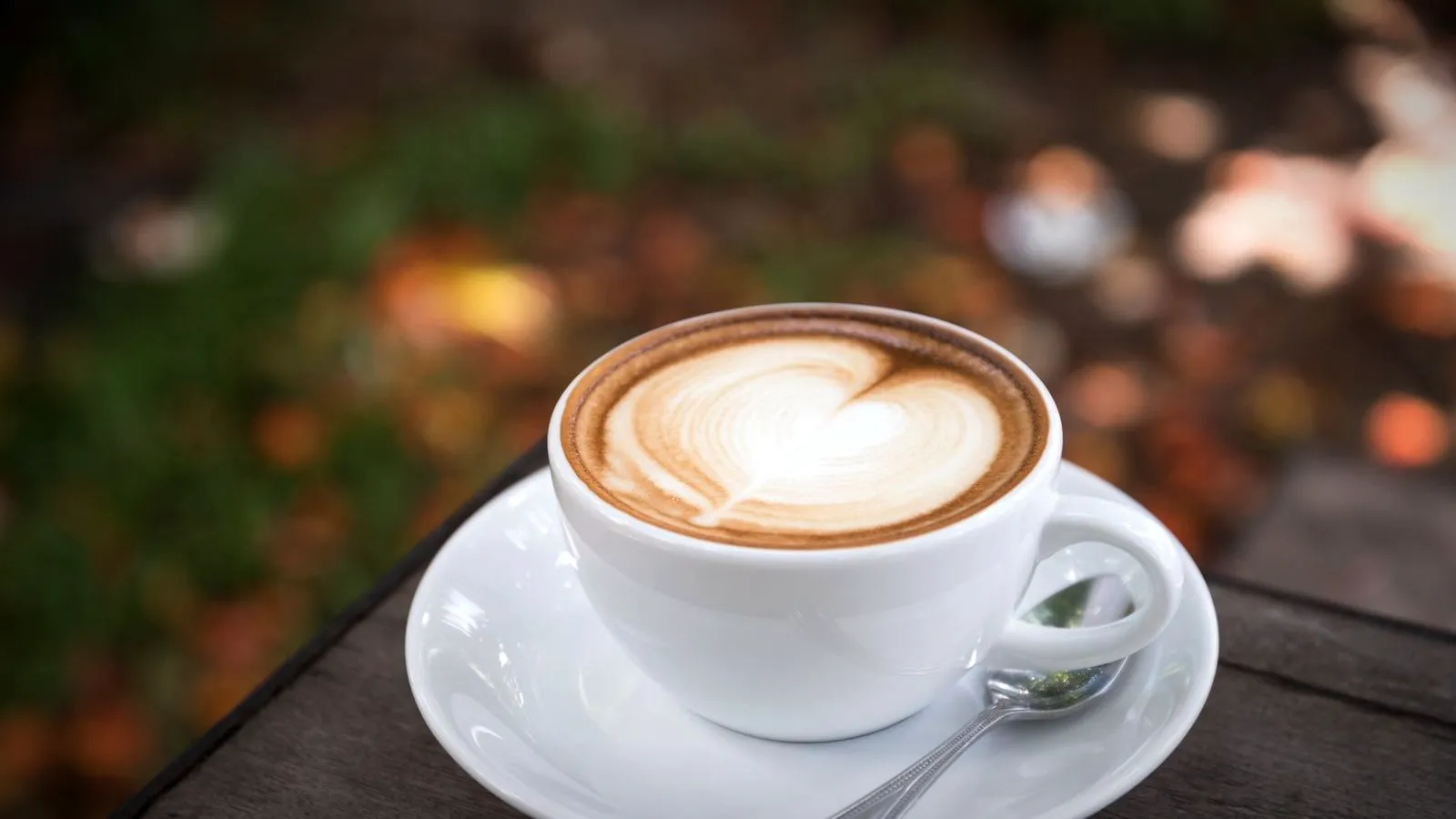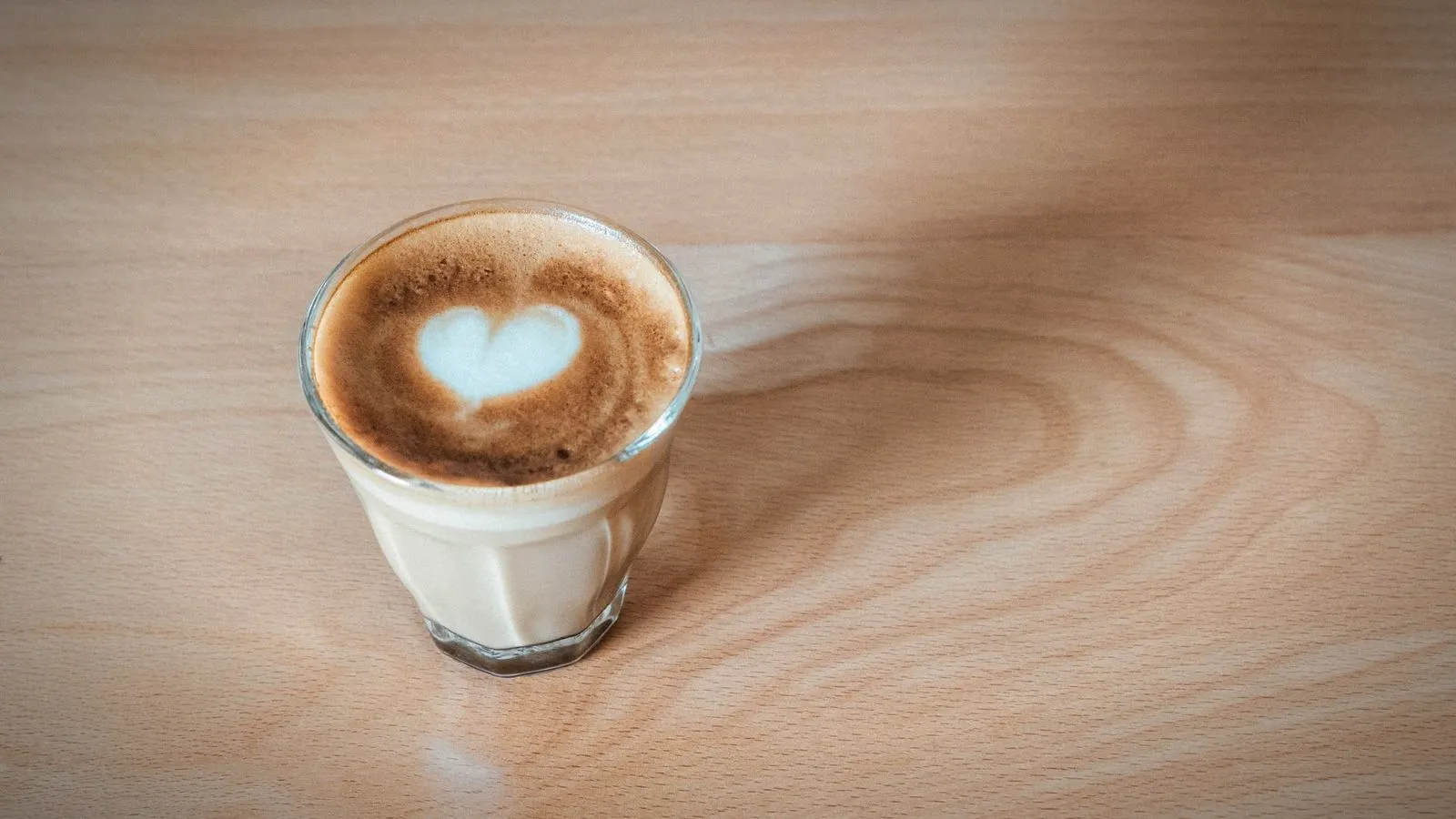

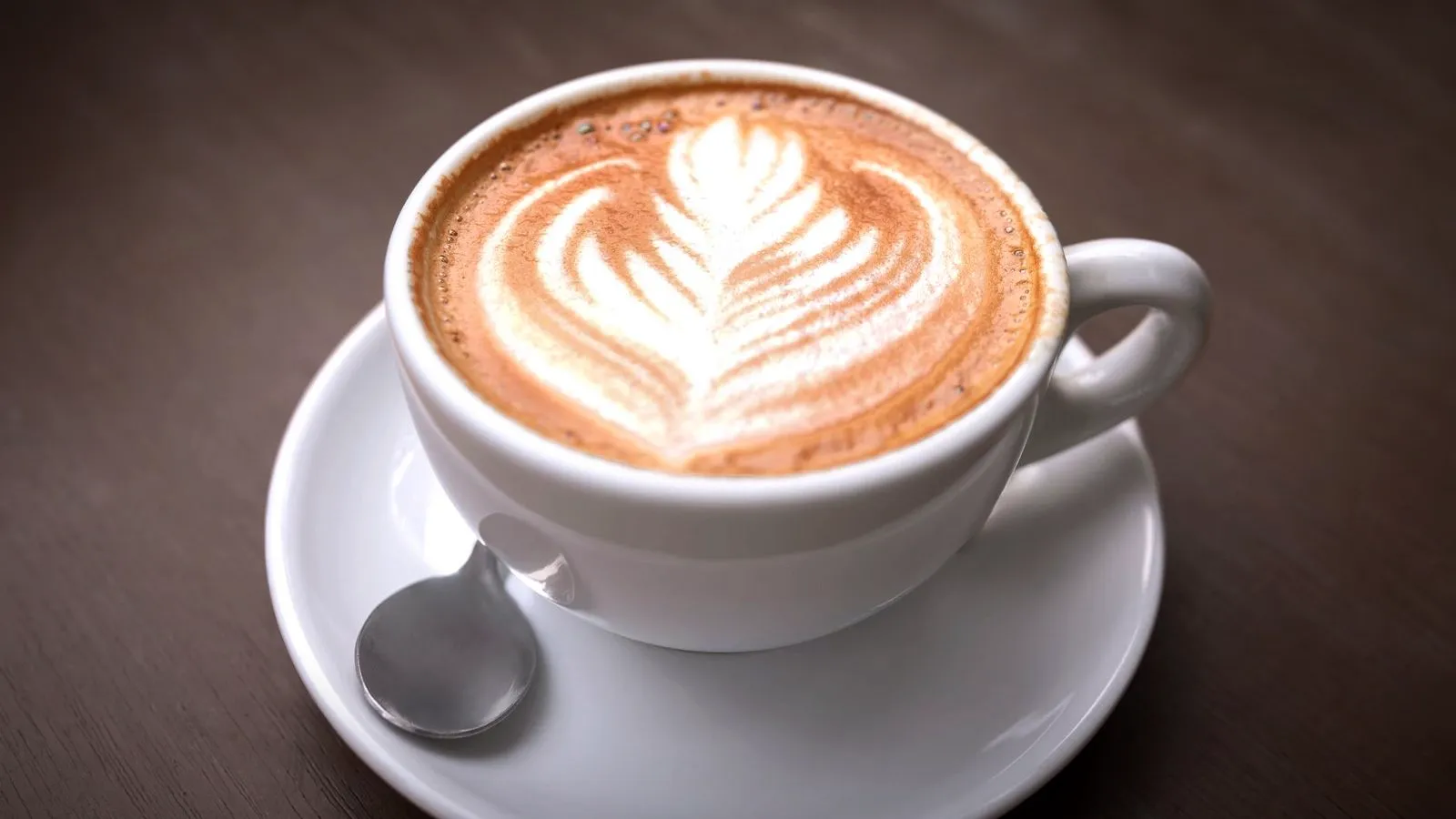
A latte is an espresso drink made with one or two shots of espresso, a large amount of steamed milk and a thin layer of foam on top. It is the mildest and creamiest of the classic café drinks, usually served in an 8 to 16 oz (240–475 ml) cup, and it is unsweetened unless syrup is added.
The word comes from the Italian caffè latte, “coffee and milk.” If you want to make one now, our step-by-step guide on how to make a latte has the full recipe.
The short answer
| Latte (caffè latte) | |
|---|---|
| What it is | Espresso topped with lots of steamed milk and a thin foam layer |
| Espresso | 1 or 2 shots, about 1–2 oz (30–60 ml) |
| Milk | About 5–10 oz (150–300 ml) of steamed milk |
| Espresso to milk | Roughly 1:3 to 1:5 |
| Foam | Thin, about 1 cm (Breville’s manual: about 10 mm) |
| Taste | Mild, creamy, naturally a little sweet |
| Sugar | None added in a plain latte; only the milk’s own lactose |
| Caffeine | About 63 mg per shot, so roughly 63–126 mg |
| Hot or cold | Hot by default; the iced latte is the cold version |
Café recipes vary, so treat these as typical ranges.
What is a latte?
A latte is espresso with a lot of steamed milk poured over it, finished with a thin layer of microfoam. Breville’s own latte recipe describes it exactly that way: steamed milk poured over a shot of espresso, with a thin layer of microfoam on top. Merriam-Webster’s definition is shorter still: espresso mixed with hot or steamed milk.
In a latte, milk is the main ingredient and espresso is the flavor, the opposite of a macchiato. USDA’s standard latte recipe, for example, is about 62 g of espresso and 305 g of 2% milk, nothing else.
The word “latte” has also spread beyond coffee. Merriam-Webster notes it can mean a similar drink made with something other than espresso, such as chai or rooibos. Those tea lattes have steamed milk but no espresso unless you add a shot, as in a dirty chai latte.
What does latte mean?
Latte means “milk” in Italian, and the drink’s full name, caffè latte, means coffee and milk. Merriam-Webster traces the English caffe latte to the Italian caffelatte, short for caffè e latte. It dates the first known English use of “caffe latte” to 1829 and the short form “latte” to 1985.
Merriam-Webster transcribes the pronunciation as ˈlä-(ˌ)tā, which sounds like LAH-tay. Caffe latte is pronounced roughly KAH-fay LAH-tay.
Cafe latte vs latte: is there a difference?
A cafe latte and a latte are the same drink. “Latte” is simply the shortened English name for caffè latte, and both mean espresso with steamed milk and a little foam. You may also see latte macchiato, which is different: steamed milk goes into a tall glass first and the espresso is poured in last, so it forms layers and tastes milkier. It is also different from café au lait, a French drink made with brewed coffee rather than espresso.
What is in a latte?
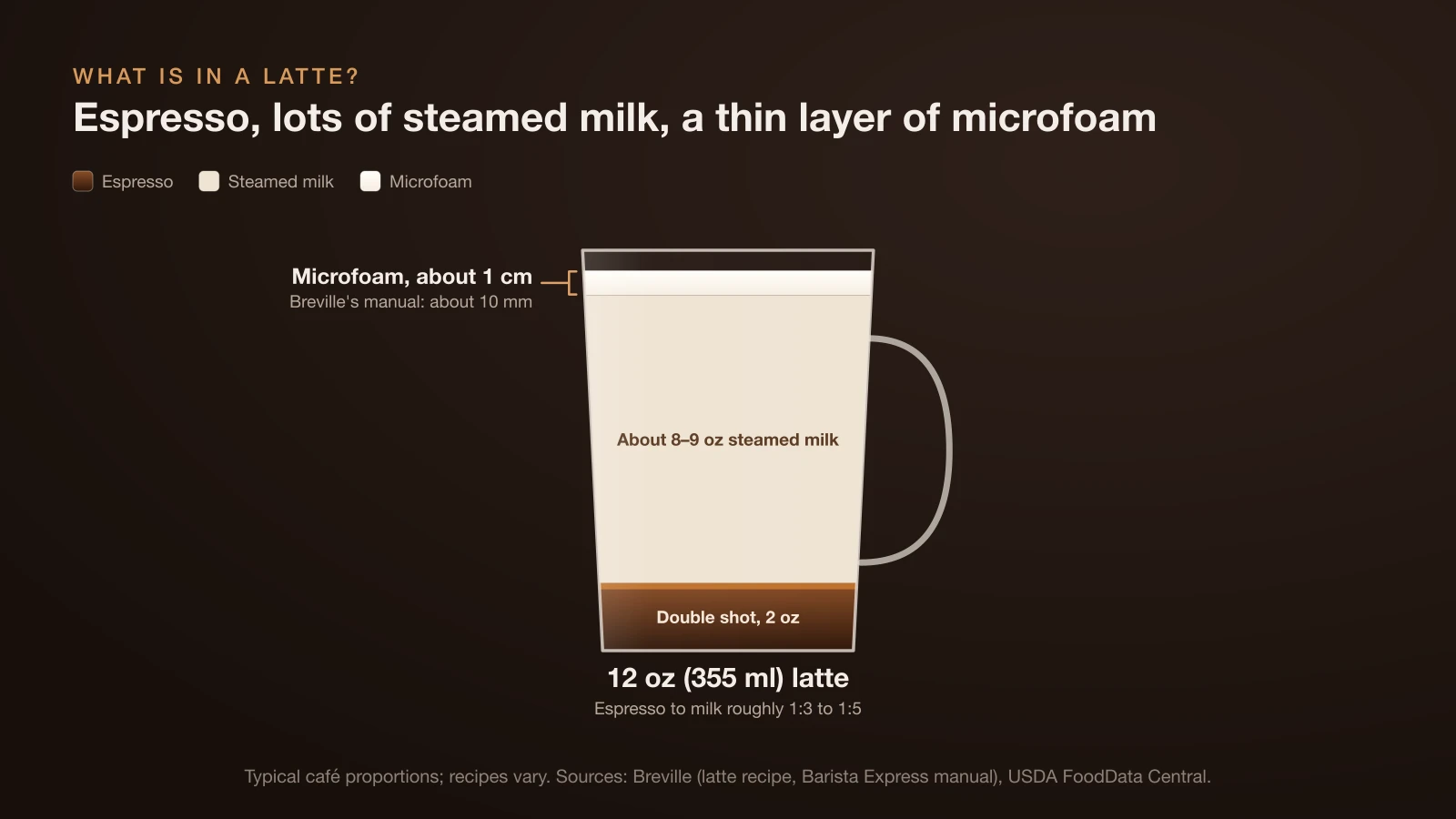
A latte has only two ingredients, espresso and milk, plus the foam that forms when the milk is steamed. Each part has a job:
- Espresso: one or two shots, about 1–2 oz (30–60 ml). Larger café sizes often use two. Starbucks, for instance, uses one shot in its 8 and 12 oz hot lattes and two in its 16 and 20 oz cups.
- Steamed milk: about 5–10 oz (150–300 ml), heated to 60–65 °C (140–150 °F). Steaming makes the milk taste sweeter and gives it a silky body.
- Microfoam: a thin layer of fine foam on top, about 1 cm. This is the part that lets baristas pour latte art.
Most lattes fall between one part espresso to three parts milk and one part espresso to five parts milk. For a 12 oz cup, a double shot with about 8–9 oz of steamed milk is a common balance. Our latte milk ratio guide breaks this down by cup size and shot count.
Whole milk is the classic choice; skim, oat and almond milk also work, as our oat milk latte guide explains.
What does a latte taste like?
A latte tastes mild, creamy and slightly sweet, with the espresso as a soft background note rather than a sharp hit. Because milk makes up most of the cup, the bitterness and acidity of espresso are rounded off. Warm steamed milk also brings out its own natural sweetness.
How much coffee you taste depends on three things:
- Ratio. A 1:3 latte tastes noticeably of coffee; a 1:5 latte tastes mostly of milk.
- Roast. Darker espresso roasts with chocolate and caramel notes keep their character through the milk better than very light roasts.
- Milk. Whole milk tastes rich and sweet. Skim milk tastes thinner. Oat milk adds a cereal sweetness, and almond milk a light nutty note.
Are lattes sweet? Do lattes have sugar?
A plain latte has no added sugar, but it does contain natural sugar from the milk. That sugar is lactose. USDA lists whole milk at 5.05 g of lactose per 100 g, and its standard latte, made only of espresso and 2% milk, at about 4.1 g of total sugars per 100 g.
In practice that adds up. Starbucks lists 14 g of sugar for a 12 oz Tall Caffè Latte and 18 g for a 16 oz Grande, made with just milk and espresso. None of it is added sugar; it all comes from the milk.
A latte only becomes truly sweet when syrup, sauce or sweetener goes in. Vanilla, caramel and hazelnut are the classic additions, and our guide to latte flavors lists the common syrups and spices.
What is a skinny latte?
A skinny latte is a café name for a latte made with nonfat (skim) milk, and in a flavored drink it usually also means sugar-free syrup. It is lower in calories because skim milk has almost no fat. USDA lists its nonfat latte at 30 kcal per 100 g, against 43 kcal for the standard latte made with 2% milk. Skim milk keeps the same protein and the same lactose, so a skinny latte is no less sweet by nature.
Are lattes hot or cold?
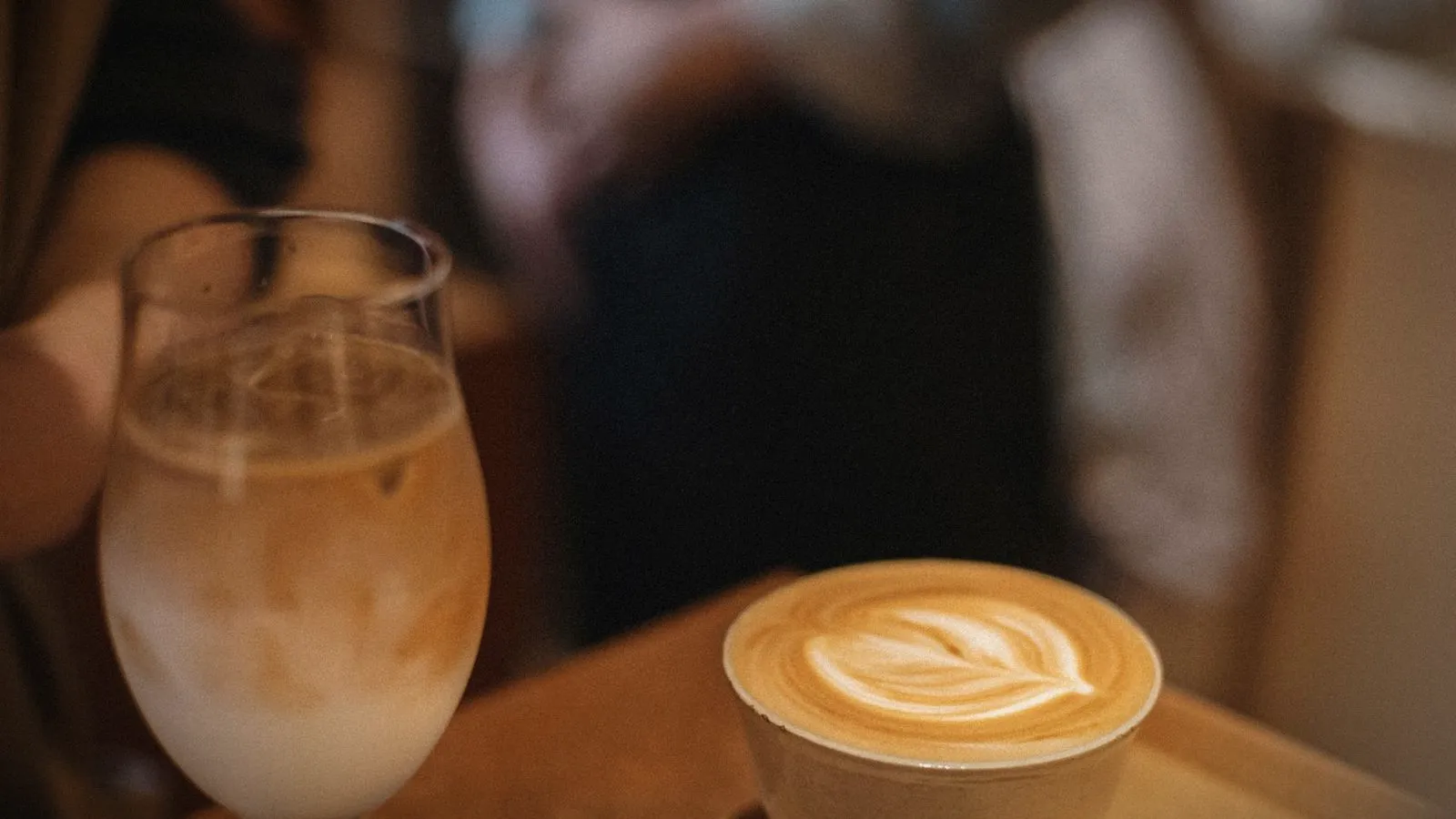
Lattes are hot by default, but the iced latte is an equally common cold version. A hot latte uses milk steamed to about 60–65 °C, while an iced latte skips steaming entirely. Starbucks describes the iced version as espresso combined with cold milk and served over ice.
Ice takes up part of the cup, so an iced latte holds less milk. See our guide to the iced latte for ratios by glass size and ways to keep it from tasting watery.
How a latte compares with other espresso milk drinks
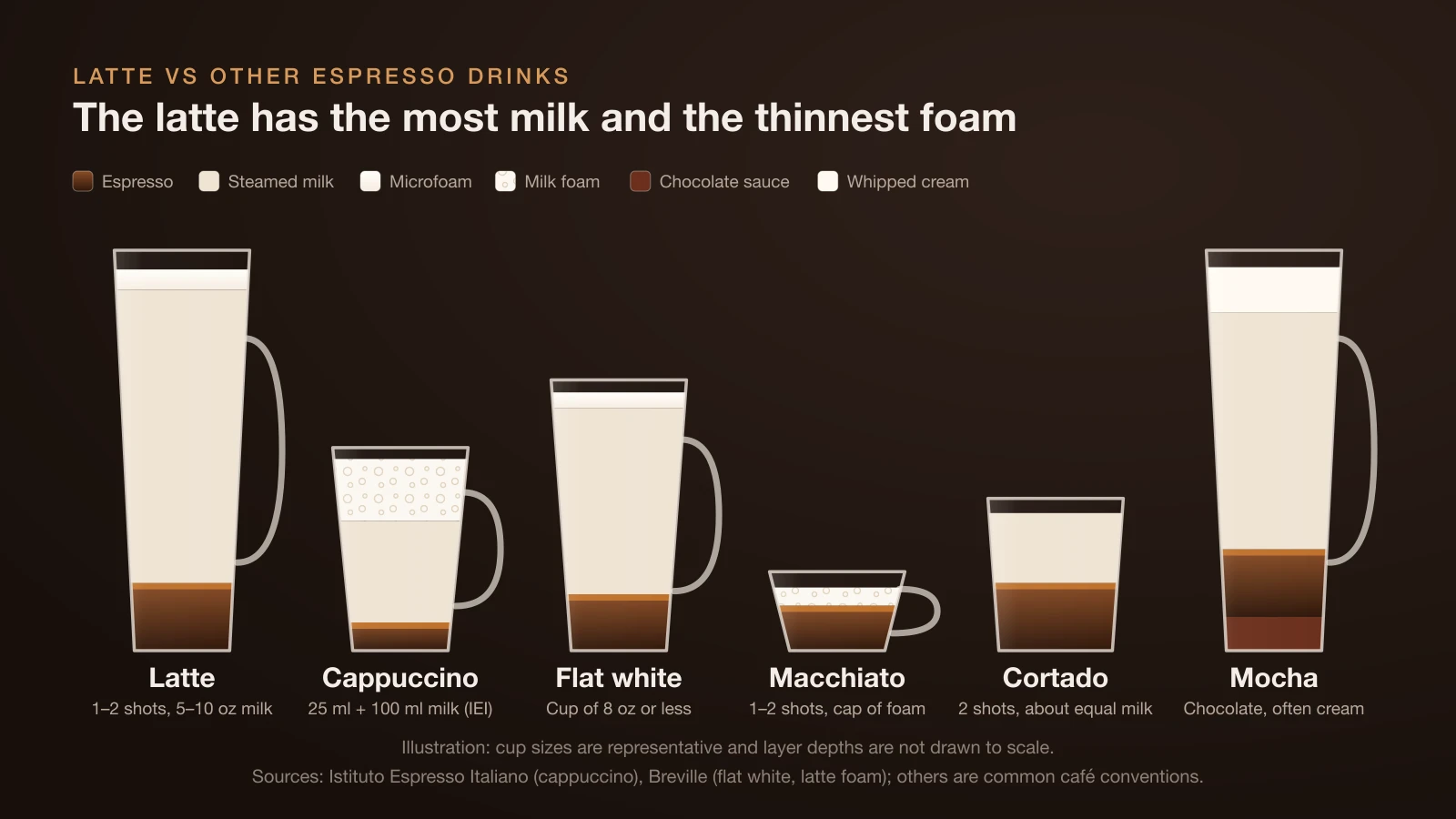
A latte has the most milk and the thinnest foam of the classic espresso-and-milk drinks. The others change either the amount of milk, the amount of foam or, in a mocha, add chocolate.
| Drink | Espresso | Milk | Foam | Taste |
|---|---|---|---|---|
| Latte | 1–2 shots | 5–10 oz (150–300 ml) steamed milk | Thin, about 1 cm | Mildest, creamiest |
| Cappuccino | 1 shot, 25 ml (IEI) | 100 ml steamed milk (IEI) | Thick | Stronger, airy |
| Flat white | 1–2 shots | Less, in a cup of 8 oz or less (Breville) | Very thin microfoam, about 1/4 in | Stronger, velvety |
| Macchiato | 1–2 shots | A spoonful of foam | A small cap | Intense, espresso-forward |
| Cortado | 2 shots | About equal to the espresso | Little or none | Strong, smooth |
| Mocha | 1–2 shots | Steamed milk, like a latte | Often whipped cream | Sweet, chocolatey |
The cappuccino row is the Istituto Espresso Italiano (IEI) certified recipe and the flat white row follows Breville’s guideline; the others are common café conventions. For the details of each pairing, read flat white vs cappuccino, cortado vs latte, mocha vs latte and our explainer on what a macchiato is.
How strong is a latte?
A latte is as strong in caffeine as the espresso shots inside it, and milk adds none. Using USDA’s average of 212 mg of caffeine per 100 g of espresso, a single shot of about 1 oz has roughly 63 mg, so a one-shot latte has about 63 mg and a two-shot latte about 126 mg. Starbucks lists 75 mg for a Tall and 150 mg for a Grande hot latte.
An 8 oz cup of brewed coffee, at about 95 mg, has more caffeine than a single-shot latte. For sizes, chains and decaf, see how much caffeine is in a latte, and for the full comparison with drip coffee, latte vs coffee.
Is a latte healthy? Calories and nutrition
A plain latte is a moderate-calorie drink whose calories come almost entirely from the milk. For a 12 oz latte with a double shot and 8 oz of milk, estimates built from USDA values come to about 155 kcal with whole milk, 125 with 2% and 90 with skim. The espresso adds only about 3 kcal per shot.
Syrups and whipped cream add calories quickly. Starbucks lists its 16 oz Grande Caffè Latte, with 2% milk and no syrup, at 190 kcal. Our guide to calories in a latte compares every milk type and size.
Do you need a latte machine?
You need an espresso machine with a steam wand to make a true latte at home, and that is what most “latte machines” are. Some models add a built-in grinder or an automatic milk system, and capsule machines can pair with a separate milk frother. Our guide to the best home espresso machine explains the machine types and what to check before buying.
Without a machine, strong moka pot coffee and milk foamed in a jug frother or jar make a convincing latte-style drink.
The bottom line
A latte is espresso with a lot of steamed milk and a thin layer of microfoam, usually one or two shots to about 5–10 oz of milk. The name is Italian for milk, short for caffè latte, coffee and milk. It is the mildest classic espresso drink, unsweetened unless you add syrup, with caffeine set only by the number of shots.
Sources
- USDA FoodData Central: Coffee, Latte (62 g espresso + 305 g 2% milk; 43 kcal, 36 mg caffeine, 4.06 g total sugars per 100 g), Coffee, Latte, nonfat (30 kcal per 100 g), espresso (212 mg caffeine, 9 kcal per 100 g; 1 fl oz = 29.6 g), Milk, whole (5.05 g lactose per 100 g; 1 cup = 244 g), Milk, 2%, Milk, nonfat and Coffee, brewed (about 95 mg caffeine per 8 oz)
- Starbucks: Caffè Latte and Iced Caffè Latte nutrition (description, shots, caffeine, calories, sugar by size) and Iced Latte recipe (a latte can be iced, with cold milk over ice)
- Breville: Latte recipe (definition, “latte” means milk, 60–65 °C), Barista Express BES875 instruction book (about 10 mm of foam) and How to make a flat white at home (cup of 8 oz or less, microfoam about a quarter inch)
- Merriam-Webster: latte and caffe latte (definitions, pronunciation, etymology caffè e latte, first known use 1829 and 1985)
- Istituto Espresso Italiano: Certified Italian Espresso and Cappuccino (25 ml espresso; cappuccino with 100 ml steamed milk)