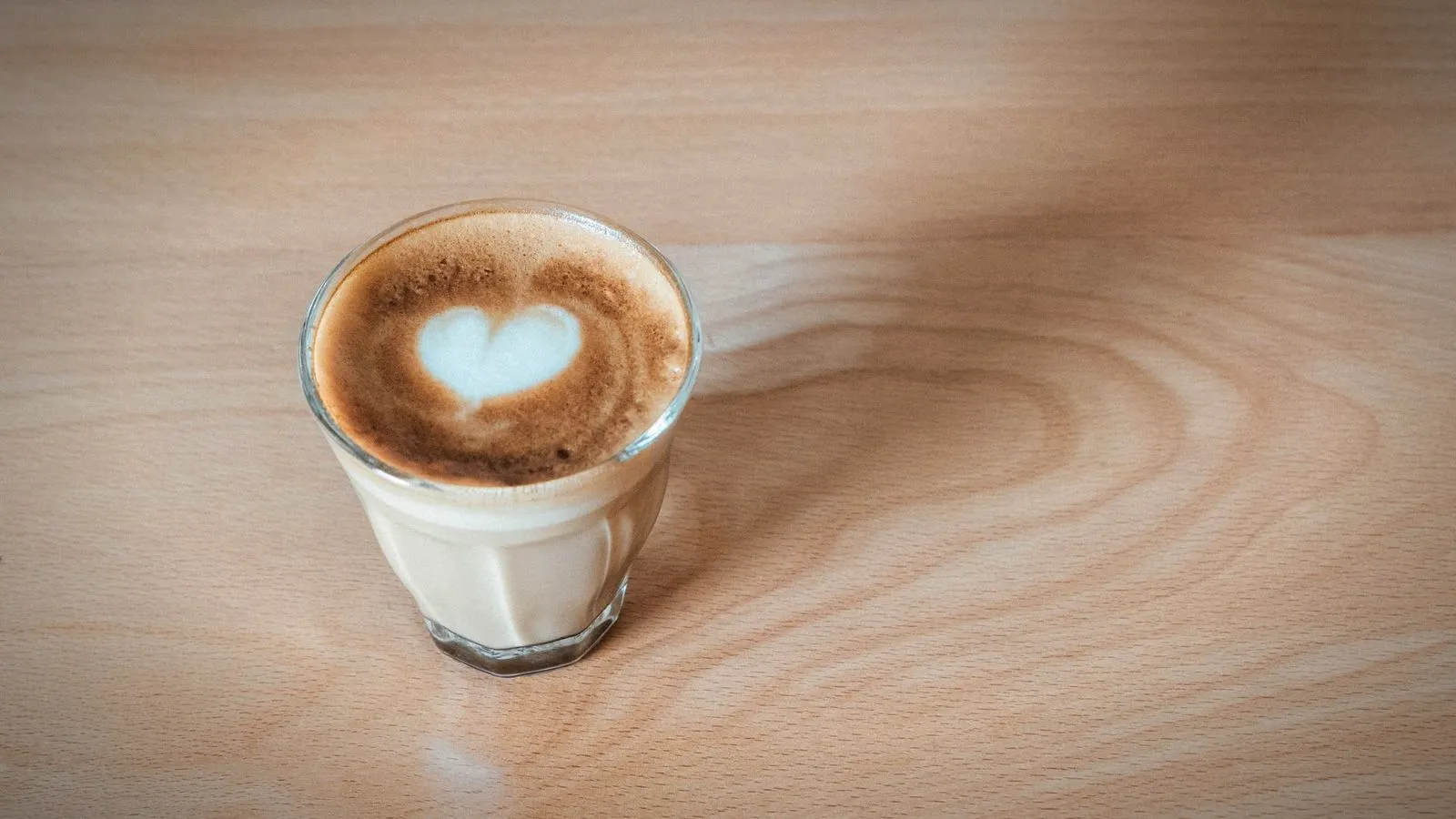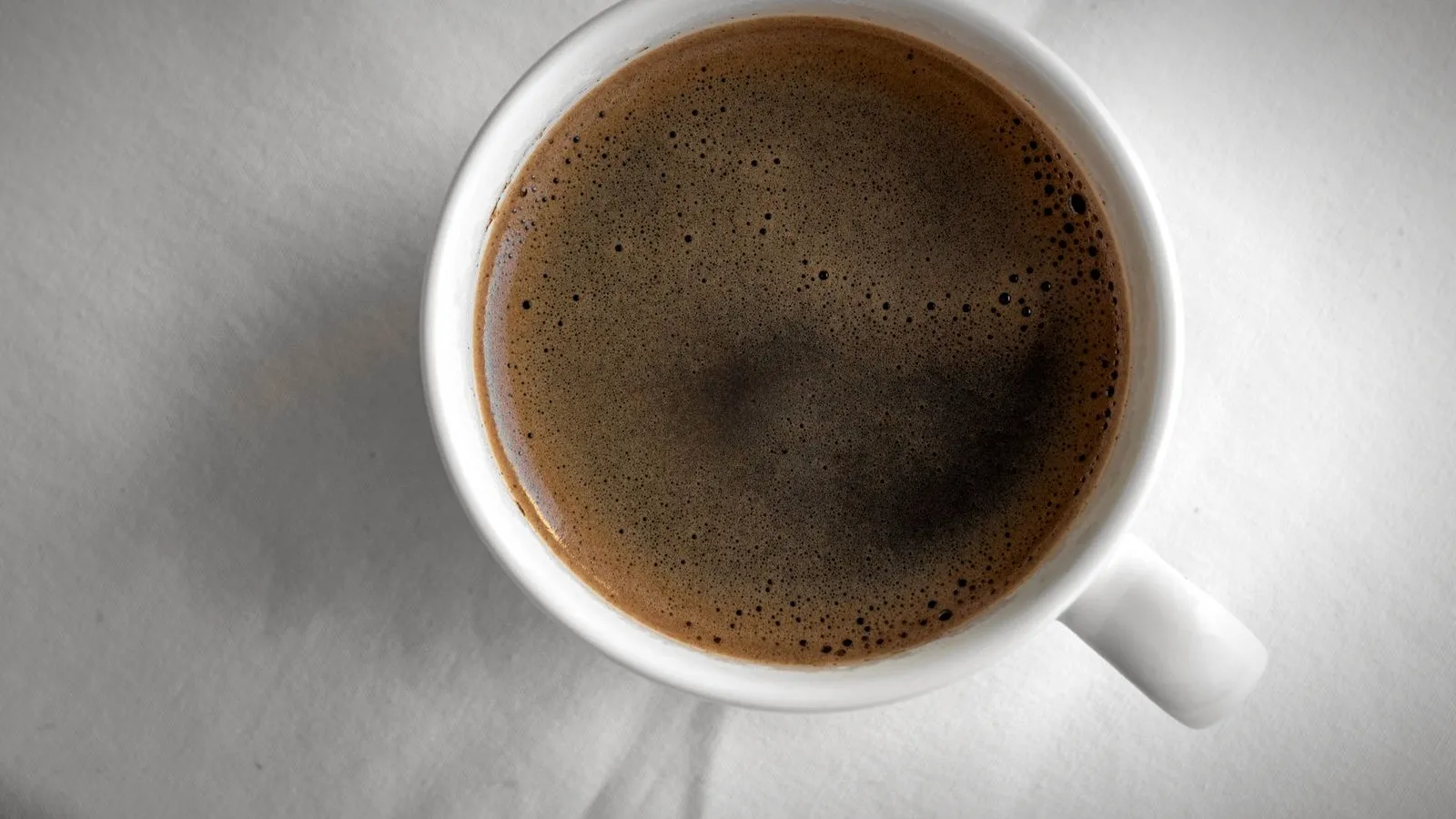

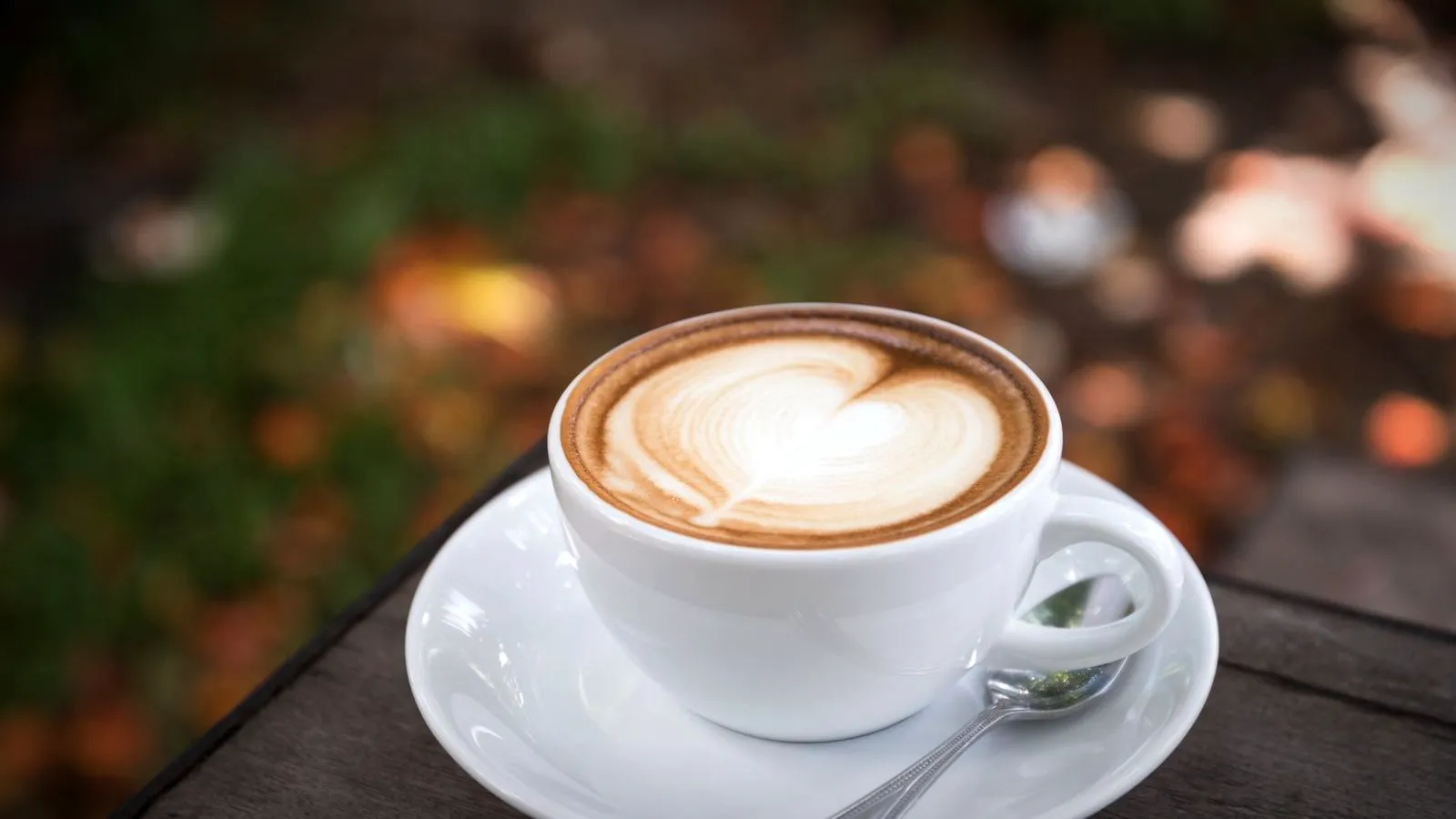
A cappuccino is an espresso drink made with a shot of espresso, steamed milk and a thick layer of milk foam on top. A traditional cappuccino is small, about 5–6 oz (150–180 ml), and the Italian standard uses 25 ml of espresso and 100 ml of milk. It tastes richer and foamier than a latte.
The name is Italian for “Capuchin,” after the friars’ brown habits. For caffeine and calories by size and milk, see our guide to cappuccino caffeine and calories.
The short answer
| Cappuccino | |
|---|---|
| What it is | Espresso with steamed milk and a thick cap of foam |
| Italian standard (Istituto Espresso Italiano, IEI) | 25 ml of espresso and 100 ml of steamed milk |
| Typical size | 5–6 oz (150–180 ml); chain sizes run up to 20 oz |
| Espresso | 1 shot traditionally; often 2 in larger café cups |
| Foam | Thick, at least 1 cm (about 0.4 in) |
| Taste | Rich and airy; milder than espresso, more coffee-forward than a latte |
| Sugar | None added; only the milk’s own lactose |
| Caffeine | About 63 mg per shot (USDA average) |
| Name | Italian for Capuchin |
Cafés pour their own versions, so treat these as typical reference values rather than fixed rules.
What is a cappuccino?
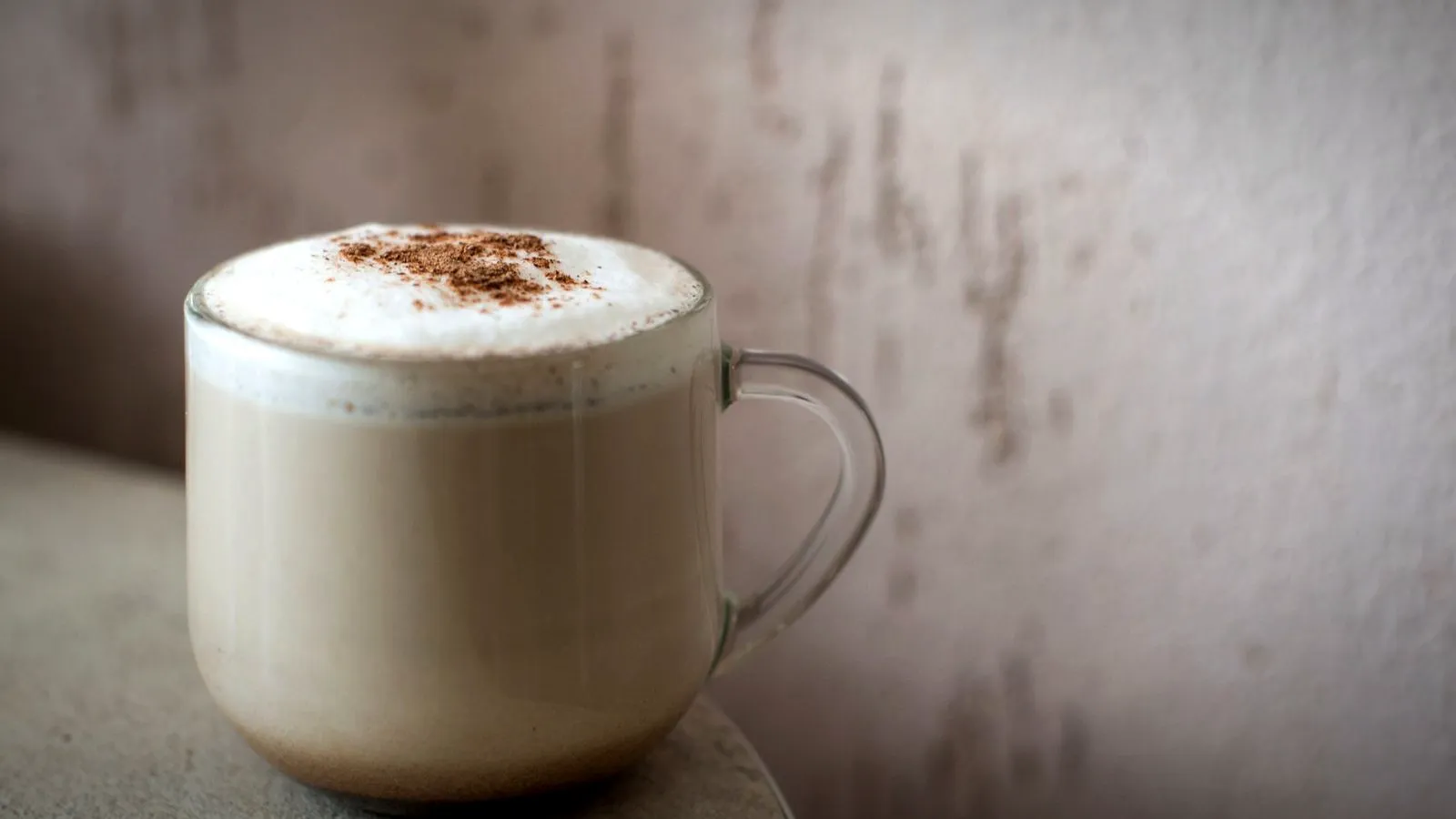
A cappuccino is espresso topped with steamed milk and a deep layer of foam. Merriam-Webster defines it as espresso coffee topped with frothed hot milk or cream and often flavored with cinnamon. Starbucks describes its version as espresso and steamed milk topped with a thick layer of foam, and lists only two ingredients: milk and brewed espresso.
You will often hear that a cappuccino is one third espresso, one third steamed milk and one third foam. Breville calls that a common belief rather than an official standard. Starbucks’ at-home recipe puts it differently, aiming for roughly equal parts milk and froth in the finished cup.
What every definition shares is the foam. Breville, citing the Specialty Coffee Association (SCA), puts it at least 0.4 inches (about 1 cm) deep, thicker than the thin layer on a latte or flat white.
The Italian cappuccino standard
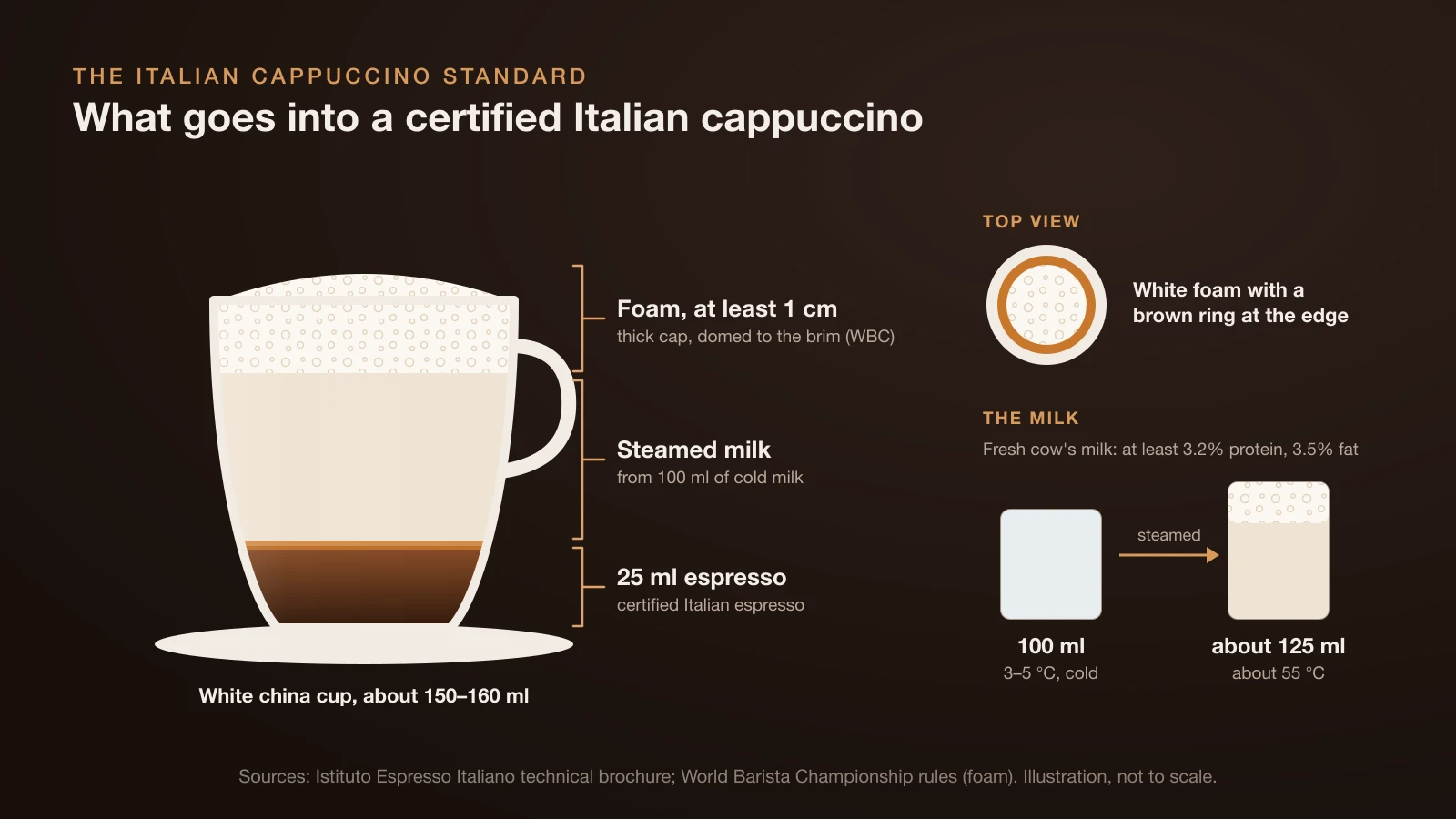
The Istituto Espresso Italiano (IEI), which has certified cappuccinos since 2006, defines one as 25 ml of espresso and 100 ml of steamed milk. Its technical brochure adds how the milk is handled and what cup it goes in:
| IEI Certified Italian Cappuccino | Specification |
|---|---|
| Espresso | 25 ml of certified Italian espresso |
| Milk | 100 ml of cold fresh cow’s milk, 3–5 °C (37–41 °F) |
| Milk after steaming | About 125 ml, at about 55 °C (131 °F) |
| Milk quality | At least 3.2% protein and 3.5% fat |
| Cup | White china of about 150–160 ml, filled to the brim |
| Look | White foam with a brown ring around the edge |
That works out to about one part espresso to four parts milk before steaming. Home guides usually steam a little hotter: Breville’s cappuccino recipe stops at 60–65 °C (140–150 °F).
How many ounces is a cappuccino?
A traditional cappuccino is about 5–6 oz (150–180 ml). Breville quotes the SCA’s description of a 5–6 oz coffee and milk beverage, and World Barista Championship rules set a 150–180 ml cup with at least 1 cm of foam.
US chains sell much larger sizes. Starbucks makes its hot cappuccino in four:
| Starbucks cappuccino | Cup | Espresso shots |
|---|---|---|
| Short | 8 fl oz | 1 |
| Tall | 12 fl oz | 1 |
| Grande | 16 fl oz | 2 |
| Venti | 20 fl oz | 2 |
A 16 or 20 oz cappuccino carries far more milk per shot than an Italian one, so it tastes milder. If you want the classic balance at a chain, the Short is the closest.
How much milk and coffee is in a cappuccino?
A traditional cappuccino has one shot of espresso, about 25 ml, and about 100 ml (3.4 oz) of milk before steaming. Recipes from other sources scale both up:
| Recipe | Espresso | Milk |
|---|---|---|
| IEI certified cappuccino | 25 ml, one shot | 100 ml |
| Starbucks Classic Cappuccino, at home | 2 oz, about a double | 4 oz whole milk |
| Starbucks Tall, in store | 1 shot | Fills a 12 fl oz cup |
| Starbucks Grande, in store | 2 shots | Fills a 16 fl oz cup |
Yes, a cappuccino has coffee in it: the espresso is simply coffee brewed under pressure. Its caffeine comes only from those shots, about 63 mg per average shot on USDA data, and Starbucks lists 75 mg for a Tall and 150 mg for a Grande. Our cappuccino caffeine and calories guide breaks both down by size and milk.
What does a cappuccino taste like?
A cappuccino tastes rich, creamy and light at once: the first sips are soft, airy foam, and the espresso and warm milk come through underneath. Because it holds less milk than a latte, the coffee flavor stays clear, with its bitterness rounded off rather than hidden.
The IEI describes its certified cappuccino as creamy and full-bodied, with a mild bitterness and an almost imperceptible acidity. It lists aromas of milk, toasted cereals, caramel, cocoa and dried fruit. Roast changes the balance: darker espresso brings chocolate and caramel, lighter espresso more fruit.
Is a cappuccino sweet? Does it have sugar?
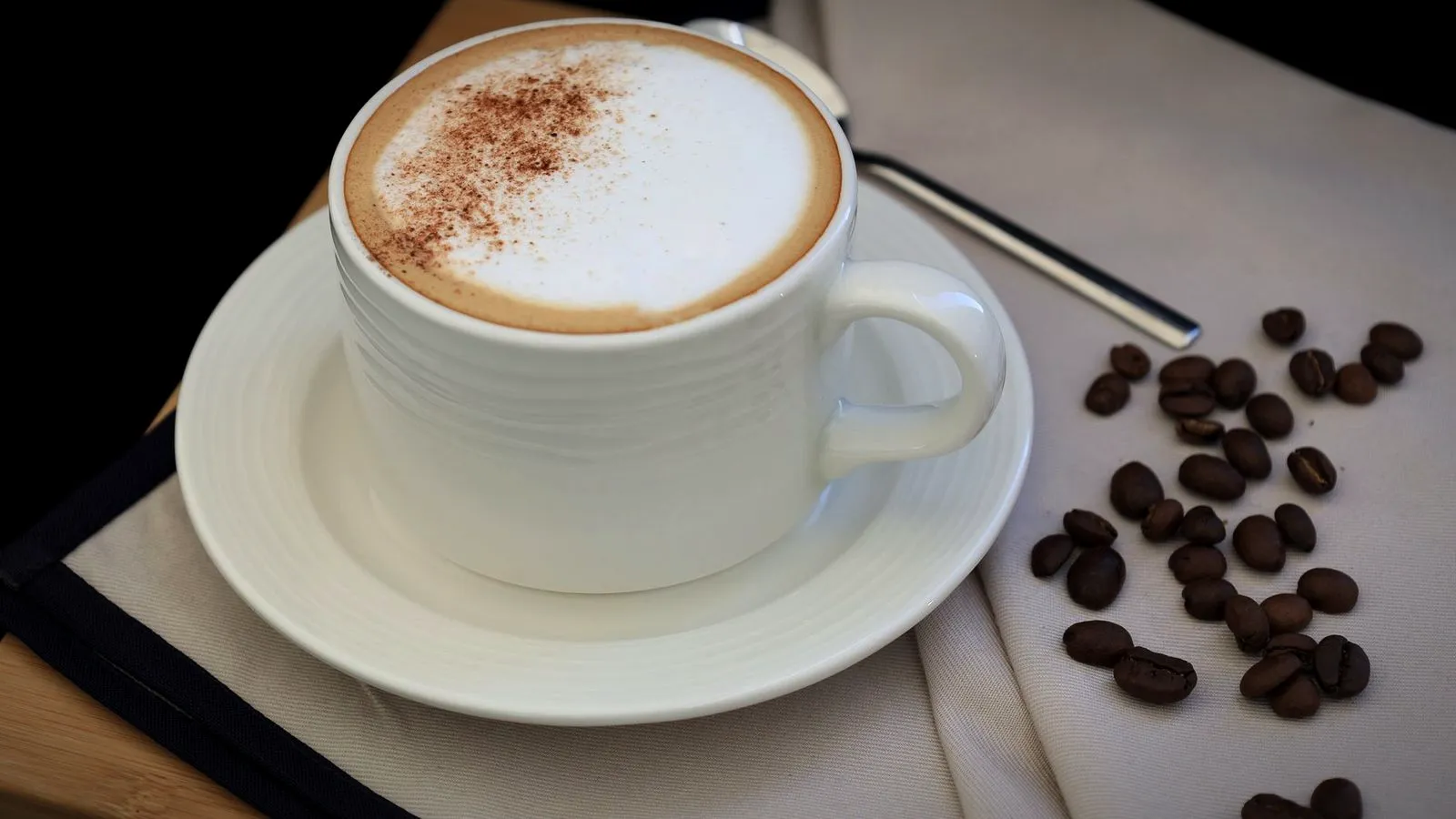
A plain cappuccino has no added sugar, but it tastes gently sweet because steamed milk carries natural lactose. USDA lists whole milk at 5.05 g of lactose per 100 g, so the 100 ml of milk in a traditional cup holds about 5 g (our estimate).
Starbucks shows the same thing at larger sizes. Its hot cappuccino, made with only milk and espresso, lists 6 g of sugar for a Short, 9 g for a Tall, 12 g for a Grande and 19 g for a Venti, all of it from the milk.
Cocoa, cinnamon and flavored cappuccinos
The classic garnishes are cocoa and cinnamon. Merriam-Webster notes that cappuccino is often flavored with cinnamon, and Breville’s recipe dusts chocolate powder into the espresso and, if you like, on top. A dusting adds flavor but very little sugar.
Syrups and sauces are what make a cappuccino truly sweet. A chocolate version moves toward a mocha.
Where does the name cappuccino come from?
Cappuccino is the Italian word for a Capuchin friar, and the drink is named for the color of the friars’ brown habits. Merriam-Webster gives the etymology as Italian, literally “Capuchin,” from the likeness of the drink’s color to a Capuchin’s habit, and dates the first known use of the word in this sense to 1893.
Breville traces the idea to the kapuziner of 19th-century Vienna, coffee mixed with milk until it matched the color of the Capuchin robes. Breville says the name took hold in the early 1900s, as espresso machines spread; Merriam-Webster’s earliest record of it is from 1893.
How do you spell and pronounce cappuccino?
Cappuccino is spelled with a double p and a double c: c-a-p-p-u-c-c-i-n-o, and the plural is cappuccinos. Merriam-Webster transcribes it as ˌka-pə-ˈchē-(ˌ)nō, which sounds like kap-uh-CHEE-noh. The “cc” before the i is a “ch” sound, as in most Italian words.
Do you need a cappuccino machine?
You need an espresso machine with a steam wand to make a true cappuccino at home, and that is what most “cappuccino machines” are. Some add a built-in grinder or an automatic milk system that foams and pours at the push of a button.
The making itself is short. Pull a single shot into a 5–6 oz cup (a double needs a larger cup), steam about 100 ml of cold milk to 60–65 °C, adding air for longer than for a latte so the volume grows, then pour and let the thick foam settle on top. Our guide on how to steam milk covers the technique. Without a wand, a jug or handheld milk frother can make cappuccino-style foam.
How a cappuccino compares with other espresso drinks
A cappuccino sits in the middle of the milk drinks: more milk than a macchiato or cortado, less than a latte, and far more foam than a flat white.
| Drink | Espresso | Milk | Foam | Typical size |
|---|---|---|---|---|
| Cappuccino | 1 shot, 25 ml (IEI) | 100 ml steamed milk (IEI) | Thick, at least 1 cm | 150–180 ml (5–6 oz) |
| Latte | 1–2 shots | About 5–10 oz (150–300 ml) | Thin | 8 oz and up |
| Flat white | Single or double | Less than a latte | About 1/4 in (6 mm) of microfoam | Cup of 8 oz or less |
| Espresso macchiato | 1–2 shots | A spoonful or two of foam | A small cap | About 1–2 oz |
| Cortado | Usually a double | About equal to the espresso | Little or none | About 4–4.5 oz |
Our master chart of cappuccino vs latte vs macchiato compares the first four side by side. For single pairs, see flat white vs cappuccino, macchiato vs cappuccino and our explainer on what a cortado is. Against a mug of drip, our cappuccino vs coffee guide compares caffeine and taste.
Cafés also adjust the foam: a dry cappuccino has more foam and less milk, and a wet one the reverse, as our guide to wet vs dry cappuccino explains.
The bottom line
A cappuccino is espresso with steamed milk and a thick cap of foam, traditionally about 5–6 oz, with 25 ml of espresso and 100 ml of milk in the Italian standard. It tastes richer and more coffee-forward than a latte, it is naturally a little sweet from the milk, and its caffeine comes only from its shots. The name comes from the Capuchin friars, whose brown habits matched the drink’s color.
Sources
- Istituto Espresso Italiano: Certified Italian Espresso and Cappuccino (25 ml espresso and 100 ml steamed milk; color and taste) and technical brochure (archived; certified since 2006; 3–5 °C milk to about 125 ml at about 55 °C; 3.2% protein, 3.5% fat; 150–160 ml cup); World Coffee Events, 2015 World Barista Championship rules (archived; 150–180 ml, at least 1 cm of foam)
- Starbucks, as of October 2026: Cappuccino nutrition (sizes, shots, sugar, caffeine), Classic Cappuccino recipe (2 oz espresso, 4 oz whole milk, half milk and half froth, moka pot option) and Starbucks espresso explained (archived; definition)
- Breville: How are flat whites, cappuccinos and lattes different? (5–6 oz, at least 0.4 in of foam, thirds as a common belief, kapuziner, early 1900s), Cappuccino recipe (60–65 °C; non-dairy below 55 °C; chocolate powder) and How to make a flat white at home (cup of 8 oz or less, about 1/4 in microfoam)
- USDA FoodData Central: espresso (212 mg caffeine per 100 g) and whole milk (5.05 g lactose per 100 g)
- Merriam-Webster and NPR: cappuccino (archived; definition, cinnamon, Capuchin etymology, 1893, pronunciation); NPR, AI slop videos and A battle over Italian brainrot (Ballerina Cappuccina, early 2025)