
Cappuccino vs coffee comes down to brewing method and milk. A cappuccino is a shot of espresso topped with steamed milk and thick foam, about 5–6 oz in all. Regular coffee is brewed by drip or pour-over and served black. An 8 oz cup of coffee has more caffeine (about 95 mg) than a one-shot cappuccino (about 63 mg).
The cappuccino tastes richer and more intense because espresso is concentrated, while drip coffee is lighter and larger. A cappuccino is also a close relative of plain espresso, which we compare below. For the bigger picture on the two brewing methods, see espresso vs coffee.
The short answer
| Cappuccino | Brewed coffee | Espresso | |
|---|---|---|---|
| Base | Espresso | Drip or pour-over coffee | Pressure-brewed shot |
| Milk and foam | About 100 ml steamed milk, thick foam | None, unless added | None |
| Typical size | 150–180 ml (5–6 oz) | 8 oz (240 ml) or more | About 1 oz (25–30 ml) |
| Caffeine | About 63 mg per shot | About 95 mg per 8 oz | About 63 mg per single |
| Calories | About 65 kcal with whole milk (estimate) | About 2 kcal per 8 oz | About 3 kcal per single |
| Taste | Rich, creamy, foamy | Lighter, clean, larger | Intense, syrupy |
Cappuccino values follow the Italian standard of one single shot; café cappuccinos are often bigger and made with a double. Caffeine and calorie figures are USDA averages.
What is the difference between a cappuccino and coffee?
The difference between a cappuccino and coffee starts with the brewing method. A cappuccino is built on espresso, which forces hot water through finely ground coffee at about 9 bar in 25–30 seconds. Brewed coffee lets hot water drip through a coarser grind by gravity, over several minutes.
That gives two very different bases. Espresso uses a lot of coffee for very little water: a double is about 18 g of coffee in and 36 g of drink out. For drip, the Specialty Coffee Association recommends 55 g of coffee per liter of water, roughly 1:18. The same beans end up far more concentrated in espresso.
Then comes the milk. The Istituto Espresso Italiano (IEI) certifies a cappuccino as 25 ml of espresso and 100 ml of steamed milk, much of it foam. Regular coffee has no milk unless you add it, and even then it is usually a splash, not a thick foam cap.
Cappuccino vs coffee caffeine: which has more?
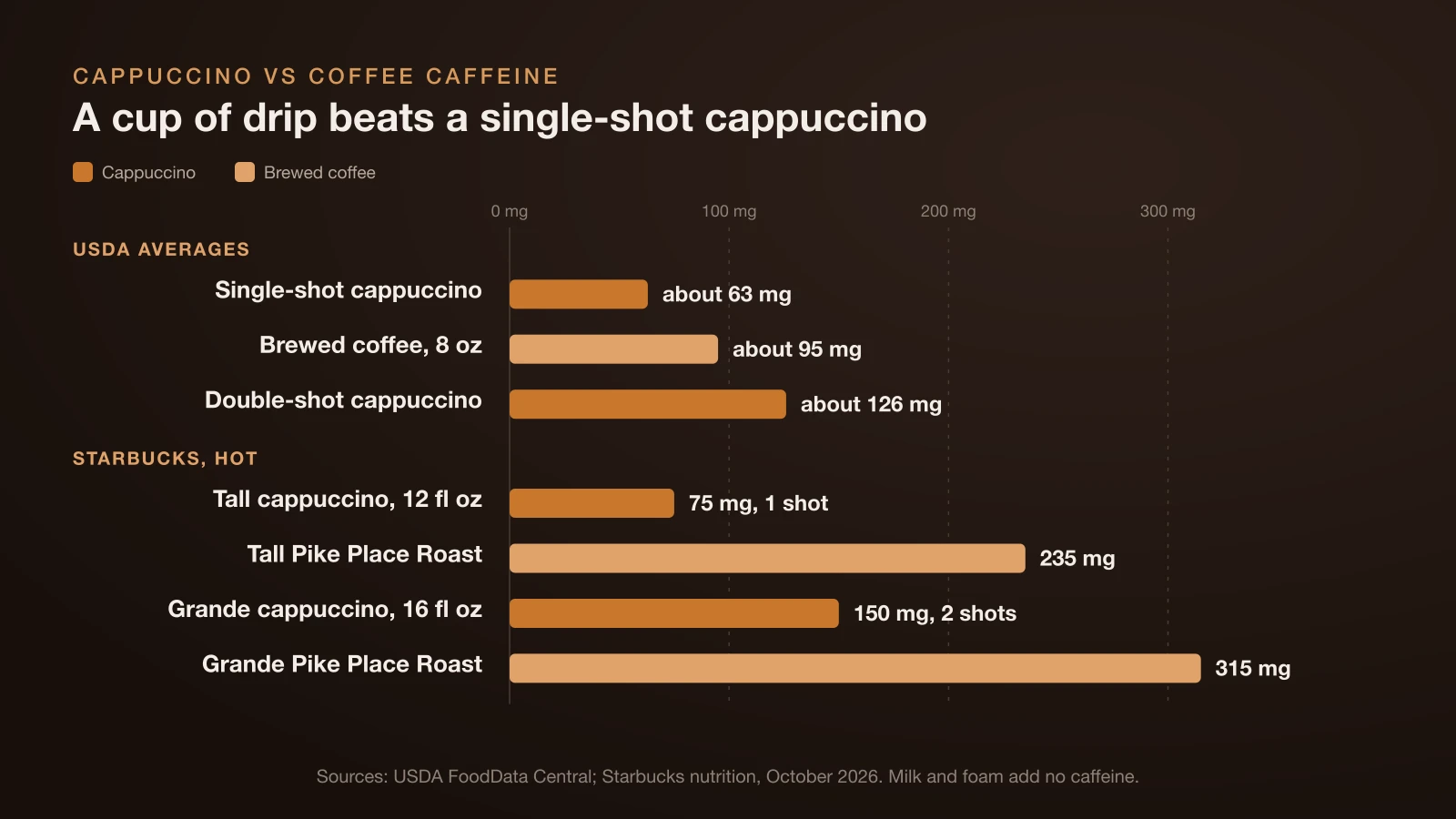
A cup of brewed coffee usually has more caffeine than a single-shot cappuccino. USDA data puts 8 oz of brewed coffee at about 95 mg and a 1 oz espresso shot at about 63 mg, so a traditional single-shot cappuccino has about two-thirds of the caffeine of a small mug.
Shot count changes the answer. A cappuccino made with a double carries about 126 mg, more than 8 oz of drip. Milk and foam add no caffeine at all.
At Starbucks, brewed coffee stays well ahead at every size, because the cappuccino uses only one or two shots:
| Starbucks, hot | Cappuccino | Pike Place Roast (brewed) |
|---|---|---|
| Tall, 12 fl oz | 75 mg (1 shot) | 235 mg |
| Grande, 16 fl oz | 150 mg (2 shots) | 315 mg |
Per ounce, the two drinks are closer than they seem. Using the USDA figures, a 5 oz single-shot cappuccino holds roughly 13 mg per ounce and drip about 12 mg per ounce. For caffeine by every size and milk, see our cappuccino caffeine and calories guide.
Is a cappuccino stronger than coffee?
A cappuccino tastes stronger than coffee even when it holds less caffeine. Espresso pulls a dense mix of oils, dissolved solids and roast flavor into a small volume, and that concentrated base comes through the milk. Drip coffee spreads its flavor through far more water, so each sip is lighter.
Texture adds to the impression. The thick foam and steamed milk give a cappuccino a heavy, velvety body, while black coffee feels thin by comparison. If you want strength in caffeine, drip wins per cup; if you want strength in flavor, the cappuccino does.
Foam level matters too. A “dry” cappuccino has more foam and less liquid milk, so the espresso comes through more sharply; a “wet” one is milkier. Our guide to wet vs dry cappuccino explains how to order each.
Cappuccino vs espresso
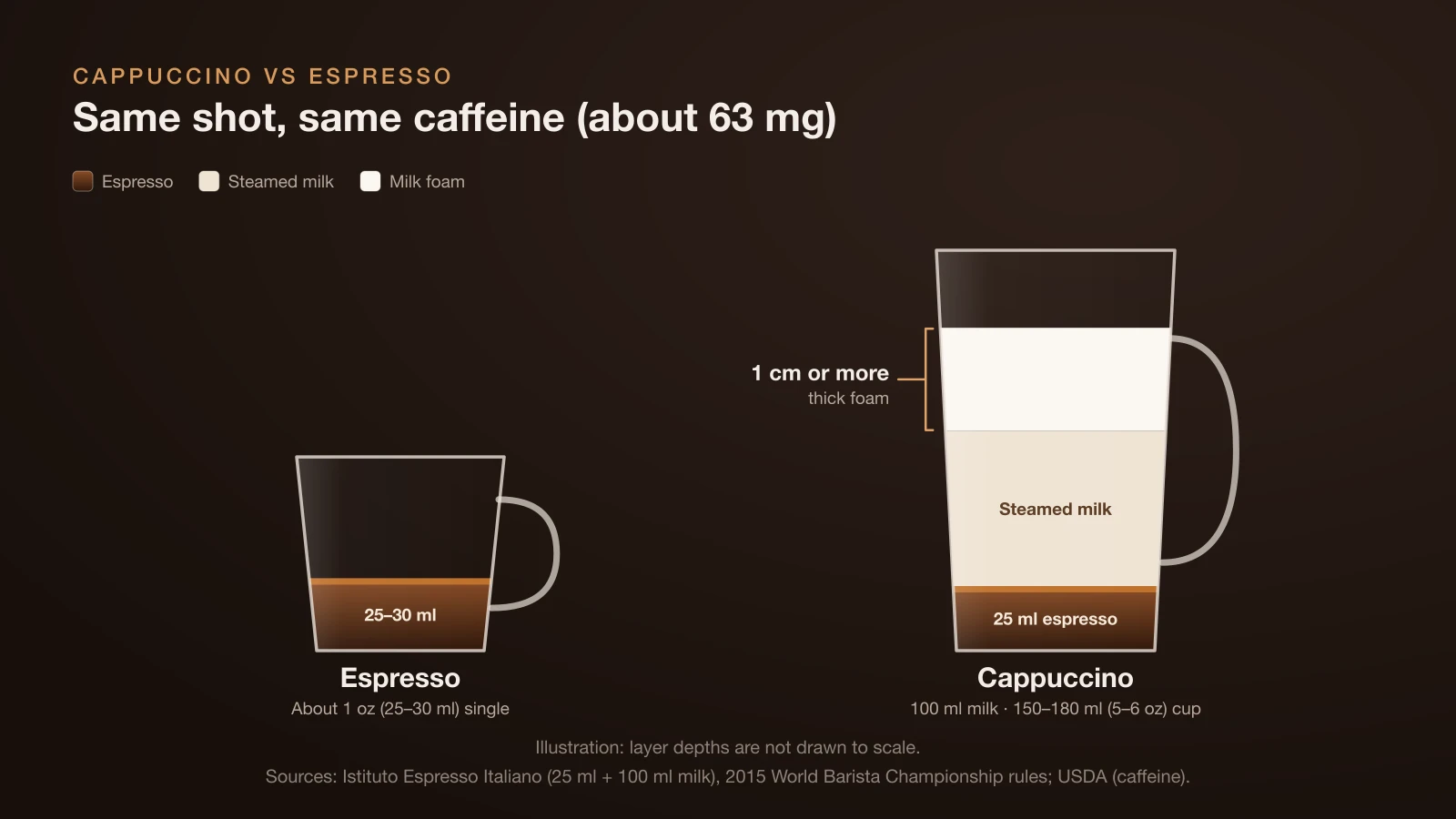
A cappuccino is an espresso with steamed milk and foam added, so the two share the same coffee and the same caffeine. An espresso is the shot on its own, about 25–30 ml in a small cup. A cappuccino adds about 100 ml of steamed milk, much of it foam, to make a 150–180 ml drink.
| Espresso | Cappuccino | |
|---|---|---|
| Ingredients | Espresso only | Espresso, steamed milk, thick foam |
| Volume | About 1 oz (25–30 ml) single | About 5–6 oz (150–180 ml) |
| Caffeine | About 63 mg per single | The same as its shots |
| Calories | About 3 kcal | About 65 kcal with whole milk |
| Taste | Intense, bitter-sweet, syrupy | Milder, creamy, foamy |
| Drinking time | A few sips | A few minutes |
Starbucks shows the same shot logic: its doppio espresso and its Grande cappuccino both use two shots and both list 150 mg. The espresso coffee in each drink is identical; the cappuccino simply dilutes it with milk, which softens bitterness and adds sweetness from lactose.
Choose espresso if you want to taste the coffee at full intensity. Choose a cappuccino if you like that flavor but want it rounder and creamier. Our guide to what espresso is covers the shot itself in more detail.
Cappuccino vs coffee calories
A cappuccino has more calories than black coffee because of its milk. Using USDA values, the 100 ml of whole milk in a traditional cappuccino adds about 63 kcal, so the drink lands near 65 kcal. Eight ounces of black brewed coffee has about 2 kcal.
Larger café cappuccinos carry more milk. Starbucks lists its Grande cappuccino, made with 2% milk, at 140 calories. Skim or plant milk lowers the total, while sugar and syrups raise it. Calories for every milk type are in the cappuccino caffeine and calories guide.
How to order or make a cappuccino
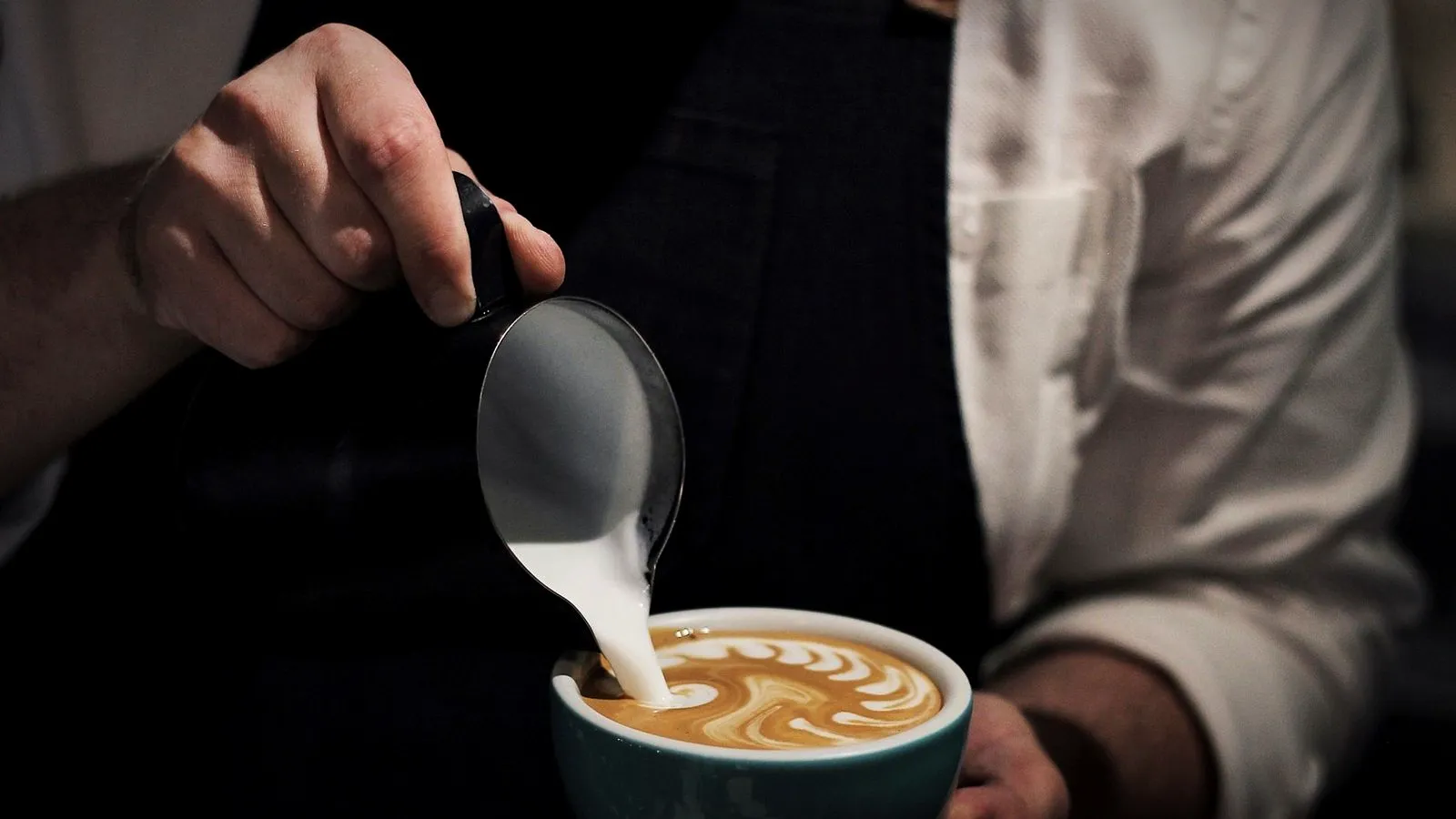
You can order a cappuccino in most cafés by size and milk, or make one at home with an espresso machine and a steam wand. For a traditional Italian-sized drink, look for the smallest cup on the menu.
At home, the method is short:
- Pull a single or double shot into a 5–6 oz cup.
- Steam about 100 ml of cold milk to 60–65 °C (140–150 °F), adding more air than for a latte so a thick foam forms.
- Pour the milk into the espresso, holding back the foam, then spoon the foam on top.
- Dust with cocoa if you like; Breville’s recipe adds chocolate powder.
Our guide on how to steam milk covers the foaming step, and flat white vs cappuccino shows how the foam differs from a flat white. If you prefer coffee without milk but with espresso flavor, an Americano sits between the two; see Americano vs coffee.
Which should you choose?
Choose coffee for more caffeine per cup and almost no calories, and choose a cappuccino for a richer, creamier drink with a more intense coffee flavor. Espresso suits you if you want the coffee at full strength in a few sips.
| Choose a cappuccino if you… | Choose brewed coffee if you… | Choose espresso if you… |
|---|---|---|
| Like milk and foam | Drink coffee black | Want maximum flavor in a small cup |
| Want a small, rich drink | Want a large cup to sip | Like a quick coffee |
| Prefer a mild bitterness | Want more caffeine per cup | Want to taste the beans clearly |
The bottom line
A cappuccino is espresso with steamed milk and thick foam, while coffee is usually brewed drip served black. An 8 oz cup of coffee has more caffeine than a single-shot cappuccino, about 95 mg against 63 mg, but the cappuccino tastes stronger and creamier. Compared with espresso, a cappuccino has the same caffeine per shot and simply adds milk.
Sources
- USDA FoodData Central: Coffee, brewed, espresso, restaurant-prepared (212 mg caffeine and 9 kcal per 100 g), Coffee, brewed, prepared with tap water (40 mg caffeine and 1 kcal per 100 g; 8 fl oz = 237 g) and Milk, whole (61 kcal per 100 g)
- Istituto Espresso Italiano: Certified Italian Espresso and Cappuccino (25 ml espresso; cappuccino with 25 ml espresso + 100 ml steamed milk) and World Coffee Events: 2015 World Barista Championship Rules and Regulations (archived; cappuccino 150–180 ml, at least 1 cm of foam)
- Specialty Coffee Association: Defining the ever-changing espresso (archived; 9 bar, 25–30 seconds, 18 g in, 36 g out) and Brewing best practices (archived; Golden Cup ratio of 55 g/L)
- Starbucks nutrition, as of October 2026: Cappuccino, Pike Place Roast and Espresso (sizes, shots, caffeine, calories)
- Breville: Cappuccino recipe (milk at 140–150 °F or 60–65 °C; chocolate powder)