
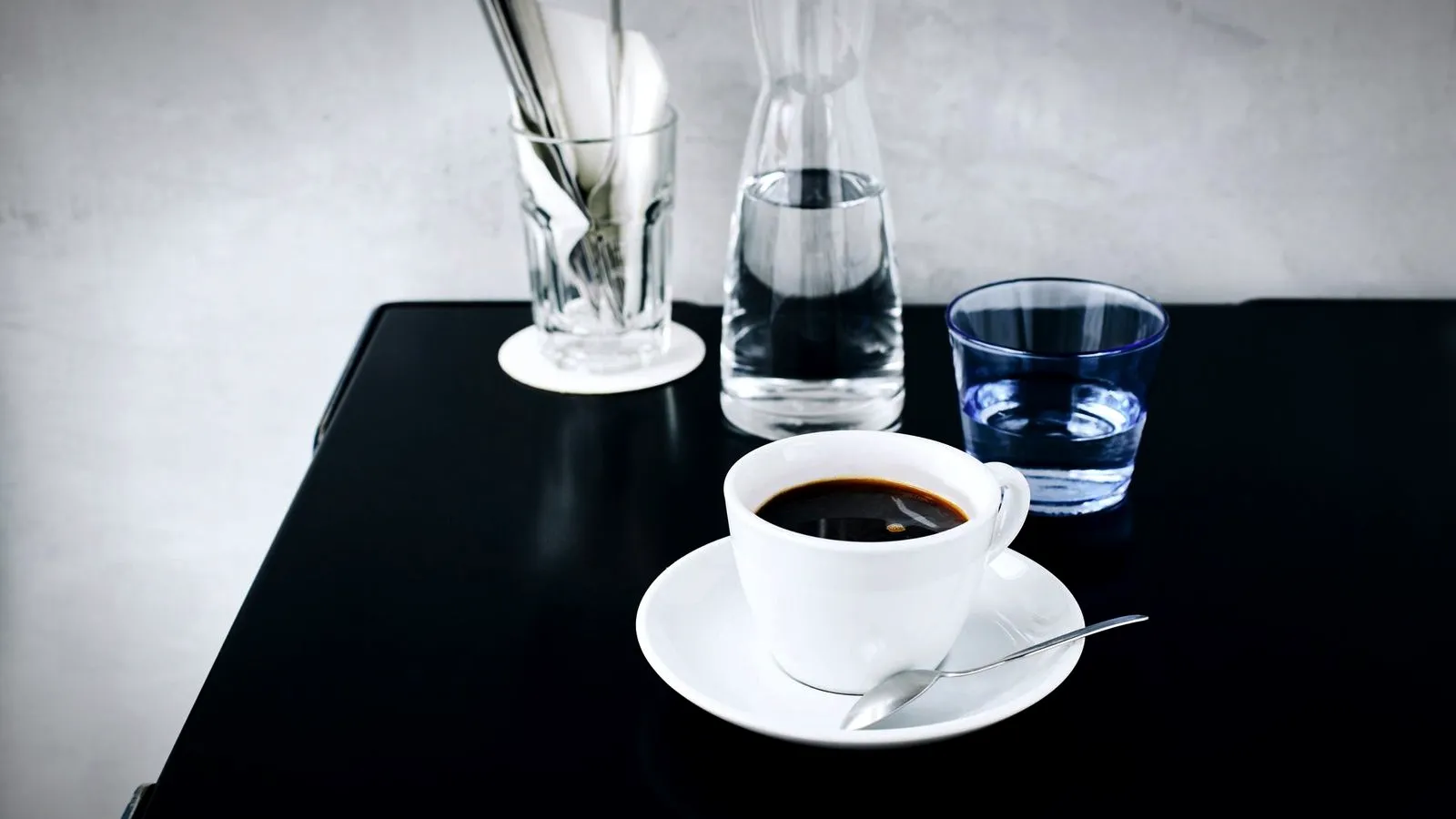
Americano vs coffee comes down to how the coffee is brewed. An Americano is espresso, brewed under about 9 bar of pressure, then topped with hot water. Regular drip coffee lets hot water flow through medium-ground coffee by gravity for several minutes. Both are black and nearly calorie-free; the Americano tastes bolder and carries a light crema.
Caffeine depends on the serving. A two-shot Americano has about 126 mg, more than an 8 oz cup of drip at about 95 mg, but at Starbucks the brewed coffee wins at every size. For the basics of pressure, grind and ratio, see our guide to espresso vs coffee.
The short answer
| Americano | Drip (brewed) coffee | |
|---|---|---|
| How it is made | Espresso shots topped with hot water | Hot water flows through ground coffee in a filter |
| Pressure | About 9 bar for the espresso | None, gravity only |
| Grind | Fine (espresso) | Medium (drip) |
| Brew time | 25–30 seconds per shot | 4–6 minutes of contact |
| Coffee per cup | About 18 g for a double shot | About 13 g for 8 oz at 55 g per liter |
| Caffeine, typical home cup | About 126 mg (double shot) | About 95 mg (8 oz) |
| Caffeine, Starbucks Grande | 225 mg (3 shots) | 315 mg (Pike Place Roast) |
| Calories, black | About 5 kcal (double) | About 2 kcal (8 oz) |
| Crema | A light layer | None |
| Taste | Bold, espresso-like, slightly heavier | Lighter, cleaner, more aromatic |
Home caffeine and calorie figures are averages from USDA data. Starbucks values are its published figures as of October 2026.
What is the difference between an Americano and coffee?
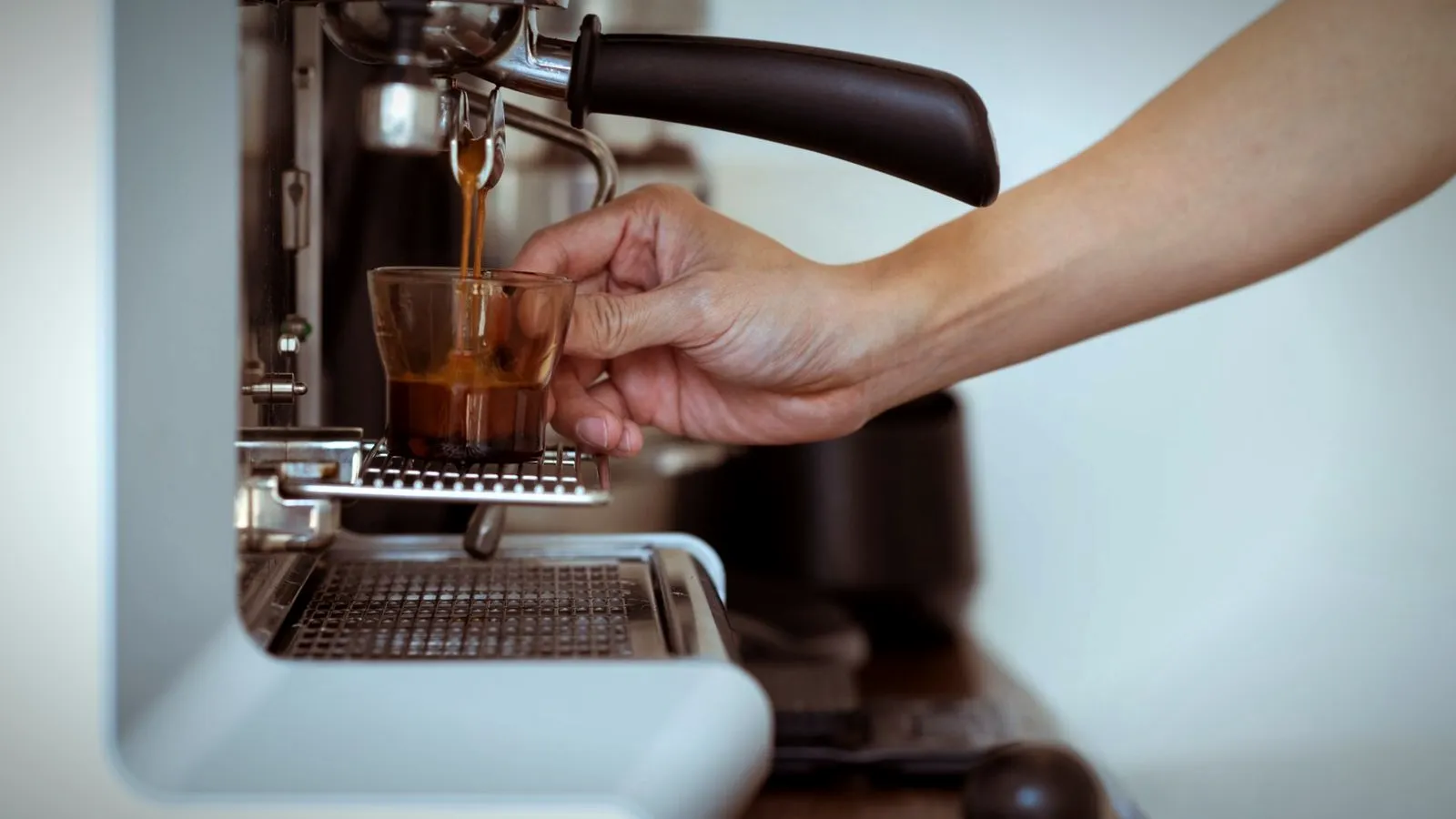
The difference between an Americano and coffee is the brewing step before the cup, not the beans. An Americano starts with espresso: in a Barista Guild of America survey of professional baristas published by the Specialty Coffee Association (SCA), a typical shot used an 18–20 g dose, yielded about 36 g and ran 25–30 seconds at 9 bar. Hot water is added after brewing, which lengthens the drink without extracting more coffee.
Drip coffee is brewed in one step. Water at about 93 °C (200 °F) soaks the grounds and drains through a filter, and the SCA’s guidelines give drip grinds 4–6 minutes of contact with the water. Its Golden Cup Standard recommends 55 g of coffee per liter, so the water does the diluting during brewing rather than afterward.
Starbucks describes its Caffè Americano as espresso shots topped with hot water that create a light layer of crema, and lists only two ingredients: water and brewed espresso. Its Pike Place Roast is simply freshly brewed coffee.
Is an Americano just watered-down espresso?
Yes, in method an Americano is espresso diluted with hot water, and that is the whole recipe. “Watered-down” undersells it, though: the water opens up the shot’s flavor and brings it to a mug-sized drink while keeping espresso’s character. How the drink changes against a straight shot, and how it differs from a long black, is covered in our Americano vs espresso comparison.
Americano vs coffee caffeine
An Americano has about 63 mg of caffeine per espresso shot, while brewed coffee has about 95 mg in an 8 oz cup, so the winner depends on how many shots go in and how big the coffee is. USDA FoodData Central lists espresso at 212 mg of caffeine per 100 g and brewed coffee at 40 mg per 100 g.
| Drink | Caffeine (USDA average) |
|---|---|
| Americano, single shot | about 63 mg |
| Americano, double shot | about 126 mg |
| Americano, triple shot | about 189 mg |
| Brewed coffee, 8 oz | about 95 mg |
| Brewed coffee, 12 oz | about 142 mg |
Real cups vary widely. The FDA puts a 12 oz cup of brewed coffee at 113 to 247 mg, and café espresso differs by dose and bean. The water in an Americano adds no caffeine, so a 6 oz and a 12 oz Americano with the same two shots match. Our guide to caffeine in a shot of espresso explains why shots vary.
Caffè Americano vs brewed coffee at Starbucks
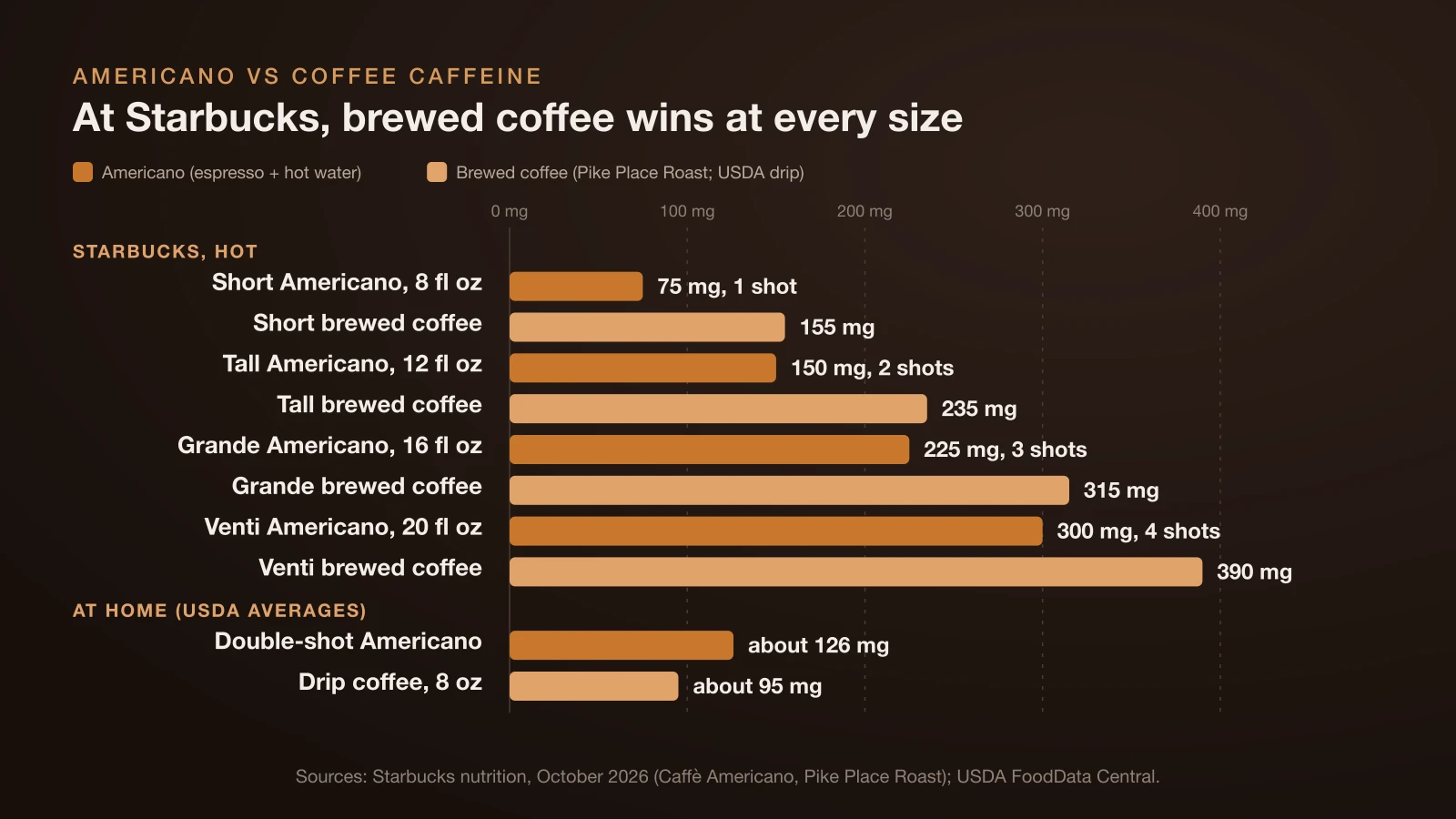
Starbucks lists more caffeine for its brewed coffee than for its Americano at every hot size, even though the Americano gains a shot with each size:
| Starbucks size | Caffè Americano | Pike Place Roast (brewed) |
|---|---|---|
| Short (8 fl oz) | 1 shot, 75 mg | 155 mg |
| Tall (12 fl oz) | 2 shots, 150 mg | 235 mg |
| Grande (16 fl oz) | 3 shots, 225 mg | 315 mg |
| Venti (20 fl oz) | 4 shots, 300 mg | 390 mg |
Per ounce, the Grande Americano works out to about 14 mg and the Grande Pike Place to about 20 mg (our division of Starbucks’ figures). Espresso is far stronger per ounce than drip, at about 63 mg against about 12 mg, but an Americano’s added water spreads that caffeine thin.
Taste, body and crema
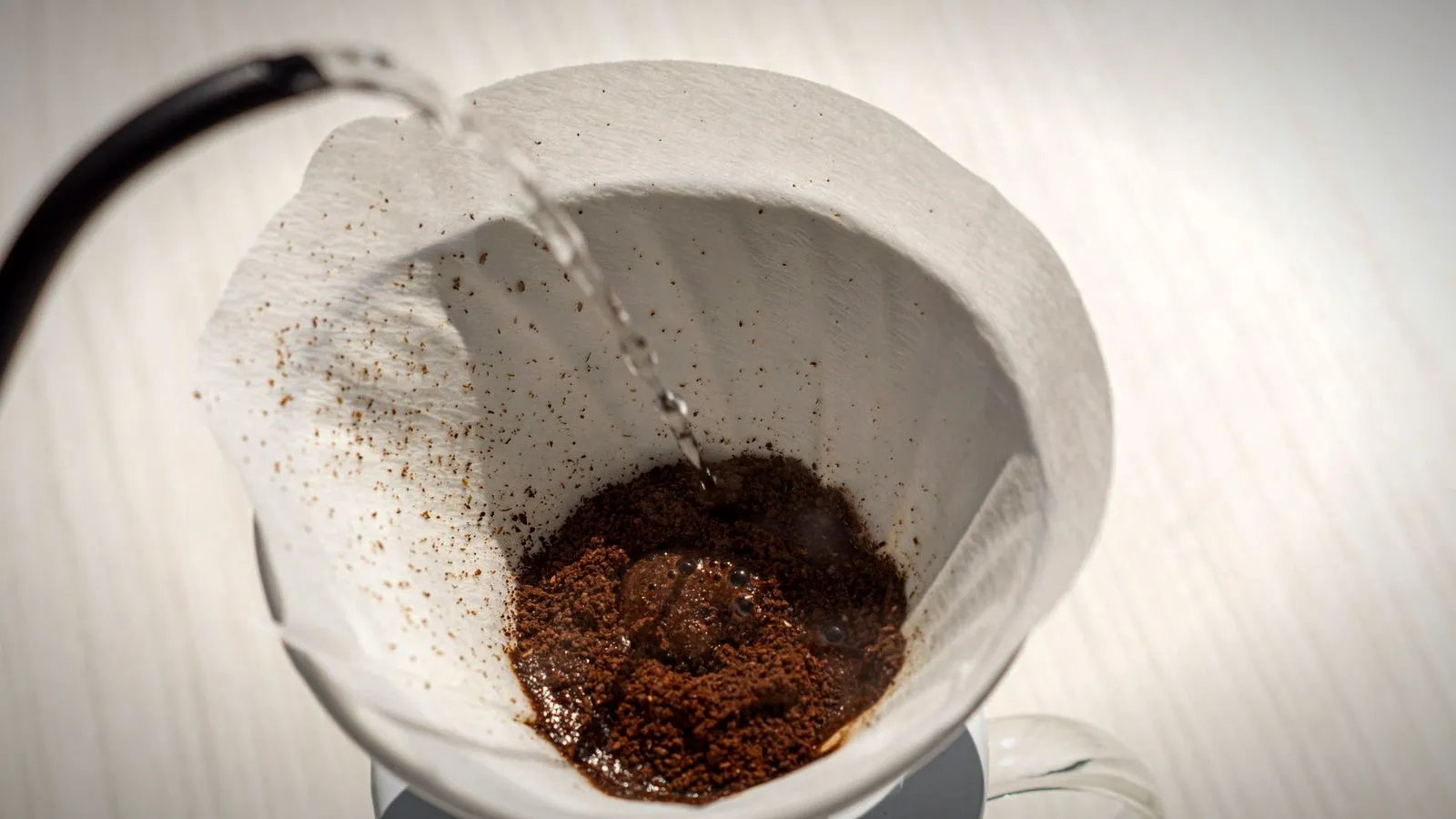
An Americano tastes bolder and slightly heavier than drip coffee, with a light crema on top, while drip coffee tastes cleaner and lighter. Pressure brewing carries coffee oils and very fine particles into the espresso, and the hot water does not remove them, so some of that texture survives in the mug.
A paper filter in a drip brewer holds back much of the oil and sediment. That gives a clearer cup in which delicate flavors, especially in light roasts, are easier to pick out. Many drinkers describe drip as more aromatic and the Americano as rounder and roastier, but it depends heavily on the beans.
Roast matters for both. Medium to medium-dark roasts are a common choice for Americanos because the water dilutes the shot; our guide to the best coffee for espresso explains which roast suits each espresso drink. Drip brewers handle the full range from light to dark.
Americano vs coffee calories
Both drinks are almost calorie-free when served black. USDA lists espresso at 9 kcal per 100 g, about 5 kcal in a double shot, and brewed coffee at 1 kcal per 100 g, about 2 kcal in an 8 oz cup. Water adds nothing.
Starbucks lists its hot Caffè Americano at 5 to 15 kcal from Short to Venti and its Pike Place Roast at 5 kcal in every size. What you add changes the total far more than the brewing method does:
- Milk: a tablespoon (15 g) of whole milk adds about 9 kcal, per USDA.
- Sugar: a teaspoon (4.2 g) of granulated sugar adds about 16 kcal.
- Lots of steamed milk: at that point the drink becomes a latte; our latte vs coffee comparison shows how much milk changes the numbers.
Americano vs black coffee
An Americano is one type of black coffee, not an alternative to it. “Black coffee” simply means coffee without milk or sugar, whatever the brewer. Drip, pour-over, French press and the Americano all qualify when served plain.
The useful comparison is therefore between brewing styles. An Americano is espresso-based and keeps a little crema; drip and pour-over are filtered and clean; a French press is unfiltered and heavier. If you want a drink that sits between an Americano and drip, a red eye adds an espresso shot to brewed coffee; see our guide to coffee with a shot of espresso.
Americano vs American coffee
An Americano and “American coffee” are different drinks, even though the names sound alike. In everyday use, “American coffee” usually means the brewed filter coffee served by the mug in diners and homes, which is the drip side of this comparison. An Americano is an espresso drink with an Italian name, “caffè americano.”
A popular origin story credits US troops stationed in Italy in the 1940s with thinning espresso with hot water so it tasted more like home. It is a widely repeated account, not a documented history. Starbucks calls the drink an Italian interpretation of “American coffee” and a staple at its cafés.
Americano vs coffee over ice
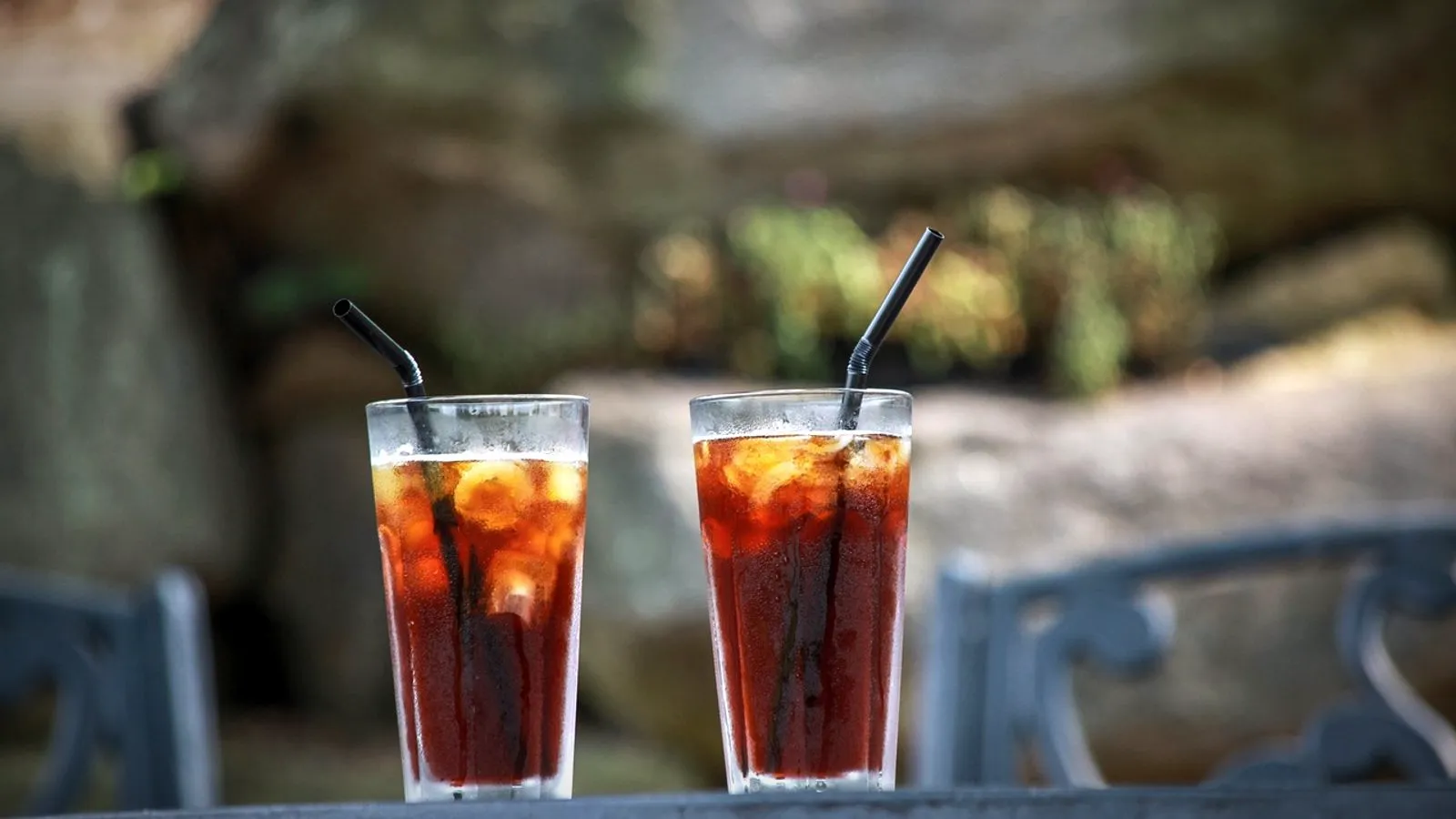
An iced Americano is espresso and cold water over ice, while iced coffee is brewed coffee served chilled over ice. Starbucks describes its Iced Coffee as freshly brewed, served chilled and unsweetened. Caffeine is close between the two, with the iced Americano slightly ahead:
| Starbucks iced size | Iced Caffè Americano | Iced Coffee |
|---|---|---|
| Tall (12 fl oz) | 150 mg, 10 kcal | 135 mg, 0 kcal |
| Grande (16 fl oz) | 225 mg, 15 kcal | 185 mg, 5 kcal |
| Venti (24 fl oz) | 300 mg, 15 kcal | 265 mg, 5 kcal |
The iced Americano tastes sharper and more espresso-forward; iced coffee is smoother and lighter. Our iced Americano recipe covers ratios and why the shot goes in last.
Americano vs coffee at home: time, effort and coffee used
Drip coffee is the easier choice at home, while an Americano needs espresso gear and is made one cup at a time. A drip brewer makes several cups in one batch with little skill. An Americano needs an espresso machine and a capable grinder, then a 25–30 second shot per cup topped with hot water. Starbucks’ home recipe pours a double shot over 1.25 cups (10 oz, 300 ml) of hot water; use less for a bolder cup.
An Americano also uses more ground coffee per cup. A double shot takes about 18 g, while 8 oz (237 ml) of drip at the SCA’s 55 g per liter takes about 13 g, so the Americano uses roughly 40% more coffee (our calculation). A bag of beans therefore makes fewer Americanos than drip cups.
If you want the full method for the shot itself, start with how to make espresso. Milk drinkers comparing other espresso drinks with brewed coffee can read cappuccino vs coffee.
Which should you choose?
Choose by the taste you like, the caffeine you want and the equipment you have:
| Choose an Americano if you… | Choose drip coffee if you… |
|---|---|
| Like espresso’s boldness in a mug-sized drink | Prefer a lighter, cleaner cup |
| Own an espresso machine and grinder | Brew for several people at once |
| Want to set the caffeine exactly by shot count | Want the most caffeine per cup at a chain |
| Enjoy a little crema on top | Like pour-over style clarity in light roasts |
The bottom line
An Americano is espresso stretched with hot water; drip coffee is brewed in one step by gravity through a filter. The Americano tastes bolder with a light crema, while drip is cleaner and, at Starbucks, has more caffeine at every hot size. At home, a two-shot Americano (about 126 mg) beats an 8 oz cup of drip (about 95 mg), and both are nearly calorie-free when black.
Sources
- USDA FoodData Central: Espresso, restaurant-prepared (212 mg caffeine and 9 kcal per 100 g; 1 fl oz = 29.6 g), Coffee, brewed, prepared with tap water (40 mg caffeine and 1 kcal per 100 g; 8 fl oz = 237 g), Milk, whole (61 kcal per 100 g; 1 tbsp = 15 g) and Sugars, granulated (387 kcal per 100 g; 1 tsp = 4.2 g)
- Specialty Coffee Association: Defining the ever-changing espresso (archived; barista survey: 18–20 g dose, about 36 g out, 25–30 seconds, 9 bar) and Brewing best practices (archived; 55 g per liter, 200 °F ± 5 °F, 4–6 minutes for a drip grind)
- Starbucks nutrition, as of October 2026 (ingredients, shots, caffeine, calories): Caffè Americano, Iced Caffè Americano, Pike Place Roast and Iced Coffee; Starbucks at Home Caffè Americano recipe (2 shots, 1.25 cups hot water; “an Italian interpretation of ‘American coffee’”, a staple at its cafés)
- U.S. Food and Drug Administration: Spilling the Beans: How Much Caffeine Is Too Much? (113–247 mg in 12 oz of brewed coffee)