
Moka pot vs espresso comes down to pressure. A moka pot uses steam to push water through coffee at about 1.5 bar, according to Bialetti, and makes a strong, full-bodied coffee with little crema. An espresso machine forces water through a fine, packed puck at about 9 bar, which produces true espresso with a thick crema.
Both make excellent strong coffee for straight sipping or milk drinks, and they cost and behave very differently. If you are new to the stovetop pot, our guide on how to use a moka pot covers the steps; this comparison covers what each one makes and which suits you.
The short answer
| Moka pot | Espresso machine | |
|---|---|---|
| Brewing pressure | About 1.5 bar (steam) | About 9 bar (pump or lever) |
| True espresso? | No | Yes |
| Crema | Little or none | Thick and lasting |
| Grind | Medium-fine, coarser than espresso | Fine |
| Typical serving | A 3-cup pot makes about 4.4 oz | 1–2 oz per shot |
| Milk | Needs a separate frother | Steam wand on most models |
| Cost class | Low | Moderate to high, plus a grinder |
| Skill needed | Low | Moderate |
Does a moka pot make espresso?
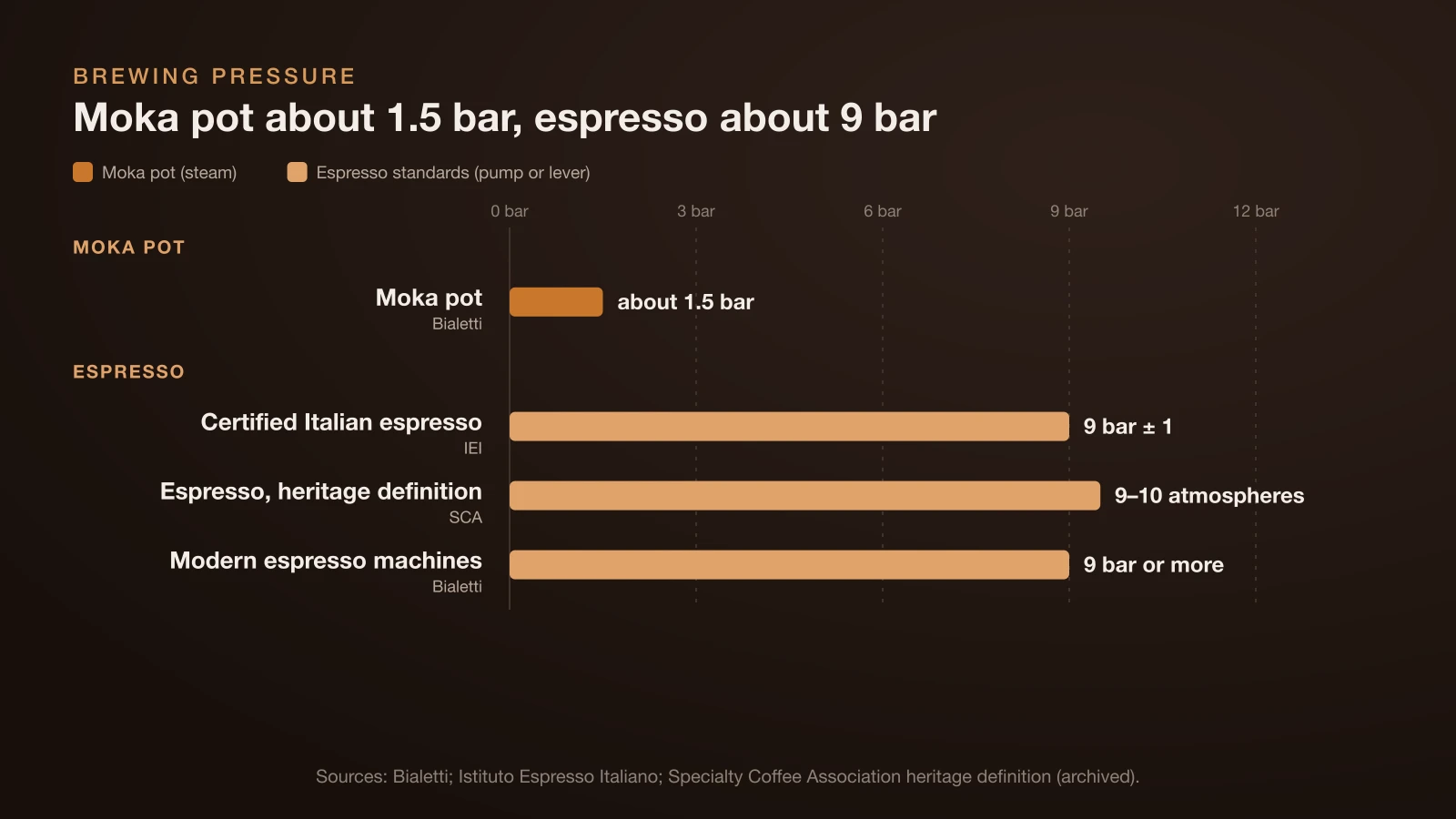
No, a moka pot does not make espresso by the standard definitions, even though it is often sold as a “stovetop espresso maker.” The Specialty Coffee Association (SCA) heritage definition describes espresso as water forced through the coffee at 9 to 10 atmospheres in 20 to 30 seconds. The Istituto Espresso Italiano (IEI) sets 9 bar, give or take 1, for its certified Italian espresso.
Bialetti, the company that introduced the Moka Express in 1933, puts the moka pot at about 1.5 bar and notes that modern espresso machines work at 9 bar or more. That gap is why moka coffee tastes rich and concentrated but lacks espresso’s syrupy body and crema.
So the honest label is “espresso-style” or simply moka coffee. For what makes a shot an espresso in the first place, see our explainer on what espresso is.
Moka pot vs espresso machine: side by side
A moka pot and an espresso machine differ in almost every brewing variable, from pressure to grind to how you control the result. The table sets out the specifications that the makers and standards bodies publish.
| Variable | Moka pot (Bialetti) | Espresso machine (SCA and IEI standards) |
|---|---|---|
| Pressure | About 1.5 bar, from steam | 9–10 atmospheres (SCA); 9 bar ± 1 (IEI) |
| Water | Fill the base with room-temperature water to the valve | 90–96 °C (195–205 °F) water at the coffee (SCA) |
| Dose | Basket filled full and level, not tamped | 7–9 g single, 14–18 g double (SCA); modern doubles often 18 g |
| Grind | Coarser than espresso | Fine enough for a 20–30 second brew |
| Output | About 2 oz per moka “cup” | 25–35 ml (0.85–1.2 oz) per single (SCA) |
| Heat source | Stove: gas, electric, induction with the right pot | Built-in boiler or thermoblock |
| Control | Heat level and grind only | Dose, grind, yield, time and often temperature |
The moka pot’s ratio is fixed by its design: a full basket and water up to the valve. An espresso machine lets you set the ratio yourself, with about 18 g of coffee in and 36 g of espresso out in 25–30 seconds as the common starting recipe for a double.
How each one brews coffee
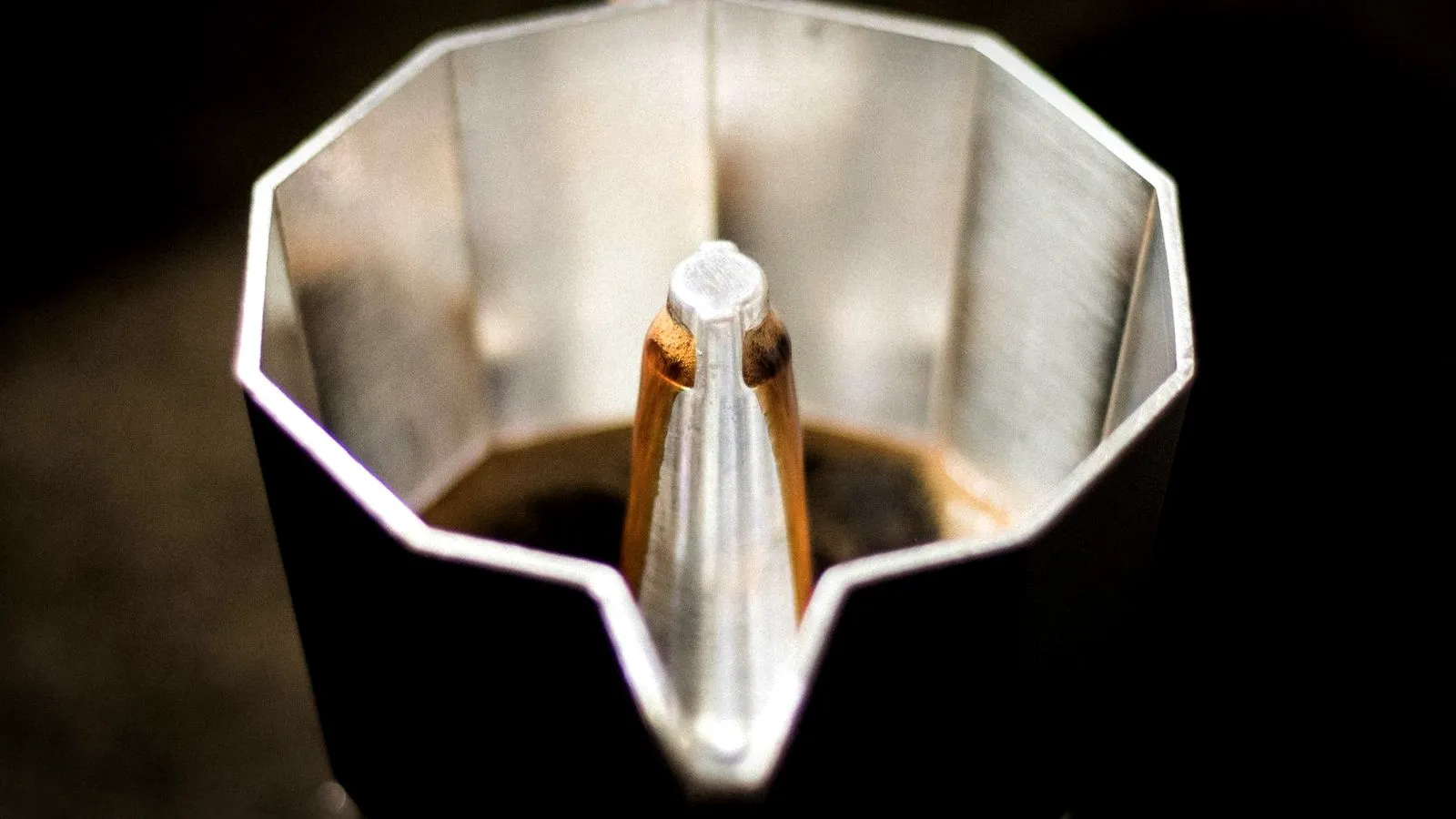
A moka pot and an espresso machine both push water up or through a bed of coffee, but they build their pressure in completely different ways.
How a moka pot works
The moka pot heats water in a sealed lower chamber until steam pressure pushes it up through the coffee in the funnel and into the top chamber. Bialetti describes the brew as finished when the water in the bottom is almost gone and the pot starts to sputter.
Bialetti recommends low heat and room-temperature water, and never pressing the coffee down. The grind should be coarser than for an espresso machine; packed or powder-fine coffee can slow the flow and taste bitter.
How an espresso machine works
An espresso machine uses an electric pump, or a lever on manual models, to force hot water through a finely ground, tamped puck held in a portafilter. The SCA heritage definition says the flow should look like warm honey and the drink should finish with a thick, dark golden crema.
Because the pressure is steady and high, the grind becomes the main adjustment. Grind finer to slow the shot, coarser to speed it up, and taste the difference within seconds.
Moka pot vs espresso: taste, strength and crema
Moka pot coffee is bold, heavy and slightly roasty, while espresso is denser, more syrupy and layered with crema. The difference comes from pressure: espresso’s 9 bar pushes more oils and very fine particles into the cup, which gives it a thicker texture.
- Strength: both are concentrated. Moka coffee sits between drip coffee and espresso, because each gram of coffee meets more water than in a shot.
- Body: espresso feels creamier and coats the tongue; moka coffee is full but thinner.
- Crema: espresso has a lasting foam layer; moka coffee may show a light foam that fades fast.
- Flavor risks: a moka pot tastes burnt if it boils hard or brews past the sputter; espresso tastes sour or bitter if the grind or time is off.
Caffeine depends mostly on how much coffee you use. A 1 oz (30 ml) single espresso has about 63 mg of caffeine and a 2 oz double about 126 mg, based on USDA data. USDA has no separate entry for moka coffee, so there is no official per-ounce figure to compare.
Moka pot vs percolator
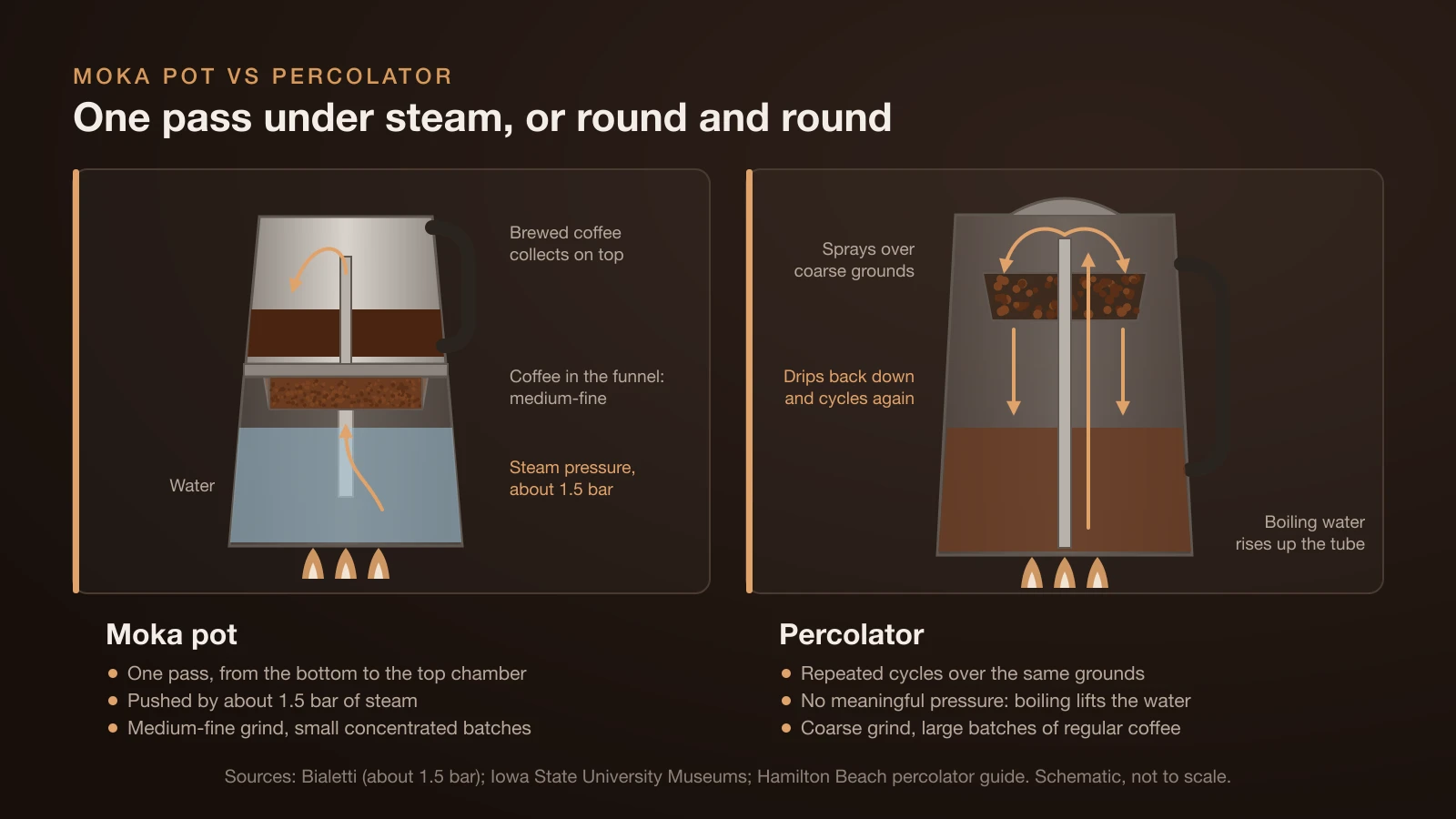
A moka pot and a percolator look similar on the stove, but they brew in opposite ways. The moka pot sends water through the coffee once and collects the finished brew in a separate top chamber. A percolator keeps cycling boiling water up a tube and dripping it back through the grounds, as Iowa State University’s museum collection describes it.
| Moka pot | Percolator | |
|---|---|---|
| Water path | One pass, bottom to top chamber | Repeated cycles over the same grounds |
| Pressure | About 1.5 bar of steam | No meaningful pressure; boiling lifts water up the tube |
| Grind | Medium-fine | Coarse (finer coffee can overflow the basket, per Hamilton Beach) |
| Batch size | Small: about 2 oz per “cup” | Large: Hamilton Beach’s chart runs up to 12 cups |
| Taste | Concentrated and full-bodied | Strong, re-brewed over the same grounds |
The percolator is the older design, with early versions in Europe. The same Iowa State record dates a US stovetop percolator patent to 1865 and the familiar tube-and-basket design to 1889. Choose a percolator for large batches, and a moka pot for small, strong cups.
Moka pot vs French press (cafetière)
A moka pot makes a small, concentrated brew under steam pressure, while a French press, called a cafetière in the UK, makes a larger, lighter cup by steeping. The National Coffee Association (NCA) gives the French press basics: coarse coffee, like rock salt, steeps in water at about 93 °C (199 °F) for about 4 minutes before you press the plunger.
- Choose a moka pot for an espresso-style base for milk drinks or a short, strong cup.
- Choose a French press for mugs of full-bodied black coffee and for brewing with no stove.
The NCA suggests 1 g of coffee to 10–16 g of water for a French press. Neither needs paper filters.
Aluminum vs stainless steel moka pot
The main differences between an aluminum and a stainless steel moka pot are stove compatibility and care. Bialetti’s classic Moka Express is aluminum; it works on gas and electric hobs, and on induction only with Bialetti’s adapter plate. Bialetti’s Venus is 18/10 stainless steel and works on gas, electric and induction hobs, except the 2-cup Venus.
| Aluminum (Moka Express) | Stainless steel (Venus) | |
|---|---|---|
| Induction | Only with an adapter plate | Yes, except the 2-cup size |
| Dishwasher | No | No |
| Cleaning | Rinse with water only | Rinse with water only |
| Looks | Classic eight-sided pot | Smooth, polished steel |
Bialetti advises against detergents and the dishwasher for both. If you cook on induction, the steel pot is the simpler choice; otherwise the decision is mostly about looks and feel. The coffee itself depends far more on grind, heat and freshness, as our guide to the best coffee for a moka pot explains.
Which should you choose: moka pot or espresso machine?
Choose by the drinks you want and how much effort you will put in. A moka pot is the low-cost, low-skill route to strong coffee, while an espresso machine is the only way to true espresso and silky steamed milk.
- Mostly lattes or cappuccinos on a budget: a moka pot plus a milk frother gets you close.
- Straight shots with crema: you need an espresso machine or a manual lever press that reaches about 9 bar.
- Coffee on the move or without power: a moka pot works on any stove, and our guide to portable espresso makers covers hand-pump options.
- You enjoy tinkering: an espresso machine rewards dialing in, but it needs a capable burr grinder; see burr vs blade grinders for why.
Still unsure about the wider category? Our comparison of espresso maker vs espresso machine covers the AeroPress and other low-pressure brewers too, and how to make espresso without a machine shows the stovetop and press methods step by step.
The bottom line
A moka pot brews strong, full-bodied coffee at about 1.5 bar, cheaply and simply, but it does not make espresso. An espresso machine brews at about 9 bar, adds crema and usually steams milk, at a higher cost and with more to learn. Pick the moka pot for easy strong coffee and the machine for true shots.
Sources
- Bialetti: How the Moka works (about 1.5 bar vs at least 9 bar, coarser grind, room-temperature water, low heat), Moka Express (aluminum, gas and electric hobs, induction plate, since 1933), Venus (18/10 stainless steel, induction except 2-cup) and Moka Pot 3 Espresso Cup (yields by size, about 2 oz per cup)
- Specialty Coffee Association: Defining the ever-changing espresso (archived; heritage definition: 25–35 ml, 7–9 g single, 195–205 °F, 9–10 atmospheres, 20–30 seconds, crema; barista survey: 18 g in, 36 g out, 25–30 seconds) and Istituto Espresso Italiano: technical brochure (archived; 9 bar ± 1)
- USDA FoodData Central: Coffee, brewed, espresso, restaurant-prepared (212 mg caffeine per 100 g; 1 fl oz = 29.6 g)
- Percolators: Iowa State University Museums, Coffee percolator (cycling boiling water up a tube, 1865 and 1889) and Hamilton Beach, percolator use and care guide (coarse grind, overflow, 12-cup chart)
- National Coffee Association: French press coffee (coarse grind, about 93 °C, about 4 minutes, 1:10–1:16)