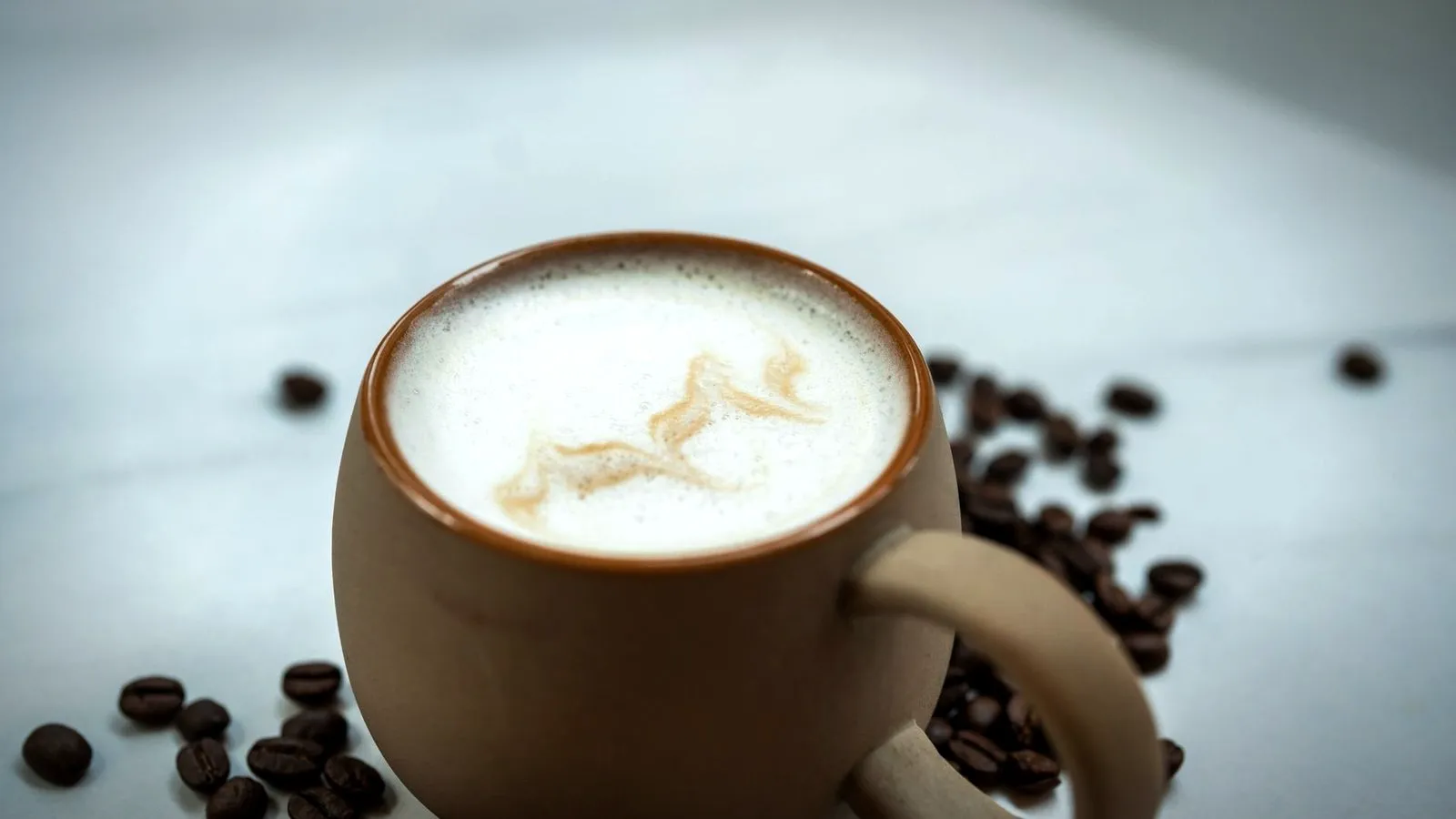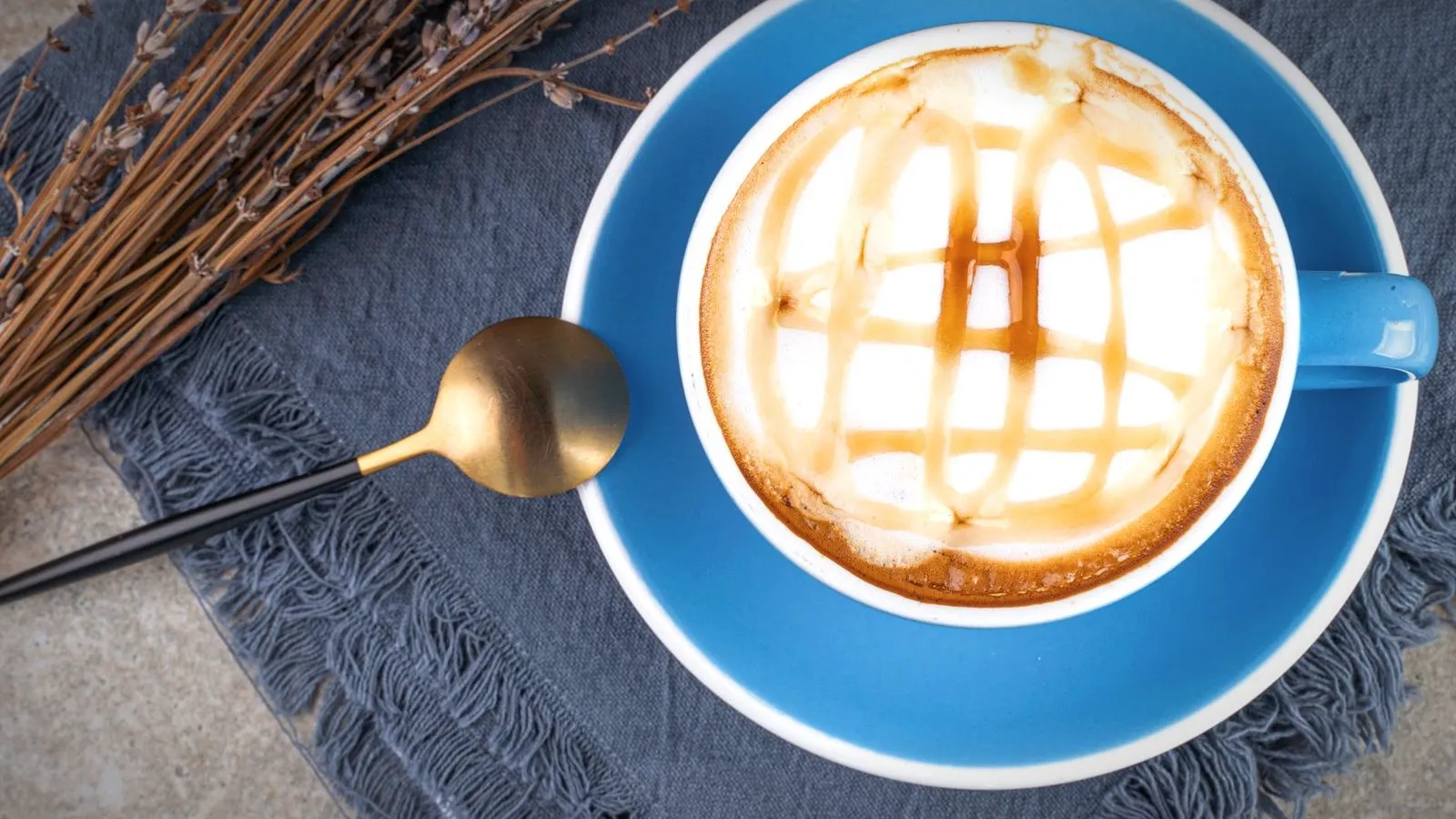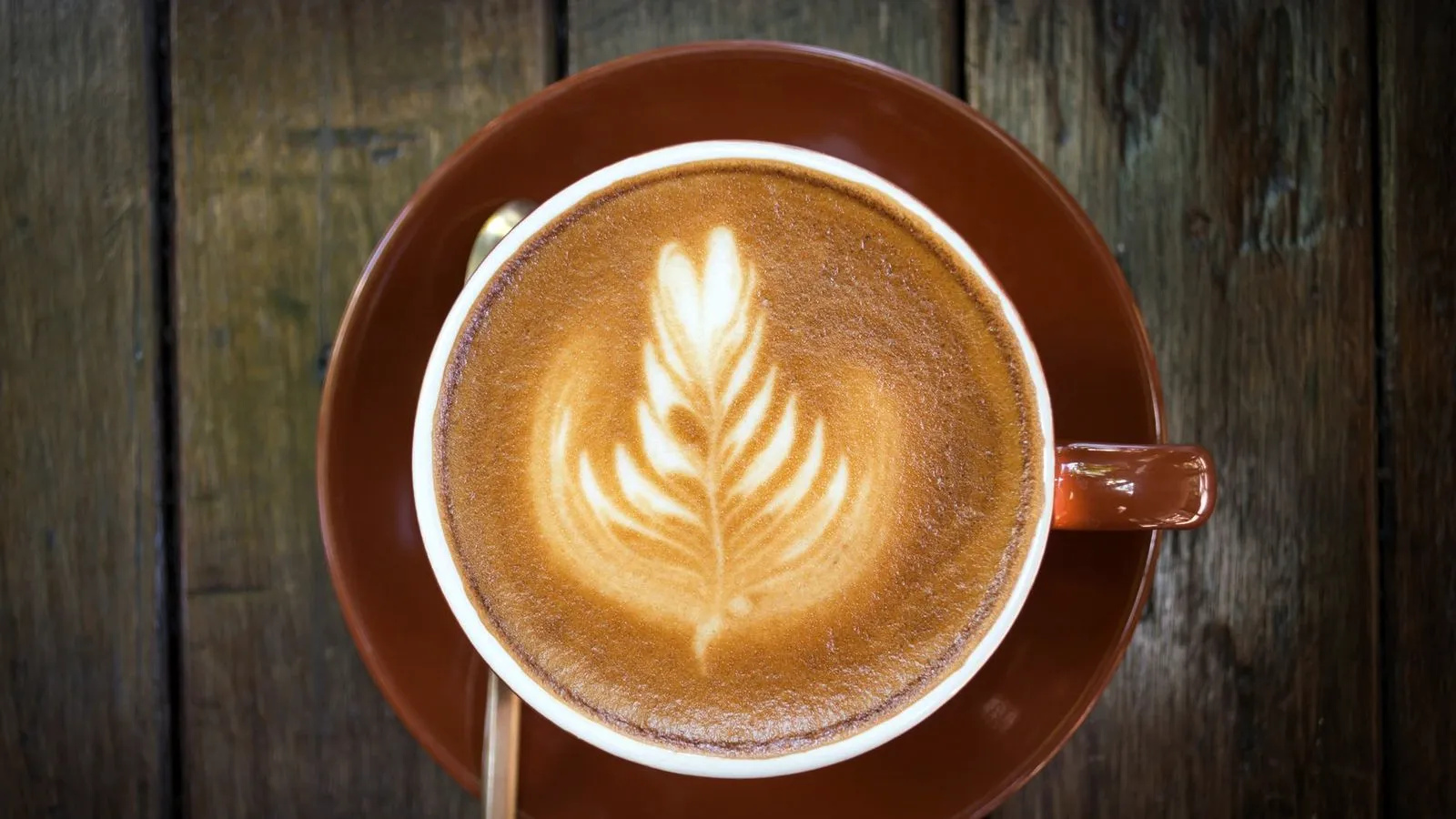
An oat milk latte is a regular latte made with steamed oat milk instead of dairy: one or two shots of espresso under about 6–8 oz (180–240 ml) of oat milk and a thin layer of foam. Barista-style oat milk steams best. A 12 oz (350 ml) cup comes to roughly 125–145 calories, depending on the carton.
The method is the same as for a dairy latte, with a few changes for oat milk’s lower protein. If you’ve never made the base drink, our step-by-step guide on how to make a latte covers pulling the shot and pouring. Here we cover what changes with oat milk: the carton, the steaming, the calories and café versions.
The short answer
| Oat milk latte at home | |
|---|---|
| Espresso | Double shot, about 2 oz (60 ml): 18 g of coffee in, 36 g out, in 25–30 seconds |
| Oat milk | 6–8 oz (180–240 ml) of cold barista oat milk |
| Ratio | About 1 part espresso to 3–5 parts milk |
| Steaming | To 60–65 °C (140–150 °F), stretching a few seconds longer than dairy |
| Calories, 12 oz | About 145 kcal with Oatly Barista Edition, about 155 kcal with whole milk (estimates) |
| Caffeine | About 126 mg from a double shot; the oat milk adds none |
These are home starting points, not fixed rules. Adjust the milk to your cup and taste.
What is an oat milk latte?
An oat milk latte, often written “oatmilk latte” on café menus, is espresso plus steamed oat milk with a little microfoam on top. Nothing else changes: same shots, same cup sizes, same pour. Oat milk itself is made from oats and water, and many cartons add oil, minerals and vitamins.
People choose it to avoid dairy or for its mild, cereal-like sweetness, which suits espresso. Compared with a whole-milk latte, it has much less protein and, with a barista carton, similar calories.
Barista vs regular oat milk: why barista versions foam better
Barista oat milk is formulated for coffee, usually with more fat and an acidity regulator that keeps it from separating in hot drinks.
Milk foam holds together when something coats the air bubbles and keeps them from bursting. In dairy, milk proteins do most of that work. Oat milk has far less protein, about 3 g per cup (240 ml) in Oatly’s cartons against about 7.7 g in whole milk, so makers adjust the recipe for coffee.
Barista cartons differ from regular ones in ways you can see on the label:
- More fat. Oatly says its Barista Edition has 3% fat and is formulated for hot drinks like coffee, against 2% for its Original. Per cup, that is 7 g of fat versus 5 g.
- An acidity regulator. Oatly adds dipotassium phosphate, which it says keeps the oat milk from separating when it hits hot drinks. Califia Farms’ Oat Barista Blend lists the same ingredient, alongside sunflower oil.
In Oatly’s US range the Original also contains dipotassium phosphate, so extra fat and the barista formulation are the main differences there. Other brands’ regular cartons may skip the regulator.
Texture matters to drinkers too. In a 2024 consumer study of 18 plant milks, a smooth mouthfeel was key to barista-style oat, almond and coconut milks being well liked. A 2025 review notes that matching dairy foam in hot coffee is still a challenge for plant milks, so expect oat foam to behave a little differently from whole-milk foam.
How to make an oat milk latte with an espresso machine
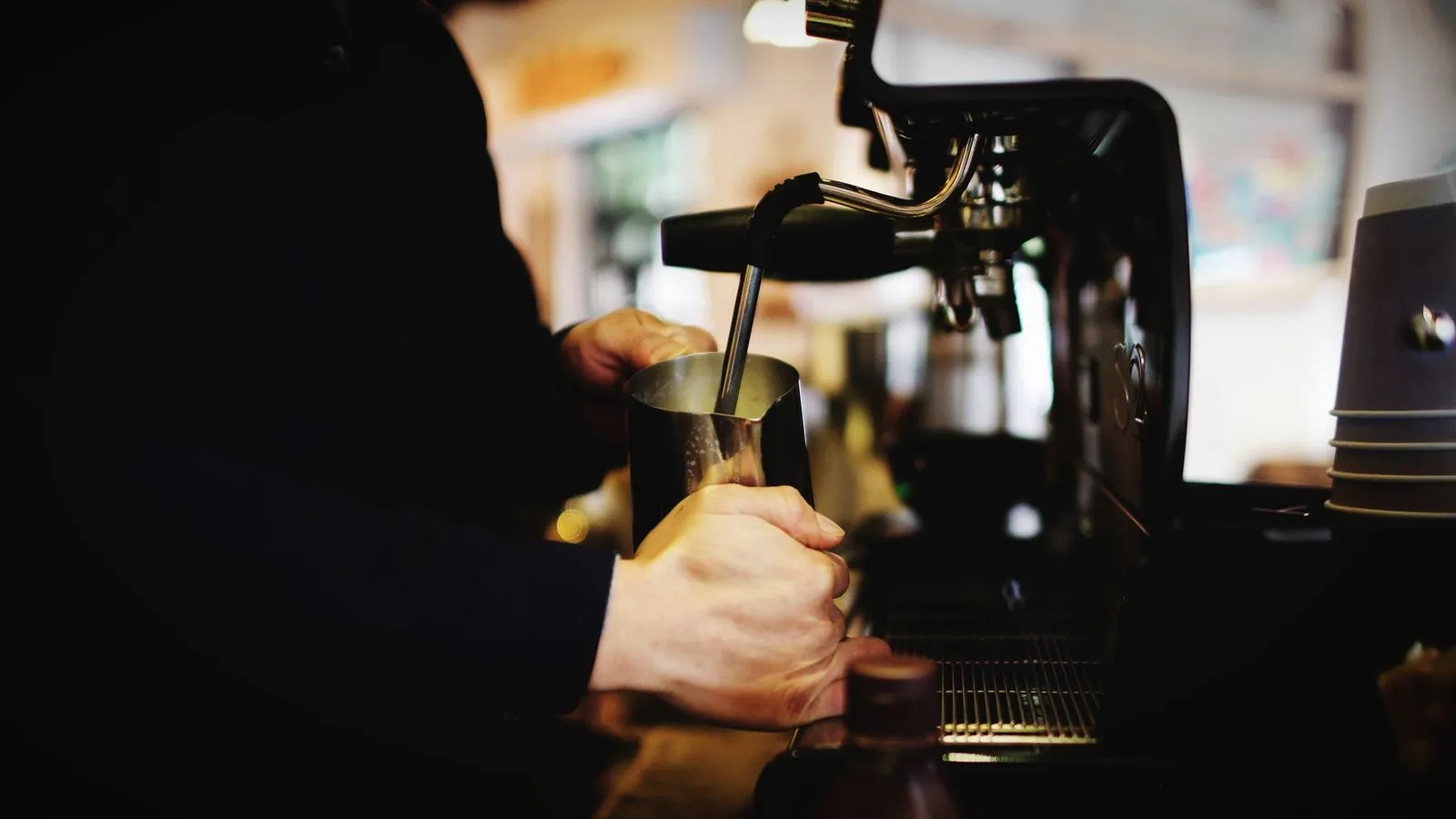
To make an oat milk latte with an espresso machine, pull a double shot, steam cold barista oat milk to 60–65 °C with a slightly longer stretch than dairy, and pour it over the espresso.
- Pull a double shot into a warm 10–12 oz (300–350 ml) cup: about 18 g of finely ground coffee in, 36 g of espresso out, in 25–30 seconds.
- Shake the carton, then pour 6–8 oz of cold oat milk into the pitcher, filling it no more than about a third.
- Purge the steam wand and place the tip just under the surface of the milk.
- Stretch a little longer than with dairy. Let air in with a soft tearing sound for a few extra seconds, until the volume visibly grows.
- Sink the tip slightly and angle the pitcher so the milk spins in a whirlpool. This breaks large bubbles into microfoam.
- Stop at 60–65 °C (140–150 °F), when the pitcher is just too hot to hold comfortably.
- Tap, swirl and pour straight away into the center of the espresso, finishing with a thin layer of foam.
What temperature to steam oat milk
Breville’s steaming guide does not give a separate number for oat milk. It says oat milk behaves much like almond milk but tolerates more heat, and that it needs a few more seconds of stretching than cow’s milk. For comparison, Breville suggests about 55 °C (131 °F) for almond milk and 60–63 °C (140–145 °F) for dairy.
In practice, the usual latte target of 60–65 °C works for barista oat milk. If the foam turns thin or bubbly near the top of that range, stop closer to 60 °C next time.
How to make an oat milk latte without a machine
No steam wand? You can still foam barista oat milk well enough for a latte-style drink:
- Make strong coffee. A moka pot gives the closest result; our guide on how to use a moka pot covers the method. Brewed coffee works if you make it about twice as strong as usual.
- Heat the oat milk on the stove or in the microwave until hot, about 60–65 °C, without boiling.
- Froth it with a handheld frother, by pumping a French press plunger until the milk looks thick and foamy, or by shaking cold milk hard in a lidded jar before microwaving it uncovered.
- Rest, tap and pour. Let the milk settle briefly so large bubbles rise, pour it over the coffee, then spoon the foam on top.
Hand frothing traps larger bubbles than a steam wand, so the foam is lighter and less glossy than café microfoam. A barista carton makes the biggest difference here.
Oat milk latte ratio and cup size
Oat milk lattes use the same proportions as dairy ones: about one part espresso to three to five parts milk. Our latte milk ratio guide breaks this down by cup size and shot count. The short version:
| Cup size | Espresso | Steamed oat milk |
|---|---|---|
| 8 oz (240 ml) | 1–2 oz (single or double) | 5–6 oz |
| 12 oz (350 ml) | 2 oz (double) | 8–9 oz |
| 16 oz (475 ml) | 2–3 oz | 12–13 oz |
These are typical café ranges, not a standard. Oat milk tastes sweet and slightly cereal-like, so a medium-dark espresso with chocolate or nutty notes keeps the coffee from getting lost; our guide to espresso roast explains what the roast labels mean. If you prefer less milk and more foam, oat milk also works in a cappuccino, and wet vs dry cappuccino explains the foam levels.
Oat milk latte calories and nutrition
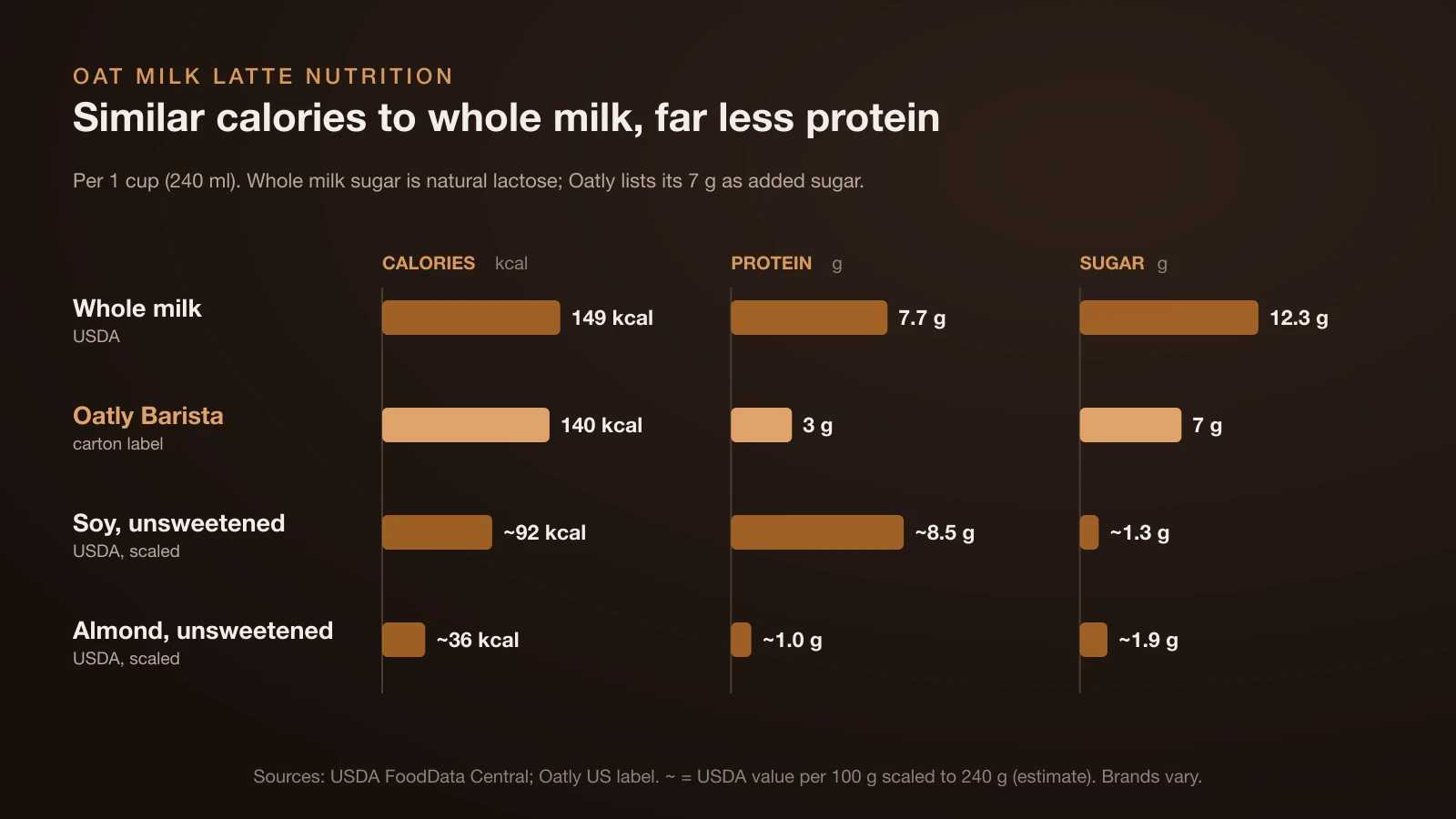
Almost all the calories in an oat milk latte come from the milk. A double shot adds only about 5 kcal, since USDA lists espresso at 9 kcal per 100 g. Here is how one cup (240 ml) of oat milk compares with dairy and other unsweetened plant milks:
| Milk, 1 cup (240 ml) | Calories | Protein | Sugar | Fat |
|---|---|---|---|---|
| Whole milk (USDA, 244 g) | 149 kcal | 7.7 g | 12.3 g (natural lactose) | 7.9 g |
| Oatly Barista Edition (label) | 140 kcal | 3 g | 7 g (listed as added) | 7 g |
| Oatly Original (label) | 120 kcal | 3 g | 7 g (listed as added) | 5 g |
| Soy milk, unsweetened (USDA) | about 92 kcal | about 8.5 g | about 1.3 g | about 5.1 g |
| Almond milk, unsweetened (USDA) | about 36 kcal | about 1.0 g | about 1.9 g | about 2.3 g |
USDA lists plant milks per 100 g; we scaled those to 240 g for one cup, assuming plant milk weighs about the same as water. Brands vary a lot, so the label on your carton is the best guide.
Calories in a 12 oz oat milk latte
For a 12 oz latte with a double shot and 8 oz (240 ml) of milk, the estimates from the table are:
- Oatly Barista Edition: about 145 kcal
- Oatly Original: about 125 kcal
- Whole milk: about 155 kcal
- Unsweetened soy: about 100 kcal
- Unsweetened almond: about 40 kcal
So a barista oat milk latte is not a low-calorie swap for whole milk. It saves only about 10 kcal and has less than half the protein, though it carries about 5 g less sugar and no cholesterol. Oatly also fortifies its cartons with 350 mg of calcium per cup, compared with about 276 mg in a cup of whole milk.
Why oat milk has sugar even when it says unsweetened
Oat milk’s sugar comes from the oats themselves. Oatly says the starch in its oats is broken down into sugars, such as maltose, during production. US FDA labeling guidance counts sugars created that way as added sugar, which is why an Oatly carton with no sugar in its ingredient list still shows 7 g of added sugar per cup.
Caffeine in an oat milk latte
An oat milk latte has exactly the caffeine of its espresso, because oat milk adds none. All of it comes from the shots: about 63 mg in a single shot and 126 mg in a double, based on USDA’s average for espresso. A double-shot oat milk latte therefore has exactly the caffeine of a double-shot dairy latte, whatever the cup size. Our guide to latte caffeine covers café sizes, iced lattes and decaf options.
Café oat milk lattes: Starbucks and canned versions
A grande Starbucks Canada Oat Latte lists 190 calories and 150 mg of caffeine, the same as a US grande Caffè Latte with 2% milk, but far less sugar and protein. All three drinks below are grande, 16 oz (473 ml):
| Drink | Calories | Sugar | Protein | Caffeine |
|---|---|---|---|---|
| Starbucks Canada Oat Latte (2 shots) | 190 | 7 g | 4 g | 150 mg |
| Starbucks US Caffè Latte, 2% milk (2 shots) | 190 | 18 g | 13 g | 150 mg |
| Starbucks US Iced Brown Sugar Oatmilk Shaken Espresso (3 shots) | 150 | 15 g | 2 g | 255 mg |
The shaken espresso is built differently: Starbucks shakes Blonde espresso with brown sugar syrup and cinnamon, then tops it with oat milk and ice, so it carries more caffeine and more sugar in fewer calories.
Canned oat milk lattes, such as La Colombe’s oatmilk draft lattes, are ready-to-drink options sold cold. Check the can for its caffeine and sugar, since recipes differ from a café latte.
Oat milk latte flavor ideas

The easiest oat milk latte flavors are syrups and spices stirred into the espresso before the milk goes in.
- Vanilla oat milk latte: stir vanilla syrup, or a little vanilla extract and sugar, into the espresso before adding the milk. The homemade vanilla latte guide covers syrup amounts.
- Brown sugar and cinnamon: dissolve brown sugar in the hot espresso and dust the foam with cinnamon.
- Hazelnut: oat milk’s nutty note suits hazelnut syrup; our hazelnut latte recipe gives amounts and calories.
- Chai: add a shot of espresso to spiced chai and steamed oat milk for a dirty chai latte.
Flavored oat milks, such as vanilla cartons, already contain sugar, so taste the drink before adding syrup.
Common oat milk latte problems and fixes
Most oat milk latte problems, such as splitting, big bubbles or a thin drink, come down to the carton or the steaming technique.
- The milk split or looks grainy. Use a carton with an acidity regulator such as dipotassium phosphate in the ingredients. Barista versions are made with one.
- Big bubbles and no microfoam. Keep the wand tip just under the surface while stretching, then spend longer spinning the milk. Tap and swirl before pouring.
- A thin, watery drink. Regular oat milk has less fat than barista versions. Switch cartons or use a little less milk.
- The coffee flavor disappears. Use a double shot, or a darker roast, in cups of 12 oz and up.
The bottom line
An oat milk latte is espresso with steamed oat milk, made just like a dairy latte but with a slightly longer stretch and a barista carton that won’t split. Steam it to 60–65 °C, keep the ratio near 1:3 to 1:5, and expect about 145 calories in a 12 oz cup with barista oat milk. The caffeine is simply the espresso’s.
Sources
- USDA FoodData Central: Milk, whole (61 kcal, 3.15 g protein, 5.05 g sugar, 3.25 g fat, 113 mg calcium per 100 g; 1 cup = 244 g), Soy milk, unsweetened, Almond milk, unsweetened and Espresso, restaurant-prepared (212 mg caffeine and 9 kcal per 100 g)
- Oat milk makers: Oatly Barista Edition and Original nutrition facts and ingredients (140 vs 120 kcal, 3% vs 2% fat, 350 mg calcium, dipotassium phosphate), Oatly 17 facts about nutrition (sugar from oat starch, FDA added-sugar labeling); Califia Farms Oat Barista Blend (ingredients)
- Starbucks: Oat Latte, Starbucks Canada, Caffè Latte and Iced Brown Sugar Oatmilk Shaken Espresso (recipes, sizes, calories, sugar, protein, caffeine)
- Breville: How to steam milk (oat, almond, soy and dairy steaming) and How to dial in espresso (18 g dose, 1:2 ratio, 25–30 seconds)
- Peer-reviewed studies: Santini et al., Food Chemistry (2023), steam injection at 60–65 °C; Jaeger et al., Food Research International (2024), drivers of liking in plant milks; Gupta et al., Beverages (2025), barista-quality plant milks review