The calories in a latte come almost entirely from the milk. A 12 oz (350 ml) latte with a double shot and 8 oz (240 ml) of milk has about 155 kcal with whole milk, 125 with 2%, 90 with skim, 115 with oat milk and 40 with unsweetened almond milk. Syrups, sauces and whipped cream add more on top.
These are estimates built from USDA FoodData Central values. The milk amounts per cup size follow our guide to the latte milk ratio, so you can adjust them to the way you pour. Espresso adds only a few calories, and the milk type changes calories, not caffeine.
The short answer
| Milk | 8 oz (240 ml) latte | 12 oz (350 ml) latte | 16 oz (475 ml) latte |
|---|---|---|---|
| Whole milk | about 115 kcal | about 155 kcal | about 230 kcal |
| 2% milk | about 95 kcal | about 125 kcal | about 190 kcal |
| Skim (nonfat) milk | about 65 kcal | about 90 kcal | about 130 kcal |
| Oat milk (USDA average) | about 85 kcal | about 115 kcal | about 165 kcal |
| Almond milk, unsweetened | about 30 kcal | about 40 kcal | about 60 kcal |
Each estimate assumes a single shot and 6 oz (180 ml) of milk in the 8 oz cup, and a double shot with 8 oz (240 ml) or 12 oz (355 ml) of milk in the larger cups. All figures are unsweetened and rounded to the nearest 5 kcal; a fuller cup, a barista carton or any syrup raises them.
How many calories are in a latte?
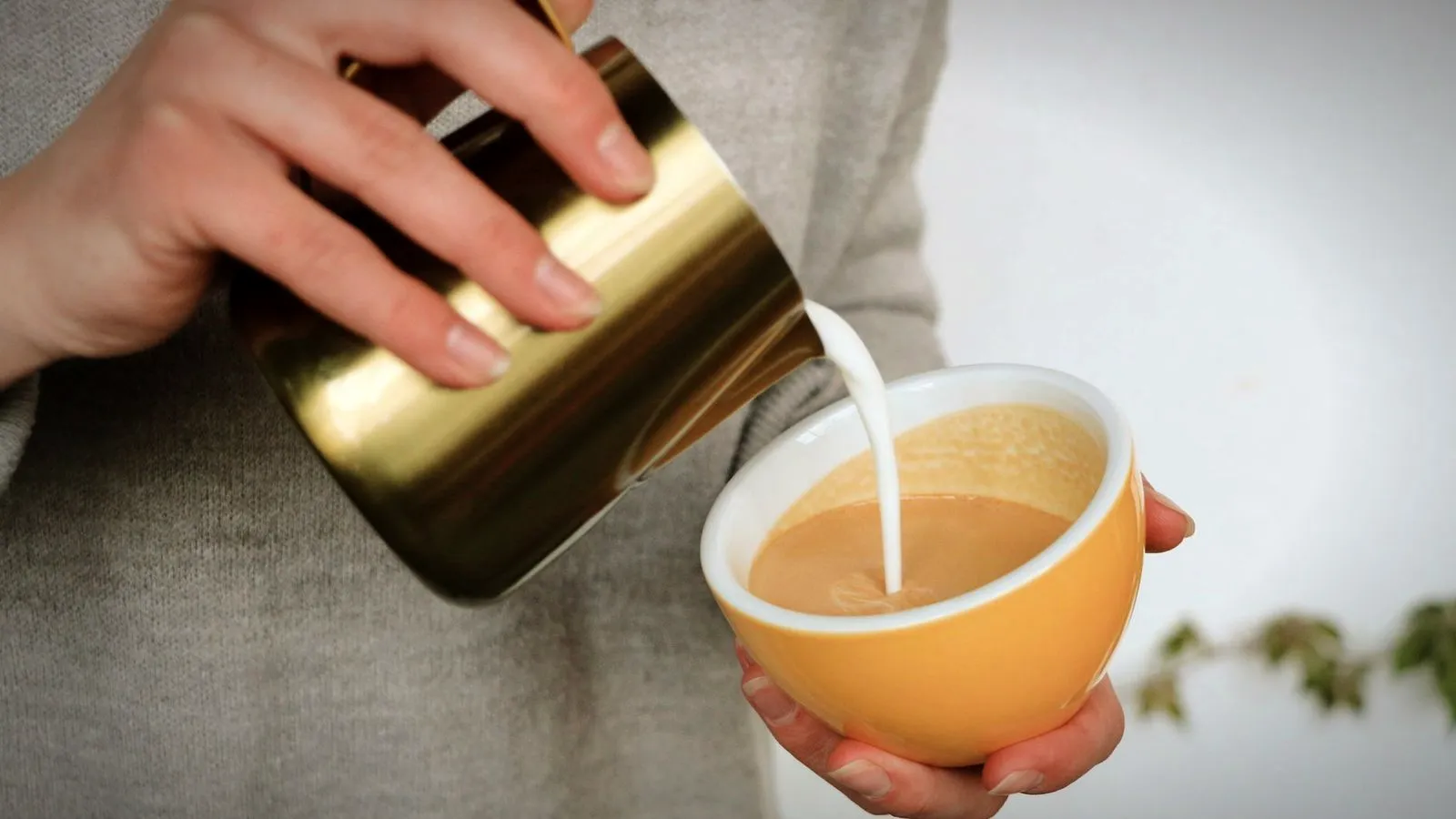
A plain latte has roughly 65 to 230 kcal with dairy milk, and less with unsweetened almond milk, depending mostly on the milk and the size of the cup. The espresso barely counts: USDA lists it at 9 kcal per 100 g, and a 1 oz (30 ml) single shot weighs about 29.6 g, so it adds about 3 kcal. A double adds about 5.
The milk is where the calories are. One cup (8 oz) of whole milk has about 149 kcal, and a latte uses from about 5 oz of milk in a small cup to 12–13 oz in a 16 oz cup. To build the estimates in this guide, we multiplied USDA’s value for each milk by these amounts:
- 8 oz (240 ml) cup: a single shot and 6 oz (180 ml) of steamed milk
- 12 oz (350 ml) cup: a double shot and 8 oz (240 ml) of milk
- 16 oz (475 ml) cup: a double shot and 12 oz (355 ml) of milk
Change the milk amount and the calories move with it. Caffeine works the other way: it comes only from the espresso, as our guide to how much caffeine is in a latte explains.
Latte calories by milk type
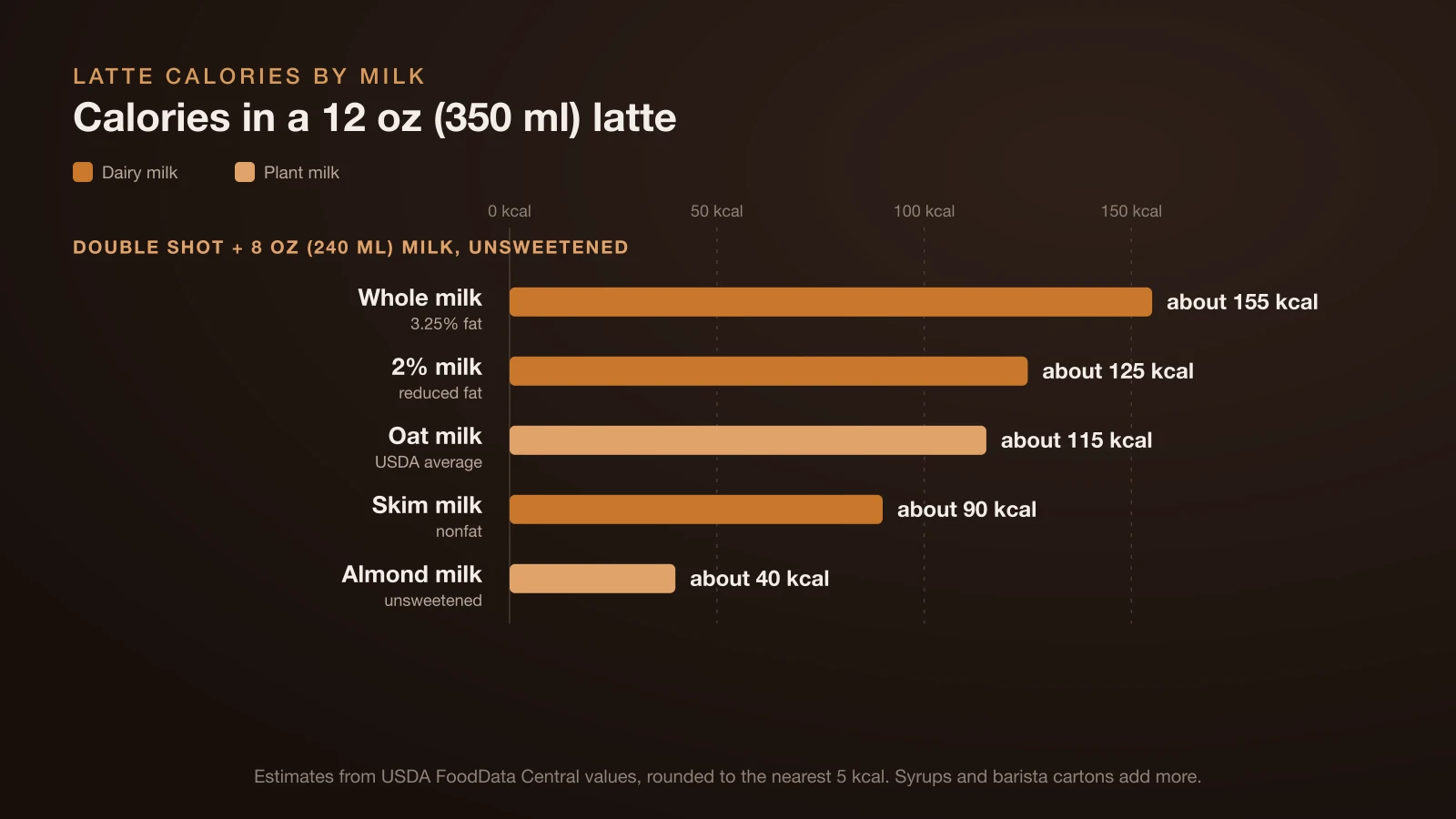
Whole milk gives the highest calorie latte of the common milks, and unsweetened almond milk the lowest. Here is one cup of each, the amount in a 12 oz latte:
| Milk, 1 cup (8 oz, 240 ml) | Calories | Protein | Sugar | Fat |
|---|---|---|---|---|
| Whole milk (3.25% fat) | 149 kcal | 7.7 g | 12.3 g | 7.9 g |
| 2% milk | 122 kcal | 8.1 g | 12.3 g | 4.8 g |
| Skim (nonfat) milk | 83 kcal | 8.3 g | 12.5 g | 0.2 g |
| Oat milk (USDA average) | about 108 kcal | about 1.6 g | about 4.9 g | about 5.6 g |
| Oatly Barista Edition (label) | 140 kcal | 3 g | 7 g | 7 g |
| Almond milk, unsweetened | about 36 kcal | about 1.0 g | about 1.9 g | about 2.3 g |
Dairy values use USDA’s own cup weights (244–245 g). USDA lists the plant milks per 100 g, so we scaled them to 240 g, assuming they weigh about the same as water. The sugar in dairy milk is lactose that is naturally present.
Two things stand out. Skim milk cuts almost half the calories of whole milk but keeps all the protein. Oat and almond milk are lower in protein, and barista-style oat milk is close to whole milk in calories; our oat milk latte guide covers that choice in depth.
How many calories are in an almond milk latte?
An almond milk latte is the lightest option in this guide: about 40 kcal for a 12 oz cup with unsweetened almond milk and a double shot. USDA puts unsweetened almond milk at 15 kcal per 100 g, so even a 16 oz latte stays near 60 kcal.
The catch is the carton. Sweetened almond milk and barista blends made for steaming often contain added sugar or oil, which can raise the total noticeably. Check the calories per cup on your label and swap it into the math above.
Whole milk vs skim milk latte calories
A whole milk latte has roughly 65 kcal more than a skim milk latte at 12 oz (155 vs 90), and about 100 kcal more at 16 oz (230 vs 130). Nearly all of the difference is fat: whole milk carries about 7.9 g per cup, skim about 0.2 g. Protein and natural sugar stay almost the same.
Taste and texture change too. Whole milk tastes rounder and sweeter in a latte, while skim milk foams easily but feels thinner in the mouth.
Calories in a 12 oz latte and other sizes
A 12 oz latte has about 90 kcal with skim milk and about 155 kcal with whole milk, when it holds a double shot and 8 oz of milk. Going up to 16 oz adds about half as much again, because the extra space is filled with milk, not espresso.
- 8 oz latte: about 65–115 kcal with dairy milk, depending on fat level.
- 12 oz latte: about 90–155 kcal with dairy milk.
- 16 oz latte: about 130–230 kcal with dairy milk.
How full the cup is changes the answer. USDA’s reference latte, built from 62 g of espresso and 305 g of 2% milk (about 10 oz), has 43 kcal per 100 g, or about 160 kcal in total. That is a 12 oz cup poured close to the rim. USDA’s nonfat version has 30 kcal per 100 g, about 110 kcal for the same recipe.
An iced latte of the same cup size has fewer calories, because ice takes the place of some milk. Starbucks lists its grande (16 fl oz) Iced Caffè Latte at 130 kcal, against 190 kcal for the hot grande.
Starbucks latte calories: an official cross-check
Starbucks lists its Caffè Latte, made with 2% milk, at 100 to 250 kcal depending on the size. Its numbers line up well with the USDA-based estimates above.
| Starbucks Caffè Latte (2% milk) | Espresso shots | Calories | Sugar |
|---|---|---|---|
| Short, 8 fl oz | 1 | 100 kcal | 9 g |
| Tall, 12 fl oz | 1 | 150 kcal | 14 g |
| Grande, 16 fl oz | 2 | 190 kcal | 18 g |
| Venti, 20 fl oz (590 ml) | 2 | 250 kcal | 23 g |
The grande matches our 2% estimate for a 16 oz latte exactly, at 190 kcal. The tall is higher than our 12 oz figure, most likely because it uses one shot and fills more of the cup with milk. For other milks, Starbucks Canada lists a grande Oat Latte at 190 kcal.
Starbucks notes that its nutrition figures follow the standard recipe and do not reflect customizations. So a latte ordered with whole, skim or almond milk will differ from the listed number; the milk table above gives a reasonable guide to how much.
How much do syrups, sauces and whipped cream add?
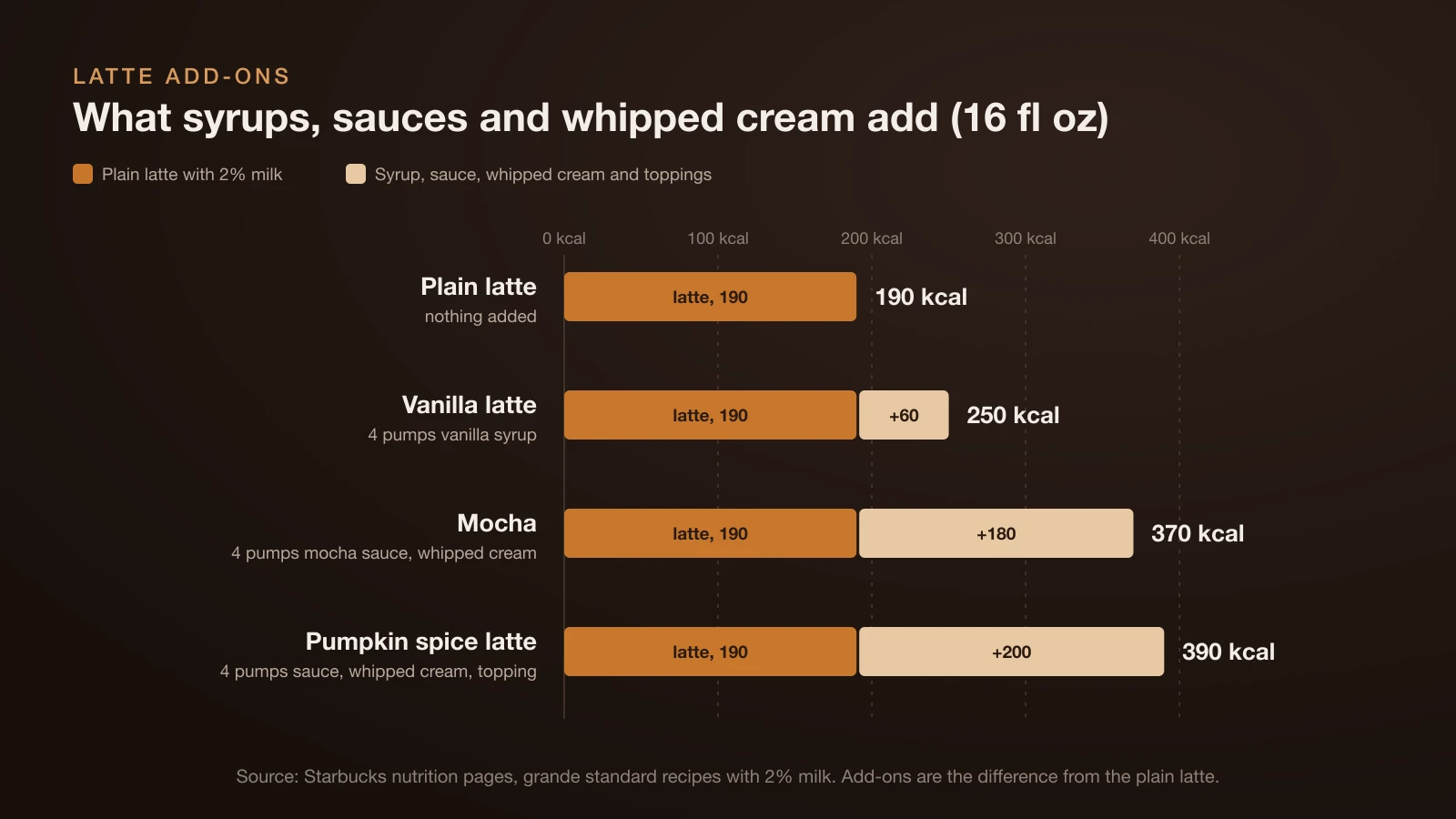
Flavor syrups add roughly 60 kcal to a 16 oz café latte, and chocolate sauce plus whipped cream can add about 180–200. The Starbucks menu shows the jump clearly, since each drink below is built on the same 2% milk grande:
| Grande (16 fl oz) drink | What is added | Calories | Sugar |
|---|---|---|---|
| Caffè Latte | Nothing | 190 kcal | 18 g |
| Blonde Vanilla Latte | 4 pumps vanilla syrup | 250 kcal | 35 g |
| Caffè Mocha | 4 pumps mocha sauce, whipped cream | 370 kcal | 35 g |
| Pumpkin Spice Latte | 4 pumps pumpkin sauce, whipped cream, spice topping | 390 kcal | 50 g |
Comparing the first two rows, four pumps of vanilla add about 60 kcal and 17 g of sugar, or roughly 15 kcal per pump. That per-pump figure is our estimate from the difference, not a Starbucks number.
At home, the same arithmetic applies to what you stir in:
- Sugar: a teaspoon (4.2 g) of granulated sugar adds about 16 kcal, per USDA.
- Chocolate syrup: 2 tablespoons (39 g) add about 109 kcal.
- Canned whipped cream: about 8 kcal per tablespoon, since a tablespoon of the airy topping weighs only about 3 g.
If you flavor your lattes often, our guide to latte flavors shows the classic syrups and spices, and mocha vs latte breaks down the chocolate version.
How to make a low calorie latte
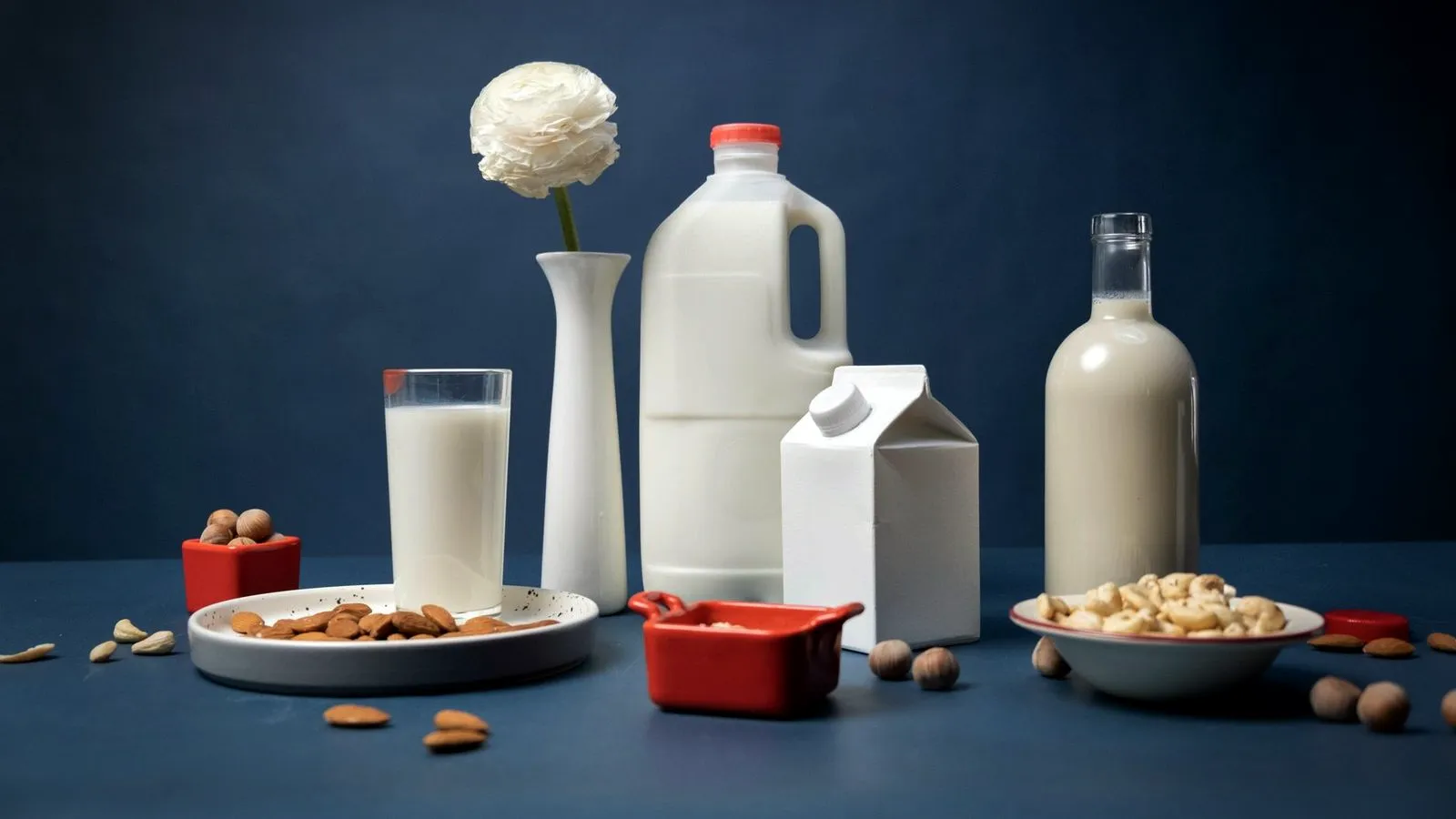
A low calorie latte comes from three choices: a lighter milk, a smaller cup and less syrup. Here are the swaps that save the most, using the estimates above:
- Switch to skim milk. A 12 oz latte drops from about 155 to about 90 kcal, with the same protein.
- Try unsweetened almond milk. It brings a 12 oz latte to about 40 kcal, though it steams less easily and tastes lighter.
- Order a smaller size. Going from 16 oz to 12 oz removes about 4 oz of milk, which is roughly 60–75 kcal with whole or 2% milk.
- Halve the syrup. Ask for fewer pumps, or add a teaspoon of sugar yourself instead of a café-sized dose.
- Skip the whipped cream and drizzle. They add calories without changing the coffee.
- Pick a smaller milk drink. A cortado or a macchiato uses far less milk; see cortado vs latte for the comparison.
Making it yourself gives the most control, because you can measure the milk. Our step-by-step guide on how to make a latte covers the method. This is general nutrition information, not dietary advice.
The bottom line
A latte’s calories are its milk’s calories: about 155 kcal for a 12 oz whole milk latte, 125 with 2%, 90 with skim and 40 with unsweetened almond milk, with espresso adding only about 3 kcal per shot. Bigger cups add milk, and syrups, sauces and whipped cream can double the total. For the lightest cup, choose skim or unsweetened plant milk, a smaller size and less syrup.
Sources
- USDA FoodData Central: Milk, whole (61 kcal per 100 g; 1 cup = 244 g, 1 fl oz = 30.5 g), Milk, 2% (50 kcal per 100 g; 1 cup = 244 g), Milk, nonfat (34 kcal per 100 g; 1 cup = 245 g), Oat milk (45 kcal per 100 g), Almond milk, unsweetened (15 kcal per 100 g), Espresso (9 kcal per 100 g; 1 fl oz = 29.6 g), Coffee, Latte and Coffee, Latte, nonfat (43 and 30 kcal per 100 g; 62 g espresso + 305 g milk), Sugars, granulated (387 kcal per 100 g; 1 tsp = 4.2 g), Chocolate syrup (279 kcal per 100 g; 2 tbsp = 39 g) and Cream topping, pressurized (257 kcal per 100 g; 1 tbsp = 3 g)
- Starbucks: Caffè Latte, Iced Caffè Latte, Blonde Vanilla Latte, Caffè Mocha, Pumpkin Spice Latte and Cappuccino (sizes, shots, pumps, calories, sugar; standard recipes only) and Starbucks Canada Oat Latte (grande 190 kcal)
- Oatly: Oatmilk Barista Edition nutrition facts (140 kcal, 3 g protein, 7 g sugar, 7 g fat per cup)