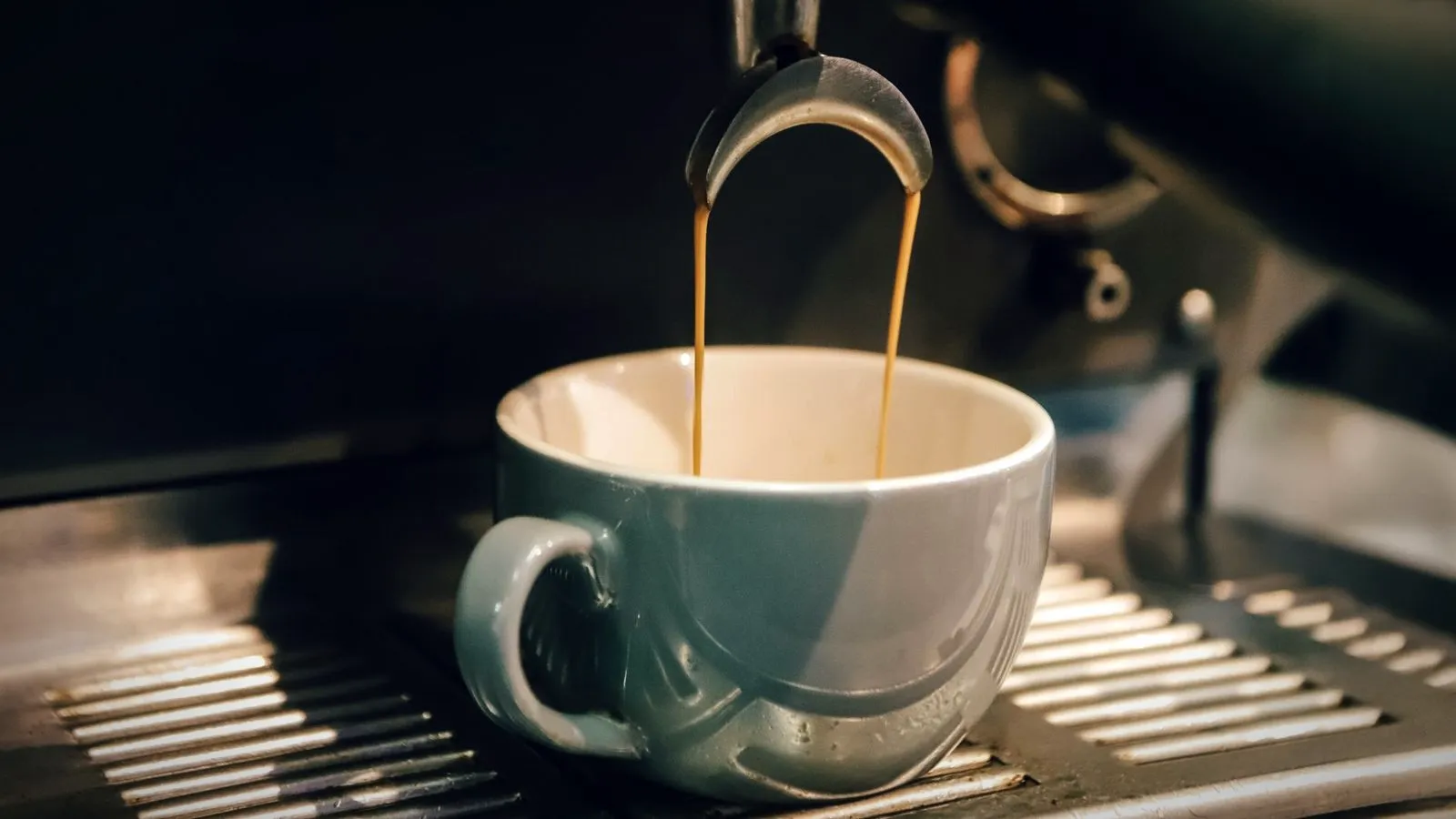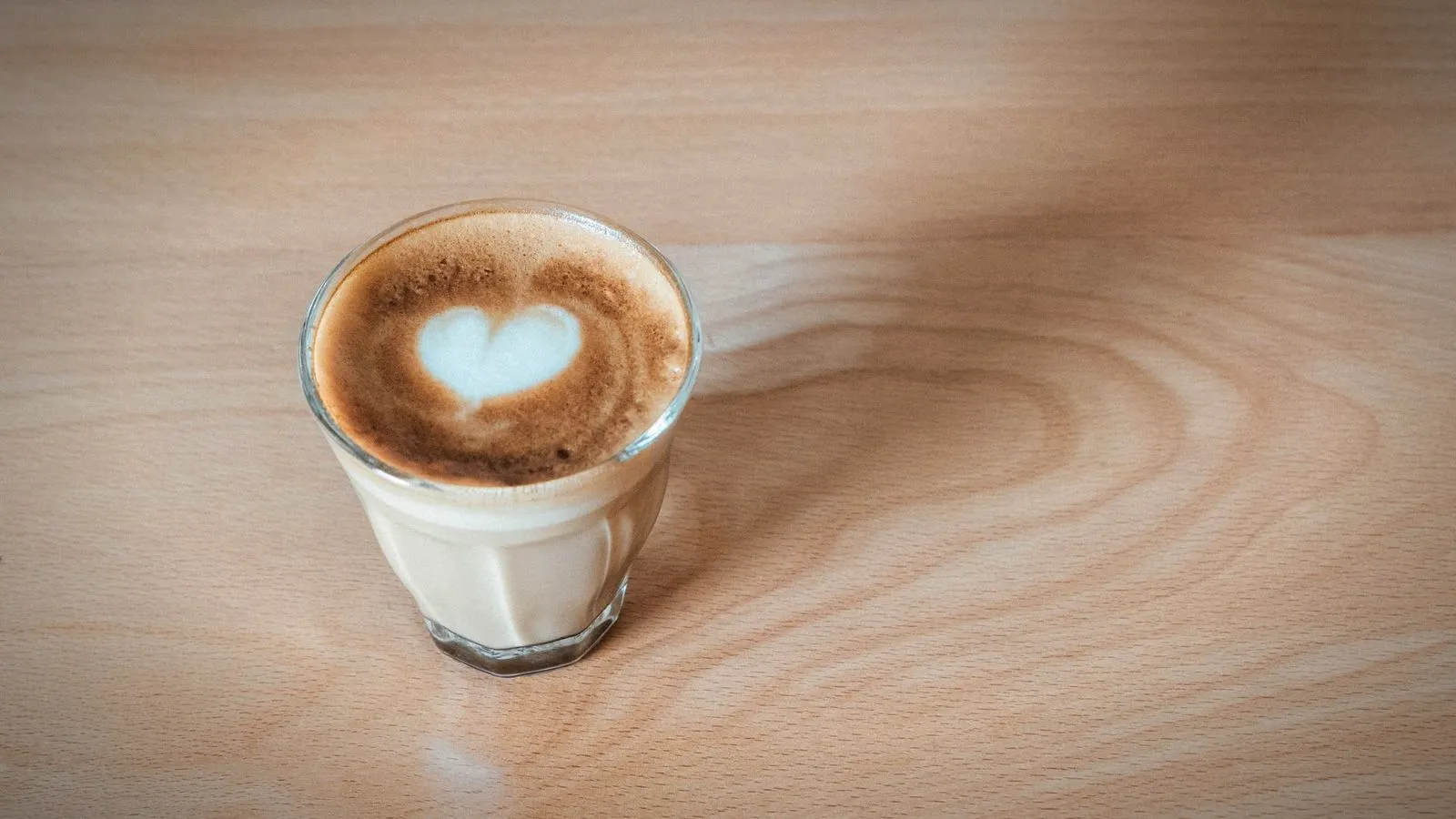

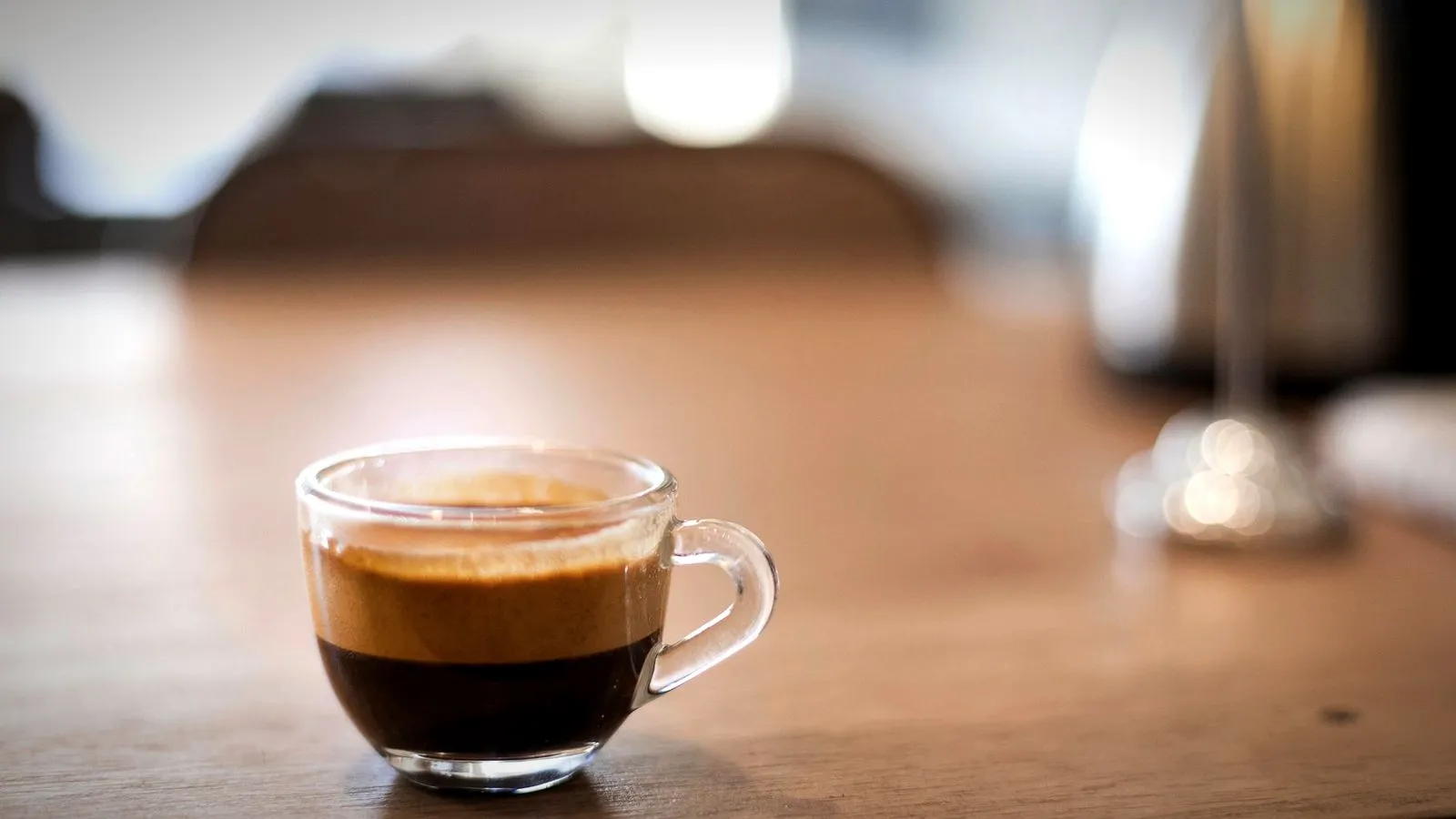
A ristretto is a short shot of espresso: the same dose of coffee as a normal shot, but with roughly half the water. The barista stops the shot early, at about a 1:1 to 1:1.5 ratio of coffee to liquid (up to 1:2 in La Marzocco’s range), so the ristretto tastes thicker, sweeter and more intense, with less bitterness and less total caffeine from the same dose.
Ristretto is a way of pulling espresso, not a type of bean or roast. It sits at the short end of the espresso ratio scale, and cafés use it on its own or as the base of small milk drinks such as the flat white.
The short answer
- What it is: a “restricted” espresso shot, stopped early so less water passes through the same coffee.
- Ratio: about 1:1 to 1:1.5 coffee to liquid by weight (Flair), within La Marzocco’s wider 1:1 to 1:2 range.
- Size: about 15 ml (0.5 oz) for a single, per Breville’s manual; about 18–27 g of liquid from an 18 g double dose.
- Taste: thick, sweet and intense, with less bitterness than a normal shot.
- Caffeine: less in total than a full shot from the same dose (about 71% in one study), but more per sip.
- Pronunciation: rih-STRET-oh, with the stress on the second syllable.
What does ristretto mean?
Ristretto means “restricted” in Italian, and in coffee it names a shot pulled with less water than usual. Starbucks defines it as a short, restricted shot in which the barista pulls only the first portion of a full-length espresso. The Collins English Dictionary gives the word’s literal sense as “concentrated” and defines a ristretto as a very strong espresso coffee.
Collins puts the stress on the second syllable (/rɪˈstrɛtəʊ/), which is roughly rih-STRET-oh when spelled out. Collins lists the English plural as ristrettos.
A double ristretto is the same short shot made from a double dose of coffee, usually around 18 g. It is the most common version, since most cafés and home machines pull doubles by default.
Ristretto ratio and size
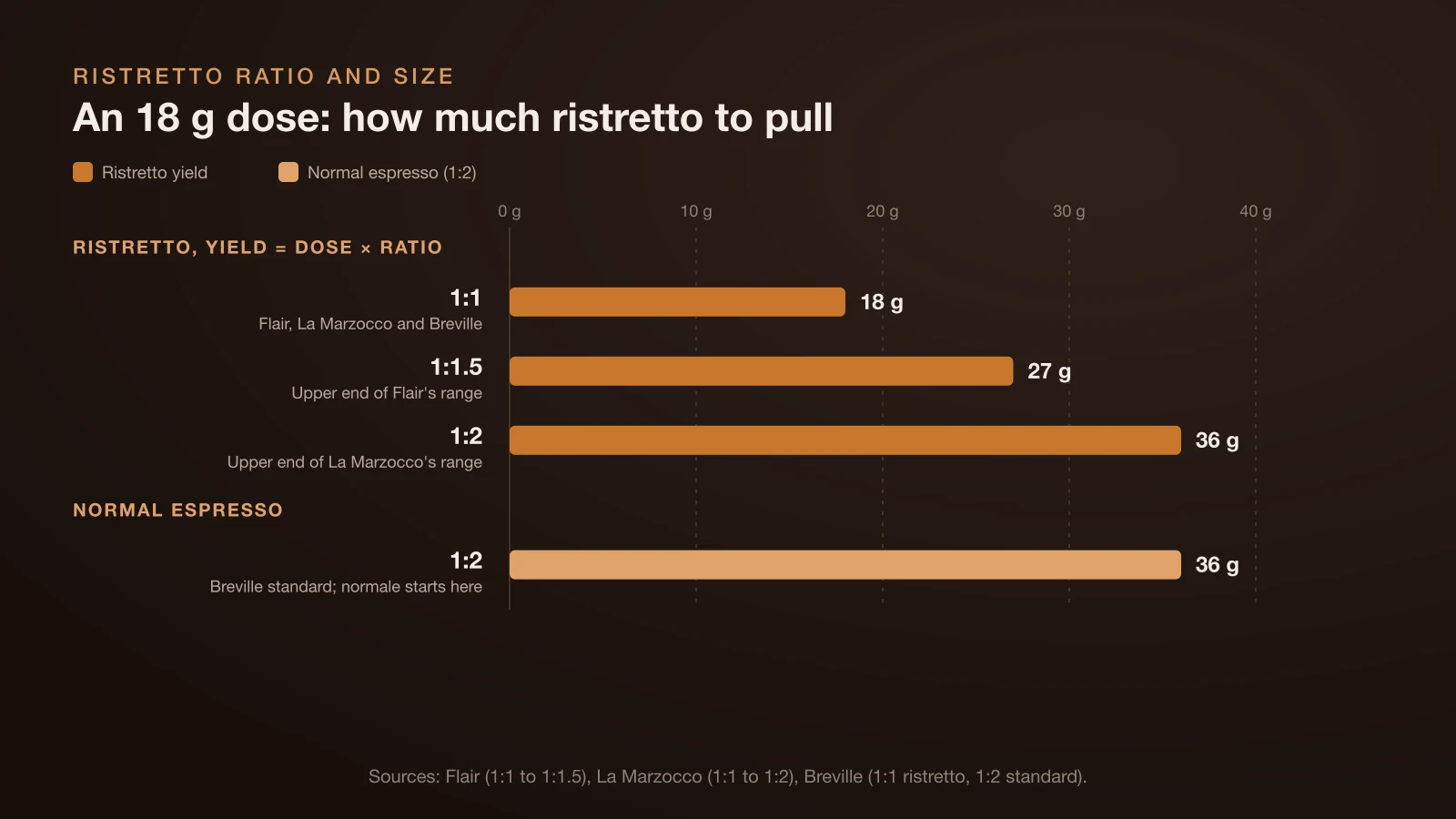
A ristretto uses a brew ratio of roughly 1:1 to 1:1.5, meaning the liquid in the cup weighs about the same as the dry coffee, or up to one and a half times as much. A normal espresso is about 1:2.
Espresso makers publish slightly different ranges:
| Source | Ristretto | Normal espresso | From an 18 g dose (ristretto) |
|---|---|---|---|
| Flair | 1:1 to 1:1.5 | 1:2 to 1:2.5 | 18–27 g |
| La Marzocco | 1:1 to 1:2 | 1:2 to 1:3 | 18–36 g |
| Breville | 1:1 | 1:2 | 18 g |
Yield = dose × ratio. A 1:2 shot sits on La Marzocco’s border between ristretto and normal espresso, so the same cup may get either name. Aim for 1:1 to 1:1.5 if you want a shot that clearly reads as a ristretto.
By volume, Breville’s machine manual describes a ristretto as an extremely short espresso of about 15 ml (0.5 oz), half of its 30 ml (1 oz) single shot.
Ristretto shot specs: dose, yield and time
A ristretto shot uses the same beans, grind range and dose as a normal espresso, but stops at a smaller yield.
| Ristretto | Espresso (normale) | |
|---|---|---|
| Dose (double) | About 18 g | About 18 g |
| Yield | About 18–27 g (1:1 to 1:1.5) | About 36 g (1:2) |
| Volume | About 0.5 oz (15 ml) per single | About 1 oz (30 ml) per single |
| Shot time | Shorter at the same grind | 25–30 seconds |
| Body | Thick, syrupy | Balanced |
| Taste | Sweeter, less bitter, intense | Balanced sweetness and bitterness |
| Caffeine (same dose) | About 71% of a normal shot | Reference |
The caffeine row comes from the university study described below. Running even more water through the coffee gives the opposite style, the lungo or long shot, which is bigger, thinner and more bitter. Our ristretto vs long shot guide compares the two side by side.
What does a ristretto taste like?
A ristretto tastes sweeter, thicker and less bitter than a normal espresso because it keeps only the early part of the extraction. La Marzocco describes water pulling compounds from the coffee in a rough order: salts first, then acids, then sugars, then bitter compounds.
Stopping early keeps more of the acids and sugars and leaves much of the late bitterness in the puck. La Marzocco also notes that the smaller the ratio, the thicker and more viscous the espresso becomes. The result:
- Body: dense and syrupy, coating the tongue.
- Sweetness: more noticeable, especially with darker roasts, which La Marzocco pairs with smaller ratios.
- Acidity: can read as bright, or turn sharp if the shot runs too fast.
- Bitterness: lower than a full shot.
A ristretto that is too fast and too short can taste sour rather than sweet, a sign of under-extraction. Our guide to sour espresso explains the cause and the fix.
Ristretto caffeine: is a ristretto stronger than espresso?
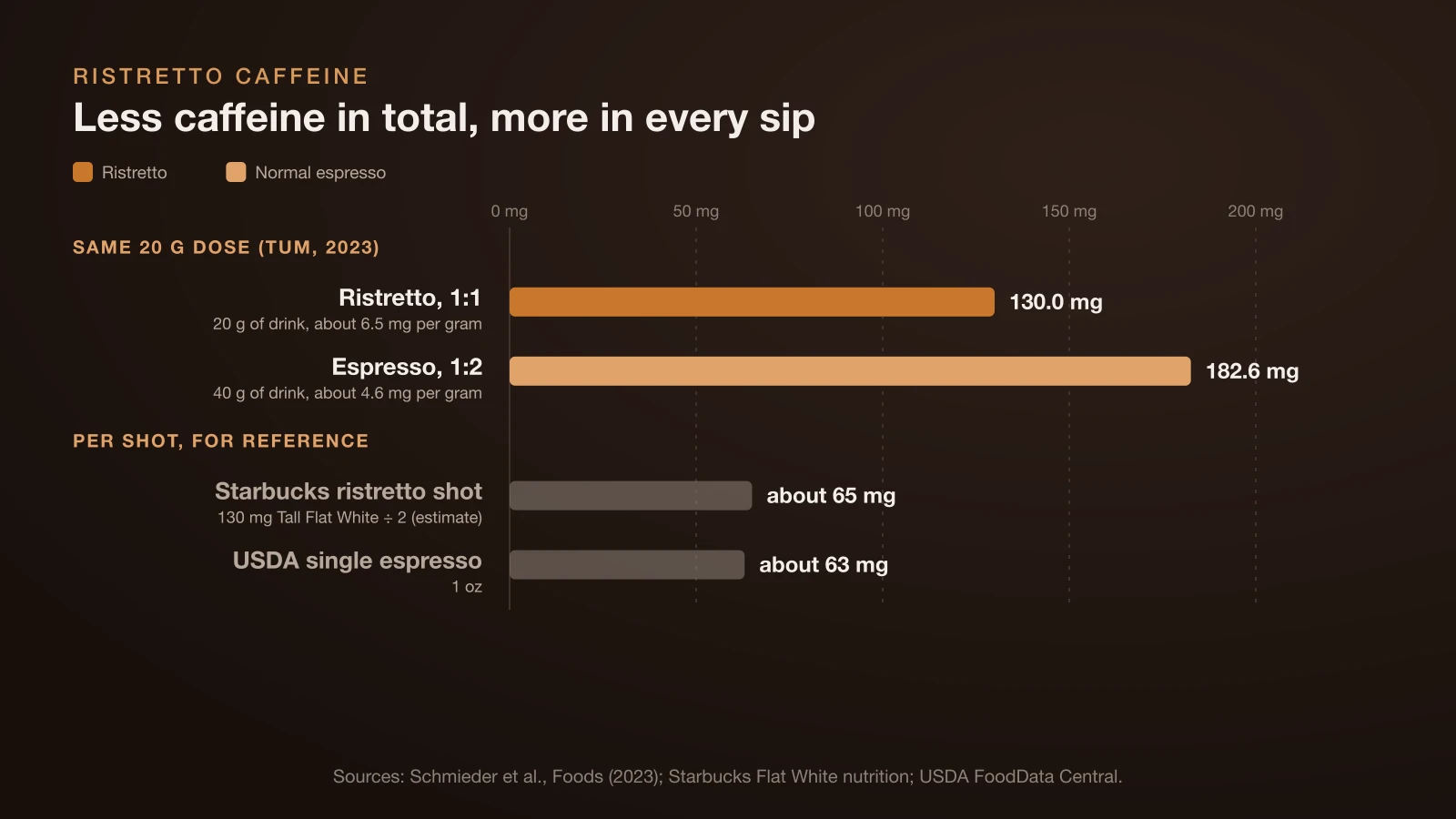
A ristretto tastes stronger than espresso but contains somewhat less total caffeine from the same dose. Caffeine dissolves quickly at the start of a shot and keeps coming out as more water flows, so stopping early leaves some behind.
A 2023 study from the Technical University of Munich measured caffeine shot by shot from 20 g doses of arabica. It found about 130.0 mg in a 1:1 ristretto (20 g of liquid) against 182.6 mg in a 1:2 espresso (40 g). That puts the ristretto at about 71% of the normal shot’s caffeine, but at about 6.5 mg per gram of drink against 4.6 mg.
USDA lists espresso at about 63 mg of caffeine in a 1 oz single, with no separate value for ristretto. Starbucks lists a Tall Flat White with two ristretto shots at 130 mg; dividing by two gives an estimate of about 65 mg per ristretto shot. For standard shots, see how much caffeine is in an espresso shot.
How to make a ristretto at home
You make a ristretto by keeping your normal dose and stopping the shot at a smaller yield, ideally with a scale under the cup. There are two ways to reach that smaller yield.
- Dose as usual. Put about 18 g of ground coffee in a double basket and tamp evenly.
- Set a target. For a ristretto, aim for about 18–27 g in the cup (1:1 to 1:1.5).
- Start the shot and a timer together. Watch the scale rather than the color of the stream.
- Stop just before the target. A few drops keep falling after the pump stops.
- Taste, then adjust the grind. If the shot reached its yield very quickly and tastes sour, grind a little finer next time.
Stop early or grind finer? Stopping a normal shot early is the quickest method and is how Starbucks describes its ristretto: the first portion of a full-length shot. Grinding finer slows the flow, so the smaller yield takes longer and is less likely to taste sour. La Marzocco suggests grinding finer whenever you hit your target yield in under 20 seconds.
Change one variable at a time. Our guide to dialing in espresso walks through grind, dose and yield adjustments in order, and the espresso shot time guide explains how to read the clock.
Drinks made with ristretto shots
Ristretto shots are used mostly in small milk drinks, where their sweetness and body come through the milk. Starbucks makes its Flat White and Cortado with ristretto shots by default and lets customers ask for ristretto in any espresso drink.
| Drink | How ristretto is used |
|---|---|
| Flat white | Starbucks’ default: two ristretto shots in a Tall, three in a Grande |
| Cortado | Starbucks’ default, cut with steamed whole milk |
| Latte or cappuccino | On request, for a sweeter, rounder coffee flavor |
| Straight | Sipped on its own from a small cup |
The flat white is the best-known example. Our flat white vs latte comparison shows how the shot choice changes caffeine at Starbucks, and our chart of types of espresso drinks places the ristretto among every other café drink.
The bottom line
A ristretto is an espresso shot stopped short: the same dose with about half the water, at roughly 1:1 to 1:1.5. It tastes thicker, sweeter and less bitter than a normal shot, and it carries less total caffeine from the same coffee. At home, fix the dose, weigh the yield and grind finer if the shot runs too fast.
Sources
- Starbucks: Starbucks espresso explained (archived; ristretto means “restricted,” first portion of a full-length shot, same espresso roast, base of the Cortado and Flat White) and Flat White nutrition (two ristretto shots in a Tall, three in a Grande; 130 mg in a Tall)
- Collins English Dictionary: ristretto (archived; pronunciation, “a very strong espresso coffee,” Italian, literally concentrated)
- Brew ratio guides: La Marzocco, Using espresso brew ratios (ristretto 1:1 to 1:2, normale 1:2 to 1:3; thicker at smaller ratios; extraction order; darker roasts; grind finer under 20 seconds) and Flair Espresso, Brew ratios and espresso (ristretto 1:1 to 1:1.5, traditional 1:2 to 1:2.5)
- Breville: How to dial in espresso (1:1 ristretto, 1:2 standard, 25–30 seconds) and Barista Express BES875 instruction book (ristretto about 15 ml; single shot about 30 ml)
- Caffeine data: Schmieder et al., Foods (2023), Influence of Flow Rate, Particle Size, and Temperature on Espresso Extraction Kinetics (130.0 mg at 1:1 and 182.6 mg at 1:2 from 20 g of arabica) and USDA FoodData Central: espresso, restaurant-prepared (212 mg caffeine per 100 g)