
Used espresso machines can save money if you buy from a maker’s refurbished program or test a private sale in person. Check for scale, a worn group gasket and shower screen (see our guide to espresso machine parts), steady pump pressure near 9 bar, a working steam wand and leaks, then ask about age, water and service history. Expect to replace wear parts and descale right away.
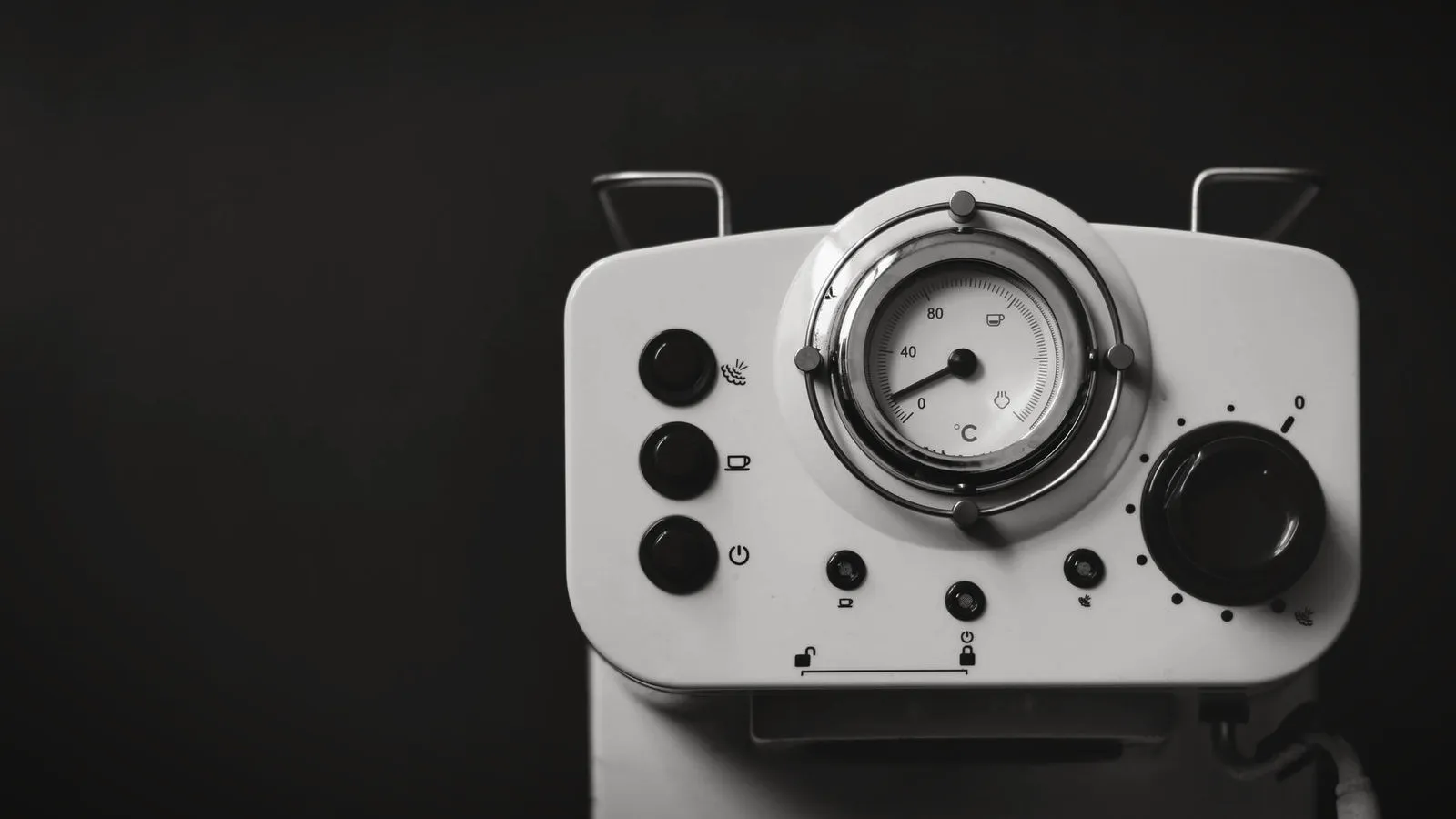
A used machine is only a bargain if its internal parts are healthy. Our guides to espresso machine parts and the espresso machine pressure gauge show what a healthy machine looks and reads like.
The short answer
- Safest: a maker-refurbished machine, tested and sold with a warranty (Breville: 6 months).
- Cheapest: a private sale, with no warranty; test it hot, with coffee, before you pay.
- Always check: scale, gasket and shower screen, pump pressure, steam, leaks and the model’s parts availability.
- Always do: replace the gasket and shower screen if worn, fit a new water filter, and descale with the maker’s product before the first drink.
Where to buy used espresso machines
The safest places to buy used espresso machines are the makers’ own refurbished programs, followed by private sales where you can test the machine before paying. Each route trades price against protection.
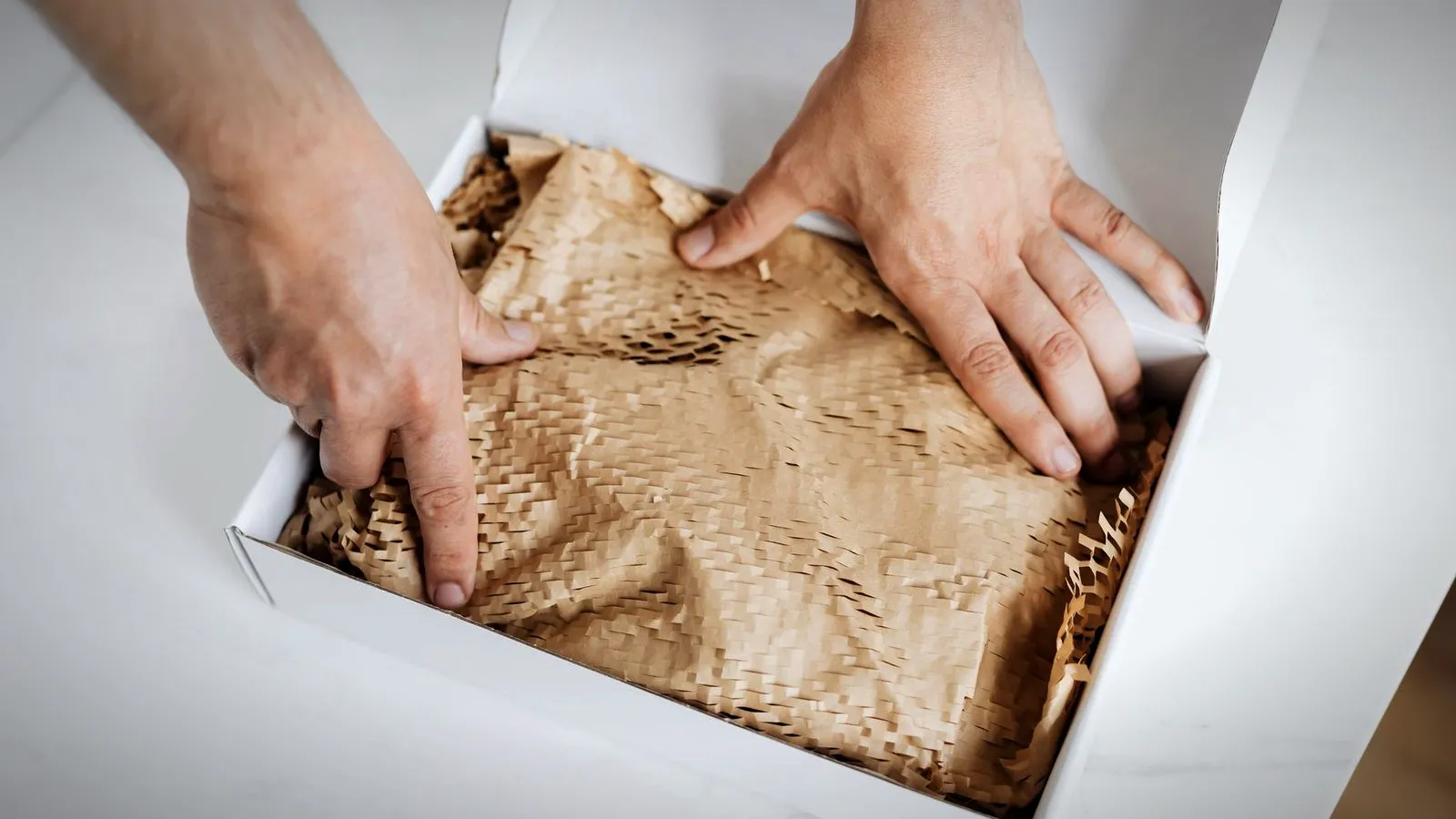
- Maker refurbished programs. Breville sells certified remanufactured products through its own store; these are units returned by retailers, inspected, cleaned, tested and repackaged with a 6 month warranty. Flair sells blemished presses with cosmetic marks at a discount, such as the Flair Classic at $119 (regular $159) as of October 2026, and says full warranty still applies.
- Authorized dealers. Some brands sell mostly through dealers. Ask the dealer in writing whether any warranty comes with a used or demo machine and who repairs it.
- Private sellers. Local listings and auctions are cheapest, but Breville’s warranty, for example, excludes products not bought from Breville or an authorized reseller.
If you are still choosing a machine type, read our guide to the best home espresso machine first, then look for that type used. If you mostly want espresso on trips or have a very small budget, a portable espresso maker with a hand pump or lever has no boiler or electric pump to inspect.
Refurbished vs used espresso machines
A refurbished espresso machine has been tested and repaired by a maker’s program and carries a warranty, while a used one is sold as it is. The differences are easiest to see side by side.
| Maker refurbished | Private used sale | |
|---|---|---|
| Testing | Inspected, cleaned and tested to the maker’s standard (Breville) | Only what you check yourself |
| Repairs | Defective parts replaced with original parts (Breville) | Unknown; ask for receipts |
| Warranty | Yes, often shorter than new (Breville: 6 months) | Usually none; maker warranties are often non-transferable |
| Condition | Fully working; may have scratches or marks | Anything from like-new to heavily scaled |
| Price | Discounted from new (Flair blemished: 25% off) | Lowest; negotiate on what you find |
| Proof of purchase | Your own new receipt | Original receipt, if the seller still has it |
Used espresso machine inspection checklist
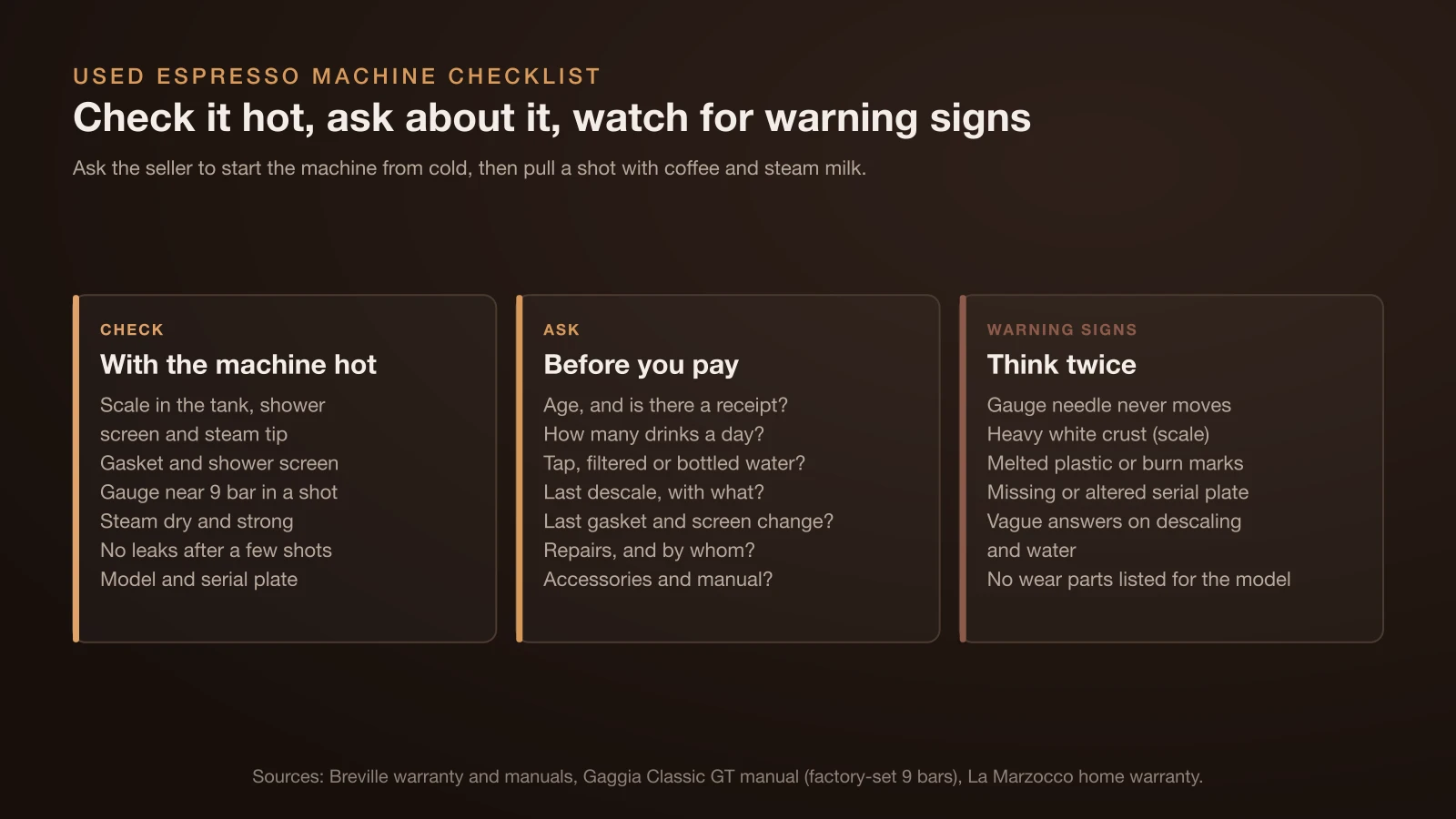
A used espresso machine inspection should cover the water path, the group, the pump and the steam system, with the machine fully hot. Ask the seller to start it from cold so you see the whole warm-up.
- Model and serial plate. Note the model and serial number; Breville’s warranty sheet shows the plate on the back, behind the water tank. A missing or altered plate voids Breville’s warranty and makes parts harder to match.
- Scale. Look inside the tank, around the shower screen and at the steam tip for white crust. La Marzocco excludes scaling and poor water quality from its home warranty and calls water outside its specification the most common cause of failure.
- Group gasket and shower screen. A hard or cracked gasket points to wear. La Marzocco’s maintenance card replaces the gasket, shower screen and screw every 6 months on its home machines.
- Pump pressure. On a machine with a brew gauge, the needle should settle near 9 bar during a shot; Gaggia factory-sets the Classic GT at 9 bars. If the needle never moves, Breville’s own test uses a rubber disc in the empty 1 cup basket, which should move it.
- Steam wand. Steam should come out dry and strong after warm-up, and the valve should close without dripping.
- Leaks. Check under the machine, around the group and in the drip tray after a few shots.
- Parts availability. Search the maker’s site for the model’s gasket, shower screen and water filter. If wear parts are no longer listed, repairs get harder.
Questions to ask the seller
The questions to ask a seller are about age, water, maintenance and repairs, because none of them shows on the outside of the machine.
- When and where was it bought, and is there a receipt?
- How many drinks a day did it make?
- What water went in: tap, filtered or bottled? Was a water filter used?
- When was it last descaled, and with what product?
- When were the gasket and shower screen last replaced?
- Has it been repaired, and by an authorized service center?
- Can I see it heat up from cold, pull a shot with coffee and steam milk?
- Are the original portafilter, baskets, tamper and manual included?
Vague answers about descaling and water are the main warning sign. Hard water is why our espresso machine water guide recommends testing and filtering before a machine ever scales.
What to replace right away on a second-hand espresso machine
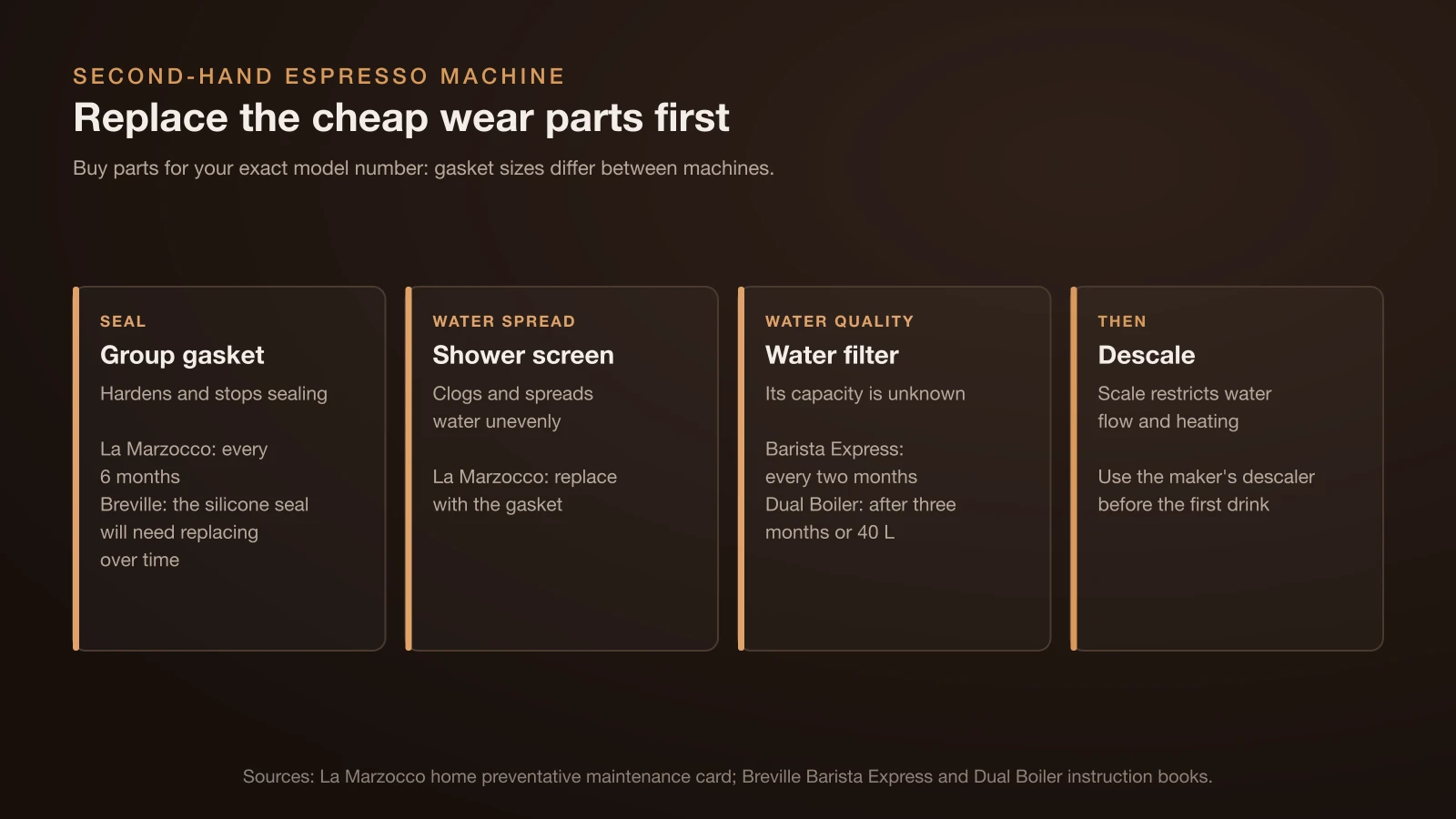
On a second-hand espresso machine, replace the cheap wear parts first: the group gasket, the shower screen and the water filter. They cost little and remove the most common causes of leaks and uneven shots.
| Part | Why replace it | Maker guidance |
|---|---|---|
| Group gasket | Hardens and stops sealing | La Marzocco: every 6 months; Breville: the silicone seal will need replacing over time |
| Shower screen | Clogs and spreads water unevenly | La Marzocco: with the gasket |
| Water filter | Its capacity is unknown | Breville Barista Express: every two months; Dual Boiler: after three months or 40 L |
| Scale | Restricts water flow and heating | Descale with the maker’s descaler before first use |
Then descale, following how to descale an espresso machine, and backflush the group if the machine has a three-way solenoid valve. Buy parts for your exact model number, since gasket sizes differ between machines.
Safety before the first shot
Treat an unknown used espresso machine as unsafe until you have inspected it cold and unplugged. Look at the power cord, plug and casing for melted plastic, cuts or burn marks, and never open panels while the machine is plugged in.
Leave internal work to professionals. Gaggia says the Classic Pro has no user-serviceable parts inside, and Rancilio reserves pump pressure adjustment on the Silvia for a qualified technician. Breville also voids its warranty for repairs by anyone it has not authorized.
Run water through the group and steam wand before the first drink, then clean and descale. Machines often sit unused for months before a sale.
Which espresso machines age well
The espresso machines that age best are built from serviceable, widely documented parts, and their makers keep selling replacements. That favors machines with standard groups and pumps whose parts the maker still sells.
| Design | Aging traits | Example |
|---|---|---|
| E61 or heat exchanger machine | Standard E61 group with widely sold wear parts | Rocket Appartamento (E61 group) |
| Rotary pump | Longer service life, per Rocket; can be plumbed in | Rocket R Cinquantotto |
| Dual boiler with PID | More parts to service, such as two boilers to keep free of scale | Breville Dual Boiler, La Marzocco Linea Micra |
| Compact thermoblock machine | Fast heat-up; internal repairs are for authorized service | Breville and Gaggia manuals |
Whatever the design, scale is the deciding factor. A well-kept compact machine can be a better buy than a neglected heat exchanger, so the checklist matters more than the label. Brand guides such as our page on Gaggia espresso machines list which models are current.
Buying a used commercial espresso machine for home
A used commercial espresso machine rarely suits a home kitchen, because most need a high-voltage circuit, a water line and a drain. La Marzocco’s installation guide for its Linea Classic, for example, calls for 208–240 V power, a plumbed water supply and a drain.
Before you consider one, confirm the voltage on the data plate, check whether a tank version exists and budget for an electrician and a plumber. Our guide to commercial espresso machines explains the power and water requirements in detail. For a single group at home, a used prosumer machine with a standard US plug is the more practical route.
The bottom line
Used espresso machines reward careful buyers: a maker-refurbished unit gives you testing and a short warranty, while a private sale gives you the lowest price and all of the risk. Inspect the machine hot, read the pressure gauge, look for scale and leaks, and ask about water and service history. Budget for a new gasket, shower screen, water filter and a descale before the first shot.
Sources
- Breville: Certified remanufactured products (retail returns, inspected, cleaned and tested, original parts, 6 month warranty, cosmetic marks), Dual Boiler BES920XL two-year limited warranty (non-transferable, proof of purchase, unauthorized sellers excluded, serial plate location, authorized servicers), Barista Express BES870 instruction book (silicone seal, filter every two months) and Dual Boiler BES920 instruction book (gauge test, filter after three months or 40 L)
- Flair Espresso: Flair Classic refurbished (blemished units, 25% off, full warranty, price)
- La Marzocco: Home warranty (scaling and water quality excluded), home preventative maintenance card (gasket, shower screen and screw every 6 months) and Linea Classic U.S. installation guideline (208–240 V, water line, drain)
- Gaggia and Rancilio: Classic Pro operating instructions (no user-serviceable parts inside), Classic GT manual (factory-set 9 bars) and Silvia user manual (pump adjustment by a qualified technician)
- Rocket Espresso: Appartamento TCA sheet (E61 group) and Rocket Espresso USA R Cinquantotto (rotary pump service life and plumbing)