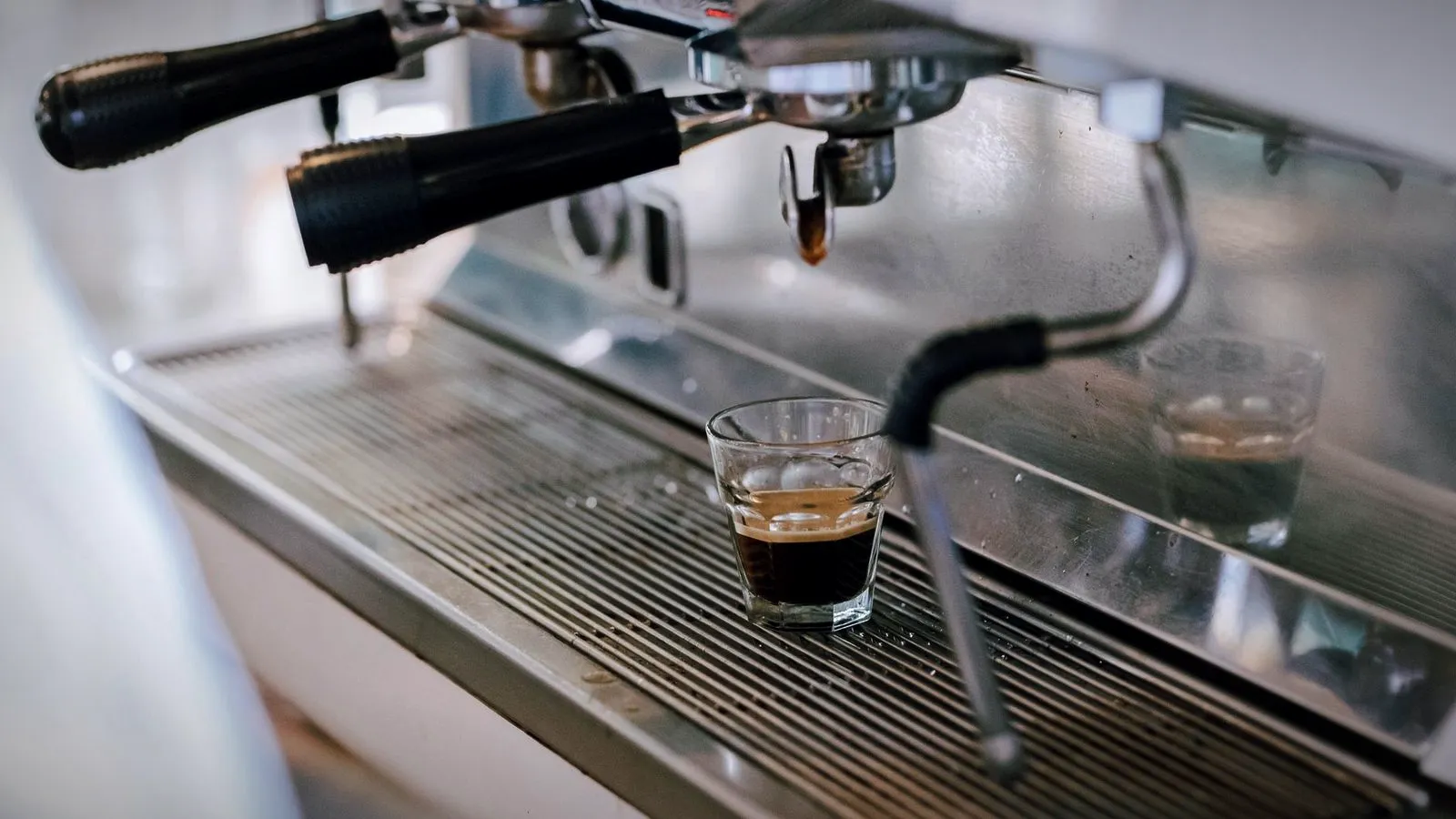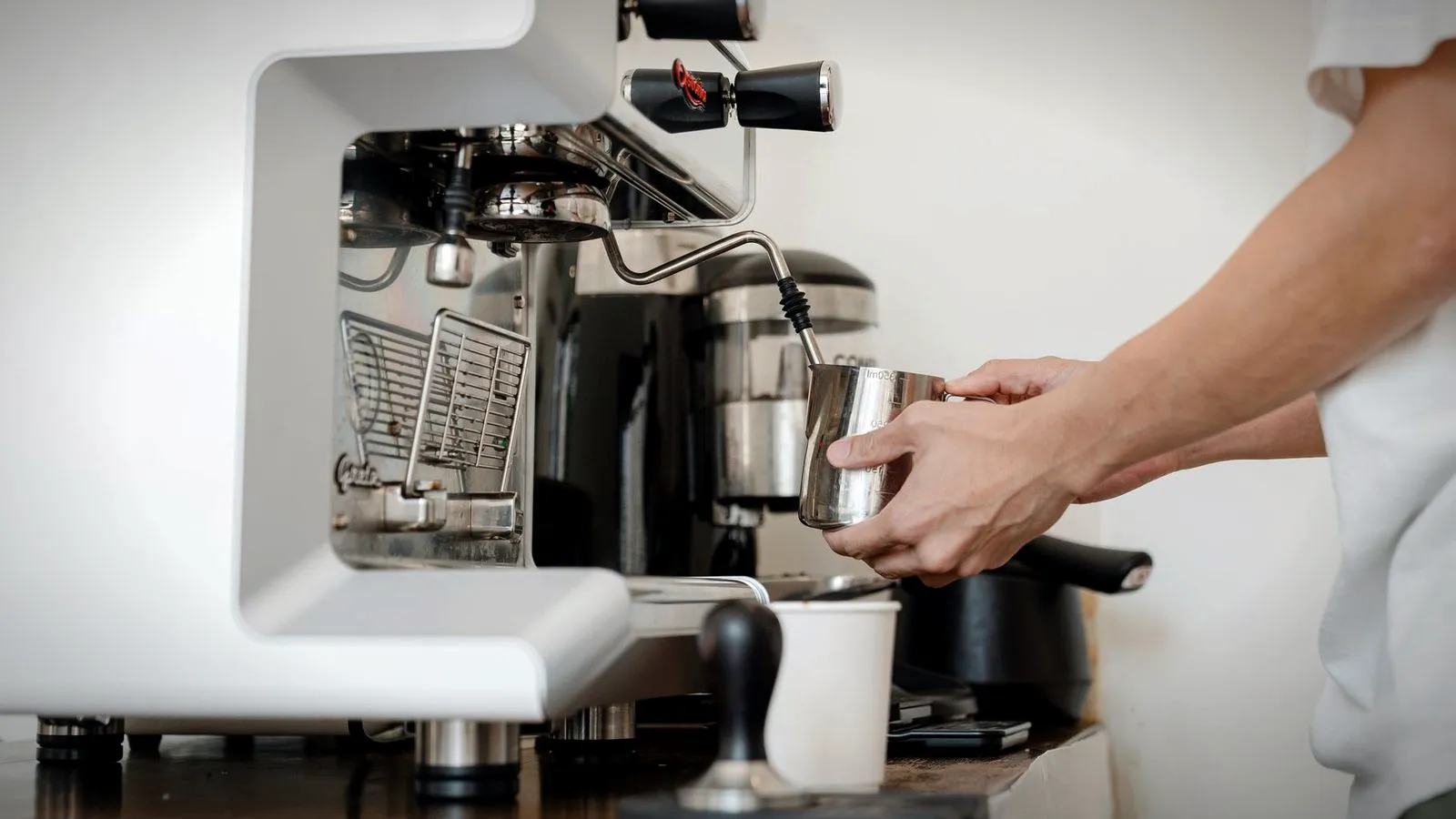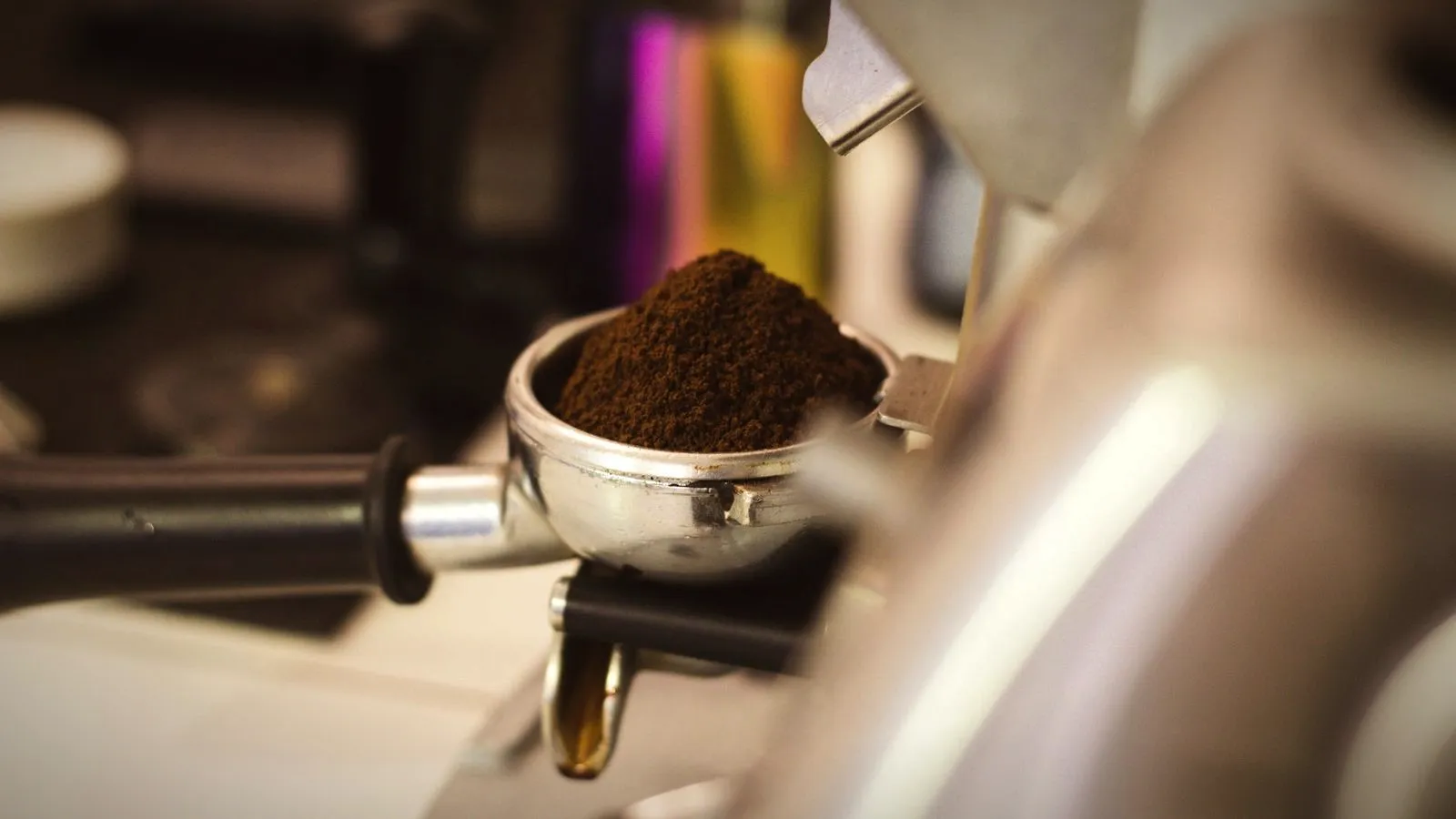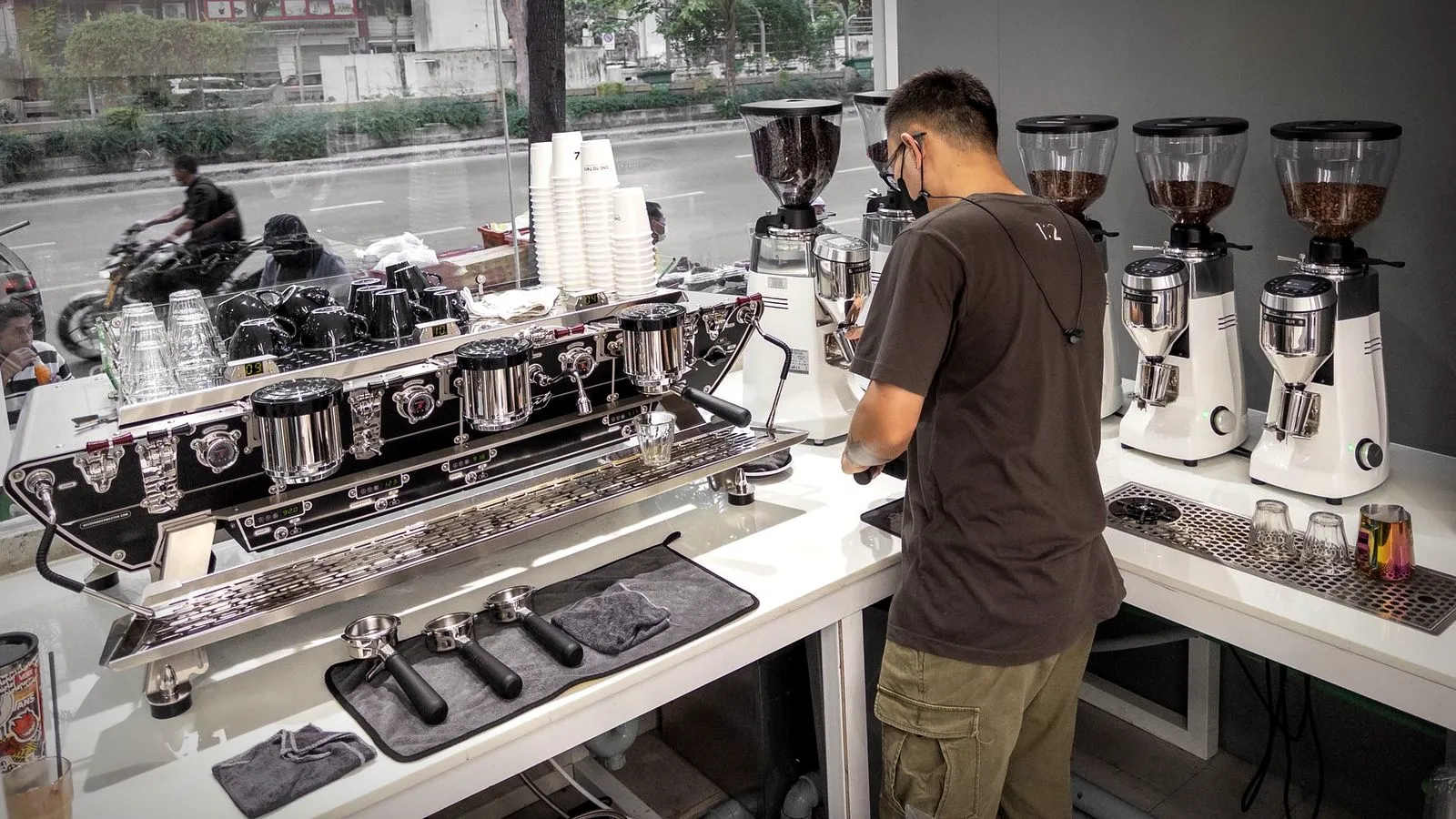
A commercial espresso machine is a machine built for continuous service in a café, restaurant or office: one to four group heads, large boilers, a plumbed water supply and drain, and usually a 208–240 V dedicated circuit. For most small coffee shops, the right choice is a two-group volumetric machine sized to your peak hour, not your average one.
This guide explains the specifications that decide whether a machine fits your business, using numbers from manufacturer installation guides. If you are shopping for your kitchen instead, start with our guides to manual espresso machines and super-automatic espresso machines.
The short answer
| Decision | What most small cafés choose | Why |
|---|---|---|
| Group heads | 2 | Two drinks at once, plus a backup if one group fails |
| Boiler system | Heat exchanger or multi-boiler | Multi-boiler gives more temperature control; heat exchanger is simpler |
| Operation | Volumetric (automatic dosing) | Consistent shot volume with less barista attention |
| Power | 208–240 V, dedicated circuit | Large heating elements; check amps in the install guide |
| Water | Plumbed line, filter, floor drain | Continuous supply and protection from scale |
| Certification | NSF/ANSI 4 sanitation + electrical safety listing | Required by most health inspectors |
| Maintenance | Daily backflush, scheduled service | Keeps shots consistent and prevents breakdowns |
What makes an espresso machine “commercial”?
The difference is duty cycle. A home machine makes a few drinks a day, then rests. A commercial espresso machine must hold brewing temperature and steam pressure through a morning rush with no recovery breaks.
That demand shows up in the hardware: larger boilers, bigger heating elements, rotary pumps fed by a water line, several group heads and parts meant to be serviced for years. They are also built to meet food-service sanitation standards.
How many group heads does a commercial espresso machine need?
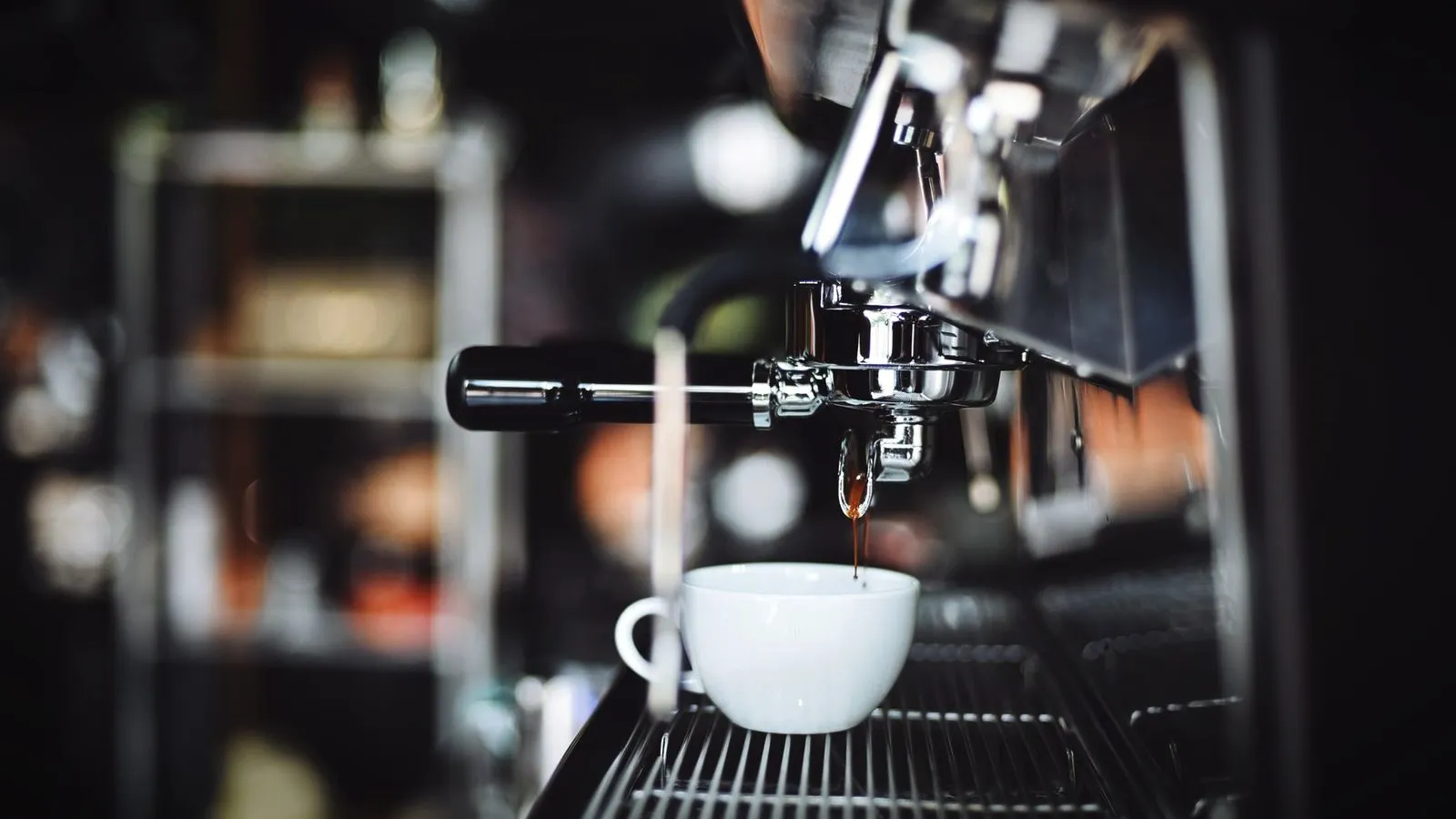
A group head is the brewing station where the portafilter locks in. Each one can pull a shot independently, so the group count sets your maximum parallel output.
| Groups | Best fit | Watch out for |
|---|---|---|
| 1 | Carts, kiosks, restaurants with a small coffee menu | No backup if the group needs repair |
| 2 | Most independent cafés with one or two baristas | Needs a 208–240 V circuit and roughly 28 in. of counter width |
| 3 | Busy cafés with two baristas working side by side | More power, more counter space, more to clean |
| 4 | High-volume shops with a large bar team | Only worth it if you can staff every group |
Counter space scales with groups. According to La Marzocco’s US installation guide for the Linea Classic, the machine is 20 in. wide with one group, 28 in. with two, 37 in. with three and 46 in. with four, all 22 in. deep.
Boiler types: heat exchanger vs multi-boiler
The boiler system controls how well a machine holds brew temperature while you steam milk. It is the biggest engineering difference between models at similar prices.
Heat exchanger
A heat exchanger machine has one large boiler kept at steam temperature. Brewing water passes through a tube inside that boiler and is heated on the way to the group. It is a proven, simpler design with a single boiler to maintain. Brew temperature is set indirectly, so it can drift when the machine sits idle or works hard.
Multi-boiler
Multi-boiler machines use a dedicated boiler for steam and a separate boiler, or one boiler per group, for brewing. Each is controlled independently, usually by a PID controller. The La Marzocco Linea PB, for example, uses dual boilers with saturated groups and dual PID control. Nuova Simonelli describes its MP system as multiboiler technology with precise temperature control.
Multi-boiler designs make it easier to run different coffees at different temperatures and keep shots stable during a rush. They also add parts and cost.
Semi-automatic vs volumetric vs super-automatic
“Automatic” means different things depending on the brand. The useful question is what the machine does for the barista.
| Type | What the barista does | What the machine does | Best for |
|---|---|---|---|
| Semi-automatic | Grinds, doses, tamps, starts and stops the shot | Heats and pumps water | Skilled baristas who want full control |
| Volumetric (automatic) | Grinds, doses, tamps, presses a button | Stops the shot at a programmed water volume | Most cafés: consistent shots, free hands for milk |
| Super-automatic | Presses a button | Grinds, doses, tamps, brews, often steams milk | Offices, hotels, self-serve and high-turnover sites |
| Manual lever / paddle | Controls pressure or flow directly | Heats water | Specialty bars that feature the process |
Volumetric machines are the default in many cafés because the barista can start a shot and steam milk at the same time. Many models, including the Nuova Simonelli Appia Life, are sold in both volumetric and semi-automatic versions.
Steam capacity and milk drinks
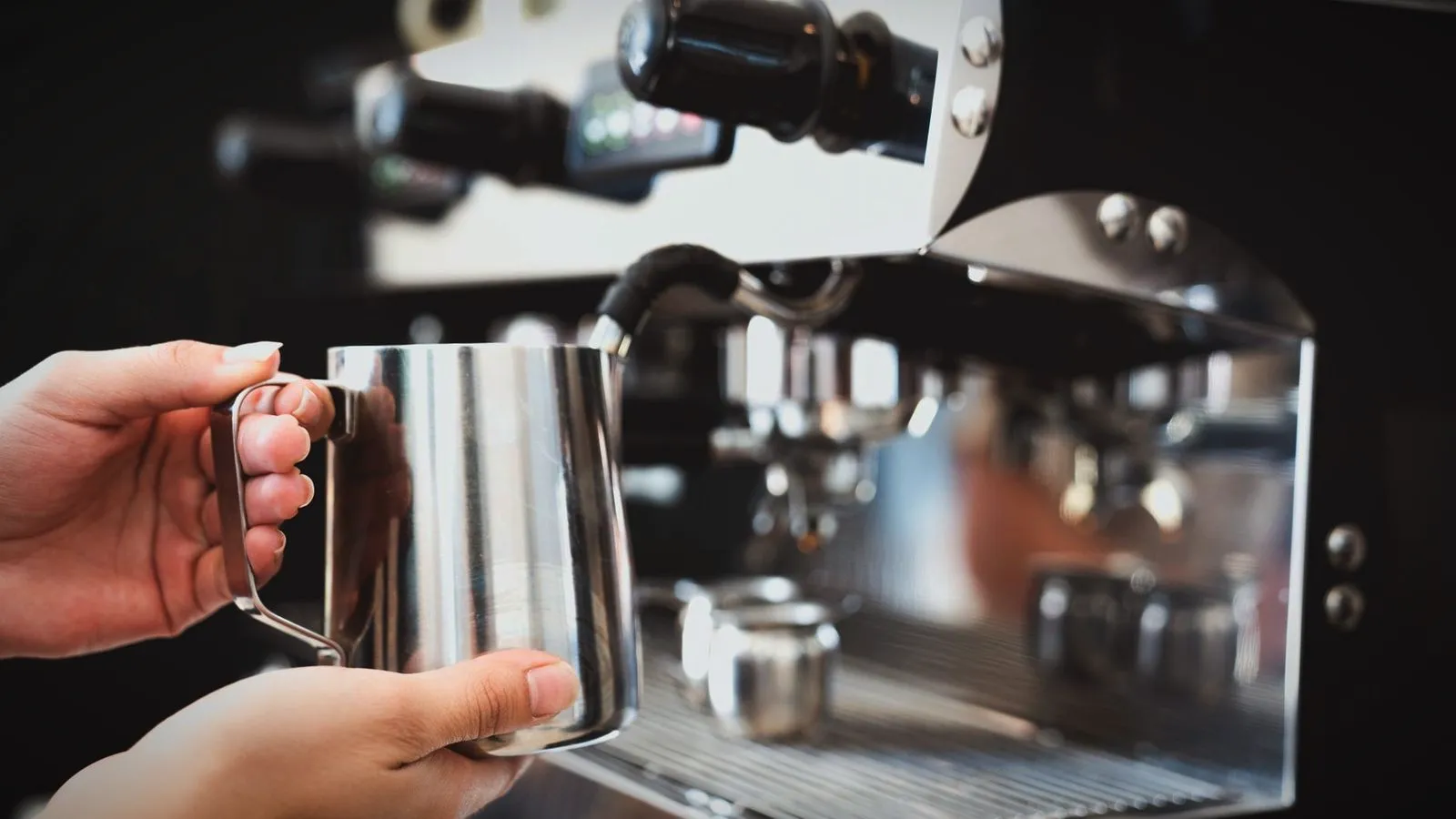
If most of your menu is lattes and cappuccinos, steam capacity matters as much as the group count. The steam boiler must refill and reheat fast enough to keep pressure up through back-to-back pitchers.
Compare steam boiler size across group counts. La Marzocco lists the Linea PB steam boiler at 7 L for two groups, 11 L for three and 15 L for four. Nuova Simonelli lists the Appia Life Standard at 5 L for one group, 7.5 L for the compact two-group and 15 L for three groups. For milk technique on any machine, see our guide to espresso drinks with milk.
Electrical requirements for a commercial espresso machine
Power is where many café fit-outs go wrong. A two-group commercial machine draws far more than a standard 120 V kitchen outlet can supply.
The table below is from La Marzocco’s US installation guideline for the Linea Classic. Other brands differ, so always use the exact model’s guide.
| Linea Classic | 1 group | 2 groups | 3 groups | 4 groups |
|---|---|---|---|---|
| Voltage | 208–240 V, 1-phase, 60 Hz | 208–240 V | 208–240 V | 208–240 V |
| Wattage | 2,500 W | 4,600 W | 6,100 W | 8,000 W |
| Full load amps | 12 A | 22 A | 28 A | 37 A |
| Suggested plug/outlet | NEMA 6-20 | NEMA 6-30 | NEMA 6-50 | NEMA 6-50 |
The same guide shows a separate 110 V, 15 A supply for the grinder. Plan outlets for every grinder, the water pump if external, and any milk or water heater. Share the model’s install sheet with a licensed electrician before you sign a lease or order the machine.
Plumbing, water line and drain
Most commercial machines are plumbed in rather than filled by hand. La Marzocco’s Linea Classic guideline suggests:
- A 3/8 in. cold water supply line with a 3/8 in. connection.
- Line pressure of 45–80 psi and a flow rate of about 2 gallons per minute.
- An external pump within about 4 ft of the water supply.
- A 3/4 in. flexible drain line to a floor drain, sloped at least 1/4 in. per foot.
The guide also notes that the machine must be installed according to federal, state and local plumbing codes. Ask your plumber and health inspector what your jurisdiction requires for backflow prevention before installation day.
Water filtration: the cheapest insurance
Water quality affects both flavor and machine life. Hard water deposits scale in boilers and valves. Very soft or distilled water can be corrosive and may not trigger the level sensors some machines rely on.
La Marzocco publishes these targets for water after filtration:
| Parameter | Recommended range |
|---|---|
| Total dissolved solids | 90–150 ppm |
| Total hardness | 70–100 ppm |
| Alkalinity | 40–80 ppm |
| Chloride | 0–30 ppm |
| Total chlorine | 0–0.1 ppm |
| pH | 6.5–8 |
La Marzocco notes that common drinking-water filters often do little to mineral content, so choose a system designed for espresso machines. Test your local water first and size the filter to your daily volume.
NSF and UL certification
Health inspectors look for sanitation certification on food equipment. The FDA Food Code treats equipment certified to a recognized American National Standard by an ANSI-accredited certification program as meeting its equipment sanitation provisions.
For espresso machines, the relevant sanitation standard is usually NSF/ANSI 4, which covers commercial cooking equipment including coffee makers and other hot beverage makers. Look for the NSF mark or an equivalent listing on the spec sheet.
Electrical safety is a separate listing. Look for a mark from a recognized testing laboratory, such as UL or ETL, for the exact voltage version you are buying. Imported or gray-market machines sometimes lack one or both marks, which can stall an inspection.
Maintenance and service
A commercial espresso machine needs daily cleaning and scheduled service. Skipping either shows up first in the cup and later on the repair bill.
- Every day: backflush each group with a blind basket and espresso machine detergent, soak portafilters and baskets, and purge and wipe the steam wands.
- Every week: remove and clean the shower screens, and check group gaskets for hardness or leaks.
- Every few months: replace group gaskets and shower screens as wear appears, and check the filter’s remaining capacity.
- On a schedule: have a technician service valves, pressure settings and boilers. La Marzocco, for instance, publishes 6-month and 12-month preventive maintenance checklists for its commercial machines.
Before you buy, ask who services that brand in your area. A machine with no local technician can close your bar for days.
Commercial vs prosumer and home machines
Prosumer machines borrow commercial parts such as E61 groups, rotary pumps and dual boilers, but they are sized for a household. They typically have one group, a water tank and a standard 120 V plug in the US. Our guide to Rocket espresso machines shows what one prosumer lineup looks like.
| Commercial | Prosumer / home | |
|---|---|---|
| Groups | 1–4 | Usually 1 |
| Water | Plumbed line and drain | Tank, sometimes plumbable |
| Power | 208–240 V dedicated circuit (most 2+ groups) | Standard 120 V outlet |
| Duty | Hours of continuous service | A few drinks at a time |
| Certification | NSF/ANSI 4 sanitation and electrical listing | Electrical listing for household use |
A prosumer machine can suit a small office, but it rarely keeps up with a café. If you are unsure which kind of machine you need, our explainer on the espresso maker vs espresso machine difference is a good starting point.
Commercial espresso machines for offices
Offices usually have no barista and many occasional users. A commercial super-automatic machine fits that pattern because it grinds, doses, tamps and brews at the push of a button, and many models also steam milk automatically.
Look for a bean hopper and grounds bin sized to your daily volume, an automatic cleaning cycle, and the option to plumb in so nobody has to refill a tank. Brands such as Jura and Franke sell super-automatic lines for offices and self-serve use.
How to choose the best commercial espresso machine for a small coffee shop
- Estimate your peak hour. Count the espresso drinks you expect in your busiest hour, not your daily average.
- Pick the group count that covers that peak with your planned staff.
- Choose volumetric or semi-automatic based on your baristas’ experience.
- Match steam capacity to how milk-heavy your menu is.
- Get the install guide first and confirm voltage, amps, plug type, water line, drain and counter space.
- Budget for a grinder per coffee, a water filter and installation, not just the machine.
- Confirm certification (NSF/ANSI 4 and an electrical listing) and local service before you order.
Once the machine is installed, our step-by-step guide on how to use an espresso machine covers dosing, tamping and pulling a shot.
The bottom line
The best commercial espresso machine is the one sized to your peak hour and your building. For most small cafés that means a two-group volumetric machine on a dedicated 208–240 V circuit, with a plumbed filter, a floor drain and a local technician. Get the manufacturer’s installation guide before you buy, and let those numbers, not the brochure, make the decision.
Sources
- La Marzocco USA: Linea Classic U.S. installation guideline (dimensions, voltage, wattage, amps, NEMA plugs, water line, drain, water ranges) and water specifications (filter guidance)
- La Marzocco USA: Linea PB product page (dual boilers, PID, boiler capacities)
- Nuova Simonelli: Appia Life (boiler sizes, volumetric and semi-automatic versions)
- U.S. Food and Drug Administration: List of American National Standards for Food Equipment (Food Code 4-205.10, NSF/ANSI 4)
- ANSI Webstore: NSF/ANSI 4 – Commercial cooking, rethermalization and powered hot food holding and transport equipment (scope includes coffee makers and hot beverage makers)