
Espresso crema is the layer of golden-brown foam that sits on top of a freshly pulled shot. It forms when hot water under about 9 bar takes up carbon dioxide (CO2) left in the coffee from roasting, and that gas comes out as tiny bubbles held in a film of coffee oils and fine particles.
Crema is a useful sign of fresh beans and a well-pulled shot, but it does not guarantee good flavor. It has nothing to do with Mexican crema, the cultured cooking cream; the two only share the word for cream. For the shot underneath, see our guide to what espresso is.
The short answer
| Question | Answer |
|---|---|
| What it is | A foam of CO2 bubbles in an emulsion of coffee oils, with fine coffee particles |
| Why it forms | CO2 from roasting, released by hot water at about 9 bar |
| What good crema looks like | Hazel-brown to dark brown with tawny reflections and very fine bubbles (IEI) |
| How much | At least 10% of the shot’s volume, holding for at least a couple of minutes |
| No or thin crema | Usually stale or pre-ground coffee, or a shot that runs too fast |
| Pale crema | Under-extraction: grind finer |
| Dark, spotty crema | Over-extraction: grind coarser |
| More crema | Fresher beans; robusta blends give more volume |
| Moka pot | Little or none, because it brews at about 1.5 bar |
What is crema on espresso?
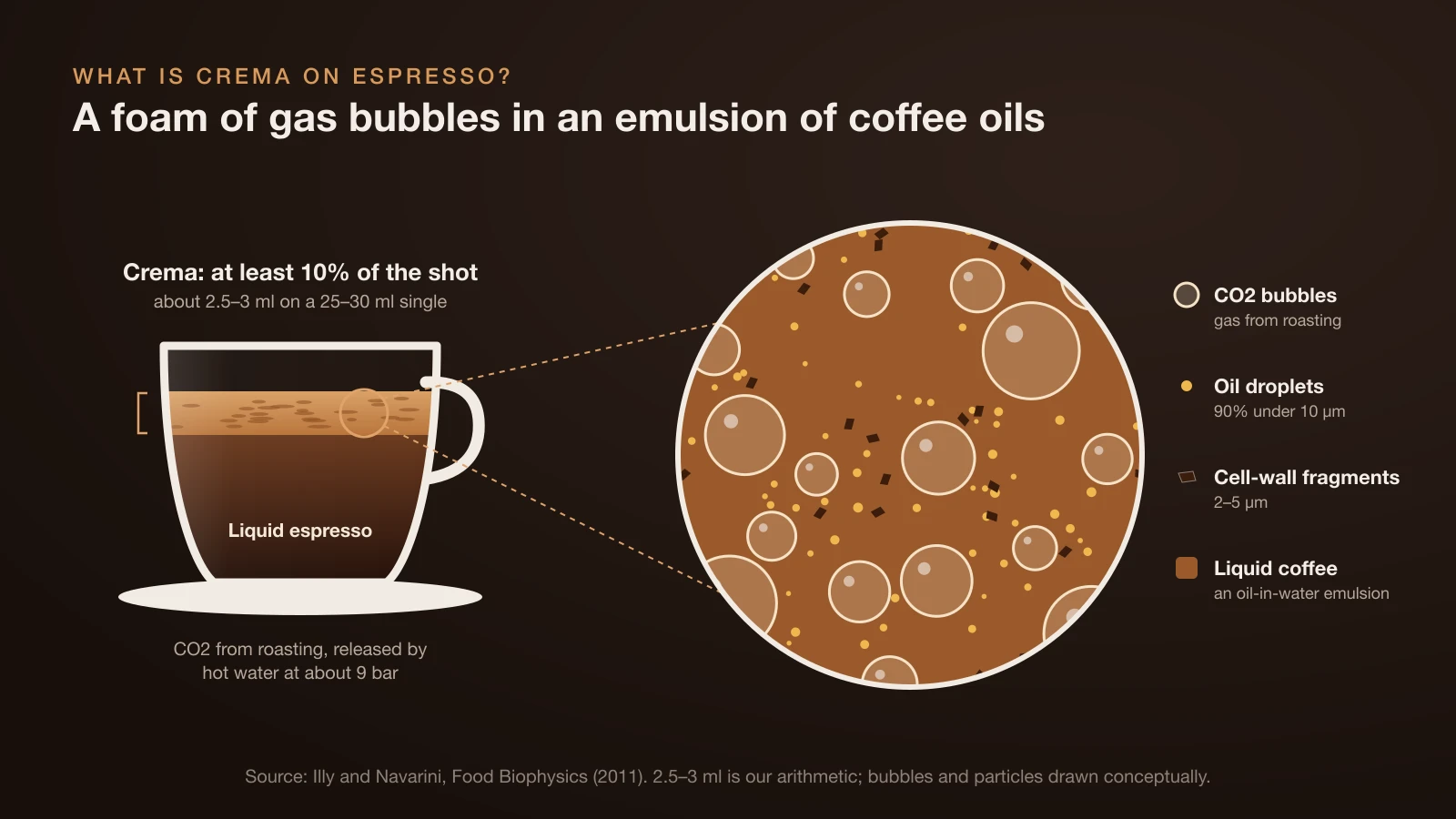
Crema on espresso is a foam: gas bubbles spread through the liquid coffee, which is itself an emulsion of tiny oil droplets. In their review of espresso foam in Food Biophysics, Ernesto Illy and Luciano Navarini describe the liquid as an oil-in-water emulsion in which 90% of the oil droplets are smaller than 10 micrometers (μm), carrying coffee cell-wall fragments of 2–5 μm.
The gas is mostly carbon dioxide. The same review notes that CO2 is the major gas produced during roasting, and that grinding breaks open the bean’s cells and releases a large share of it. What stays in the grounds is what the shot can turn into foam.
The Specialty Coffee Association (SCA) heritage definition of espresso calls for a thick, dark golden crema, and the Istituto Espresso Italiano (IEI) describes the foam as part of its certified Italian espresso. The crema expected today dates from the 1930s: Gaggia traces this “crema naturale” to Achille Gaggia’s 1938 patent, which replaced steam with hot water under pressure.
How does espresso crema form?
Espresso crema forms when hot water forced through the coffee at about 9 bar dissolves CO2, and that gas comes back out of the brew as fine bubbles. Illy and Navarini describe the likely mechanism as supersaturation: under high pressure and temperature the water takes up more CO2 than it can hold at normal pressure, and tiny coffee particles act as nucleation sites where bubbles form.
What keeps those bubbles from popping is less settled. The review links foam stability to large polysaccharides, mostly mannans with some arabinogalactans, and the ability to foam to melanoidin and protein material formed during roasting. Lipids tend to reduce foaming. The authors stress that the bubble mechanism and crema’s chemistry have not been studied in detail.
Pressure matters, but more is not better. A University of Navarra study in the Journal of Agricultural and Food Chemistry compared arabica shots brewed at 7, 9 and 11 atmospheres. The 9 atmosphere shots had a consistent foam and a high share of aroma compounds linked to fresh, fruity, malty and buttery notes.
What does good espresso crema look like?
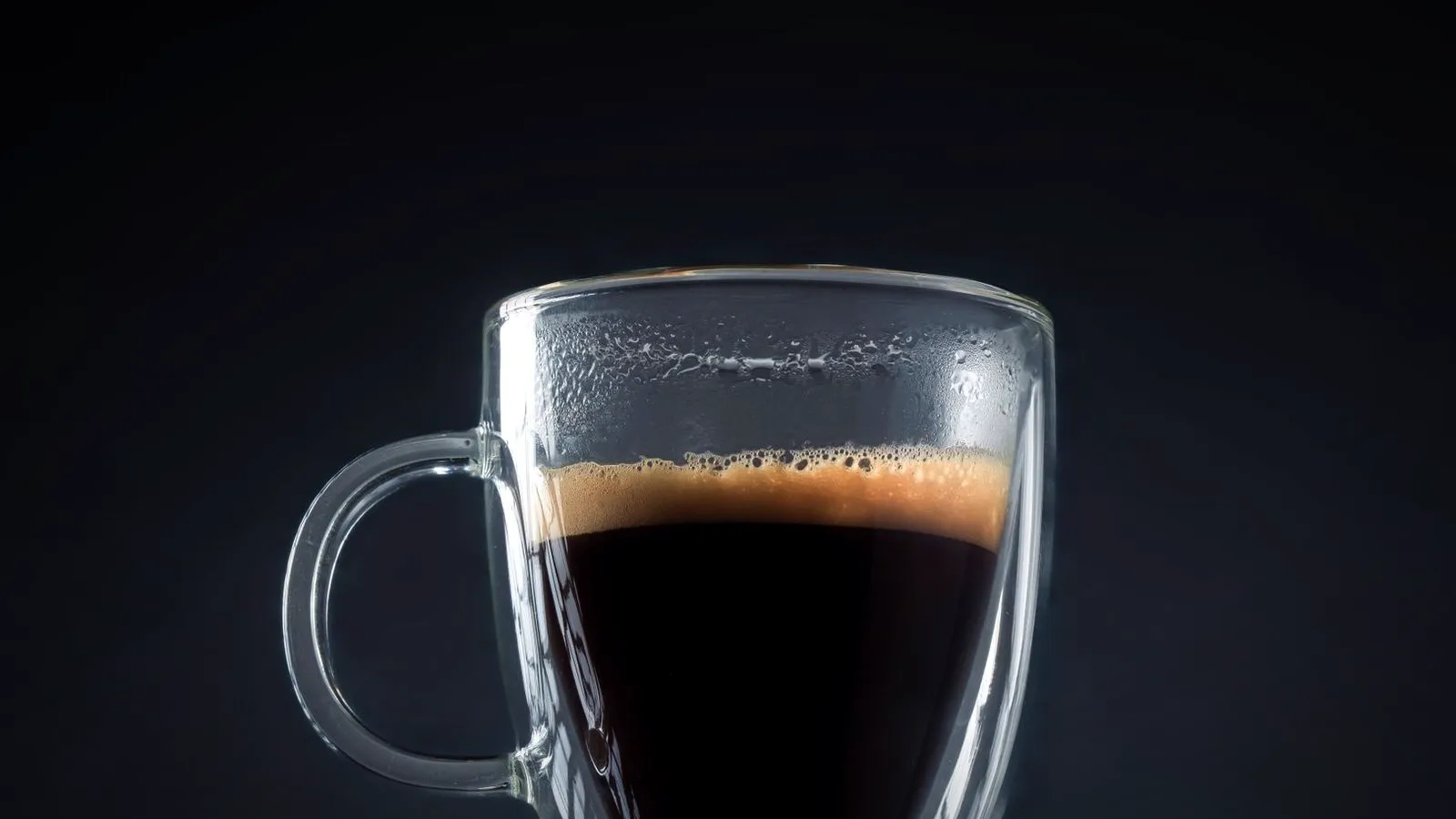
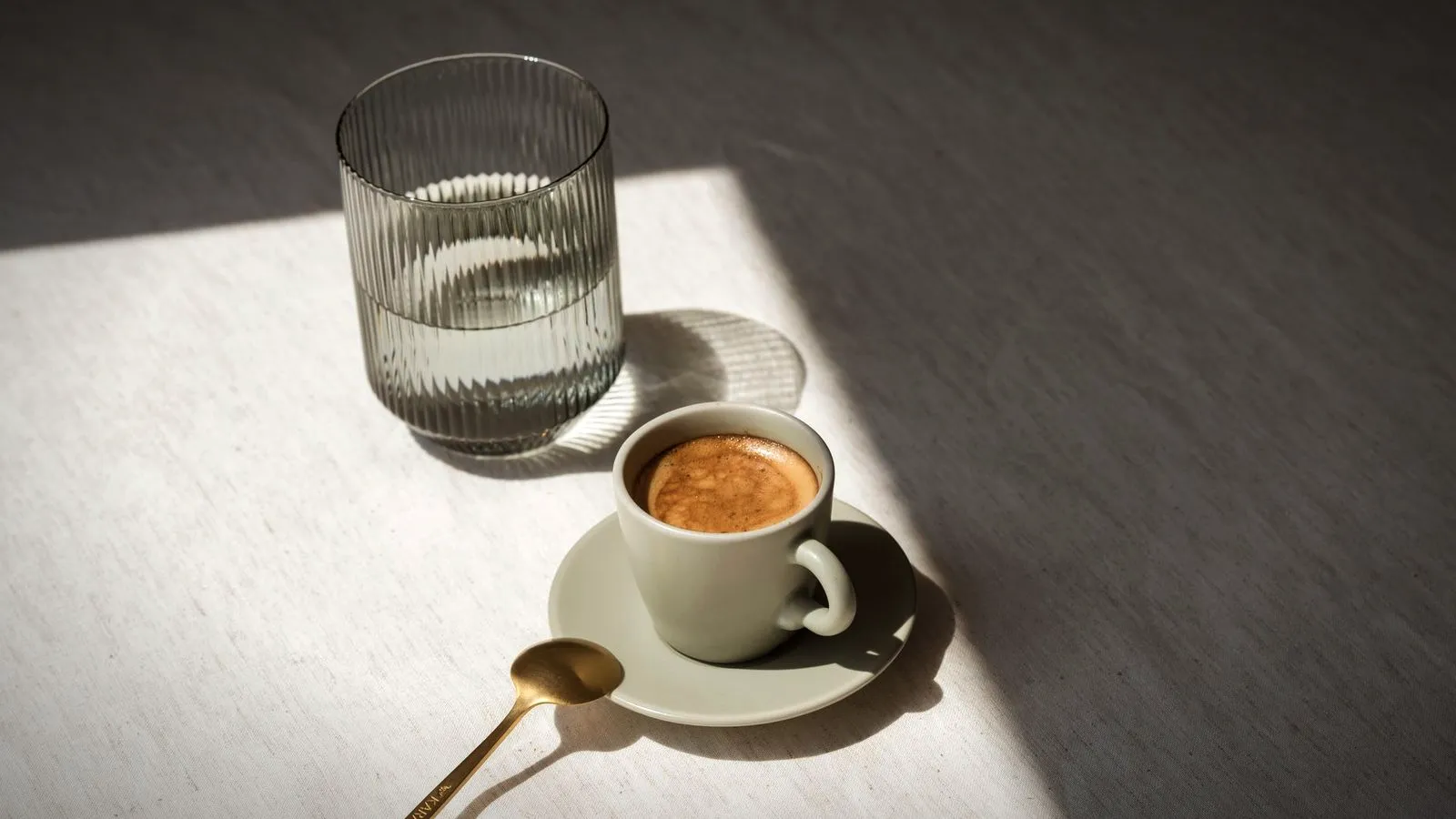
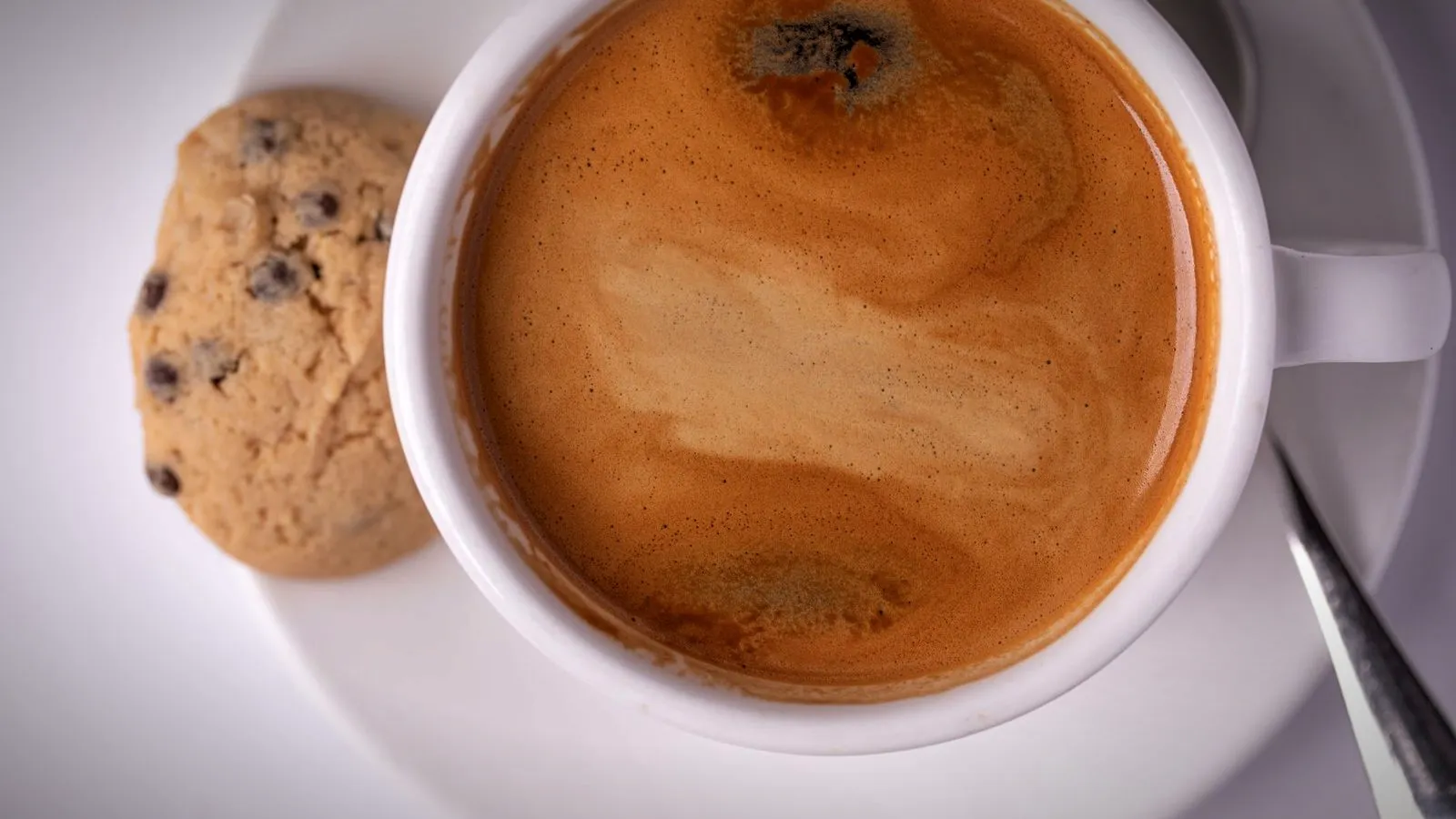
Good espresso crema is a fine, even, hazel-brown to golden-brown foam that covers the whole surface and holds for a couple of minutes. The IEI describes the foam on a certified Italian espresso as hazel-brown to dark brown, with tawny reflections and a very fine texture free of large or uneven bubbles.
Check four things:
- Color: golden-brown to hazel. Breville’s extraction guide pairs golden-brown crema with a balanced double shot that flows like warm honey.
- Texture: a tight, fine foam. Large, uneven bubbles are exactly what the IEI description rules out.
- Amount: the Illy and Navarini review cites at least 10% of the shot’s volume, about 2.5–3 ml on a 25–30 ml single (our arithmetic).
- Persistence: the same review cites a benchmark of at least a couple of minutes before the first uncovered black spot appears.
Darker flecks and streaks, which the review calls “tiger skin,” are a pattern it reports for pure arabica shots. Watching the shot through a bottomless portafilter also shows how evenly the foam forms at the basket.
Why is there no crema on my espresso?
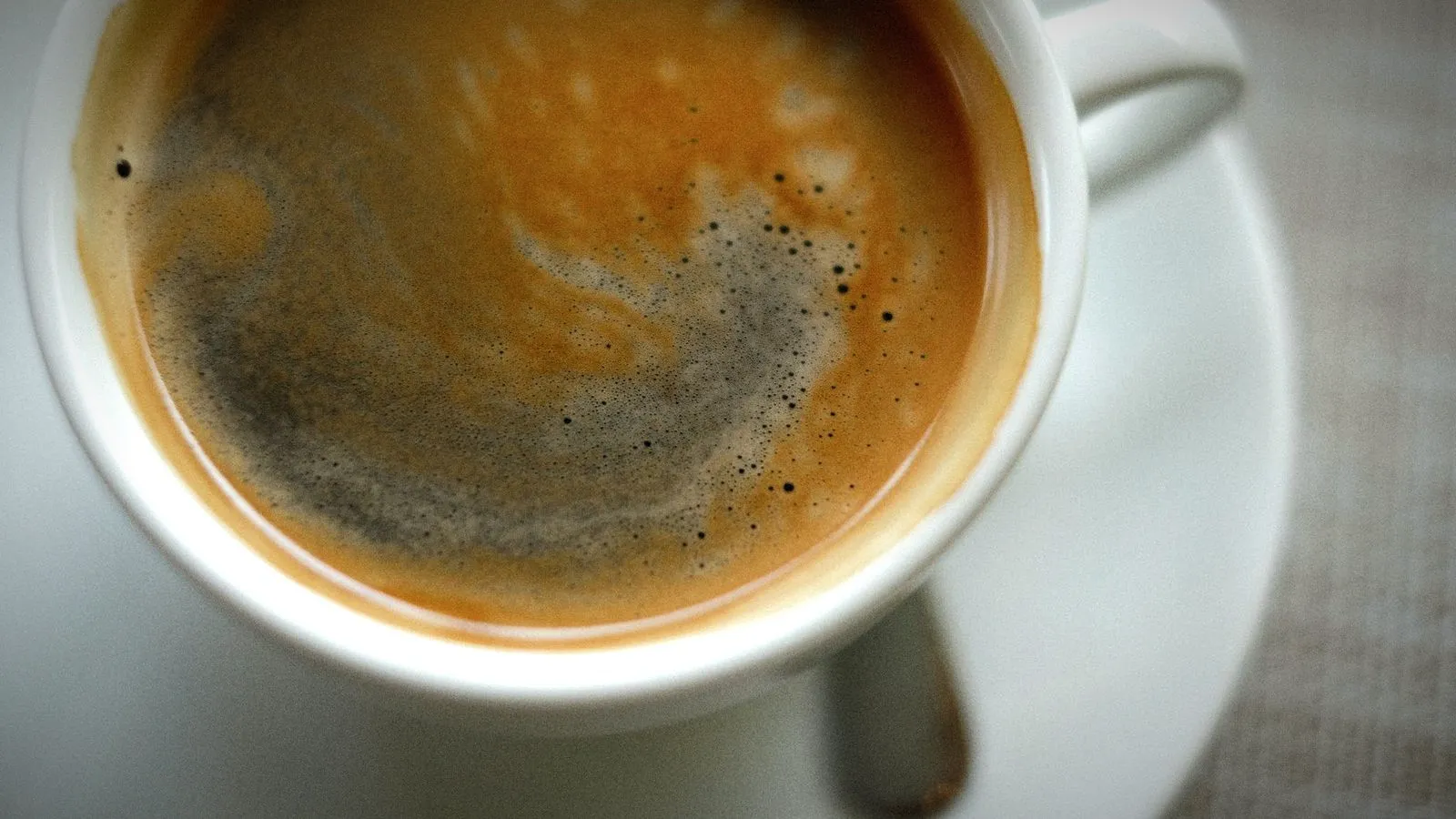
Little or no crema usually means the coffee has lost its CO2, or the shot ran too fast to build a foam. Work through the causes in this order:
| Cause | What you see | Fix |
|---|---|---|
| Stale beans | Thin crema that fades fast, flat taste | Use beans within about three weeks of roasting |
| Coffee ground long before brewing | Little crema even with a good recipe | Grind just before you brew |
| Grind too coarse | Shot under 20 seconds, watery, thin pale crema | Grind finer |
| Dose too low | Fast, weak shot, patchy foam | Fill the basket to its rated dose |
| Pressure too low | Weak flow even with a fine grind | Check the gauge; descale the machine |
| Brewer below espresso pressure | Moka pot, AeroPress or French press | Expected: these make strong coffee, not crema |
| Beans roasted a day or two ago | Shots run unevenly as the gas escapes | Rest the beans a few days |
Freshness comes first. In a University of Guelph study in Food Research International, crema volume depended mainly on bean variety and freshness, while grind size, brew ratio and water temperature mattered less. Basket size mattered most for stability: double and triple baskets gave more stable crema than a single, so a doppio is the easier shot to judge.
How bean freshness changes crema
Fresh beans make more crema because they still hold the CO2 formed in roasting. The SCA says roasted beans degas rapidly for about 20 days and treats whole beans as fresh for about three weeks, with fresher coffee producing more crema. Breville suggests using beans 5–20 days after the roast date.
Ground coffee loses gas far faster. The Illy and Navarini review cites a reported limit of 30 minutes between grinding and brewing, and reports that ground coffee left out for 36 hours made a foam that barely held up. Our guides to espresso beans and the espresso grind size cover buying and grinding, and dialing in espresso shows how to adjust the shot afterward.
What crema color says about your shot

Crema color is a quick visual clue to extraction: pale crema points to under-extraction, and dark, spotty crema to over-extraction. Breville’s extraction guide and the Illy and Navarini review describe the same pattern:
| Crema | Likely cause | Taste | Fix |
|---|---|---|---|
| Thin and pale | Grind too coarse, shot too fast or water too cool | Sour, weak | Grind finer |
| Golden-brown, fine | Balanced shot | Sweet, rounded | Keep the recipe |
| Dark and spotty | Grind too fine or dose too high | Bitter, harsh | Grind coarser |
| Very dark with a white spot in the middle | Grind too fine or too much coffee | Bitter | Coarser grind or smaller dose |
Treat color as a hint, not a verdict. The review notes that these rules rest on decades of trial and error rather than reproducible measurements, and roast and bean type change the color too: it describes robusta foam as dark brown with grey tones. Taste confirms what the crema suggests, and our guides to sour espresso and bitter espresso list the fixes for each.
Does more crema mean better espresso?
No, more crema does not mean better espresso. A normal layer helps aroma, but extra foam adds little and can make the cup taste more roasted.
A Nestlé Research study in Food & Function made shots with different amounts of crema. Espresso with its standard amount released the most pleasant aroma compounds, and reducing the crema by filtering the coffee lowered them. Raising the brew pressure produced more crema without improving aroma, and more crema came with a longer dominance of roasted notes.
Roast changes the amount as well. In studies summarized by Illy and Navarini, foam volume rose with roast degree, but a very dark roast gave less foam than a dark one, and foam lasted longest at a medium roast.
Arabica vs robusta crema
Robusta has a reputation for more crema, and the evidence is mixed. The Guelph study found robusta made a larger volume of crema, while arabica made a more stable one, which the authors attributed to its higher lipid content. Illy and Navarini, by contrast, write that the role of coffee species in espresso foam is not established. In practice, a blend with some robusta usually gives a bigger, darker cap; how long it lasts depends on the rest of the shot.
Should you stir or skim the crema?
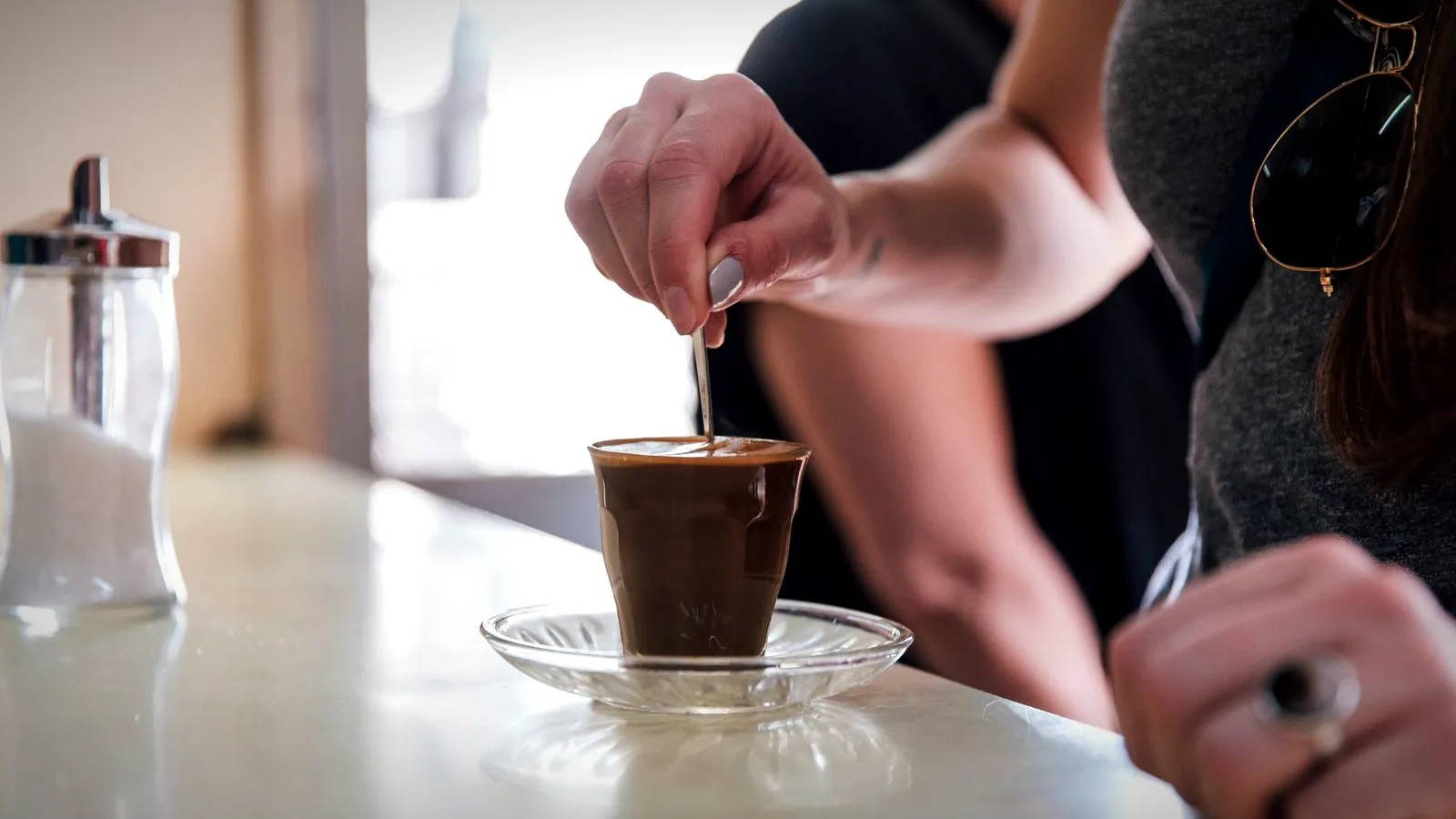
Stirring the crema into the shot is the common choice, and research suggests skimming it costs aroma. The Nestlé study above found that reducing the crema lowered the release of pleasant aroma compounds, although it also softened the roasted notes in the mouth.
A second Nestlé Research study, in the Journal of Agricultural and Food Chemistry, found that crema boosted the aroma above the cup for the first 2–3 minutes and that a stable crema then acted as an aroma barrier over several minutes. A Japanese study in Bioscience, Biotechnology, and Biochemistry found that the foam also slows the cooling of the liquid underneath.
Some drinkers still skim it, because they find crema more bitter and roasty than the coffee below. A quick stir mixes it into every sip; try the shot both ways and keep the one you prefer.
Crema from a moka pot, pod or pressurized basket
A moka pot makes little or no crema, while capsule machines and pressurized baskets can make plenty of crema even with coffee that would struggle in a standard basket. Pressure is the reason in both cases.
- Moka pot: Bialetti puts its moka pot at about 1.5 bar, against about 9 bar for espresso, so you may see only a brief, light foam. Our moka pot vs espresso comparison explains the difference.
- Pressurized (dual wall) basket: a small exit hole builds resistance on its own. Breville says its Dual Wall baskets regulate pressure regardless of grind, dose, tamp or freshness, and Gaggia’s manual says its “crema perfetta” filter gives an espresso with crema even on first use. The foam is real, but it tells you less about your grind and beans than crema from a single wall basket.
- Capsules: sealed capsules brew under pump pressure and do produce crema; one of the Nestlé crema studies used capsule-brewed espresso for its samples.
The bottom line
Espresso crema is a foam of CO2 bubbles, oils and fine coffee particles that forms when water is pushed through fresh coffee at about 9 bar. Good crema is fine, hazel-brown and lasts a couple of minutes, while thin or missing crema usually means stale beans or a fast shot. Use it as a clue to freshness and extraction, and let the taste decide.
Sources
- Peer-reviewed research on crema formation: Illy and Navarini, Neglected food bubbles: the espresso coffee foam, Food Biophysics (2011) (emulsion, 90% of droplets under 10 μm, 2–5 μm cell-wall fragments, CO2 from roasting, supersaturation, stabilizers and lipids, at least 10% of volume, a couple of minutes, roast degree, 36 hours, 30 minutes, color clues, tiger skin, robusta color); Wang et al., Investigation of the factors that affect the volume and stability of espresso crema, Food Research International (2019); Andueza et al., Influence of water pressure on the final quality of arabica espresso coffee, J Agric Food Chem (2002) (7, 9 and 11 atm)
- Peer-reviewed research on crema, aroma and temperature: Barron et al., Impact of crema on the aroma release and the in-mouth sensory perception of espresso coffee, Food & Function (2012); Dold et al., Influence of foam structure on the release kinetics of volatiles from espresso coffee, J Agric Food Chem (2011) (capsule-brewed samples, first 2–3 minutes); Arii and Nishizawa, Espresso coffee foam delays cooling of the liquid phase, Biosci Biotechnol Biochem (2017)
- Standards: Istituto Espresso Italiano, Certified Italian Espresso (foam color, tawny reflections, fine texture); Specialty Coffee Association, Defining the ever-changing espresso (archived; 9–10 atmospheres, thick dark golden crema) and Coffee Decoded: fresh coffee (rapid degassing for about 20 days, fresh within about three weeks, more crema from fresh coffee)
- Machine makers: Breville, Barista Express BES870 instruction book (extraction guide: under 20 and 25–30 seconds, flow and crema color; Single Wall and Dual Wall baskets; 5–20 days after roasting); Gaggia, Classic Pro operating instructions (“crema perfetta” filter) and our history (1938 patent, crema naturale); Bialetti, How the Moka works (about 1.5 bar against at least 9 bar)